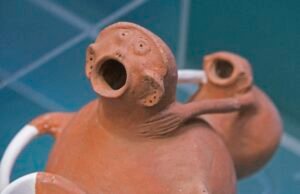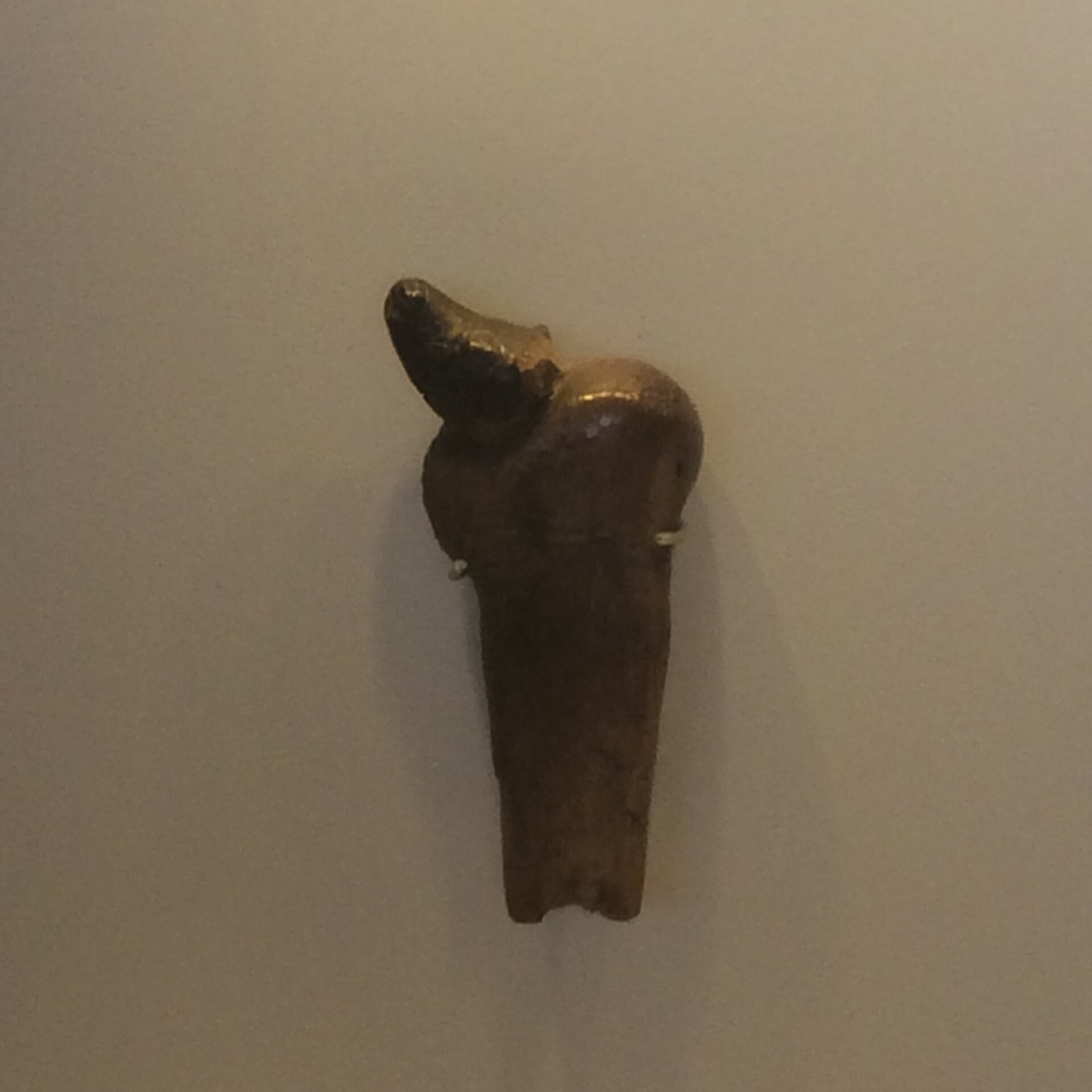
The Natufian clay bird figurines reveal that Natufian hunter-gatherers shaped and colored animal images before farming became widespread. Birds account for 11 of the 15 recognizable figurines in a study of finds from three settlements, while preserved fingerprints suggest that children also participated in making clay figures.
How much can you learn from an object smaller than 2 centimeters? Most figurines identified in the study fall below that size, yet their surfaces preserve evidence of coloring, shaping, and human touch. Their small bodies connect questions about early art with the practical acts of pressing clay and learning from another person.
Who were the Natufians?
The Natufian culture belongs to the Epipaleolithic period in the Levant. Its communities lived approximately 15,000–11,500 years ago. They developed settled or partly settled ways of life before agriculture became widespread, supporting themselves by gathering wild cereals and hunting animals, especially gazelles.
That setting matters when you consider the figurines. These clay images belonged to hunter-gatherer communities whose lives already included forms of settlement. Their production therefore places figurative clay work within a world that preceded widespread farming.
The culture’s name comes from Wadi Natuf, near Shuqba Cave. Dorothy Garrod named it after investigating finds at the cave in 1928. The term connects these communities to the place where archaeological work helped establish their identification.
Where were the clay bird figurines found?
Laurent Davin and colleagues examined material from three settlements in Israel. These were el-Wad Terrace on Mount Carmel, Hayonim Terrace in Galilee, and Eynan-Mallaha in the Upper Jordan Valley. Their study was published in PLOS One on 11 November 2026.
Eynan-Mallaha lies in the Hula Valley in northern Israel, approximately 25 kilometers north of the Sea of Galilee.
The researchers identified 154 figurative clay finds. This total includes 15 recognizable figurines and 139 cylindrical pieces that may be fragments of figures. The distinction matters: 154 is the number of identified figurative finds, while only 15 preserve recognizable figures.
Researchers sorted approximately 40 kilograms of clay material collected from the three settlements. The figurines emerged from that larger body of material. Their identification depended on examining small pieces, including fragments whose original shapes remain uncertain.
Why do birds matter so much in Natufian art?
Birds form the largest group among the recognizable figures: 11 out of 15. Some are associated with waterbirds such as ducks, geese, or swans. Others are associated with birds of prey. These identifications indicate a range of bird imagery within the surviving group.
Some bird figurines have heads turned downward and to the left. Researchers connect those poses with duck courtship behavior. This is an interpretation of the modeled posture, rather than a firm identification of a particular species or ritual.
Ten of the 11 bird figurines preserve traces of red coloring. Their makers therefore worked with both form and surface color. If you picture these objects only as small lumps of clay, the surviving red traces add an essential part of their appearance.
The collection also includes human imagery. Two human figurines identified at Eynan-Mallaha represent an upper torso with modeled arms and a stylized face. Birds dominate the recognizable group, but they were part of a broader practice of shaping living figures in clay.
Did children help make the figurines?
Approximately 60 of the examined figurative pieces preserve fingerprints left when clay was squeezed or pressed. These marks record contact during shaping. They offer evidence about the people handling the material alongside evidence about the subjects being represented.
Analysis of the distances between fingerprint ridges suggests that some makers may have been children younger than 10. That conclusion remains an inference from the prints. Even with that qualification, it gives children a possible place in Natufian artistic production.
An approximately 15,000-year-old human torso figurine from Eynan-Mallaha preserves a particularly telling overlap. On its back, a child’s fingerprint covers an adult’s fingerprint. Researchers interpret the combination as possible evidence of practical teaching involving the same clay object.
You can connect this evidence to an everyday experience: showing someone how to shape a small piece of clay by handling it together. The overlapping prints make that comparison useful. They support the possibility of shared work, although they do not establish what an adult might have explained to a child.
How were the clay surfaces treated?
Researchers identify a thin coating of colored clay on one approximately 15,000-year-old figurine as the earliest known evidence of engobe. The coating adds another material detail to the Natufian objects, alongside the red traces preserved on most of the bird figures.
All the examined clay objects experienced heat. The evidence has not yet separated deliberate firing from warming near a fire or burning that happened later. Calling every object deliberately fired would therefore make the production process sound more certain than it is.
Most figurines identified in the study measure less than 2 centimeters and show no signs of intensive use. Their size and surfaces help characterize the surviving objects. Those observations alone, however, do not establish how the figures were used.
Were the figurines used for stories or beliefs?
Davin proposes that the figurines may have helped transmit stories and cultural knowledge. The possible involvement of children and the overlapping adult and child fingerprints make teaching a relevant interpretation. The objects’ actual purpose remains uncertain.
A separate find offers another connection between Natufian people and bird imagery. An approximately 12,000-year-old woman-and-goose figurine comes from Nahal Ein Gev II, about 2 kilometers east of the Sea of Galilee. It belongs to a separate study.
Researchers interpret that figure as potentially representing an animistic or mythological scene. This reading is an interpretation of the object, without a written account explaining Natufian beliefs. The combination of woman and goose is evidence; its proposed meaning requires greater caution.
Goose remains provide concrete context at Nahal Ein Gev II. The site’s 229 identified goose bone specimens account for approximately 40 percent of its bird remains. Among geese identifiable by species, 96 percent are greylag geese. Those figures establish the prominence of geese in the recovered bird material without settling the figurine’s meaning.
Details you won’t find in guidebooks
The woman-and-goose figurine measures 37 millimeters high, 18 millimeters wide, and 23 millimeters deep. It weighs 12.6 grams. These measurements give you a clearer sense of the object behind interpretations of a possible mythological scene.
The overlapping fingerprints at Eynan-Mallaha occur on the back of a human torso. Their placement directs attention to a surface beyond the represented arms and body. A mark left during handling can carry evidence about production as well as the modeled features themselves.
The 139 cylindrical pieces remain an important qualification in the larger collection. They may be parts of figures, but they do not provide another 139 recognizable subjects. Keeping them separate from the 15 identifiable figurines preserves the difference between a possible fragment and a readable image.
How do these finds fit the history of clay art?
According to the PLOS announcement, most previously known Natufian figurines were made from bone or stone. The clay finds broaden the material evidence for Natufian representation. They also invite reassessment of the view that clay figurine traditions in Southwest Asia became widespread with Neolithic farming communities.
These objects are not the world’s first clay artworks. Central Europe’s Pavlov culture produced thousands of figurative clay finds approximately 32,000–27,000 years ago. The Natufian evidence matters for understanding early clay art in Southwest Asia within that longer history.
Timeline
- Approximately 32,000–27,000 years ago Central Europe’s Pavlov culture produced figurative clay objects.
- Approximately 15,000 years ago Early examples of Natufian clay figurine production appeared.
- Approximately 12,000 years ago The woman-and-goose figurine from Nahal Ein Gev II was made.
- 1928 Dorothy Garrod investigated finds at Shuqba Cave, providing a basis for identifying Natufian culture.
- 11 November 2026 PLOS One published the study examining 154 figurative clay finds.
FAQ
What do the clay bird figurines reveal about Natufian art?
They show that Natufian hunter-gatherers modeled birds in clay before farming became widespread. Coloring and fingerprints also provide evidence about surface treatment and possible participation by children.
Did children help make Natufian figurines?
Fingerprint ridge spacing suggests that some makers may have been younger than 10. A child’s fingerprint also overlaps an adult’s print on a human torso figurine from Eynan-Mallaha.
Were the figurines deliberately fired?
All the examined clay objects experienced heat. Deliberate firing, warming near a fire, and later burning have not yet been distinguished.
Are these the world’s earliest clay artworks?
No. Thousands of figurative clay finds are known from Central Europe’s Pavlov culture, dating to approximately 32,000–27,000 years ago.
Sources
- Wikipedia — Natufian culture en.wikipedia.org
- HeritageDaily — 15,000-year-old clay figurines heritagedaily.com
- PLOS announcement via Phys.org — Prehistoric clay figurines phys.org
- Science News — Stone Age children left fingerprints on ancient art projects sciencenews.org
- Hebrew University announcement via Mirage News — Children shaped clay art 15,000 years ago miragenews.com
- PNAS — A 12,000-year-old clay figurine of a woman and a goose pmc.ncbi.nlm.nih.gov
- Wikipedia — ʿAin Mallaha en.wikipedia.org
Image: Satuette animale période natoufienne.jpg — Fabien Gatti, CC BY-SA 4.0