The Bronze Age hoard found at the Keresztes battlefield reveals a much earlier past beneath a landscape associated with the Ottoman victory of 1596. A bronze vessel and three arm spirals date to approximately the 13th–11th centuries BCE, roughly 2,500 years before the battle. The museum’s announcement on 4 November 2026 adds a third spiral to the two initially seen in the field.
That change from two spirals to three explains why this discovery deserves attention beyond its battlefield setting. You can follow the objects from a metal detector signal to laboratory excavation, where their arrangement was recorded in photographs and three dimensions. The story connects a Bronze Age deposit, a later Ottoman battlefield, and planned tests on soil and possible residues.
Where was the Keresztes hoard found?
The discovery came from Mezőkeresztes, a settlement in Borsod-Abaúj-Zemplén County in northern Hungary. Turkish readers know the place as Haçova. These names connect the same location to different accounts of its past. If you encounter Haçova in an Ottoman history and Keresztes in an English report about the bronze objects, you are following the same battlefield landscape.
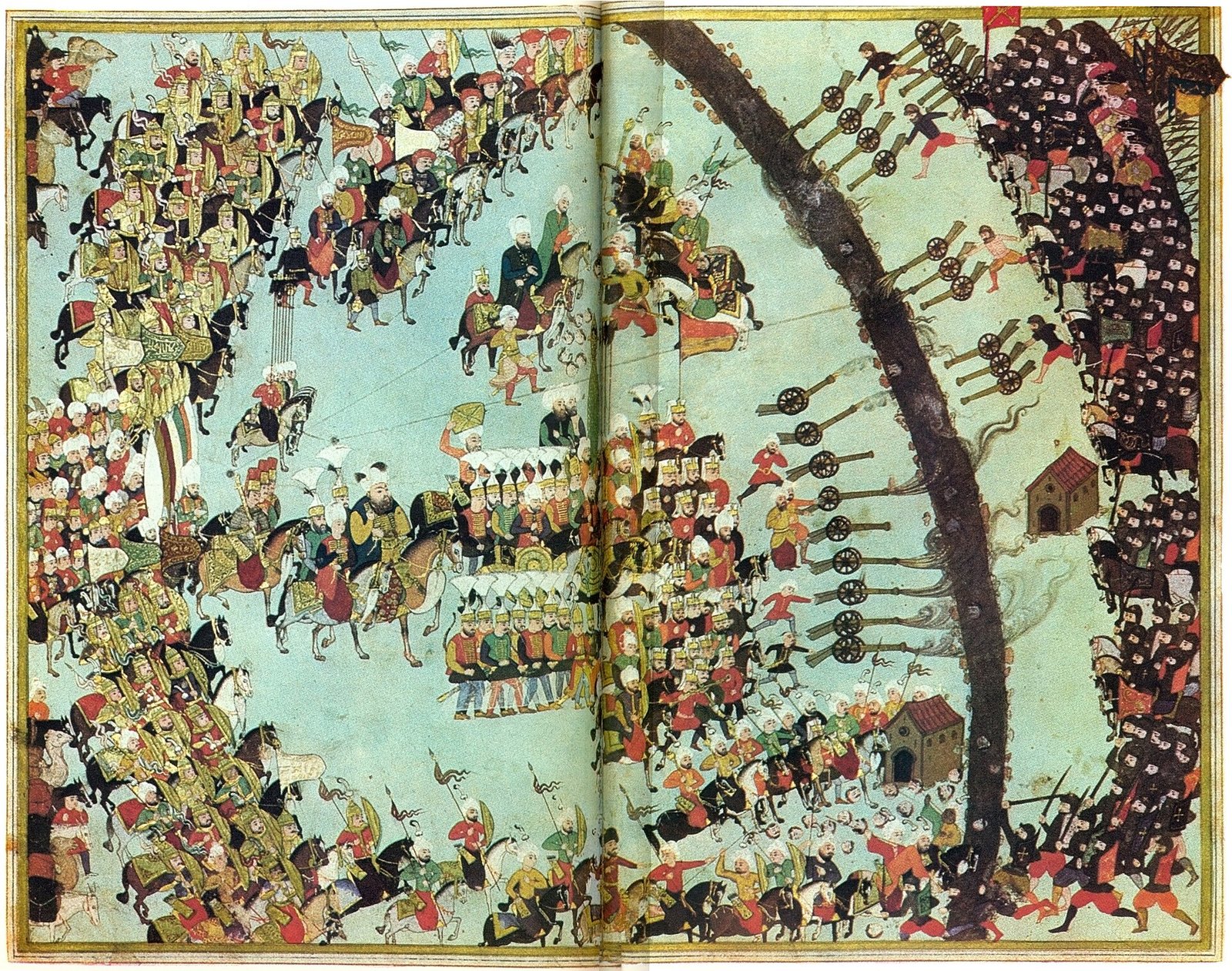
The Battle of Keresztes took place on 24–26 October 1596. Mehmed III’s Ottoman army faced Habsburg–Transylvanian forces led by Maximilian III and Sigismund Báthory. The battle ended in an Ottoman victory during the Ottoman–Habsburg War of 1593–1606. That military history explains the battlefield research project through which the much older objects emerged.
The bronze vessel and spirals belong to a different period. Their proposed date falls in the Late Bronze Age, approximately the 13th–11th centuries BCE. Their forms and decoration provide the basis for that dating. Finding them within the battlefield research area connects their discovery to the project, while their age places them roughly 2,500 years before the fighting.
How did battlefield research uncover the bronze objects?
The Mezőkeresztes Battlefield Research project had been running for about a decade by the time of the 2026 reports. Its research area extends across more than 100 square kilometres. Historical and archival sources helped define that area. The bronze discovery therefore emerged from a broad investigation of the battlefield landscape, with a geographical scope much larger than the vessel itself.
Archaeology volunteer Zoltán Vágó detected the signal that brought the group to attention. The initial field examination revealed a large bronze vessel with two spiral arm ornaments inside it. Archaeologist and project leader Gábor Bakos conducted the field excavation with geographer András Gömöri, who is associated with the University of Miskolc and BORBAS.
Those first observations established an important relationship: the spirals were inside the vessel. The discovery was more specific than a collection of bronze objects found across the research area. A container and its contents had survived together. Preserving that arrangement became a central purpose of the next stage, when the vessel was lifted with its contents as a block.
What exactly was inside the vessel?
The first field account described two spiral arm ornaments placed within the large bronze vessel. The Hungarian discovery report describes these ornaments as having twisted or bent-looking decoration. Their identification as arm jewellery gives you a concrete way to picture the group: a bronze container holding objects associated with personal adornment.
Laboratory excavation changed the reported count. In its announcement of 4 November 2026, the museum stated that a third arm spiral had been found. The difference between two and three reflects the stages of examination. Two were seen during the initial field investigation; the third emerged during the more detailed work in the laboratory.
The vessel and spirals are dated through their shapes and decoration to approximately the 13th–11th centuries BCE. This is the stated basis for placing the group in the Late Bronze Age. The dating applies to the bronze objects themselves. It also explains why their discovery adds an earlier period to a place widely associated with the battle of 1596.
Why was the vessel lifted with its contents?
The excavation team removed the vessel as a block to preserve the arrangement inside it for laboratory micro-excavation. That decision kept the contents together during removal. The purpose was to examine their positions carefully, rather than lose those relationships while separating the objects in the field. The third spiral was subsequently identified during this laboratory work.
You can connect this method to an everyday task: moving a filled container while trying to preserve how its contents sit. Taking each item out changes the arrangement you are trying to understand. At Mezőkeresztes, lifting the vessel with its contents allowed the laboratory team to investigate that arrangement through a controlled sequence of excavation and recording.
János Gábor Tarbay and András Gömöri carried out the laboratory micro-excavation. Gábor Bakos prepared the three-dimensional models. Each stage was documented through photographs and three-dimensional records so that the positions of the objects relative to one another could be reconstructed. The record therefore preserves more than the appearance of the individual bronze pieces.
Details you won’t find in guidebooks
The museum describes this as the first comparable Late Bronze Age group from the Borsod region to undergo micro-excavation. That distinction concerns the method used to investigate the deposit. Together with the discovery of the third spiral, it makes the laboratory stage a substantial part of the find’s story.
The museum also leaves open the possibility that smaller metal objects could appear when soil inside the spirals is cleaned away. This is a prospect for further examination, not an addition to the confirmed inventory. The announced group consists of the bronze vessel and three arm spirals. Further cleaning may refine that picture.
Possible samples from the inner surfaces of the vessel and spirals could be examined using Py-GC/MS. The proposed purpose is to look for plant and animal biomarkers. This work would address possible traces associated with the objects, extending the investigation beyond their visible form and decoration. It remains a proposed avenue of analysis.
What analyses are planned for the vessel’s contents?
Soil samples taken from the vessel are intended for macrobotanical, microbotanical, and pollen analyses. These planned investigations concern material preserved within the container. The museum’s announcement presents these analyses as steps ahead, rather than completed findings.
The distinction matters when you read about the hoard. Three arm spirals are an announced laboratory finding. Botanical, pollen, and possible biomarker analyses are planned or potential investigations. Keeping those stages separate lets you see what the excavation has already established and what the next examinations are intended to explore.
Was the hoard an offering or hidden for safekeeping?
Ritual or ceremonial deposition is one proposed explanation for the Mezőkeresztes group. This interpretation draws on the possibility that Late Bronze Age metal deposits were placed for such purposes. It offers a way to understand the vessel and ornaments together, but it has not been established as the reason this particular group was buried.
Concealment for safekeeping is another proposed explanation. Under that interpretation, the valuable objects were placed together for protection. The vessel containing the arm spirals is the physical evidence shared by both readings. Neither ritual deposition nor safekeeping should be presented as a demonstrated event at Mezőkeresztes. Why the group was buried remains unknown.
Timeline
- 13th–11th centuries BCE: Proposed Late Bronze Age date of the bronze vessel and arm spirals, based on their forms and decoration.
- 24–26 October 1596: The Battle of Keresztes takes place in the same area and ends in an Ottoman victory.
- 4 November 2026: The museum announces the third spiral found through micro-excavation and outlines planned analyses.
FAQ
How old is the Keresztes Bronze Age hoard?
The vessel and arm spirals are dated by their forms and decoration to approximately the 13th–11th centuries BCE. They predate the 1596 Battle of Keresztes by roughly 2,500 years.
Were two or three arm spirals found?
Two arm spirals were visible during the initial field examination. The Hungarian National Museum announced a third spiral after laboratory excavation on 4 November 2026.
Was the hoard connected to the Ottoman battle?
It was discovered during research into the Keresztes battlefield. Its proposed Late Bronze Age date places it roughly 2,500 years before the Ottoman victory there.
Was the hoard a ritual offering?
Ritual deposition is one proposed explanation. Concealment for safekeeping is another possibility; neither explanation has been established for this group.
Sources
- Hungarian National Museum — Micro-excavation of the Mezőkeresztes bronze hoard mnm.hu
- Múlt-kor — Late Bronze Age hoard found during research into the Mezőkeresztes battlefield mult-kor.hu
- Wikipedia — Battle of Keresztes en.wikipedia.org
- Vikipedi — Haçova Muharebesi tr.wikipedia.org
Image: Battle of Mezőkeresztes 1596.jpg — Unknown authorUnknown author, Public domain