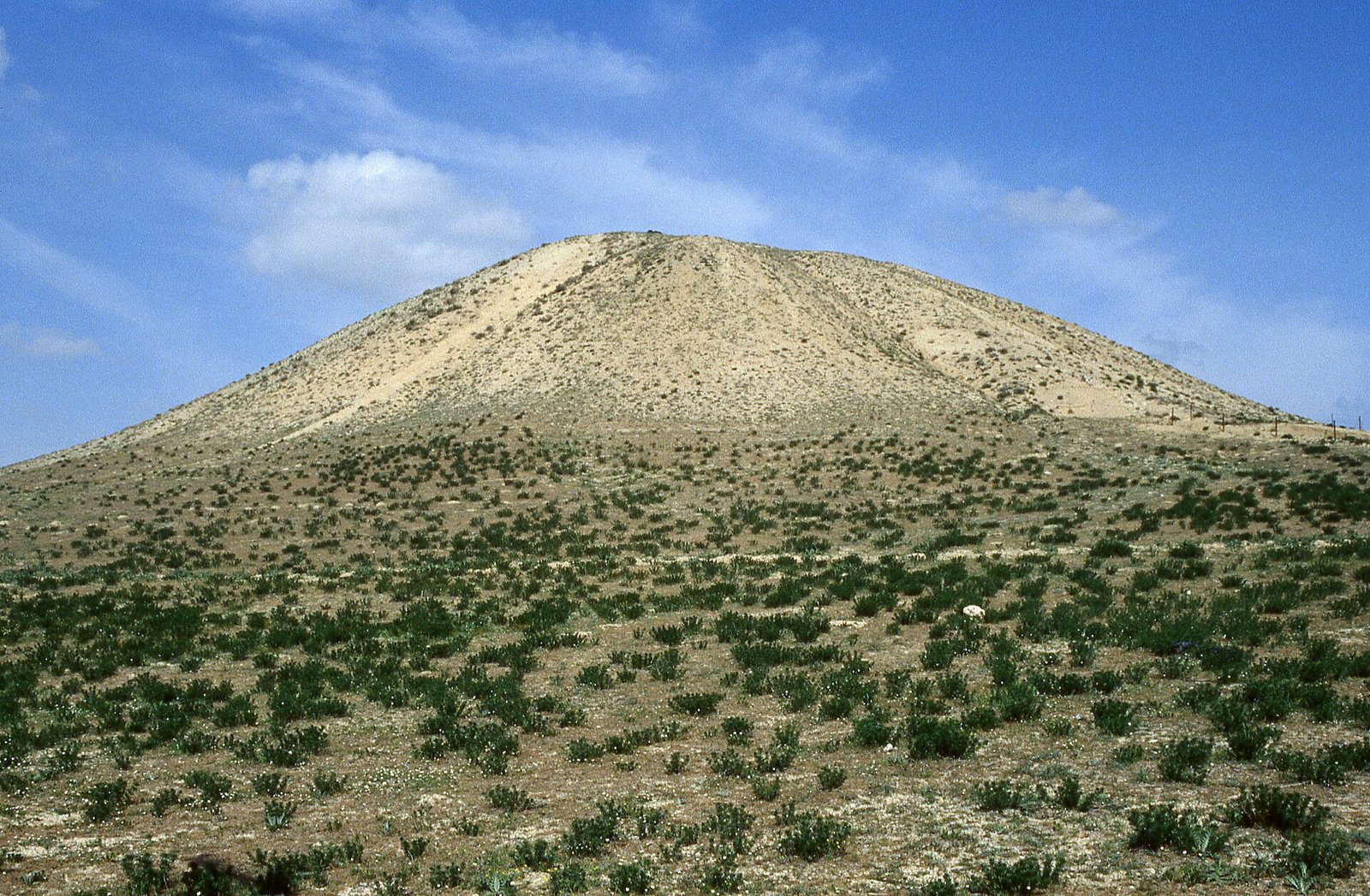
The person buried in King Midas’s Tomb at Gordion may be Gordios, Midas’s father, but the identification remains unconfirmed. Known as Tumulus MM, the wooden chamber dates to around 740 BCE, while Midas still appears in Assyrian records in 709 BCE. That chronology is the main reason scholars question whether the tomb belongs to Midas himself.
You can follow the burial’s story through its timber walls, cedar coffin and bronze drinking vessels. Each offers a different kind of evidence: the wood establishes a date, the objects reveal the burial’s furnishings, and food residues help reconstruct a funeral feast. The separate tomb announced at Gordion in 2025 adds another chapter, but it is not Tumulus MM.
Where is King Midas’s Tomb at Gordion?
The mound stands around Yassıhöyük, in Ankara’s Polatlı district, where the Phrygian capital of Gordion was located. Its archaeological name, Tumulus MM, preserves the familiar association with Midas. The letters MM abbreviate the English name “Midas Mound.”
The scale helps explain why this burial commands attention. Measurements published by Penn Museum researchers in 2015 put the mound at approximately 300 metres across its base and 53 metres high. Beneath that earthen monument lies the wooden chamber associated with the king’s name.
Gordion’s burial landscape extends beyond this mound. More than 100 tumuli around the site date between the ninth and sixth centuries BCE. The earliest known example, Tumulus W, dates to around 850 BCE. Tumulus MM therefore belongs within a longer local history of mound burial.
Who is buried in King Midas’s Tomb?
The leading theory points to Gordios, the father of Midas. Yet no evidence recovered from the tomb definitively identifies the dead king. “King Midas’s Tomb” is the established name you will encounter, while Gordios remains a proposed identification.
The crucial evidence is chronological. Dendrochronological examination of the juniper logs surrounding the chamber places its construction at approximately 740 BCE. Midas appears in Assyrian records as late as 709 BCE. A burial built at the earlier date is difficult to reconcile with a king still appearing in records at the later one.
Rodney S. Young’s University of Pennsylvania team excavated Tumulus MM in 1957. The skeleton found inside was reported to belong to a person who died aged 60–65. This gives the occupant an estimated age at death, but it does not establish his name.
The distinction matters when you read about Gordios. The dating supports doubt about Midas, and the current theory favours his father. Neither point turns the proposed identity into a confirmed one. The chamber’s date is firmer than the name attached to its occupant.
Is Tumulus MM the oldest wooden building in the world?
Penn Museum’s 2016 presentation described the chamber as the world’s oldest known intact wooden structure. The wording matters: the claim concerns a wooden structure that has retained its integrity. It refers specifically to the chamber within Tumulus MM.
The builders used several layers of timber protection. Pine walls formed the chamber, with a second surrounding band of juniper logs. Above the double-pitched roof, they placed an additional protective roof. The surviving construction therefore includes more than the visible idea of a simple wooden room.
The deceased lay in an open coffin hollowed from a large cedar log. Pine, juniper and cedar each appear in the burial’s construction or equipment. The coffin connects the chamber’s architecture directly to the treatment of the body placed inside it.
Wooden furnishings also survived. The inventory includes 15 pieces of wooden furniture, alongside metal objects. The inlaid table and serving stands were reassembled for display at Ankara’s Museum of Anatolian Civilizations, allowing the burial’s furniture to be studied beyond the chamber itself.
What was found inside Tumulus MM?
Despite the legend of Midas’s golden touch, no gold was found in Tumulus MM. Its inventory instead lists 170 bronze vessels, 10 bronze-and-leather belts and more than 180 bronze fibulae. The burial’s material richness rests on those objects and its preserved woodwork.
The drinking equipment was extensive. Excavators found 100 omphalos drinking bowls and another 15 larger bowls with ring handles. These are specific groups within the burial assemblage, giving the funeral’s drinking service a more tangible shape than the general phrase “grave goods.”
Vessel sizes varied considerably. Some large cauldrons reportedly held approximately 125 litres, while smaller serving cauldrons held around 5 litres. Those capacities help you picture the difference between the largest containers and the smaller vessels used within the service.
What was served at King Midas’s funeral feast?
Chemical analysis of residues in the vessels identified components of grape wine, barley beer and mead. The evidence supports a funeral drink incorporating all three. Its ingredients come from traces left in the containers, rather than from the golden-touch legend associated with Midas.
Patrick McGovern and colleagues also reconstructed food served at the funeral from residue analysis. Their reconstruction includes a spiced lentil stew made with sheep or goat meat. The choice between sheep and goat remains open within that reconstruction.
Think of the serving dishes on your own table: their sizes help you imagine how a meal is arranged. At Tumulus MM, the approximately 125-litre cauldrons and 5-litre serving vessels provide that everyday connection. The residue evidence then supplies something the vessels alone cannot: information about their contents.
The name “King Midas’s funeral feast” needs the same care as the tomb’s name. The food and drink evidence belongs to Tumulus MM. Because the occupant remains unidentified, the reconstructed meal cannot securely be assigned to Midas’s own funeral.
What was the Gordion tomb discovery announced in 2025?
The discovery announced in 2025 concerned T26, a separate mound from Tumulus MM. It was the 47th tumulus excavated at Gordion. Its wooden burial chamber measured 3.1 by 2.8 metres, and investigators recovered 88 metal objects.
Among those finds were bronze vessels suspended from the north and south walls with iron nails. Penn’s September 2025 account dated the burial to around 740 BCE. It also reported that the chamber’s roof had collapsed, but that there was no evidence of looting.
A possible connection to Gordios or Midas’s royal family has been proposed from the finds. Brian Rose also allowed for someone from the family’s wider circle. These are interpretations of the burial, rather than a confirmed identification of its occupant.
T26’s approximate date overlaps with that of Tumulus MM. That makes the distinction between the two especially useful when reading headlines: the 2025 announcement describes another wooden tomb at Gordion, not the first excavation of the chamber discovered in 1957.
Details you won’t find in guidebooks
Inside Tumulus MM, the temperature remains relatively stable at approximately 16°C. This small environmental detail belongs alongside the chamber’s pine walls, surrounding juniper logs and protective roof when considering the surviving wooden structure.
Young called one inlaid furnishing the “Pagoda Table.” It was assembled from 46 separate pieces and stood on three lion-paw feet. Those construction details give a closer view of the woodworking represented among the tomb’s 15 furniture pieces.
The plainer tables offer a different detail. Their curved legs were not steam-bent. They came from branches that had grown curved naturally or had been shaped while growing. The curves therefore began in the wood’s growth, before the branches became furniture legs.
T26 preserved textiles adhering to the outside surfaces of bronze vessels. It also contained evidence of cremation. That cremation places the practice at Gordion more than 100 years earlier than the examples previously known there.
Timeline
- Around 850 BCE: Tumulus W, Gordion’s earliest known tumulus, was built.
- Around 740 BCE: Tumulus MM’s wooden chamber was constructed. Penn researchers also place the T26 burial at approximately this date.
- 709 BCE: Midas still appears in Assyrian records, creating a chronological objection to identifying him as Tumulus MM’s occupant.
- 1957: Rodney S. Young’s team excavated Tumulus MM.
- 1963: Gordion Museum was established beside Yassıhöyük village.
- 2023: Gordion entered the UNESCO World Heritage List under cultural criterion iii.
- 2025: The separate T26 chamber and its 88 metal objects were publicly announced.
FAQ
Who is buried in King Midas’s Tomb at Gordion?
The leading theory identifies the occupant as Gordios, Midas’s father, but the identity remains unconfirmed. The chamber dates to around 740 BCE, while Midas still appears in Assyrian records in 709 BCE.
Is Tumulus MM the oldest wooden building in the world?
Penn Museum described it in 2016 as the world’s oldest known intact wooden structure. That description refers to the preserved burial chamber.
What was served at the funeral feast?
Residue analysis supports a drink containing grape wine, barley beer and mead. A reconstruction by Patrick McGovern and colleagues includes a spiced lentil stew with sheep or goat meat.
Was the Gordion tomb announced in 2025 King Midas’s Tomb?
No. The 2025 announcement concerned T26, a separate tomb with a wooden chamber and 88 metal objects. Its possible connection to Midas’s royal family remains an interpretation.
Sources
- Penn Museum, Expedition — Tumulus MM penn.museum
- UNESCO — Gordion Nomination Dossier whc.unesco.org
- The Pennsylvania Gazette — New Treasures From King Midas’ Tomb thepenngazette.com
- University of Pennsylvania Almanac — The Golden Age of King Midas almanac.upenn.edu
- Wikipedia — Gordion Furniture and Wooden Artifacts en.wikipedia.org
- Wikipedia — Gordion en.wikipedia.org
- Vikipedi — Gordion tr.wikipedia.org
- Ministry of Culture and Tourism — Gordion Museum muze.gov.tr
- UNESCO World Heritage Centre — Gordion whc.unesco.org
- Ministry of Culture and Tourism — Gordion’da Büyük Keşif basin.ktb.gov.tr
- Penn Today — The Discovery of a 2,800-Year-Old Royal Tomb Linked to the Midas Dynasty penntoday.upenn.edu
Image: Gordion Midas mound (1993).jpg — Mark Landon, CC BY 4.0