The Treaty of Karlowitz was signed on 26 January 1699, during the reign of Ottoman Sultan Mustafa II. It brought peace between the Ottoman Empire and the Austrian Habsburgs, Venice, and Poland-Lithuania. Its territorial terms shifted the balance of power in Central Europe toward the Habsburgs.
If you are exploring Ottoman history before traveling to Turkey, Karlowitz gives you a clear point of reference. The empire accepted extensive losses in Europe, including the end of its rule over most Ottoman Hungary and Transylvania. Yet it retained Belgrade, the Banat of Temeşvar, and overlordship over Wallachia and Moldavia.
What was the Treaty of Karlowitz in 1699?
Karlowitz was a peace settlement after approximately sixteen years of warfare on several fronts. That conflict began with the unsuccessful Ottoman siege of Vienna in 1683. By 1699, military defeat and the strain of sustaining armies had made peace an urgent Ottoman concern.
The settlement takes its name from the town where the negotiations occurred. Karlowitz is now Sremski Karlovci, in Serbia’s Vojvodina region. The place name therefore connects an Ottoman diplomatic turning point with a town outside modern Turkey.
The agreements also need to be distinguished from one another. The Ottoman-Habsburg peace had a stated duration of twenty-five years. Russia reached only a two-year truce at Karlowitz, leaving its definitive peace with the Ottoman Empire to a later agreement.
Why did the Ottoman Empire accept peace?
The Ottoman defeat at Zenta on 11 September 1697 was a major military development behind Mustafa II’s acceptance of negotiations. It came late in the long conflict that had followed the failed siege of Vienna. The loss helped move the sultan toward a negotiated settlement.
Grand Vizier Amcazâde Hüseyin Pasha persuaded Mustafa II to accept peace talks. His argument concerned the practical burden of war. He pointed to extraordinary taxes, deserted villages, and difficulties obtaining soldiers and ammunition.
These pressures connect Karlowitz to everyday life. Extraordinary taxation and empty villages were part of the case for ending the war. If you usually picture treaties through rulers and armies, Hüseyin Pasha’s reasoning brings households and the demands of military supply into the same picture.
Austria also had a reason to seek peace. The expected struggle with France over the succession to the Spanish throne influenced its decision. The settlement thus reflected pressures on both sides, even though the territorial outcome favored the Habsburgs.
Who negotiated the peace treaty of Karlowitz?
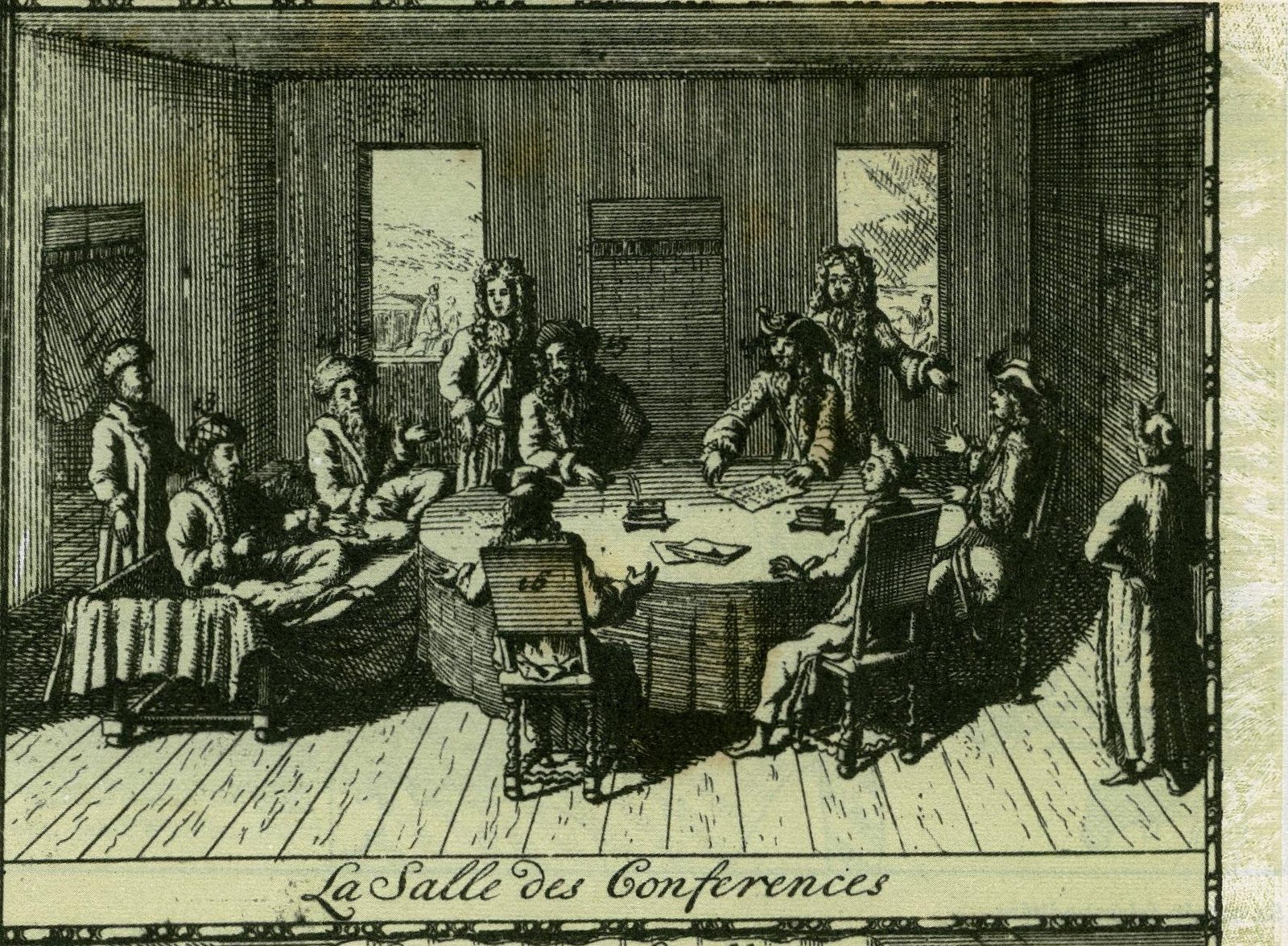
The Ottoman representatives were Râmi Mehmed Efendi, the reisülküttap, and Aleksandros Mavrokordatos, chief interpreter of the Imperial Council. Their participation placed Ottoman diplomatic officials at the center of the negotiations conducted under Mustafa II.
The English ambassador William Paget and the Dutch ambassador Jacobus Colyer served as mediators. The introduction to the Ottoman-Habsburg treaty identified the mediators and authorized representatives before setting out the agreement’s twenty articles.
The negotiations used the principle of uti possidetis. In this setting, it meant an approach based on the parties retaining territories they had captured. Military possession therefore provided a foundation for discussing the territorial settlement.
What did the Treaty of Karlowitz do?
The largest change concerned Ottoman Hungary and Transylvania. Ottoman rule there ended in favor of the Habsburgs, with Banat and Temeşvar excepted from the Hungarian losses. This established Habsburg predominance across much of the territory covered by that part of the settlement.
Poland-Lithuania recovered Podolia and Kamaniçe Fortress. In return for recovering Podolia, it returned the fortresses it had occupied in Moldavia. The Polish-Lithuanian terms therefore involved both a recovery of territory and the return of occupied positions.
Venice retained the Morea Peninsula and substantial territorial gains in Dalmatia. These terms formed another part of the wider peace, alongside the settlements concerning Hungary, Transylvania, and Podolia.
The Ottoman Empire nevertheless retained important European possessions and relationships. Belgrade and the Banat of Temeşvar remained under Ottoman control. Ottoman overlordship over Wallachia and Moldavia also continued. These retained areas matter when assessing the extent of the losses.
Karlowitz marked a turning point because the Ottoman Empire accepted large territorial losses in Europe. The gains in Hungary and Transylvania changed the Central European balance in the Habsburgs’ favor. That is the central meaning of the peace for Ottoman power in the region.
Treaty of Karlowitz map: how to read the changes
When you study a Treaty of Karlowitz map, begin with Hungary and Transylvania. Look for the shift toward Habsburg control, then check that Banat and Temeşvar remain outside that transfer. Those exceptions are essential to understanding the boundary created by the settlement.
Next, locate Podolia and Kamaniçe, which returned to Poland-Lithuania. Then identify the Morea and the Venetian gains in Dalmatia. Reading these areas separately helps you follow the different territorial agreements within the Karlowitz peace.
Finally, check Belgrade, Wallachia, and Moldavia. The Ottomans retained Belgrade and their overlordship over the two principalities. A map that makes these distinctions visible gives a fuller account of the settlement than the territorial losses alone.
The new Ottoman-Habsburg frontier also required work on the ground. Luigi Ferdinando Marsili advised on the determination of approximately 850 kilometres of border. Surveying and mapping continued between 1699 and 1701.
Timeline
- 1683: The unsuccessful Ottoman siege of Vienna began the period of warfare on several fronts that led to Karlowitz.
- 11 September 1697: The Ottoman army suffered defeat at Zenta.
- 24 January 1699: The Ottoman Empire and Russia agreed to a two-year truce.
- 26 January 1699: The Karlowitz peace treaties were signed.
- 1699–1701: Work proceeded on surveying and mapping the Ottoman-Habsburg border.
- 14 July 1700: The Treaty of Istanbul established Ottoman-Russian peace and finalized the cession of Azov to Russia.
Details you won’t find in guidebooks
The Ottoman-Habsburg treaty addressed fishing and watering animals. It granted subjects of both empires shared use of the Moroş and Tisa rivers for these purposes. The agreement reached into activities carried out along the frontier.
The second article prohibited diverting water from the Moroş and Tisa rivers for mills, in order to protect navigation. River use had to accommodate the passage of vessels as well as other needs. The treaty’s practical provisions extended beyond the allocation of territory.
Marsili’s Austrian boundary commission surveyed and mapped land on both sides of the accepted frontier between 1699 and 1701. Its work covered a strip extending two hours’ walking distance on either side. The boundary process therefore included the surrounding landscape as well as the border itself.
The negotiations were substantial in their own right. The TDV İslâm Ansiklopedisi records thirty-six sessions over seventy-two days. The signature date marks the conclusion of that sustained process of discussion.
Treaty of Karlowitz text and PDF searches
For the treaty text, you can read the Ottoman-Habsburg agreement at Documents de droit international. Its introduction names the mediators and authorized representatives. Twenty articles follow, including the river provisions in Article 2.
If your search begins with “Treaty of Karlowitz PDF,” use the twenty-article Ottoman-Habsburg text as a reference point. The twenty-five-year term belongs to that peace. The Russian agreement at Karlowitz was a separate two-year truce, followed by the Treaty of Istanbul in 1700.
FAQ
When was the Treaty of Karlowitz signed?
The Karlowitz peace treaties were signed on 26 January 1699, during the reign of Ottoman Sultan Mustafa II.
Who signed the Treaty of Karlowitz?
The peace settlement involved the Ottoman Empire, the Austrian Habsburgs, Venice, and Poland-Lithuania. Russia reached a separate two-year truce with the Ottomans on 24 January 1699.
What did the Treaty of Karlowitz do?
It confirmed extensive Ottoman territorial losses in Europe. Ottoman rule over Hungary, except Banat and Temeşvar, and over Transylvania ended in favor of the Habsburgs. Poland-Lithuania recovered Podolia and Kamaniçe, while Venice retained the Morea and substantial gains in Dalmatia.
Where is Karlowitz today?
Karlowitz is now called Sremski Karlovci. The town lies in the Vojvodina region of Serbia.
Did the Treaty of Karlowitz give Azov to Russia?
The Ottoman-Russian agreement at Karlowitz was a two-year truce. The cession of Azov to Russia was finalized by the Treaty of Istanbul on 14 July 1700.
Sources
- Vikipedi — Karlofça Antlaşması tr.wikipedia.org
- Wikipedia — Treaty of Karlowitz en.wikipedia.org
- TDV İslâm Ansiklopedisi — Karlofça islamansiklopedisi.org.tr
- Documents de droit international — Traité de Carlowitz, 26 janvier 1699 documentsdedroitinternational.fr
- Edward Worth Library — Marking the border danube.edwardworthlibrary.ie
Image: Negotiation of the peace of Karlowitz.jpg — unknown person from Low Countries, Public domain