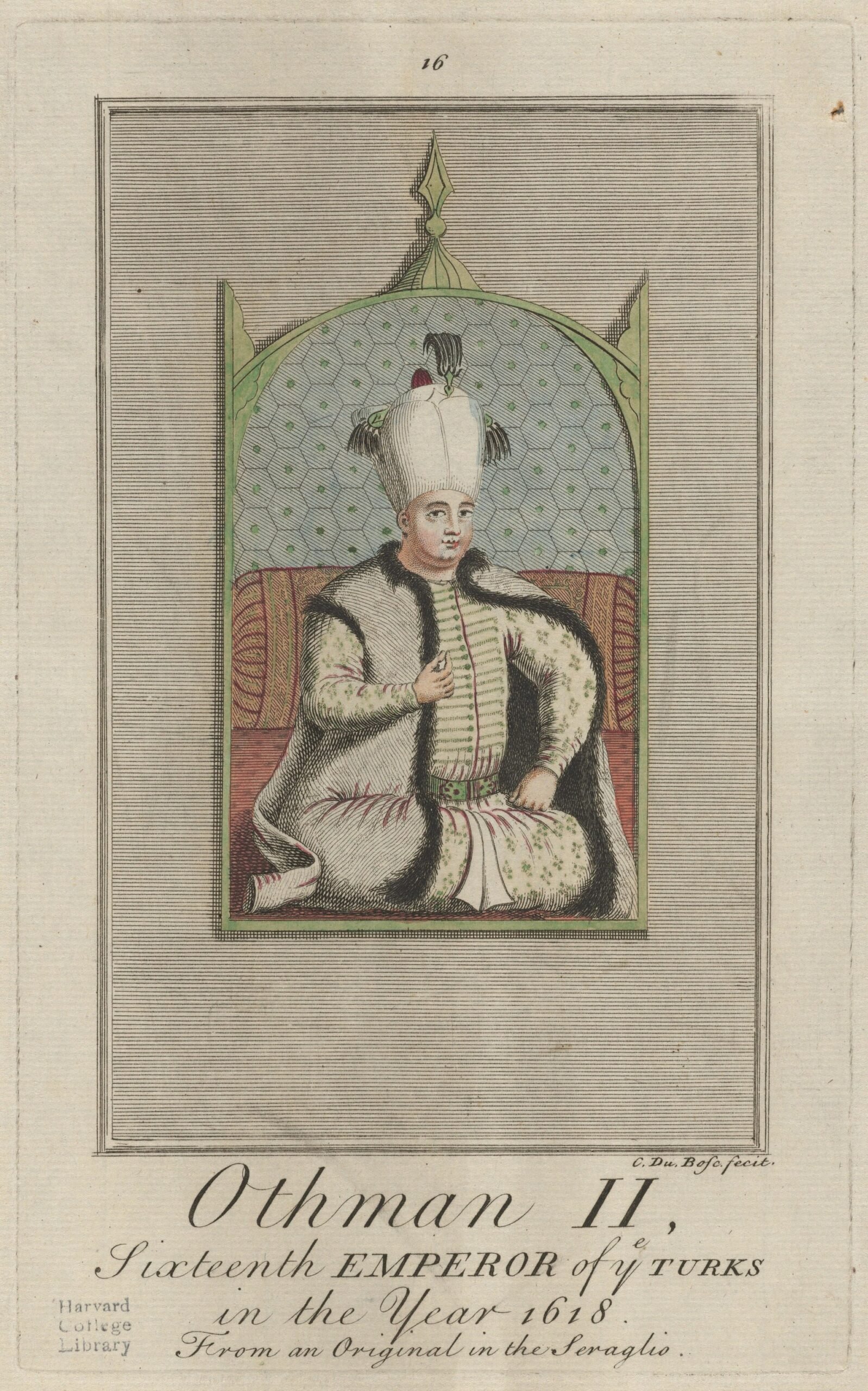
Osman II, the Sultan Known as “Young Osman”
Osman II was the 16th sultan of the Ottoman Empire. In Turkish he is called Genç Osman, “Young Osman”. The nickname fits. He died at 17.
Turkish Wikipedia dates his reign from 26 February 1618 to 20 May 1622. That is four years, two months and twenty-four days. He did not leave the throne by choice. He lost it in a revolt, and he lost his life a short time later.
His story matters because of how it ended. He is remembered as the first Ottoman sultan killed by the janissaries. If you walk through Istanbul today, you pass places tied to his life: the old palace quarter, Eyüp, Sultanahmet and Yedikule. This article follows those places in order.
Osman II’s Birthday, Parents and Mother
Osman II was born on 3 November 1604 in Istanbul. English Wikipedia gives his birthplace as Topkapı Palace.
His father was Sultan Ahmed I. His mother was Mahfiruz Sultan. Those are the two names to remember if you are tracing his family tree.
The historian Mustafa Sâfî wrote that his birth was celebrated in Istanbul for seven days and seven nights. A week of festivities for a newborn tells you how much the birth mattered to the capital.
Osman II’s Reign, 1618-1622
Osman became sultan on 26 February 1618, after Mustafa I. Mustafa was his uncle. The next day, the sword-girding ceremony took place at Eyüp. In Ottoman practice, this ceremony marked a sultan’s formal start of rule.
In October 1619 he had the coinage reorganized and new akçe struck. Think of the coins in your own pocket. Whoever issues them puts their authority on them. A new coin told every merchant and soldier who paid and received money in Istanbul that a new ruler was in charge.
He also visited his father’s wife, Kösem Sultan, at the Old Palace (Eski Saray) during his reign. We return to her below.
The Death of Prince Mehmed
On 12 January 1621, before the Polish campaign, Osman had his brother Şehzade Mehmed put to death. His other brothers included Murad IV and Ibrahim, both of whom later became sultans.
The Campaign Against Poland
In 1621 Osman joined the campaign against Poland, which the sources call Lehistan. The campaign included the siege of Hotin. Osman took part in it in person. A sultan who rode out with his army was visible to his soldiers, and soldiers who see their ruler also judge him.
Osman II and Kösem Sultan
People often search for “Osman II and Kösem”. The facts we have are short.
Kösem Sultan was the wife of Osman’s father, Ahmed I. During his reign Osman visited her at the Old Palace.
Kösem is not named as his mother. His mother was Mahfiruz Sultan. If you read a source that blurs the two women, check it against the family facts above.
Osman II’s Wife and Children
In 1622 Osman married Âkıle Hatun. She was the daughter of Şeyhülislâm Hocazâde Esad Efendi. The şeyhülislâm was the empire’s top religious scholar. The marriage tied the young sultan to the religious establishment in the last year of his life.
English Wikipedia lists his children as:
- Şehzade Ömer
- Şehzade Mustafa
- Zeynep Sultan
Timeline
- 3 November 1604: Born in Istanbul.
- 26 February 1618: Takes the throne after Mustafa I.
- October 1619: Has new akçe struck.
- 12 January 1621: Has his brother Şehzade Mehmed put to death.
- 1621: Takes part in the Poland and Hotin campaign.
- 1622: Marries Âkıle Hatun, daughter of Şeyhülislâm Esad Efendi.
- May 1622: Loses the throne in a revolt. Mustafa I becomes sultan again.
- 20 May 1622: Strangled at Yedikule.
Osman II’s Death: Cause and Place
Osman II was strangled at Yedikule in Istanbul on 20 May 1622. He was 17. That answers the cause-of-death question: he was killed by strangulation, not by illness or accident.
TDV İslâm Ansiklopedisi records the role of Kara Dâvud Paşa in the killing. The same entry says what set off the revolt. Preparations for a pilgrimage to Mecca raised suspicion. That suspicion joined existing tension with the soldiers and with the ulema, the religious scholars. Together these produced the May 1622 uprising.
His body was buried in the tomb of his father, Ahmed I, in Sultanahmet. If you visit the Sultanahmet area, you are in the district where he was laid to rest.
Osman II’s Successor
The throne passed to Mustafa I. He was Osman’s uncle, and he had already been sultan before Osman. That makes this a return to the throne, not a first reign. Mustafa I took the throne again in May 1622, after the revolt.
Why Historians Still Argue About Osman II
The janissary revolt looks simple. The explanation is not.
One historical interpretation says Osman planned to replace the janissaries with a new army. In that account, he would have gathered troops from Anatolia and Syria. The conflict over that plan, the argument goes, grew until it ended in his death.
Feridun Emecen disagrees. He treats the claims that Osman wanted to abolish the janissaries and move the capital as propaganda against Osman II. So the plan itself is contested.
There is a second layer. Baki Tezcan’s 2009 study looks at Tûgî, a former janissary who wrote an account of the killing. Tezcan shows that within a year Tûgî changed his account. At first it described shared responsibility among the soldiers. Later it became a defense of their innocence. You can see the problem for any historian. Even the people who wrote about the murder had reasons to change the story.
Details You Won’t Find in Guidebooks
- A week-long celebration. Mustafa Sâfî says Osman’s birth was celebrated in Istanbul for seven days and seven nights.
- Eyüp the next day. His sword-girding ceremony took place at Eyüp the day after he became sultan.
- The October 1619 coins. He had the coinage reorganized and new akçe struck.
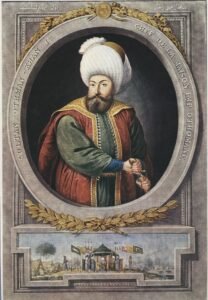
- A portrait in Scotland. The National Galleries of Scotland hold a paper engraving of Osman II by Claude du Bosc. It measures 19.50 × 12.40 centimetres.
- A source that changed its story. Baki Tezcan showed that Tûgî’s account of the murder moved from shared guilt to a claim of innocence in a single year.
FAQ
How did Osman II die?
He was strangled at Yedikule in Istanbul on 20 May 1622. He was 17 years old. He is remembered as the first Ottoman sultan killed by the janissaries.
Who succeeded Osman II?
His uncle Mustafa I took the throne again. Mustafa had already been sultan before Osman.
When was Osman II born, and who were his parents?
He was born on 3 November 1604 in Istanbul. His father was Ahmed I and his mother was Mahfiruz Sultan.
Who was Osman II’s wife, and did he have children?
In 1622 he married Âkıle Hatun, daughter of Şeyhülislâm Hocazâde Esad Efendi. English Wikipedia lists his children as Şehzade Ömer, Şehzade Mustafa and Zeynep Sultan.
Did Osman II really plan to abolish the janissaries?
Historians disagree. One interpretation says his plan for an army raised in Anatolia and Syria deepened the conflict. Feridun Emecen calls the claims about abolishing the janissaries and moving the capital propaganda against Osman II.
Sources
- Türkçe Vikipedi, “II. Osman” tr.wikipedia.org
- English Wikipedia, “Osman II” en.wikipedia.org
- TDV İslâm Ansiklopedisi, “Osman II”, Feridun Emecen islamansiklopedisi.org.tr
- Baki Tezcan, “The history of a ‘primary source’”, Bulletin of SOAS cambridge.org
Image: Houghton EC7 T4922 734c (B) – Othman II.jpg — Claude du Bosc, Public domain