The Battle of Varna in 1444: what happened?
On 10 November 1444, Murad II led the Ottoman army to a decisive victory near Varna. His opponents were the Crusader forces associated with King Władysław III and their commander, János Hunyadi. Władysław died during the battle. The defeat broke the Crusader army and strengthened the Ottoman position in the Balkans.
The Ottoman ruler on the throne was actually Mehmed II. Murad had handed power to his son. He returned to command the army when the new Crusade began. If you associate Varna with Murad alone, this distinction matters: the commander who won the battle and the ruler occupying the throne were different people.
Varna also brought together a multinational Crusader army. Hungarian, Polish, Czech, and Wallachian forces fought alongside Croatian, Bosnian, and Bulgarian units. Their defeat therefore involved a coalition whose political leadership, military command, and participating contingents extended beyond a single kingdom.
Why did the Crusaders fight after agreeing to peace?
The Edirne–Szeged agreement of summer 1444 envisaged ten years of peace between the Ottomans and Hungarians. Yet another Crusade followed. Pope Eugenius IV and Venice supported the organization of the campaign under Władysław and Hunyadi.
Cardinal Julian Cesarini encouraged Władysław to break the peace. He argued that an agreement made with non-Christians was not binding. The treaty and the renewed campaign belong to the same year’s events. The promised decade of peace did not prevent the armies from meeting at Varna in November.
The Crusader plan also depended on restricting Ottoman movement between Anatolia and Europe. Allied naval efforts sought to close the Dardanelles and Bosporus. They failed to prevent Murad from crossing into Europe with his Anatolian forces. The Ottoman army could therefore confront the Crusaders despite the attempted blockade.
Who commanded the armies at Varna?
Władysław III was king of Poland and also ruled Hungary under the name Ulászló I. These different royal names refer to the same man. Hunyadi, the voivode of Transylvania, held the Crusader army’s chief military command. Understanding their separate roles helps you follow accounts that move between the king and the commander.
Murad commanded the Ottoman army after relinquishing the throne to Mehmed. Victory increased his weight in Ottoman internal politics. His return to military leadership thus had consequences beyond the battlefield, even while the throne remained formally associated with his son.
Where was the Battle of Varna? Reading the map
The battle took place near Varna, on the Black Sea coast of present-day Bulgaria. For readers exploring Ottoman history through travel in Turkey, the location is an important distinction. The battlefield lies in Bulgaria, although its outcome strengthened Ottoman power in the Balkans.
The Crusaders occupied a constrained position. The Black Sea, Varna Lake, the Franga Plateau, and the Ottoman army enclosed them. The deployment description presented by English Wikipedia places their line in an arc approximately 3.5 kilometres long between the lake and the plateau.
You can approach this map as you would an everyday journey: first identify the barriers around the route. At Varna, the sea, lake, and plateau defined the setting of the Crusader position. These features make the army’s confinement easier to understand than a map showing only opposing formations.
Battle of Varna numbers: how large were the armies?
Army totals remain disputed. The Vladislav Varnenchik Park-Museum gives approximately 20,000 Crusaders and 60,000 Ottoman soldiers. Feridun Emecen, writing in the TDV İslâm Ansiklopedisi, estimates that Murad assembled about 40,000 men for the campaign.
The difference between the Ottoman estimates is substantial. A comparison using 20,000 Crusaders and 60,000 Ottomans presents a different numerical balance from one using Emecen’s Ottoman estimate. When you encounter a battle diagram or summary, check which total it uses. The figures should retain their attribution rather than become an apparently settled count.
How did Murad II win the Battle of Varna?
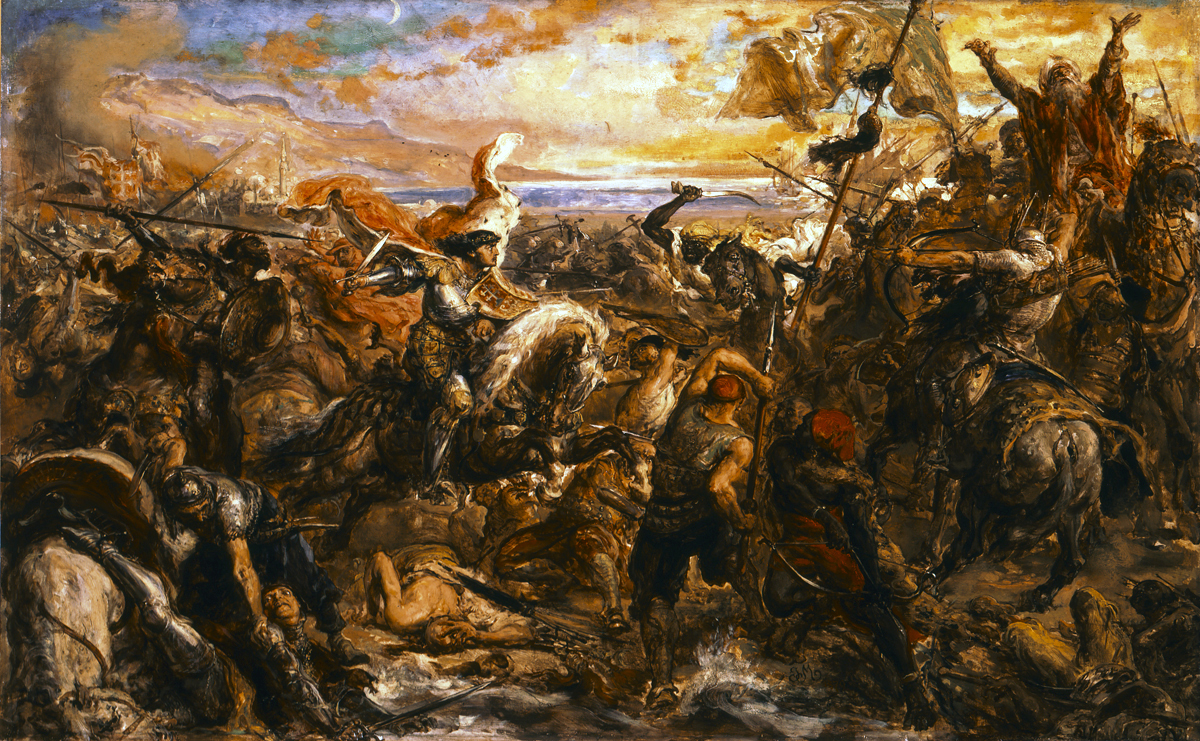
A decisive episode came when Władysław attacked the Ottoman centre with approximately 500 cavalrymen. The king was killed, and his loss accelerated the disintegration of the Crusader army. His attack and death connect the battle’s military turning point with the collapse of its royal leadership.
The circumstances of his death differ between accounts. Chronicles describe him being killed in the fighting. A victory proclamation issued in Murad’s name instead claims that he was captured wounded and then executed. Both accounts place his death within the Ottoman victory, but they describe different final moments.
Another disputed explanation concerns a supposed planned retreat by the entire Ottoman army. Emecen states that the sources do not establish such a collective feigned withdrawal. He argues that the Janissary manoeuvre in the centre requires separate interpretation. A sweeping account of the whole army retreating by design therefore goes beyond his assessment.
Battle of Varna casualties: what do the estimates mean?
Emecen gives approximately 7,000–8,000 Hungarians left on the battlefield and places Ottoman losses near that level. The wording matters. A figure referring to Hungarians should not silently become an exact total for every contingent in the multinational Crusader army.
Ottoman death estimates also vary. Turkish Wikipedia presents figures of 7,000–8,000 and 10,000–15,000 dead. These competing estimates do not support one precise casualty total. The Ottoman victory was decisive, but the reported losses show that victory and low casualties are separate questions.
What changed after Murad II’s victory?
Varna consolidated the Ottoman position in the Balkans. It also increased Murad’s influence in internal politics. Those consequences give the battle significance beyond Władysław’s death or the defeat of the Crusader coalition.
The distinction between military command and sovereign authority continued after the fighting. Victory proclamations sent to Shahrukh, Karamanoğlu İbrahim Bey, and the Mamluk Sultan Çakmak carried Mehmed II’s tuğra. Murad had commanded the victorious army, while these announcements bore his son’s mark of authority.
Timeline
- Summer 1444: The Edirne–Szeged agreement envisaged ten years of peace between the Ottomans and Hungarians.
- Before the battle: Pope Eugenius IV and Venice supported the organization of a new Crusade under Władysław and Hunyadi. Murad commanded the Ottoman army after relinquishing the throne to Mehmed II.
- 10 November 1444: The Battle of Varna ended in Ottoman victory. Władysław III died.
- 1935: A symbolic mausoleum for Władysław was built over an ancient Thracian tomb on the battlefield.
- 1964: The Vladislav Varnenchik Museum opened for the battle’s 520th anniversary. The Hunyadi monument was erected that year.
Battle of Varna museum: where can you visit the battlefield?
The Vladislav Varnenchik Park-Museum stands west of Varna on the historic battlefield. It occupies a park of approximately 30 decares. The museum opened in 1964 to mark the battle’s 520th anniversary, connecting the place of combat with a permanent museum devoted to its memory.
Its displays include fifteenth-century helmets, crossbows, swords, shields, and spears found on the battlefield. If you visit, these objects provide a concrete counterpart to the army estimates and accounts of the fighting. The collection brings attention back to the equipment carried into the battle.
Details of the battlefield and its memorials
The memorial park contains two Thracian burial mounds. One includes a tomb dating to the fourth century BC. The commemorated battlefield therefore shares its physical setting with remains from a much earlier period.
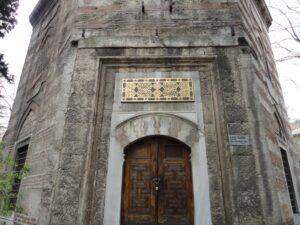
Władysław’s symbolic mausoleum was built in 1935 over the ancient Thracian tomb. The king was twenty when he died at Varna. The structure commemorates him symbolically; that description is an important part of understanding the monument.
Hunyadi has a separate monument in the park. It was erected in 1964, the same year the museum opened. The site’s memorials thus recognize both the king who died and the commander who led the Crusader forces.
FAQ
When was the Battle of Varna?
The Battle of Varna took place on 10 November 1444. It ended in a decisive Ottoman victory under Murad II.
Where was the Battle of Varna fought?
It was fought near Varna, on the Black Sea coast of present-day Bulgaria. The Crusader position lay between Varna Lake, the Franga Plateau, the sea, and the Ottoman army.
How many soldiers fought at Varna?
Estimates differ. The Vladislav Varnenchik Park-Museum gives approximately 20,000 Crusaders and 60,000 Ottoman soldiers. Historian Feridun Emecen estimates Murad II’s army at about 40,000.
Who was on the Ottoman throne during the battle?
Mehmed II occupied the Ottoman throne. His father, Murad II, had abdicated but returned to command the army against the Crusaders.
Sources
- Turkish Wikipedia — Varna Muharebesi tr.wikipedia.org
- English Wikipedia — Battle of Varna en.wikipedia.org
- TDV İslâm Ansiklopedisi — Feridun Emecen, Varna Muharebesi islamansiklopedisi.org.tr
- Vladislav Varnenchik Park-Museum — History varnenchikmuseum.com
- Varna Municipality Tourism — The Park-Museum Vladislav Varnenchik visit.varna.bg
Image: Battle of Varna 1444.PNG — Jan Matejko, Public domain