Virgil was a Roman poet, traditionally dated to 70–19 BCE, who wrote the Eclogues, Georgics and Aeneid. The Aeneid connected Rome’s origins with Aeneas’s escape from Troy and linked Rome’s future to Augustus, while also showing the costs of war, loss and anger.
How does a Trojan survivor become the bearer of Rome’s future? If you approach the Aeneid through an interest in Troy, follow three connections: Aeneas’s journey to Italy, his descendants’ place in Rome’s origin tradition, and the poem’s visions of Augustus. Its final killing then puts its language of duty and mercy under pressure.
Where did Virgil’s lifetime fall within Rome’s civil wars?
Publius Vergilius Maro was traditionally born on 15 October 70 BCE at Andes, near Mantua in northern Italy. He was in his twenties during the civil war between supporters of Caesar and Pompeius in 49–45 BCE. Caesar’s assassination in 44 BCE brought further conflicts within the poet’s lifetime.
The historical background to his career included Philippi in 42 BCE, land confiscations in Italy in 41 BCE, and Actium in 31 BCE. These events help explain why displacement, rural life and warfare belong together in his poetry. The countryside of the Eclogues was affected by the struggle for power.
Virgil also lived through the establishment of Augustus’s rule. Octavian received the title Augustus in 27 BCE, during the years when the Aeneid was being written. Virgil’s traditional death date is 21 September 19 BCE, at Brundisium, modern Brindisi.
In what historical circumstances were the Eclogues, Georgics, and Aeneid written?
The Eclogues, also called the Bucolica, were written around 42–38 BCE, during the civil wars of the Second Triumvirate. The collection contains ten poems in dactylic hexameter. Its pastoral model was the Greek poet Theocritus, but its rural setting also accommodated contemporary Italian upheaval.
The first and ninth Eclogues address land confiscations and their effects on people in the Italian countryside. Here you can make an everyday connection: losing access to the land on which your livelihood depends changes both work and home. Virgil’s pastoral poetry brings that material insecurity into its rural world.
The Georgics followed around 37–29 BCE. Their composition stretched from Octavian’s struggle with Antony into the period after Actium. The four books concern field crops, trees, livestock and beekeeping. This sequence gives agricultural labour a sustained place in Virgil’s writing.
Civil war also enters this agricultural poem directly. In Georgics 1.461–514, the turmoil following Caesar’s assassination appears alongside disorder in nature. Farming and political violence occupy the same passage. The practical subjects of cultivation therefore carry the experience of a society disrupted by conflict.
The Aeneid was written around 29–19 BCE, overlapping with the formation of the new Augustan order. It contains twelve books. A common structural reading connects the journeys of its first six books with the Odyssey and the wars of its final six with the Iliad. Travel leads into another struggle over settlement.
How did the story of Aeneas connect Troy with Rome?
In the Aeneid’s mythological narrative, Aeneas survives Troy and leads his people to Italy. His arrival begins the process associated with Lavinium’s foundation and Rome’s later history. The connection unfolds across generations: Aeneas’s son Ascanius founds Alba Longa, and Romulus and Remus emerge from that city.
This distinction matters when you trace the story from Troy toward Rome. Aeneas begins an ancestral sequence rather than founding Rome himself. Lavinium and Alba Longa provide the intervening links. The epic gives Rome a Trojan past through migration, settlement and descent.
The genealogy also carried a family claim. Ascanius had the alternative name Iulus. The Julian family treated Iulus as its ancestor and as the origin of its own name, connecting the family with the Trojan heroes. An origin story could thus serve both Rome’s collective identity and a particular lineage.
Virgil inherited the Troy–Rome connection. Before him, Naevius’s Bellum Punicum had already treated Anchises and Aeneas leaving Troy and reaching Latium. Virgil’s contribution lay in the form and development of his epic, rather than the invention of the ancestral link itself.
The poem also supplies a mythological explanation for later hostility. In Book 4, Dido’s wish for enmity before her suicide points toward the future conflicts between Rome and Carthage. Personal catastrophe becomes part of the poem’s account of relations between peoples.
Can the Aeneid be read simply as praise of imperial ideals?
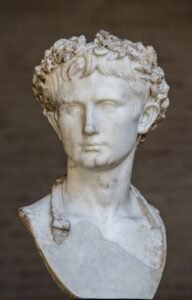
The Aeneid explicitly brings Augustus into Rome’s promised future. In Book 6, Anchises shows Aeneas future Roman heroes in the underworld. They include Romulus, Julius Caesar and Augustus. The scene places the Augustan age within a long ancestral sequence visible to the Trojan hero.
Book 8 makes the political connection through an object. At the centre of Aeneas’s shield is Actium, where Octavian defeated Antony and Cleopatra in 31 BCE. A battle from Virgil’s lifetime appears on equipment carried by a figure from Rome’s mythological past.
Duty provides another connection between the hero and Roman ideals. Aeneas’s defining virtue, pietas, includes respect for the gods, loyalty to family and country, responsibility and self-control. Translating it simply as religious devotion would narrow the obligations it places upon him.
Anchises gives those obligations a political expression in 6.851–853. He describes the Roman task as governing peoples, establishing an order of peace, sparing the defeated and subduing the proud. Rule is presented with a demand for restraint as well as power.
The ending makes that demand difficult to resolve. In Book 12, Aeneas comes close to sparing the defeated Turnus. Then he sees the belt of the slain Pallas on his opponent. Anger overtakes him, and he kills Turnus. The promised mercy toward the defeated meets a final act of vengeance.
Scholarly interpretations of this death range from justification of Aeneas and Rome’s future to criticism of Augustan rule. Many readings fall between those positions. You can therefore recognize the poem’s imperial promises while taking its anger and losses seriously. Its final scene makes simple praise an insufficient description.
How reliable are accounts of Virgil’s life and his wish to burn the Aeneid?
The biographies associated with Donatus and Servius date to the fourth century CE. Modern scholars face serious difficulties when assessing their accuracy. Their distance from Virgil’s lifetime matters when a vivid personal anecdote is treated as a secure account of his actions.
Ancient biographical tradition says Virgil wanted the Aeneid burned and that Augustus ensured its publication. Yet the accounts of his final instructions conflict markedly. The burning story belongs to that disputed tradition and should retain its status as a reported wish.
The poem itself offers more concrete evidence about its unfinished condition. Some lines remained metrically incomplete at Virgil’s death. These support the judgment that final revisions were unfinished. They do not, by themselves, establish what he wanted done with the manuscript.
Timeline
- 70 BCE: Traditional birth of Virgil near Mantua.
- 49–45 BCE: Civil war between supporters of Caesar and Pompeius.
- 44 BCE: Caesar’s assassination and renewed conflicts.
- 42 BCE: Battle of Philippi.
- Around 42–38 BCE: Composition of the Eclogues.
- 41 BCE: Land confiscations in Italy.
- Around 37–29 BCE: Composition of the Georgics.
- 31 BCE: Octavian defeats Antony and Cleopatra at Actium.
- Around 29–19 BCE: Composition of the Aeneid.
- 27 BCE: Octavian receives the title Augustus.
- 23 BCE: Death of Marcellus, mourned in Book 6.
- 19 BCE: Virgil dies with final revisions unfinished.
- Fourth century CE: Period of the Donatus and Servius biographies.
- 1450–1474: Copying period assigned to Harley MS 2761.
Details you won’t find in guidebooks
Ancient tradition describes a prolonged reading of the completed Georgics in 29 BCE. Virgil and Maecenas reportedly took turns reading it to Octavian over four days. The anecdote places the agricultural poem before the victor of Actium, though it remains a traditional account.
Aeneas does not understand the future events depicted on his shield. In 8.729–731, he delights in the images without knowing their meaning and carries his descendants’ fame on his shoulder. The reader can recognize the historical future that the hero cannot yet interpret.
Book 6 also interrupts its vision of Roman greatness with mourning. It includes a lament for Augustus’s nephew Marcellus, who died in 23 BCE. Loss thus appears within the same account of Rome’s future that includes Augustus.
Later manuscripts show Virgil’s three major works travelling together. The British Library dates the Florentine Harley MS 2761 to 1450–1474; it combines them in one parchment volume with 239 numbered leaves. Another fifteenth-century Italian manuscript, Add MS 39648, includes one-line and ten-line summaries of the Aeneid alongside the three works.
FAQ
Who was Virgil?
Virgil, or Publius Vergilius Maro, was a Roman poet traditionally dated to 70–19 BCE. His three major works are the Eclogues, Georgics and Aeneid.
Did Aeneas found Rome?
In the origin tradition, Aeneas begins the process leading to Rome through his arrival in Italy and the foundation of Lavinium. His son Ascanius founds Alba Longa, from which Romulus and Remus later emerge.
Does the Aeneid simply praise Augustus?
The poem connects Augustus with Rome’s destined future and depicts his victory at Actium. Yet its losses and Aeneas’s angry killing of Turnus complicate a straightforward reading of imperial praise.
Did Virgil want the Aeneid burned?
Ancient biography reports this wish and says Augustus secured publication. The accounts of Virgil’s final instructions conflict, so the story requires caution.
Sources
- Wikipedia — Publius Vergilius Maro tr.wikipedia.org
- Randall T. Ganiban — Vergil: Aeneid, Books 1–6, introduction eclass.upatras.gr
- William J. Dominik — Virgil (70–19 BCE), Wiley onlinelibrary.wiley.com
- Wikipedia — Virgil en.wikipedia.org
- Poetry Foundation — Virgil poetryfoundation.org
- Jaclyn Neel — Alba Longa, The Encyclopedia of Ancient History onlinelibrary.wiley.com
- Stephen J. Harrison — Ascanius, Oxford Classical Dictionary academic.oup.com
- Peter Jones — Reading Virgil: Aeneid I and II, Cambridge University Press assets.cambridge.org
- The Open University — A brief summary of the Aeneid open.edu
- The Open University — What is pietas? open.edu
- The Open University — Vengeance and mercy in the Aeneid open.edu
- Dickinson College Commentaries — Introduction dcc.dickinson.edu
- Oxford Research Archive — Apollonios and the end of the Aeneid ora.ox.ac.uk
- British Library — Harley MS 2761 searcharchives.bl.uk
- British Library — Add MS 39648 searcharchives.bl.uk
Image: Virgil city hall virgil kansas 3-15-2005.jpg — Flickr user Out.of.Focus, CC BY-SA 2.0