Where is Kızkalesi in Mersin?
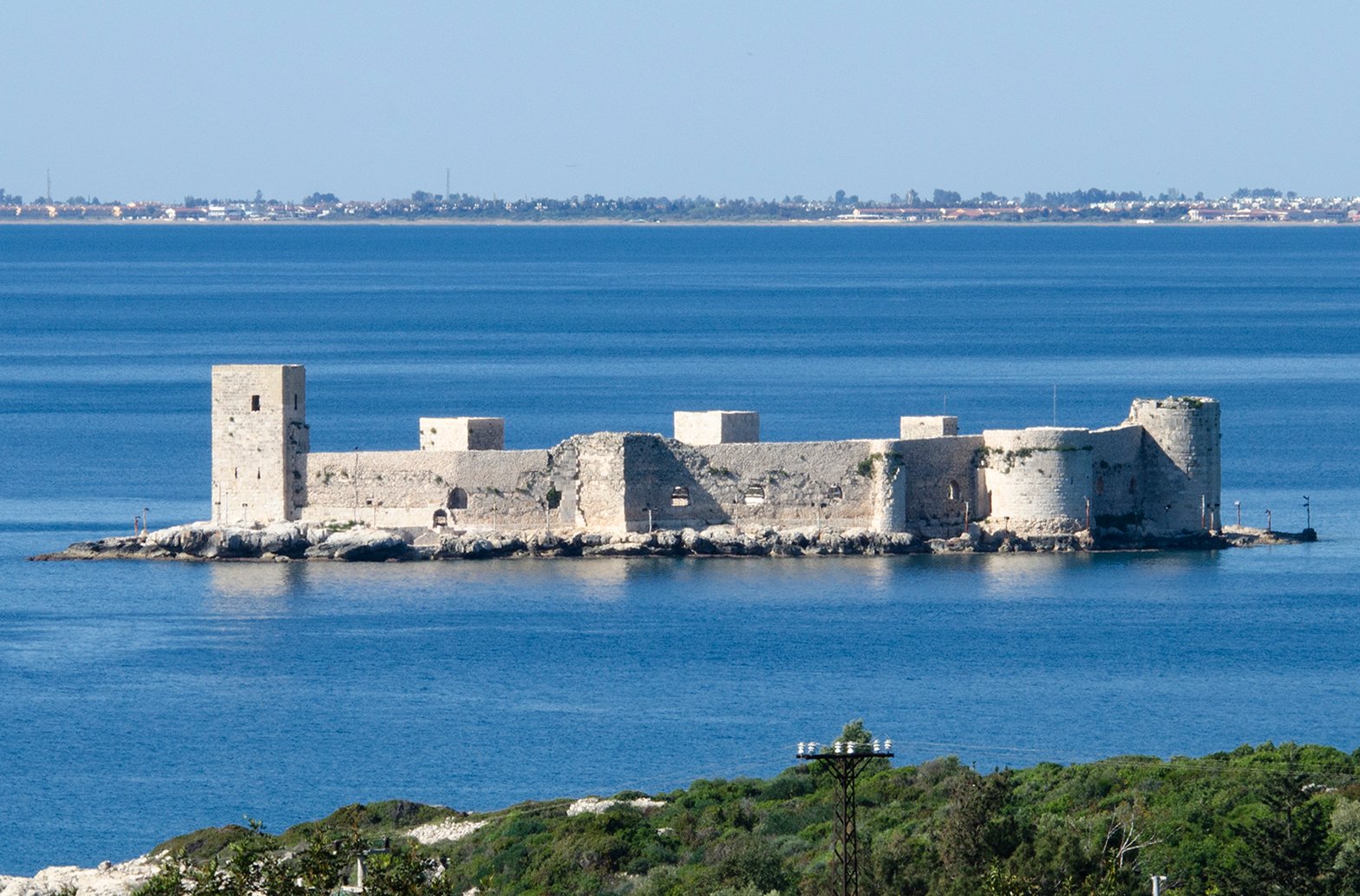
Kızkalesi is a medieval sea castle on a small island in the Mediterranean. It stands off Kızkalesi neighborhood in Erdemli, a district of Mersin. Mersin Museum places the archaeological site approximately 60 kilometers southwest of Mersin. If you are looking for the castle associated with the princess and the snake, this is the Mersin location.
The structure is also called Deniz Kalesi, or Sea Castle. It gave its name to the settlement facing it across the water. The island covers approximately 15,000 square meters, and the castle occupies most of that area. Its setting explains the sea-castle name, but its historical purpose belongs to the harbor of Korykos.
Published distances from the shore differ. UNESCO’s nomination account gives 200 meters, while English Wikipedia gives approximately 300 meters. Mersin’s provincial culture and tourism directorate states an average of 600 meters and explains that the distance changes with the observation point. These figures should therefore be read with their source attribution.
Why was Kızkalesi built beside Korykos?
Kızkalesi formed the seaward part of a defensive system protecting Korykos harbor. A second castle stood on land. If you consider only the island fortress, you miss its documented relationship with the castle on the mainland.
English Wikipedia identifies the island’s ancient name as Crambusa. An ancient account attributed to Strabo describes the island as a refuge for pirates. That account concerns the island’s earlier history. It does not establish that the surviving medieval castle was built during the Roman period.
The distinction matters when reading Kızkalesi’s history. An ancient island name, an account of pirates and medieval fortifications refer to different kinds of evidence. The surviving castle’s documented building history includes Byzantine construction and Armenian rebuilding. Its location had a past before those walls took their recorded form.
Kızkalesi castle history: who built it?
The official Mersin Museum page attributes the castle’s construction to Leon I in 1199. It presents this date on the basis of an inscription. Read alone, that statement suggests a single founding moment. Other accounts, however, describe an earlier Byzantine phase and later rebuilding campaigns.
Museum archaeologist F. Güler Gürkan reports that construction began during the Byzantine period. In her account, it was completed between the late 11th century and the middle of the 12th century. This places substantial castle construction before the museum page’s 1199 attribution. Both accounts belong in an explanation of the building’s chronology.
English Wikipedia, drawing on Robert W. Edwards, reports Armenian inscriptions recording rebuilding under Leon I in 1206 and Hethum I in 1251. These are described as rebuilding dates. They should not be silently substituted for the date of the earliest construction. The castle’s history contains several interventions rather than one uncontested building date.
The architecture also preserves different phases. The southern side retains a Byzantine arrangement with square towers. The northern and western sides were reworked during the Armenian period with round towers and dressed stonework. You can connect these contrasting forms with the accounts of construction and rebuilding.
Timeline
- Late 11th to mid-12th century: According to F. Güler Gürkan, construction begun in the Byzantine period was completed within this interval.
- 1199: The official museum page attributes construction to Leon I. This claim must be considered alongside the earlier Byzantine phase.
- 1206 and 1251: English Wikipedia’s account based on Edwards reports Armenian inscriptions recording rebuilding under Leon I and Hethum I.
- 1360–1361: The castle passed into Cypriot control. English Wikipedia gives 1360; Mersin’s provincial culture and tourism directorate gives 1361.
- 1448: Karamanoğlu İbrahim II captured Korykos.
- 1471 or 1473–1474: UNESCO’s nomination account gives 1471 for the Ottoman takeover. Mersin Museum gives 1473–1474.
- 2001: Excavations uncovered a large building complex in the center of the castle, with connected rooms opening into a central reception hall.
- 15 April 2014: The Ancient City of Korykos, including Kızkalesi, was submitted to the UNESCO World Heritage Tentative List.
What does the castle’s layout reveal?
The castle has a defensive wall circuit measuring 192 meters. Its walls contain openings for defensive use. Eight towers have triangular, quadrangular and round forms. These recorded shapes add detail to the broader distinction between the southern Byzantine arrangement and the Armenian alterations on the northern and western sides.
The main entrance is on the north. A gallery runs along the western wall and leads to a separate doorway opening toward the sea. The castle therefore had more than its principal entrance. The western gallery and sea-facing doorway are specific features of its internal arrangement.
Excavations in 2001 uncovered a large building complex in the center of the castle. Its connected rooms opened into a central reception hall. This gives the interior a documented plan beyond the enclosing walls and towers. The excavated rooms belong to the history of how the space inside the fortress was organized.
Details you won’t find in guidebooks
Six cisterns were cut into the bedrock to meet the castle’s water needs. Here is an everyday-life connection: when you think about the water you use at home, consider those six storage spaces inside the island fortress. They make water provision a concrete part of the castle’s history.
The interior building complex contained both mosaic floors and opus sectile paving. Opus sectile uses pieces of cut stone to form a floor surface. The finds add evidence of decorated interiors to a structure often approached through its defensive walls.
One floor mosaic contains a five-line inscription within a circular braided design. Its arrangement is a precise detail: writing sits inside an ornamental border. The mosaic therefore preserves both decoration and text within the excavated complex, alongside the cut-stone paving recorded at the site.
Beneath the chapel, a medieval crypt suffered damage from treasure hunters. Skeletons from the grave were scattered inside the chapel. This is part of the archaeological record of the castle’s burials and the damage done to them.
Some burials found close to the surface were dated by Gürkan to the late 19th and early 20th centuries. These graves belong to a much later period than the Byzantine and Armenian building phases. The excavated burial evidence thus extends beyond the centuries associated with the castle’s principal construction history.
What is the Kızkalesi snake legend?
In the legend, a king hears a prophecy that his daughter will die from a snakebite. He places her in the island castle to protect her. The sea separates the princess from the mainland, but the story’s danger eventually reaches her through a delivery from the palace.
A snake hides inside a basket of grapes sent to the princess. It bites her, and she dies. This is the legendary explanation associated with Kızkalesi, not a verified historical event. It should be distinguished from the inscriptions, architectural phases and excavated remains used to describe the fortress’s past.
The version published by Mersin Museum includes a more specific detail. The grapes requested by the princess are called Tarsus Beyazı. That name belongs to this particular telling of the legend. The basket is therefore described more precisely in the museum’s version than in a simple account of grapes and a hidden snake.
Is Kızkalesi connected with Istanbul’s Kız Kulesi?
Mersin Governorate notes that a similar story is told about Istanbul’s Kız Kulesi. Both tellings feature the snake and grape basket. This shared legend helps explain the connection between the two names in discussions of the story, but the structures have different locations.
If you mean the island fortress that defended Korykos harbor, the location is Erdemli in Mersin. Istanbul’s Kız Kulesi is the other structure named in the comparison. The repeated legend does not relocate Kızkalesi’s Byzantine and Armenian architectural history to Istanbul.
FAQ
Where is Kızkalesi?
Kızkalesi stands on a small Mediterranean island off Kızkalesi neighborhood in Erdemli, Mersin. Mersin Museum places the archaeological site approximately 60 kilometers southwest of Mersin.
Who built Kızkalesi?
The castle has several building phases. Archaeologist F. Güler Gürkan describes Byzantine construction completed between the late 11th and mid-12th centuries. The official museum page attributes construction to Leon I in 1199, while another account records Armenian rebuilding in 1206 and 1251.
What is the snake legend of Kızkalesi?
A king places his daughter in the island castle after hearing that a snakebite will kill her. A snake hidden in a grape basket sent from the palace reaches the princess and kills her. The story is a legend, not a verified historical event.
Is Kızkalesi the same as Istanbul’s Kız Kulesi?
They are different structures. Kızkalesi is the sea castle off Erdemli in Mersin. Mersin Governorate notes that a similar snake-and-grape-basket legend is also told about Istanbul’s Kız Kulesi.
Sources
- Mersin Provincial Directorate of Culture and Tourism — Castles, Fortresses and Bastions mersin.ktb.gov.tr
- General Directorate of Cultural Heritage and Museums — Mersin Museum Directorate kvmgm.ktb.gov.tr
- UNESCO World Heritage Centre — Ancient City of Korykos whc.unesco.org
- English Wikipedia — Kızkalesi (castle)) en.wikipedia.org
- TÜBİTAK Bilim ve Teknik — F. Güler Gürkan, Kızkalesi Kazıları bilimteknik.tubitak.gov.tr
- Mersin Governorate — Kızkalesi mersin.gov.tr
Image: Korykos – Kızkalesi 01 (cropped).jpg — Zeynel Cebeci, CC BY-SA 4.0