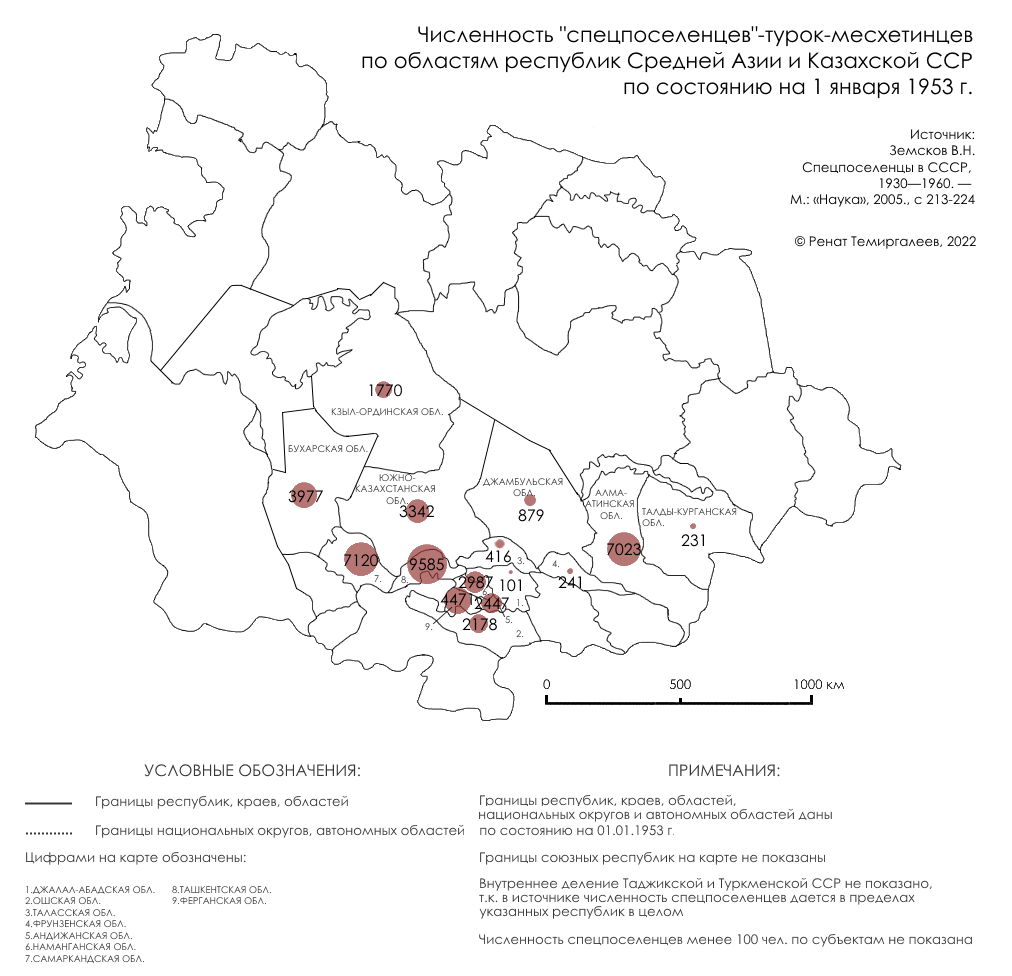
The deportation of the Meskhetian Turks began in November 1944. Under Stalin’s government, families were removed from their homeland in southwestern Georgia and transported to Central Asia. Their historical home was Meskheti, along the border with Turkey. They are also known as Ahıska Turks.
If you encounter this history while traveling in Turkey, keep that geography in mind. Ahıska lies within a story connecting Georgia, Turkey, and the Central Asian destinations of the deportation. Later movements brought members of the community to other places, including Turkey. Return to the original homeland remained a separate struggle.
What was the deportation of the Meskhetian Turks?
The deportation was a state-directed removal from Georgia’s border districts. On 31 July 1944, Stalin signed State Defence Committee Resolution No. 6279ss. It ordered the deportation of Turks, Kurds, and Hemshins from those areas. The decision therefore affected several groups, a distinction that matters when reading population totals.
The Soviet People’s Commissariat for Internal Affairs issued Order No. 001176 on 20 September 1944. Its attached instructions regulated implementation. Families removed from around Ahıska, Aspinza, Ahılkelek, and Bogdanovka were sent by freight train to Uzbekistan, Kazakhstan, and Kyrgyzstan.
Two dates mark the operation’s beginning in the cited accounts. YTB commemorates 14 November 1944. A telegram from Raphava, published by the Institute for Development of Freedom of Information, reports the start on 15 November. The date range 14–15 November preserves that distinction.
Ahıska’s earlier history also involved a change of sovereignty. According to YTB’s historical account, Russia occupied Ahıska in 1828, and the territory passed under Russian rule in 1829. The 1944 deportation removed families from this historical homeland more than a century later.
Why were the Meskhetian Turks deported?
Beriya alleged espionage connected with Turkey. Historian Pavel Polian challenges the collective accusation of betrayal by pointing to approximately 40,000 Meskhetian Turks serving in the Soviet army. Their military service is central to his criticism of the justification used against the community.
The July resolution applied removal to named population groups in the border region. Read alongside Polian’s assessment, it shows the central problem with the collective accusation: service in the Soviet army did not protect the community from deportation. The decision operated across the targeted population.
How many people were deported, and how many died?
The totals differ according to the population counted and the recording date. IDFI gives 91,095 people from Beriya’s summary telegram. The English-language account of the deportation on Wikipedia gives a range of 92,307–94,955 for Meskhetian Turks. You should keep those different scopes in view rather than combine the figures into one total.
Death estimates also vary. Demographer Dalkhat Ediev estimated 12,589 Meskhetian Turkish deaths. Other assessments give 30,000–50,000. Incomplete Soviet records list 14,895 deaths across all the groups deported from the region. That last figure covers a broader population than Meskhetian Turks alone.
These figures require their labels. An estimate concerning Meskhetian Turks and an incomplete administrative count covering several deported groups describe different populations. Reporting both without explaining that difference would obscure what each number measures.
What did exile mean in everyday life?
In exile, Meskhetian Turks lived under a special settlement regime. They had to report weekly and could not leave their settlement areas. Deportation therefore continued through restrictions on movement after the train journeys ended.
Think of the ordinary act of leaving the place where you live. Under the special settlement regime, that movement was restricted, and weekly reporting was compulsory. This is the everyday-life connection behind the administrative language: the regime governed where people could go and required repeated contact with the authorities.
A Soviet decree dated 28 April 1956 removed special settlement supervision. It did not permit return to the homeland. The distinction is essential. The end of one system of restrictions did not restore access to the places from which families had been removed.
On 30 May 1968, another Soviet decree acknowledged the deportation. It argued that Meskhetian Turks had established roots in Kazakhstan and Uzbekistan and called for them to remain there. Official recognition of the removal again stopped short of permission to return.
Timeline
- 1829: Ahıska passed under Russian rule.
- 31 July 1944: Stalin signed the resolution ordering deportation from Georgia’s border districts.
- 20 September 1944: The NKVD issued its implementation order.
- 14–15 November 1944: Mass deportation to Central Asia began.
- 28 April 1956: Special settlement supervision ended, without permission to return.
- 30 May 1968: A Soviet decree called for deportees to remain in the republics where they lived.
- 1989: The Fergana attacks triggered another mass displacement.
- 1999: Georgia made commitments on return when joining the Council of Europe.
- February 2004: A United States resettlement programme began for eligible Meskhetian Turks in Krasnodar.
- 18 March 2005: The Parliamentary Assembly of the Council of Europe adopted a resolution on Meskhetian Turks.
- 11 July 2007: Georgia adopted its return law.
- 1 January 2010: The deadline for return-status applications expired.
- 2019: YTB began its oral history project recording deportation witnesses.
Why did displacement continue after 1989?
The Fergana attacks and unrest in 1989 forced another major movement. According to the Parliamentary Assembly of the Council of Europe, more than 70,000 Meskhetian Turks left Uzbekistan. They dispersed across seven Soviet republics. Places of exile had become starting points for another displacement.
In Krasnodar, the collapse of the Soviet Union brought a further problem. The Assembly’s resolution of 18 March 2005 stated that Meskhetian Turks there had effectively become stateless because they were not recognised as citizens. Denial of residence registration and citizenship deprived them of basic civil, political, economic, and social rights.
A United States resettlement programme began in February 2004 for eligible applicants living without legal status in Krasnodar. The first Meskhetian Turkish group admitted during the 2004 fiscal year numbered 85 people. Resettlement offered a different destination from the homeland sought by the return movement.
What happened to the struggle to return to Georgia?
When Georgia joined the Council of Europe in 1999, it committed to establishing a legal framework for return within two years. It pledged to begin the process within three years and complete it within twelve. These commitments placed a timetable around the return question.
Georgia adopted a law on 11 July 2007 concerning the return of people forcibly deported by the Soviet Union in the 1940s. The application deadline was 1 January 2010. By that date, 5,841 applications had been submitted.
The figures for subsequent status decisions show why legal categories matter. According to information supplied by the World Union of Ahıska Turks and cited by the Council of Europe Commissioner, 1,174 people had received return status by 6 October 2013. Only seven had received citizenship. You cannot read the return-status figure as a count of new citizens.
Return also became a subject of field research. Serhat Keskin’s 2019 study at Middle East Technical University drew on interviews and fieldwork conducted in 2015–2016. It covered six settlements in Azerbaijan and Georgia, examining the repatriation process through those locations.
Details you won’t find in guidebooks
IDFI’s examination of the deportation documents records the mobilisation of 900 Studebaker trucks. The transport operation therefore involved road vehicles as well as the freight trains that carried deported families to Central Asia.
The 1944 instructions allowed each family to take up to 1,500 kilograms of household and agricultural belongings. That was a written allowance. It describes what the instructions permitted, rather than establishing what every family actually managed to carry.
IDFI also reports that some informants whose reports were examined before the operation became victims of the deportation themselves. Their inclusion adds a specific detail to the history of the machinery that preceded removal.
Language later created an obstacle in the return process. The Council of Europe’s 2014 report recorded that applications could be submitted only in Georgian or English. It identified this requirement as a major barrier for most applicants.
YTB’s oral history project, launched in 2019, assembled interviews with 75 witnesses in five countries. It gathered approximately 300 hours of video recordings. These testimonies sit alongside the decrees, telegrams, and later legal documents that record the deportation and its consequences.
How does this history connect with Turkey?
The historical homeland lies along Turkey’s border, while later settlement brought Meskhetian Turks into Turkey itself. Anadolu Agency reported in 2025 that people brought from Ukraine had been settled in Üzümlü in Erzincan and Ahlat in Bitlis. Those destinations belong to the community’s later history of movement.
For readers visiting Turkey, these place names connect the 1944 deportation with subsequent displacement. Üzümlü and Ahlat were settlement destinations reported in 2025. Meskheti remained the historical homeland at the centre of the struggle for return.
FAQ
Where is the historical homeland of the Meskhetian Turks?
Their historical homeland is the Meskheti region of southwestern Georgia, along the border with Turkey. They are also known as Ahıska Turks.
When did the deportation of the Meskhetian Turks begin?
The deportation began on 14–15 November 1944. YTB commemorates 14 November, while a telegram published by IDFI reports the operation’s start on 15 November.
Did the 1956 decree allow the Meskhetian Turks to return?
No. The decree of 28 April 1956 removed special settlement supervision but did not grant permission to return to their homeland.
Did Georgia’s return law automatically grant citizenship?
Return status and citizenship were separate outcomes. According to information cited in a Council of Europe report, 1,174 people had received return status by 6 October 2013, while only seven had received citizenship.
Sources
- Wikipedia — Deportation of the Meskhetian Turks en.wikipedia.org
- YTB — 1944 Ahıska Sürgünü: Son Tanıklar ytb.gov.tr
- Institute for Development of Freedom of Information — Official Documents of 1944 on the Resettlement of the Minorities of Georgia idfi.ge
- Parliamentary Assembly of the Council of Europe — Resolution 1428 (2005) assembly.coe.int
- United States Department of State — Proposed Refugee Admissions for Fiscal Year 2006 2001-2009.state.gov
- Council of Europe Commissioner for Human Rights — CommDH(2014)9 rm.coe.int
- Serhat Keskin, Middle East Technical University — The Repatriation Process of Meskhetian/Ahiska Turks to Their Homeland in Georgia open.metu.edu.tr
- Anadolu Agency — Ahıska Türklerinin sürgün edilişinin 81. yılı aa.com.tr
Image: Численность “спецпоселенцев”-турок-месхетинцев по областям республик Средней Азии и Казахской ССР на 1 января 1953 г.png — Ренат Темиргалеев, CC BY-SA 4.0