Henry Morgan was a Welsh sailor who attacked Spanish ships and cities from a base at Port Royal, Jamaica. Born around 1635, he operated under English authority. His career included raids, a diplomatic crisis, a knighthood, and appointment as Jamaica’s lieutenant governor in 1674.
If you know Morgan as a Caribbean pirate, the governor’s commission adds an essential detail. Jamaica’s governor Thomas Modyford authorized him to attack Spanish shipping in 1667. Yet authorization did not keep Morgan clear of trouble. His forces attacked Panama after England and Spain had signed the 1670 Treaty of Madrid, which provided for the withdrawal of privateering commissions.
Who was Henry Morgan before Jamaica?
Morgan was born in Wales around 1635. The Oxford Dictionary of National Biography identifies him as the eldest son of Robert Morgan of Llanrhymny. His later connection with Jamaica followed these Welsh beginnings, although accounts differ over his early route to the Caribbean.
The Dictionary of Welsh Biography associates Morgan with a three-year service contract in Barbados dated 9 February 1655. The Oxford biography takes a different position. It states that documentary evidence does not establish the story that Morgan was an indentured servant. The contract identification therefore remains disputed.
Richard Browne, a surgeon aboard Morgan’s flagship, placed his arrival in the West Indies around 1658. That account provides another reference point for his early Caribbean years. Morgan later made Port Royal his operational base, linking his raiding career directly to Jamaica.
Was Henry Morgan a pirate or a privateer?
Morgan operated as a privateer: a sea raider acting with government permission. In 1667, Thomas Modyford gave him a commission authorizing attacks on Spanish ships and their seizure. That official permission is central to understanding the historical Captain Morgan.
You can connect this distinction to everyday life through written authorization. A document can determine whether someone has permission to perform an action. Morgan’s commission served that purpose for attacks on Spanish shipping. It tied his activities to the English administration in Jamaica.
The commission did not make his campaigns bloodless. Smithsonian Ocean describes prisoners being killed and tortured during Morgan’s attacks on Spanish cities and ships on Jamaica’s behalf. His official status belongs in the same account as the violence committed during those expeditions.
The limits of authorization became especially important after the 1670 Treaty of Madrid. England and Spain agreed to withdraw privateering commissions. Morgan’s subsequent attack on Panama brought his raiding career into conflict with that diplomatic settlement.
Which Spanish targets did Henry Morgan attack?
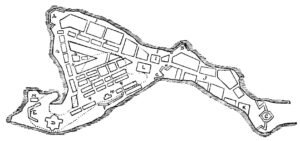
In 1668, Morgan sacked Porto Bello, in what is now Panama. The raid was among the attacks on Spanish settlements that marked his career before the larger Panama expedition. Port Royal remained the Jamaican base from which he operated.
On 1 May 1669, Morgan’s forces attacked a Spanish fleet at the exit from Maracaibo. They used a fireship. The operation also involved deception: logs wearing hats represented crew members, while logs positioned along the vessel’s sides imitated cannon.
Those improvised figures give you a concrete glimpse of the Maracaibo operation. The apparent crew and guns were made from timber. This detail sits alongside the broader account of Morgan’s attacks on Spanish shipping and the killing and torture of prisoners described by Smithsonian Ocean.
What happened during Henry Morgan’s Panama expedition?
Morgan assembled 36 ships and 1,846 men for the Panama expedition in 1670, according to Texas State University’s project account. The force brought together a substantial fleet before the attack on the city itself. Its approach included the Chagres River.
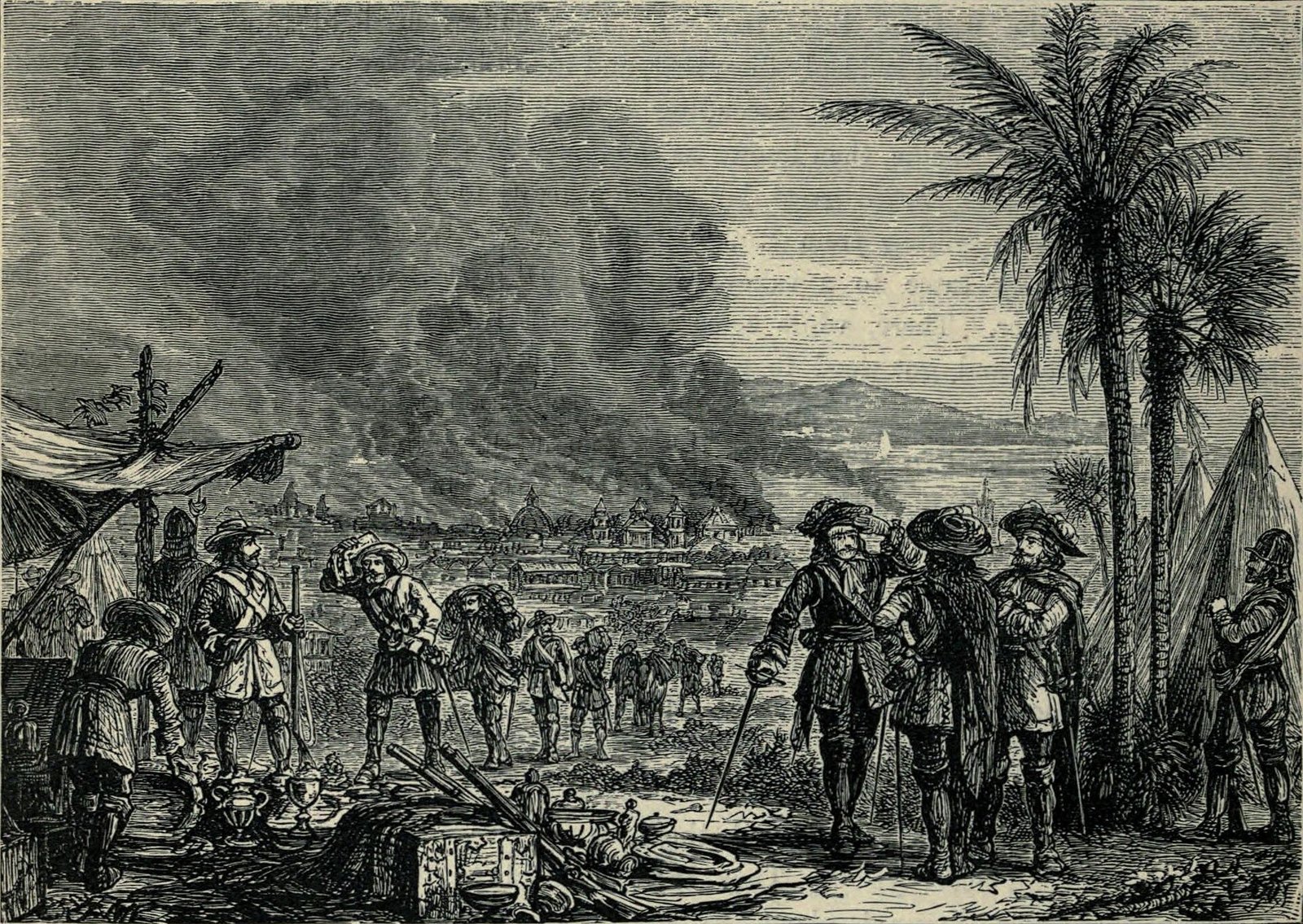
During the 1671 expedition, Morgan lost his flagship, Satisfaction, and four other ships near the Chagres approach. His forces nevertheless crossed the Panama isthmus. On 28 January 1671, they attacked the old city of Panama on the Pacific coast.
The date explains the diplomatic problem. England and Spain had already signed the Treaty of Madrid in 1670. Its provisions included withdrawing privateering commissions. The Panama attack therefore occurred after the agreement intended to end that authorized raiding.
Charles II’s administration had Morgan brought to England in 1672 to ease the crisis with Spain. In England, Morgan argued that he had not known about the treaty before attacking Panama. He also promised that he would not return to sea raiding. These were his stated defense and undertaking after the expedition.
How did Henry Morgan become Jamaica’s lieutenant governor?
Morgan’s return to England did not end his public career. In 1674, he received a knighthood and appointment as Jamaica’s lieutenant governor. The same man brought back over the Panama crisis now held an official position in the island’s administration.
The appointment and his return happened in different years. Morgan became lieutenant governor in 1674. He returned to Jamaica in 1675 and began serving as deputy to the new governor, Lord Vaughan. Keeping those dates separate makes the transition from raider to officeholder easier to follow.
His administrative career also retained a connection with sea raiding. The Museum of Miami exhibition describes Morgan as both suppressing and encouraging sea raiders during his time as lieutenant governor. His conduct in office therefore included both approaches to the activity he had previously pursued.
Morgan also owned plantations. At his death, he held three plantations, and 131 enslaved Africans were held on his estates. Those holdings are part of his history alongside his commission and knighthood.
Details you won’t find in guidebooks
Morgan challenged the published account of his activities by Exquemelin. He sued the publishers over damage to his reputation and won £200 in damages. The lawsuit adds a documented dispute over his portrayal to the record of his military and administrative career.
The publication history of Exquemelin’s book contains another revealing detail. Its 1684 English edition was prepared from the 1681 Spanish translation. It was not translated directly from the Dutch original published in 1678.
The ships lost during the Panama expedition also became the subject of underwater investigation. Texas State University reports that cannon recovered in 2010 may have come from vessels Morgan lost in 1671. That possible connection does not establish the identity of the seventeenth-century wreck found during the investigation.
If you encounter these discoveries as evidence of Morgan’s fleet, keep that distinction in view. The cannon were described as possibly connected to his lost ships. The wreck’s identity remained undetermined in the university’s account. Satisfaction and the four other losses provide the historical setting for the investigation.
Timeline
- Around 1635: Henry Morgan was born in Wales.
- Around 1658: He reached the West Indies, according to surgeon Richard Browne.
- 1667: Thomas Modyford authorized him to attack and seize Spanish ships.
- 1668: Morgan sacked Porto Bello.
- 1 May 1669: His forces attacked the Spanish fleet at Maracaibo’s exit.
- 1670: England and Spain signed the Treaty of Madrid. Morgan assembled 36 ships and 1,846 men for his Panama expedition.
- 28 January 1671: His forces attacked old Panama after crossing the isthmus.
- 1672: Morgan was brought to England following the diplomatic crisis.
- 1674: He was knighted and appointed Jamaica’s lieutenant governor.
- 1675: He returned to Jamaica to serve under Lord Vaughan.
- 25 August 1688: Morgan died in Jamaica.
- 26 August 1688: He was buried at Port Royal.
- 2010: Investigators recovered cannon possibly associated with his lost ships.
FAQ
Was Henry Morgan a pirate or a privateer?
Morgan operated as a privateer under English authority. Jamaica’s governor Thomas Modyford authorized him to attack and seize Spanish ships in 1667.
How did Henry Morgan become Jamaica’s lieutenant governor?
After being brought to England over the Panama raid, Morgan said he had not known about the 1670 treaty and promised to stop sea raiding. He was knighted and appointed lieutenant governor in 1674, then returned to Jamaica in 1675.
Was Henry Morgan an indentured servant?
The identification is disputed. The Dictionary of Welsh Biography connects him with a Barbados service contract dated 9 February 1655, while the Oxford Dictionary of National Biography states that documentary evidence does not confirm the indentured-servant account.
When did Henry Morgan die?
Morgan died in Jamaica on 25 August 1688. He was buried at Port Royal the following day.
Sources
- Oxford Dictionary of National Biography — Morgan, Sir Henry doi.org
- Dictionary of Welsh Biography — Henry Morgan biography.wales
- Museum of Miami — Port Royal, Jamaica museumofmiami.org
- Smithsonian Ocean — Henry Morgan ocean.si.edu
- Texas State University — Lost Ships of Henry Morgan meadowscenter.txst.edu
- University of Glasgow Library — Americana: 17th Century gla.ac.uk
Image: Burning of Panama by Henry Morgan, 1671.jpg — Unknown authorUnknown author, Public domain