Where does Halloween come from?
Halloween, celebrated on October 31, developed through the interaction of seasonal customs in Ireland and Britain with Christian observances. Samhain belongs to this history, alongside All Saints’ Day and All Souls’ Day. If you follow the carved lantern back through these traditions, you encounter winter gatherings, prayers for the dead, household visits, and migration.
The name supplies a clear starting point. Halloween is a shortened form of All Hallows’ Eve, the evening before All Saints’ Day on November 1. The word therefore carries a Christian calendar reference. The customs associated with that evening draw on a broader history, including Ireland’s seasonal celebrations and its traditions of masks and turnip lanterns.
What was Samhain?
In the traditional Irish calendar, Samhain fell on November 1 and marked the beginning of winter. It was one of four seasonal turning points. Its principal celebrations took place on the preceding evening, October 31, as happened with many traditional festivals. That relationship between an evening celebration and the following calendar date helps explain its connection with Halloween.
Medieval accounts associate Ireland’s Samhain and Wales’s Calan Gaeaf with gatherings at the end of summer and the beginning of winter. These meetings could include legal business, games, and festivities. Their activities place the seasonal transition within community life. People assembled to address practical affairs as well as to celebrate.
According to University of Kentucky folklorist Jeanmarie Rouhier-Willoughby, Irish sagas written down between the ninth and twelfth centuries record Samhain celebrations. Those dates identify the written accounts. They should be kept distinct from claims about exactly how people celebrated before Christianity or how particular customs passed into later Halloween traditions.
Was Samhain a festival of the dead?
Rouhier-Willoughby interprets Samhain as the Celtic new year and a threshold when ancestral spirits could return to the world. This interpretation connects the seasonal boundary with a boundary between the living and the dead. It offers one explanation for the association between Halloween and visiting spirits.
Graham Harvey, a professor of religious studies at the Open University, challenges a central part of that account. He states that reliable historical evidence does not establish pre-Christian Samhain as a festival commemorating the dead. The disagreement concerns the historical basis for that description, rather than Samhain’s place at the beginning of winter.
Ronald Hutton’s 2024 academic article also examines this interpretation. Its abstract highlights the influence of John Rhys and James Frazer in spreading the view of Samhain as the Celtic new year and a major feast of the dead. When you encounter that familiar explanation, distinguish the seasonal festival from the disputed claims attached to it.
How did Christian holy days shape Halloween?
In Western Christianity, Allhallowtide brings together three observances: the eve on October 31, All Saints’ Day on November 1, and All Souls’ Day on November 2. Halloween’s date and name sit within this sequence. Remembering the dead also had an explicit place in the Christian observances surrounding it.
The calendar developed over time. In 609, Pope Boniface IV dedicated Rome’s Pantheon to Mary and all martyrs, supporting a commemoration on May 13. In 835, the Frankish Empire formally adopted November 1 as the date of All Saints’ Day, with the support of Pope Gregory IV.
All Souls’ Day, commemorating all deceased Christians on November 2, became widespread in the twelfth century. These developments matter because Halloween’s history includes Christian practices as well as seasonal folklore. Its association with the dead cannot be explained solely through a disputed reconstruction of pre-Christian Samhain.
Why did people go from door to door?
Souling, documented from at least the fifteenth century, involved poor people and children visiting houses to collect small baked goods called soul cakes. In exchange, they offered prayers for the dead. The visit linked a household gift with a religious service, giving food distribution a place in commemorative practice.
Ireland’s guising tradition involved masked men or children performing for their neighbours in return for refreshments. Here, the exchange centred on a performance. Masks, visiting, and household hospitality came together in an activity that depended on participation from both the visitors and the people receiving them.
The Horniman Museum and Gardens identifies both costumed performances around Samhain and medieval exchanges of prayers for cakes as predecessors of modern door-to-door customs. You can connect this history with everyday life through a familiar act: answering the door and offering something to a visitor. In souling, that offering carried an obligation to pray; in guising, it rewarded a performance.
Why did turnips become jack-o’-lanterns?
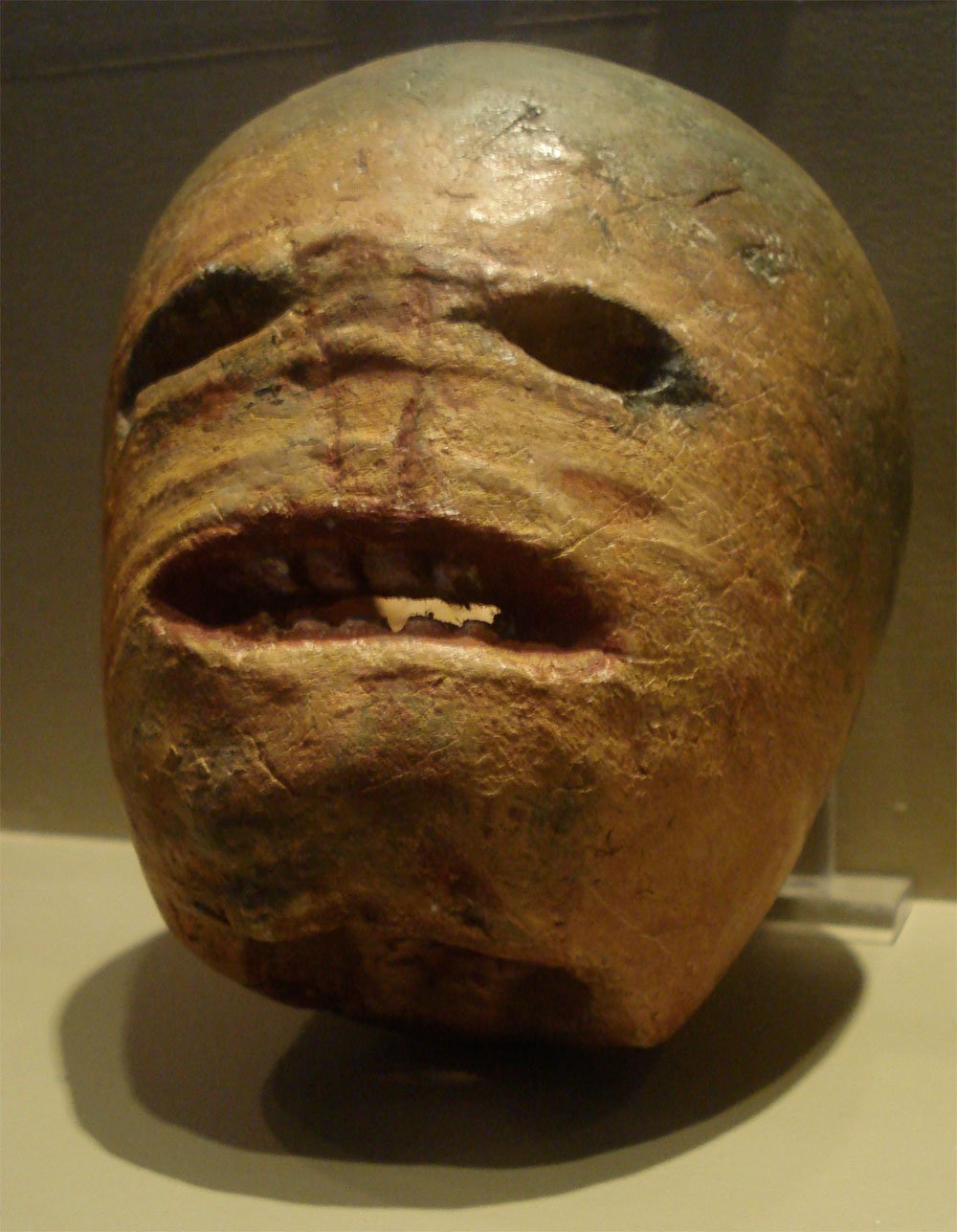
In Ireland, people carved faces into turnips and placed candles inside them to frighten others on Halloween night. The illuminated face was therefore already part of the celebration before the pumpkin version developed in America. The National Museum of Ireland describes today’s widespread pumpkin lantern as an American development of the Irish turnip tradition.
An Irish folk narrative explains the name jack-o’-lantern through the fate of Jack. Refused admission to both heaven and hell, he is condemned to wander forever carrying his lantern. The story gives the lantern a wandering human figure, while the carved turnip provides a physical object associated with Halloween fright.
The museum’s turnip evidence also gives you a useful way to read a familiar Halloween image. A carved pumpkin belongs to a history in which the vegetable changed. The Irish practice already combined a hollowed vegetable, a face, and candlelight; its American development used the pumpkin that now characterizes the lantern.
How did Halloween spread in America?
According to Rouhier-Willoughby, Irish immigrants carried Halloween to the United States during the nineteenth century. By the 1930s, Americans without Irish backgrounds were also taking part. Migration brought the celebration into another setting, and participation eventually extended beyond the immigrant communities associated with its arrival.
A newspaper example shows several customs together in 1907. The Library of Congress’s historical newspaper guide identifies a 1907 Los Angeles Herald account describing Halloween pranks, jack-o’-lanterns, and attempts to discover future marriages through fortune-telling. Lanterns and predictions about marriage therefore appeared alongside practical jokes in that American account.
Timeline
- 609: Pope Boniface IV dedicates Rome’s Pantheon to Mary and all martyrs, supporting a May 13 commemoration.
- 835: The Frankish Empire formally adopts November 1 as All Saints’ Day, supported by Pope Gregory IV.
- Ninth–twelfth centuries: Irish sagas recording Samhain celebrations are written down.
- Twelfth century: All Souls’ Day on November 2 becomes widespread.
- At least the fifteenth century: Souling involves collecting cakes from households in exchange for prayers for the dead.
- Nineteenth century: Irish immigrants bring Halloween celebrations to the United States.
- Around 1900: Turnip lanterns of the type later represented in the museum collection are made near Fintown in Donegal.
- 1907: The Los Angeles Herald describes Halloween lanterns, pranks, and marriage fortune-telling.
- 1930s: According to Rouhier-Willoughby, Americans outside Irish communities also celebrate Halloween.
- 1943: Teacher Rois Ní Braonáin sends a turnip lantern to the National Museum of Ireland.
Details you won’t find in guidebooks
The turnip lantern sent by Rois Ní Braonáin in 1943 has a specific local connection. According to her description, it represented the kind made around Fintown in Donegal around 1900. This links the museum’s account to a named contributor, a locality, and an approximate period of use.
The museum’s ghost-turnip model, numbered F1943.350, is a plaster cast prepared and painted by artist Eileen Barnes. Its material matters when you look at the object: the museum model preserves the appearance of a carved turnip through a deliberately made cast.
A Halloween mask presented by the Horniman Museum was made from a wheat sack. Three holes provided openings for the eyes and mouth, and a wool beard was sewn onto it. This example places an ordinary material directly within the history of costume, showing how a sack could become a face covering.
Fortune-telling also entered Irish Halloween food. Objects placed inside the cake báirín breac carried predictions: a ring signalled marriage, a piece of cloth poverty, and a coin wealth. Unlike the cakes exchanged for prayers in souling, this cake held signs interpreted as clues to the future.
Some people travelling alone on Halloween night in Ireland carried a black-handled knife or a steel needle. They believed these objects would protect them from harmful beings. The custom connects supernatural fears with the practical circumstance of having to make a journey alone.
FAQ
Where does the name Halloween come from?
Halloween is a shortened form of All Hallows’ Eve, the evening before All Saints’ Day on November 1. Halloween is celebrated on October 31.
Was Samhain an ancient festival of the dead?
That interpretation is disputed. Jeanmarie Rouhier-Willoughby describes Samhain as a threshold when ancestral spirits could return, while Graham Harvey says reliable historical evidence does not establish a pre-Christian festival of the dead.
Were jack-o’-lanterns originally made from pumpkins?
Irish Halloween lanterns were made from carved turnips with candles inside. The National Museum of Ireland describes the pumpkin lantern as an American development of that tradition.
How did Halloween reach the United States?
According to folklorist Jeanmarie Rouhier-Willoughby, Irish immigrants brought Halloween to the United States in the nineteenth century. By the 1930s, Americans without Irish backgrounds were also celebrating.
Sources
- Vikipedi — Cadılar Bayramı tr.wikipedia.org
- National Museum of Ireland — Halloween traditions source.museum.ie
- University of Kentucky — UK Folklorist Explains the Spellbinding History of Halloween uknow.uky.edu
- Open University — The History of Halloween open.edu
- University of Bristol — The Celtic New Year and Feast of the Dead research-information.bris.ac.uk
- Wikipedia — Halloween en.wikipedia.org
- Horniman Museum and Gardens — Stories of Samhain horniman.ac.uk
- National Museum of Ireland — Ghost Turnip source.museum.ie
- Library of Congress — Halloween: Topics in Chronicling America guides.loc.gov
Image: Traditional Irish halloween Jack-o’-lantern.jpg — rannṗáirtí anaiṫnid (coṁrá), CC BY-SA 3.0