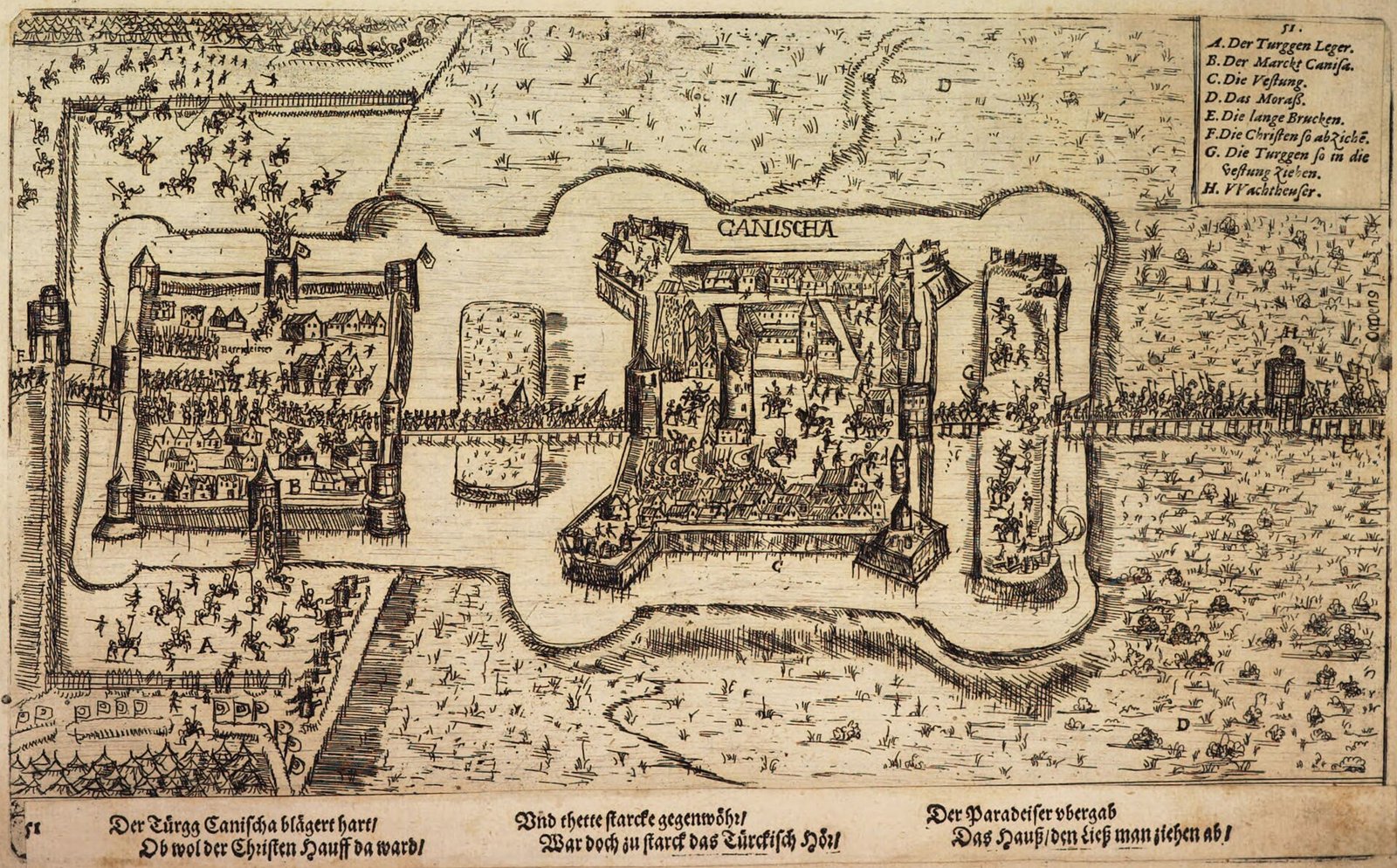
Siege of Nagykanizsa 1601: how Hasan Pasha broke the siege
Tiryaki Hasan Pasha broke the siege of Nagykanizsa by attacking from the fortress when worsening weather was putting the Habsburg army under pressure. Disorder spread through the besiegers’ camp after the sortie. Archduke Ferdinand’s forces withdrew with heavy losses in November 1601. The defence ended in an Ottoman victory.
The action belonged to the Ottoman-Habsburg War of 1593–1606. It took place during the reign of Sultan Mehmed III. Known in Turkish as the Kanije Savunması, it combined a sustained fortress defence with a counterattack. The final movement matters: Hasan Pasha’s troops left their defensive position and struck the army outside.
If you know the story through tales of hidden cannon and false letters, there is another part to follow closely. Hasan Pasha requested reinforcements before the siege. Expected support failed to arrive. His eventual sortie came as the weather increased the difficulties facing Ferdinand’s army. These events explain the victory without making disputed tricks carry the whole story.
Siege of Nagykanizsa: where was Kanije?
Kanije is the Ottoman name associated with present-day Nagykanizsa. The city lies in Zala County in southwestern Hungary. If you encounter Kanije in Turkish historical writing and Nagykanizsa in English, you are following the same place under different names.
The fortress had entered Ottoman hands only in 1600. Damad İbrahim Pasha’s campaign brought about its surrender. Ferdinand’s siege followed in 1601. The defence therefore concerned a fortress the Ottomans had captured during the preceding year.
Hasan Pasha had already taken part in decisions about the campaign. At a war council on 22 August 1600, he argued that Bobofça should be captured first to secure Budin. This places him within the planning that preceded Kanije’s capture, before his better-known role as its defender.
Who commanded the armies, and how large were they?
Tiryaki Hasan Pasha commanded the Ottoman defence. Archduke Ferdinand led the besieging Habsburg forces. According to the TDV İslâm Ansiklopedisi biography of Hasan Pasha, the defenders numbered 9,000. That figure provides a stated basis for discussing the garrison’s strength.
The size of the attacking army is disputed. The Turkish Wikipedia article’s information box gives 90,000–100,000 besiegers. A footnote on the same page, citing Paas, gives 35,000. These are substantially different estimates. You should therefore treat claims about an exact numerical imbalance with care.
The dates also vary slightly. English Wikipedia records the siege as 9 September–18 November 1601. TDV’s Kanije entry gives 10 September–17 November. Its Hasan Pasha biography uses a 9 September beginning and an 18 November withdrawal. All place the operation in the same autumn, despite the differences in days.
Why the missing reinforcements mattered
Before the siege, Hasan Pasha sent his kethüda, İskender Bey, to Belgrade. His mission was to request additional troops for Kanije. The request shows that securing support was part of the preparations for defending the fortress.
The expected assistance did not arrive during the siege, and the defence became increasingly difficult. At Kanije, the delayed support concerned the troops Hasan Pasha had sought before the attack.
That failure to receive help gives the later counterattack its setting. Hasan Pasha was defending with the force available to him while the hoped-for support remained absent. The eventual opportunity came when deteriorating weather began to weigh on the besiegers outside the fortress.
How the sortie turned defence into victory
Hasan Pasha observed that worsening weather was making conditions harder for the Habsburg army. He then ordered a sortie from Kanije. A sortie is an attack launched out of a defended position. In this case, it carried Ottoman troops from the fortress against the besieging force.
After the attack, disorder developed in the Habsburg camp. The besiegers withdrew with heavy losses. The sequence is central to the outcome: worsening conditions, an Ottoman sortie, disruption in the camp, and retreat. Hasan Pasha used the pressure already bearing on Ferdinand’s army to launch his counterattack.
The withdrawal ended the attempt to take Kanije in November 1601. Depending on the account, the closing date falls on 17 or 18 November. The disagreement over that final day does not alter the recorded result. The Ottoman defenders retained the fortress.
Did hidden cannon and a false letter fool Ferdinand?
One familiar story says Hasan Pasha initially kept his cannon silent. According to the Turkish Wikipedia account, this encouraged Ferdinand to believe that the fortress had no artillery. It is a reported deception story and should be presented as such.
Another tale appears in the anonymous Gazavât-ı Tiryâkî Hasan Paşa. It describes a false letter saying that help and plentiful ammunition had reached the fortress. The letter was supposedly left where the enemy would discover it. Its message directly addressed the question of Kanije’s ability to continue resisting.
Osman Ünlü’s 2016 comparison of historical and literary sources challenges the standing of these famous tricks. He notes their absence from the accounts of Peçevî, Topçular Kâtibi, and Cafer Iyânî. He argues that the stories may be literary inventions. They remain part of the siege’s narrative tradition, but their status differs from the documented sortie and withdrawal.
Ünlü also traces how the anonymous Kanije campaign narrative passed into Kâtip Çelebi’s Fezleke. From there, it reached Naîmâ and later popular works. This chain helps explain how particular episodes became familiar. Repetition across later works can reflect the movement of a story between texts.
Timeline
- 22 August 1600: Hasan Pasha recommended capturing Bobofça first to secure Budin at a war council.
- 1600: Kanije surrendered to the Ottomans during Damad İbrahim Pasha’s campaign.
- September 1601: Ferdinand’s forces began the siege. Accounts give either 9 or 10 September.
- During the siege: Worsening weather troubled the besiegers, and Hasan Pasha ordered a sortie.
- 17–18 November 1601: The Habsburg army lifted the siege and withdrew, with the precise closing day varying by source.
- After the defence: Damaged walls were rebuilt thicker, and a new ammunition building was constructed.
- 1702: The fortress was demolished under Habsburg rule.
Details you won’t find in guidebooks
Tiryaki Hasan Pasha was not Kanije’s first Ottoman provincial governor. That position initially belonged to Alaca-illi, also called Alacaetli, Arnavut Hasan Pasha. Keeping the two men distinct prevents the celebrated defender from absorbing the entire early history of Ottoman administration at Kanije.
The surrender of 1600 also had consequences for the opposing commander. Georg Paradeiser, the Austrian commander who handed over the fortress, was sentenced to death by his own side for that decision. His fate belongs to the capture that preceded Hasan Pasha’s defence.
After the victory, Hasan Pasha received three robes of honour, a sword, and three horses. He also oversaw practical work at Kanije. The damaged walls were rebuilt thicker than before, and a new ammunition building was erected. The aftermath included both recognition and repairs.
The fortress was later demolished on the Habsburg ruler’s orders in 1702. Its stones were reused in other buildings during the eighteenth century. If you connect the siege with present-day Nagykanizsa, this later destruction is part of the place’s history alongside the victory of 1601.
Reading the defence through its accounts
Vahit Çabuk’s Tiryaki Hasan Paşa’nın Gazaları ve Kanije Savunması appeared in Istanbul in 1978. It brought together Cafer Iyânî’s work and the anonymous Târîh-i Tîr Hasan Paşa. The volume therefore places distinct accounts within a single publication.
H. Ziya Ersever’s Kanije Savunması ve Tiryaki Hasan Paşa was published by the Ministry of Culture and Tourism in 1986. Ünlü’s 2016 article compares the defence’s historical and literary sources. Its full text is available through DergiPark, including the discussion of how celebrated deception stories entered later narratives.
FAQ
Who won the siege of Nagykanizsa in 1601?
The Ottoman defenders under Tiryaki Hasan Pasha won. Their sortie helped break up the Habsburg camp, and Archduke Ferdinand’s forces withdrew with heavy losses.
When did the siege take place?
It took place from September to November 1601. Accounts give a starting date of either 9 or 10 September and an ending date of either 17 or 18 November.
Did Hasan Pasha use a fake letter?
An anonymous campaign narrative describes a false letter announcing reinforcements and plentiful ammunition. Osman Ünlü argues that famous deception stories may be literary inventions, since they are absent from the accounts of Peçevî, Topçular Kâtibi, and Cafer Iyânî.
Where is Kanije, and does its fortress survive?
Kanije is Nagykanizsa, in Zala County in southwestern Hungary. The fortress was demolished on the Habsburg ruler’s orders in 1702, and its stones were reused in other buildings during the eighteenth century.
Sources
- TDV İslâm Ansiklopedisi — Tiryâkî Hasan Paşa islamansiklopedisi.org.tr
- TDV İslâm Ansiklopedisi — Kanije islamansiklopedisi.org.tr
- TDV İslâm Ansiklopedisi — Mehmed III islamansiklopedisi.org.tr
- English Wikipedia — Siege of Kanizsa (1601)) en.wikipedia.org
- English Wikipedia — Nagykanizsa en.wikipedia.org
- Turkish Wikipedia — Kanije Savunması tr.wikipedia.org
- Osman Ünlü — Erken Dönem Tarihî ve Edebî Kaynaklarda Kanije Müdafaası dergipark.org.tr
- Google Books — H. Ziya Ersever, Kanije Savunması ve Tiryaki Hasan Paşa books.google.com
Image: Siege of Canischa (Nagykanizsa), 1601.jpg — Wilhelm Peter Zimmermann, Public domain