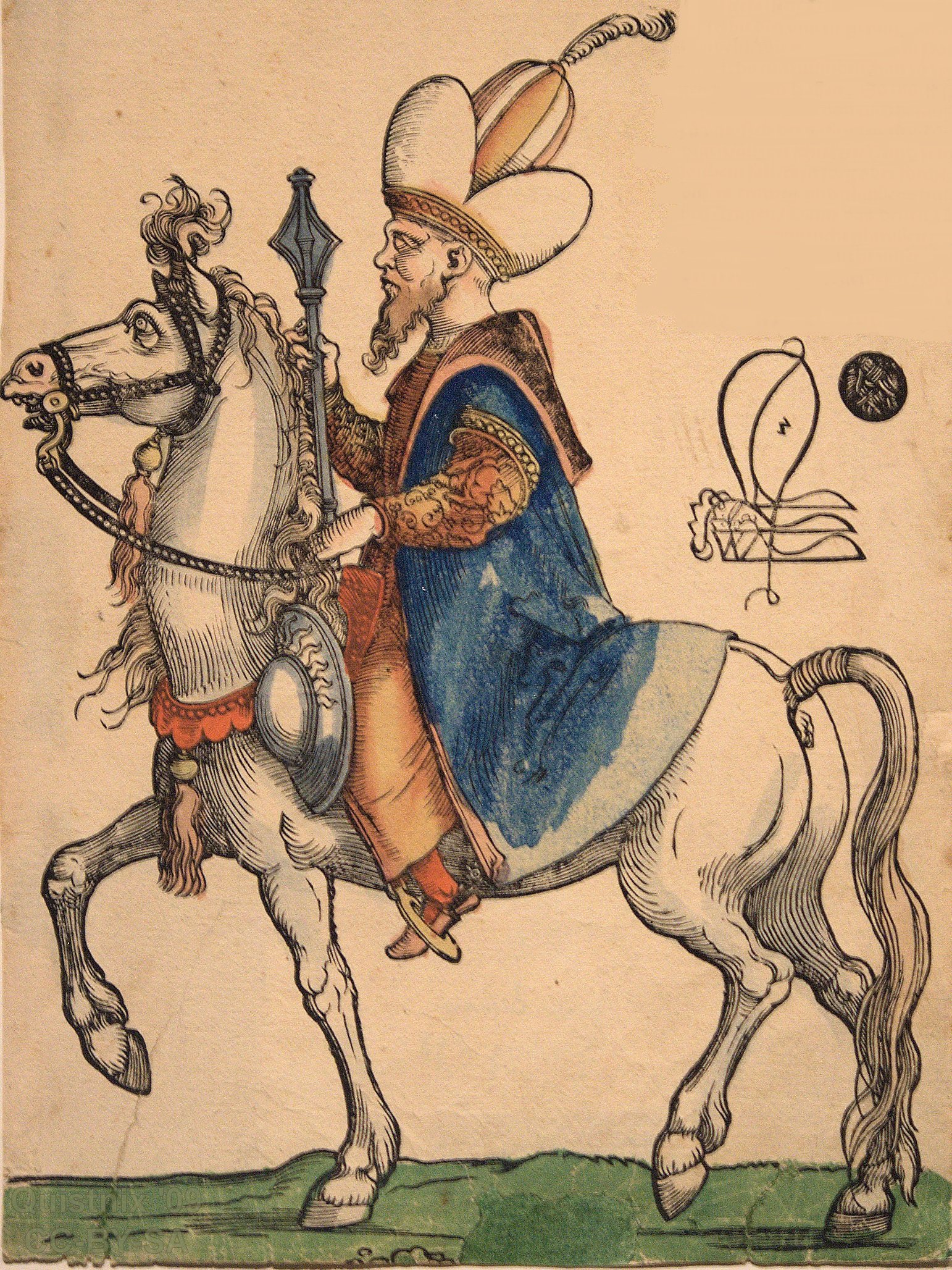
Who was Pargalı Ibrahim Pasha?
Pargalı Ibrahim Pasha was an Ottoman grand vizier under Suleiman. He was born around 1495, and tradition places his birth in Parga, in today’s Greece. The exact date is unknown.
His origin is also unsettled. Sources have called him Greek, Albanian, Italian and Croatian. None of these claims is confirmed.
What we do know is how he met the future sultan. In his youth he served Prince Suleiman in Manisa. That early service is the base of his later career.
A short history of his rise
Suleiman made him grand vizier on 27 June 1523. He held the office until 15 March 1536. That is almost thirteen years at the top of the government.
He was not only a court figure. He joined the Belgrade campaign in 1521 and the Rhodes campaign in 1522. In 1526 he played an important part in the Ottoman victory at Mohács.
Before the campaign that ended at Vienna in 1529, he received wide powers and the title of serasker, or commander-in-chief. Think of a manager who is handed full authority over one huge project. It works, until others start to ask who really decides.
In 1533 he led the peace talks in Istanbul. In those talks the Ottoman grand vizier was treated as equal to the Habsburg ruler Ferdinand. That was a rare sign of how much weight his office carried.
In 1534 he entered Tabriz on 6 August during the Iraqayn campaign. It was one of his last great moments.
Timeline
- c. 1495: Believed born in Parga; the exact date is unknown.
- 1521: Took part in the Belgrade campaign.
- 1522: Took part in the Rhodes campaign.
- 27 June 1523: Became grand vizier.
- 5 June 1524: His wedding; Suleiman attended and spent the night there.
- 1526: Played a role in the Mohács victory; set up statues from Buda in front of his palace.
- 1529: Joined the Vienna campaign as serasker.
- 1533: Led the Istanbul peace talks with Habsburg envoys.
- 6 August 1534: Entered Tabriz during the Iraqayn campaign.
- 14–15 March 1536: Strangled in Topkapı Palace.
- 1983: The Museum of Turkish and Islamic Arts moved into his palace.
Pargalı Ibrahim Pasha’s death: what happened
On the night of 14–15 March 1536, Ibrahim was called to Topkapı Palace for the iftar meal that breaks the Ramadan fast. He did not leave. He was strangled there.
The invitation to a meal is the part that stays with most readers. A man summoned to dinner by his ruler was killed inside the ruler’s own palace.
Why was Pargalı Ibrahim Pasha executed?
The honest answer is that nobody can prove a single cause. No clear reason was stated when he was killed in 1536. The Islamic Encyclopedia of the Turkish Religious Foundation (TDV) says a single exact cause cannot be fixed.
So historians look at the pressures around him. Here are the main ones.
The killing of İskender Çelebi. During the Iraqayn campaign Ibrahim fell out with the Chief Treasurer, Defterdar İskender Çelebi. He had İskender dismissed first. Then he had him executed in Baghdad. This is listed among the things that weighed against him with Suleiman.
The “serasker sultan” title. Ibrahim used the title “serasker sultan”. The same encyclopedia lists this too among the negative influences on the ruler. A grand vizier who sounds like a second sultan is a problem for the first one.
Hürrem Sultan. A popular claim says Hürrem had him removed because of closeness to Prince Mustafa. The sources do not settle this. Celâlzâde stresses his conduct on the Iraqayn campaign. Matrakçı Nasuh stresses a desire for sovereign power. So treat the Hürrem story as a claim, not as fact.
In short, power, titles and a deadly quarrel on campaign are the main explanations. None is a signed confession of motive.
Pargalı Ibrahim Pasha’s wife and spouse
The usual story says he married Hatice Sultan. A Turkish historian challenged this.
İsmail Hakkı Uzunçarşılı published a study in 1965. Using letters, he argued that Ibrahim was not the sultan’s son-in-law. He said Ibrahim’s wife was Muhsine Hatun.
The letters also prove something else directly. They show that Ibrahim had a son named Mehmed Şah. The “Şah” in the name does not prove the child was of the dynasty, Uzunçarşılı wrote, because the word was used for other people in that period.
So the identity of the wife is a live debate. The son is documented.
Pargalı Ibrahim Pasha’s grave and tomb: where is he buried?
No one can point to a certain grave. Three accounts compete.
- Ayvansarâyî writes that he was buried on a separate mound in Galata, beside the Canfedâ Zaviyesi, behind the Arsenal (Tersane).
- The Sicill-i Osmânî has an Okmeydanı record instead.
- English Wikipedia shows a photo of a tomb in the Canfeda cemetery in Fındıklı, Beyoğlu, which is believed to be his.
No marker is known that fixes the exact spot. If a guide tells you the grave is certain, ask for the source.
Pargalı Ibrahim Pasha Palace: what you can see
The palace stands in Sultanahmet Square in Istanbul’s Fatih district, on the west side. Its approximate coordinates are 41.00583° N, 28.97444° E.
A record from 1521 shows how it began. The palace was made by changing, enlarging and repairing an existing mansion. It was not built from nothing.
After his execution in 1536, the state seized the palace. In 1983 the Museum of Turkish and Islamic Arts moved in.
If you plan a visit, type the address into your phone’s map: Binbirdirek Mahallesi, At Meydanı Sokak No: 12, Sultanahmet, Istanbul.
Details you won’t find in guidebooks
- The sultan at the wedding. According to a record cited by Uzunçarşılı, Suleiman attended Ibrahim’s wedding on 5 June 1524 and spent the night there.
- Eleven letters. The Topkapı Palace Archive holds 11 letters from Ibrahim to his wife under number 5860.
- A letter of explanation. In 1534, after the Valide Sultan died, Ibrahim’s wife went to the palace to offer condolences without asking him. She wrote a letter to explain herself.
- Statues from Buda. In 1526 Ibrahim had statues brought from Buda and set up in front of his palace. Some period engravings show them.
- A converted mansion. The 1521 archive note shows the palace began as an older mansion that was rebuilt.
FAQ
Why was Pargalı Ibrahim Pasha executed?
No clear reason was stated in 1536, so no single cause can be proven. Historians point to the killing of Defterdar İskender Çelebi and Ibrahim’s use of the title “serasker sultan” as negative influences on Suleiman.
Where is Pargalı Ibrahim Pasha buried?
The exact grave is unknown. Ayvansarâyî places it near the Canfedâ Zaviyesi in Galata, while the Sicill-i Osmânî records Okmeydanı. A tomb in the Canfeda cemetery in Fındıklı is believed to be his.
Who was Pargalı Ibrahim Pasha’s wife?
Tradition names Hatice Sultan. İsmail Hakkı Uzunçarşılı argued in 1965, using letters, that he was not an imperial son-in-law and that his wife was Muhsine Hatun.
Can you visit Ibrahim Pasha’s palace today?
Yes. It houses the Museum of Turkish and Islamic Arts, which moved there in 1983. The address is Binbirdirek Mahallesi, At Meydanı Sokak No: 12, Sultanahmet, Istanbul.
Sources
- Wikipedia — Pargalı Ibrahim Pasha en.wikipedia.org
- TDV İslâm Ansiklopedisi — İbrâhim Paşa, Makbul islamansiklopedisi.org.tr
- TDV İslâm Ansiklopedisi — İbrâhim Paşa Sarayı islamansiklopedisi.org.tr
- Belleten — Kanunî Sultan Süleyman’ın Vezir-i Âzamı Makbûl ve Maktûl İbrahim Paşa Padişah Dâmadı Değildi belleten.gov.tr
- Kültür ve Turizm Bakanlığı — Türk ve İslam Eserleri Müzesi muze.gov.tr
- Wikipedia — Ibrahim Pasha Palace en.wikipedia.org
Image: Sebald Beham – Pargali Damat Ibrahim Pascha ca 1530-cropped.jpg — Quistnix!, Public domain