Caracalla was a Roman emperor of the Severan dynasty who extended citizenship to almost all free inhabitants of the empire through the Constitutio Antoniniana, generally dated to 212. His edict thanked the immortal gods, while other explanations connect the grant with taxation and strengthening his rule after his brother Geta’s murder. No single motive should be treated as a settled explanation.
The citizenship grant followed a killing within the imperial family, yet its effects reached millions across Europe, Africa and Asia. If you follow Caracalla from his joint rule with Geta to his death between modern Şanlıurfa and Harran, the connections between citizenship, military support and imperial power become clearer. The surviving papyrus also helps distinguish the emperor’s stated purpose from the motives attributed to him.
Who was Caracalla before the citizenship edict?
Caracalla was born Lucius Septimius Bassianus at Lugdunum, modern Lyon, in Gaul. He was the elder son of Septimius Severus and Julia Domna. His birth is placed between 186 and 188, with sources differing over the year. He became his father’s co-emperor in 198.
When Septimius Severus died at York in 211, his sons continued ruling together. Their joint rule ended in December of that year, when Geta was killed and Caracalla became sole ruler.
How did Caracalla end his joint rule with Geta?
Julia Domna arranged a reconciliation meeting between her sons in December 211. Guards loyal to Caracalla killed Geta during that meeting. The killing left Caracalla in sole command, but the campaign against his brother’s position continued afterward.
Geta’s supporters faced a purge. His name and image were also targeted through the practice known as damnatio memoriae. His name was erased from inscriptions and papyri, and his representations were attacked. The suppression therefore affected both people associated with Geta and the records through which he could be remembered.
Caracalla claimed that Geta had plotted against him. That claim needs attribution. Giessen University treats it as a partisan account of the brothers’ lethal rivalry, rather than an independently established explanation. The distinction matters because the citizenship grant followed this struggle for sole power.
Who was covered by the Constitutio Antoniniana of 212?
The Constitutio Antoniniana extended Roman citizenship to almost all free inhabitants of the empire. Free women were included. Enslaved people were not freed by the measure. Its broad reach must therefore be understood alongside a clear boundary: it expanded citizenship among the free population.
The usual interpretation excludes a group called the dediticii. Their precise identity remains uncertain. You should therefore read the phrase “almost all free inhabitants” carefully. It conveys the scale of the grant without making the disputed exception sound fully understood.
Before 212, citizenship grants often focused on selected groups, including provincial elites and veterans. Caracalla changed the scale of that practice. Millions of people across Europe, Africa and Asia gained a common civic status, while local legal traditions were allowed to continue.
The edict is generally dated to 212. Its exact publication day cannot be established from the fragmentary papyrus. An amnesty on the same sheet carries the date 11 July 212, but that date cannot automatically be assigned to the citizenship grant.
How was the edict connected to taxation, law and social integration?
The surviving text gives a religious explanation. Caracalla presents the grant as thanksgiving to the immortal gods for his deliverance from a great danger. He also describes bringing the new citizens into that religious community. This is the emperor’s stated justification for the measure.
A political interpretation connects the grant with Geta’s death. Giessen University explains that making new citizens could have helped attach them to Caracalla and consolidate his authority. This remains an interpretation of the grant’s purpose. It places the measure within the struggle that had made him sole ruler.
Cassius Dio offers a different explanation. He attributes the extension principally to a desire to increase the number of people liable for inheritance and slave-manumission taxes. Caracalla raised the inheritance tax from 5 percent to 10 percent and removed some exemptions. Citizenship could therefore carry financial obligations alongside its legal consequences.
The fiscal explanation has a counterargument. The commentary published by Grenoble Alpes University points to the near disappearance of the poll tax in Egyptian records after the edict. It argues that gains from inheritance and manumission taxes were unlikely to compensate for that loss. Dio’s explanation should consequently remain an ancient claim, rather than the final answer.
For everyday life, consider contracts, marriage and inheritance. Roman citizenship affected how new citizens could carry out these transactions under Roman law. If you want to connect the edict with ordinary decisions, these are concrete starting points: agreements, family arrangements and the transfer of property.
The common civic status also had an integrating effect across the empire’s free population. Yet local legal traditions continued. The grant brought millions into a shared category of citizenship without requiring every existing legal custom to disappear. Its scale and its limits belong in the same explanation.
How did military campaigns and army policies affect his rule?
Caracalla strengthened the army’s loyalty through higher pay and monetary gifts. These payments put pressure on state finances. Army support and taxation therefore belong together when assessing his government, although military spending alone does not establish why he issued the citizenship edict.
During his German frontier campaign of 213–214, Caracalla used diplomatic agreements as well as military action. Frontier fortifications in Raetia and Germania Superior were strengthened. His activity along that frontier thus included both campaigning and negotiated arrangements.
In 216, he began an eastern campaign against the Parthians. His death in 217 prevented him from completing it. On 8 April 217, he was killed on the road between Edessa and Carrhae, now Şanlıurfa and Harran. Macrinus became emperor afterward.
For you as a traveler in Turkey, Şanlıurfa and Harran provide a direct geographical connection to Caracalla’s final campaign. The road between these places belongs to the account of his assassination. His reign ended there after years in which military loyalty had supported his power.
How should hostile ancient accounts be read critically?
Cassius Dio was a senator and a contemporary of Caracalla. He criticized the emperor’s closeness to soldiers rather than senators. His political position matters when reading his account, especially where he assigns motives to the emperor’s actions.
Clare Rowan distinguishes between Dio’s account of events and the intentions he attributes to Caracalla. She broadly accepts his sequence of events while questioning his explanations of motive. That distinction is particularly useful when assessing the claim that citizenship was extended solely to raise tax revenue.
The edict’s religious language, Dio’s fiscal explanation and the political integration interpretation represent different kinds of evidence and argument. The surviving text establishes what Caracalla publicly declared. Dio supplies a critical contemporary explanation. The political interpretation connects the grant with the circumstances following Geta’s murder.
Details you won’t find in guidebooks
“Caracalla” was a nickname derived from a hooded cloak the emperor wore. His birth name was Lucius Septimius Bassianus. The familiar name attached to his citizenship grant therefore began with an item of clothing.
After 212, many new citizens adopted the name Aurelius. This gives the citizenship extension a trace in personal names and inscriptions. The legal change can consequently be followed through evidence beyond the wording of the edict itself.
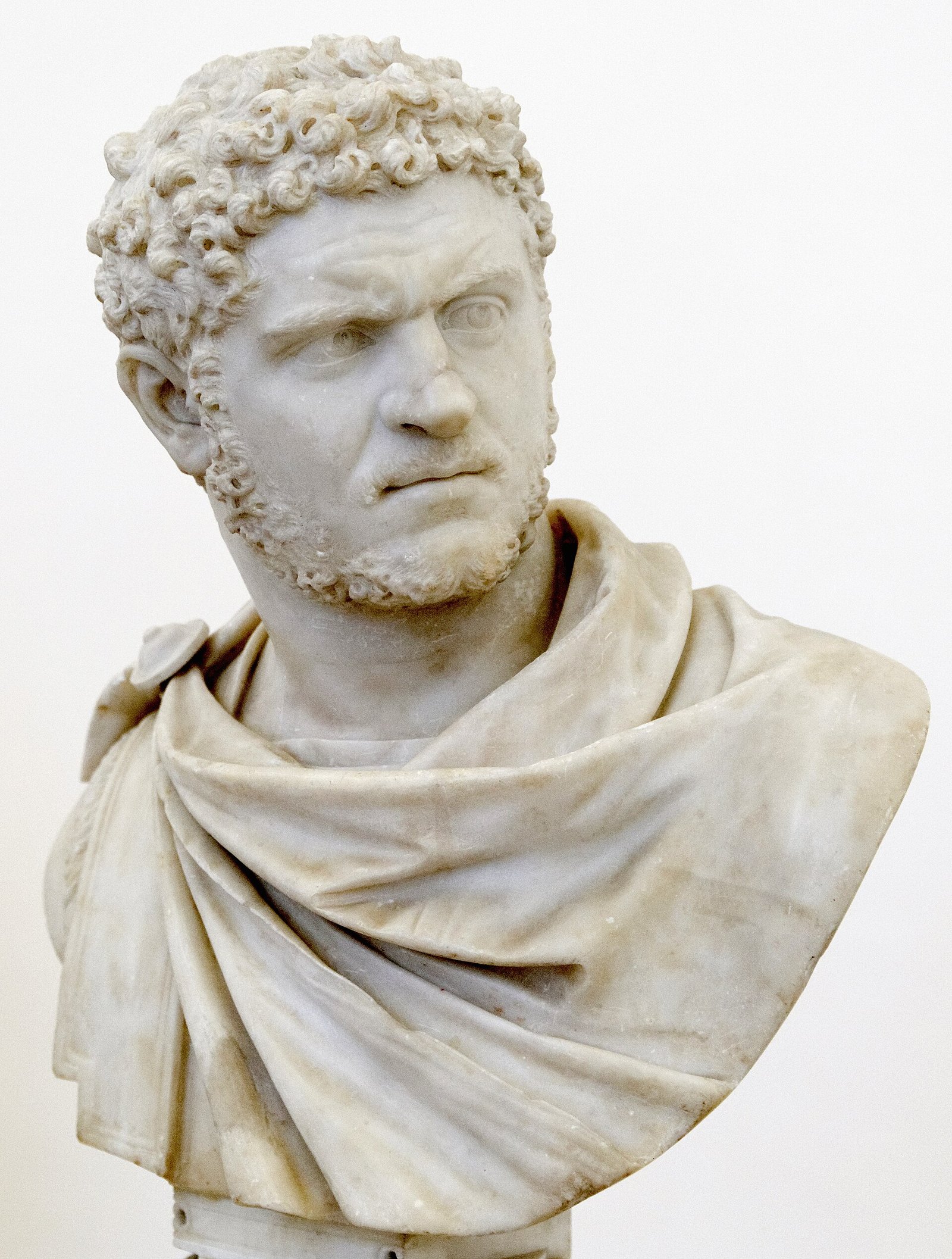
Caracalla’s official portraits used short hair, a short beard and a furrowed brow to convey an energetic military leader. The Metropolitan Museum of Art explains that the hair and beard on its marble head were formed through small chisel marks cut into the stone surface.
The only surviving papyrus copy transmitting the edict’s words belongs to the Giessen collection. It entered UNESCO’s Memory of the World Register in 2017. Its fragmentary condition is central to the uncertainty over the edict’s precise publication date.
Timeline
- 186–188: Caracalla was born at Lugdunum; sources differ over the year.
- 198: He became co-emperor with Septimius Severus.
- 211: Septimius Severus died at York.
- December 211: Geta was killed, leaving Caracalla sole ruler.
- 212: The Constitutio Antoniniana, generally dated to this year, extended citizenship to almost all free inhabitants.
- 213–214: Caracalla conducted campaigns and diplomacy on the German frontier.
- 216: He began his campaign against the Parthians.
- 8 April 217: He was killed between Edessa and Carrhae.
- 2017: The Giessen papyrus entered UNESCO’s Memory of the World Register.
FAQ
Who was Caracalla?
Caracalla was a Roman emperor of the Severan dynasty and the elder son of Septimius Severus and Julia Domna. He became sole ruler after his brother Geta was killed in December 211.
Sources
- Vikipedi — Caracalla tr.wikipedia.org
- Wikipedia — Caracalla en.wikipedia.org
- CNRS — Interview with François Chausson on Caracalla news.cnrs.fr
- Giessen University — Caracalla und seine Motive constitutio.de
- Giessen University — Der Text constitutio.de
- UNESCO — Constitutio Antoniniana unesco.org
- German Commission for UNESCO — Constitutio Antoniniana unesco.de
- Giessen University — Recht constitutio.de
- Grenoble Alpes University — Edicts of Caracalla droitromain.univ-grenoble-alpes.fr
- Metropolitan Museum of Art — Roman Art: A Resource for Educators, pages 67–68 resources.metmuseum.org
Image: Caracalla MAN Napoli Inv6033 n01.jpg — Wikimedia Commons, CC BY 2.5