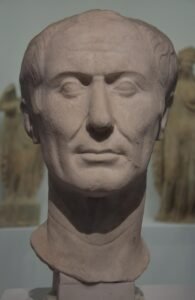
Belisarius was an Eastern Roman general who fought Sasanian, Vandal and Ostrogothic armies for Justinian, who ruled from 527 to 565. He helped reconquer former Western Roman territories by defeating the Vandal kingdom in Africa and capturing Rome and Ravenna in Italy.
Why did victory in Africa come quickly, while Italy demanded repeated campaigns? If you follow Belisarius from Dara to Carthage and Rome, the contrast becomes clear. Battlefield tactics mattered, but so did intelligence, soldiers’ pay and the ability to keep conquered cities supplied. His career also leads back to Constantinople, where he helped suppress a revolt and later faced a conspiracy accusation.
How did Belisarius rise to prominence in the Persian wars?
Belisarius won one of his most important eastern victories at Dara in 530. According to Procopius, he and Hermogenes commanded about 25,000 soldiers. They faced a Sasanian army initially numbering 40,000. Those figures make the arrangement of the Roman position especially important.
The Romans deployed behind trenches with passages left open. Cavalry stood on the sides, positioned to strike the enemy’s flanks and rear. The trenches and mounted troops worked together: the position gave the defenders an obstacle while preserving routes for movement and attack.
Dara did not begin an uninterrupted sequence of victories. In 531, Belisarius lost to the Sasanians at Callinicum on the Euphrates. His early career therefore contains both a major defensive success and a defeat in successive years.
In 532, he served Justinian inside Constantinople itself. Belisarius took part in the bloody suppression of the Nika revolt around the Hippodrome.
How did his campaign against the Vandal kingdom succeed?
Justinian preferred to end the eastern war before attacking the Vandals. Procopius describes preparations for the African expedition following peace with the Persians. The sequence mattered: the emperor settled one conflict before committing Belisarius to another.
The expedition sailed in 533. Its core force comprised about 10,000 infantry and 5,000 cavalry. The fleet included 500 transport vessels and 92 warships. These numbers show the scale of the operation required to carry an army to Africa.
Intelligence helped Belisarius judge the crossing. While gathering information in Sicily, Procopius learned that much of the Vandal fleet was in Sardinia. He reported the favorable conditions to the commander. The campaign thus depended partly on information collected before the army reached Africa.
Belisarius defeated the Vandals at Ad Decimum and then took Carthage. In December of the same year, he won again at Tricamarum. The capture of the Vandal king Gelimer in 534 completed the sequence that brought the defeated ruler and war booty to Constantinople.
Holding Carthage required more than winning battles. Belisarius restrained his soldiers’ plundering, offered assurances to Vandals seeking refuge and repaired the city walls. These measures strengthened his position after the initial victory. You can see the practical connection: military success needed discipline and functioning defenses to become lasting control.
Why were the Gothic wars in Italy longer and more destructive?
Belisarius completed the capture of Sicily by the end of 535. He advanced onto mainland Italy in 536, taking Naples and Rome. During the Ostrogothic siege of 537–538, he defended Rome against an attempt to recover the city.
In May 540, he captured Ravenna by appearing willing to accept the Goths’ offer of rulership. He nevertheless remained loyal to Justinian. Ravenna was a major success, but its fall did not end the war.
Under Totila, the Goths recovered much of Italy and Sicily between 542 and 550. Some coastal centers, including Ravenna, remained exceptions. The recovery shows why a list of cities captured by Belisarius cannot, by itself, explain the outcome of the Italian campaigns.
The historian J. B. Bury identified divided command as a serious weakness after Belisarius left in 540. Independent commanders shared authority over the army in Italy. In Bury’s assessment, this arrangement weakened coordinated operations and discipline.
Money added another source of resentment. Bury describes how Alexander, the financial official at Ravenna, demanded payments arising from earlier accounts and reduced soldiers’ pay. These measures angered both the Italian population and the army. As with your everyday budget, reduced income changes what you can sustain; here, pay cuts also damaged military morale.
Belisarius returned to Italy in 544 with about 4,000 soldiers. The eastern front’s needs and the effects of plague limited the resources Justinian could provide. His second appointment therefore came with a smaller force than the infantry and cavalry core sent to Africa in 533.
Sieges, inadequate supplies and widespread famine wore down the cities during this second assignment. Totila captured Rome in 546. These conditions explain the destructive character of the struggle: armies fought repeatedly over cities whose capacity to resist was already being weakened by hunger.
The decisive later victories belonged to Narses. In 552, he defeated Totila at Busta Gallorum. Belisarius had captured Rome and Ravenna, but another commander delivered the later military success that his own campaigns had failed to secure.
How do Procopius’s different works portray his relationship with Justinian?
Procopius became Belisarius’s adviser and secretary in 527. He remained with him until at least 540 and witnessed campaigns against the Sasanians, Vandals and Goths. His proximity makes his writing central to the commander’s story, while the differences between his works require careful reading.
In Wars, Procopius praises Belisarius’s authority over his soldiers, notably in section 7.1. Elsewhere in the same work, he records failures. The portrait includes both effective leadership and unsuccessful operations, rather than treating every campaign as a triumph.
In Buildings, section 1.10.16 places the kings and booty brought back by Belisarius within praise of Justinian. The general’s achievements support the emperor’s supremacy. This emphasis makes reconquest part of an imperial tribute, with the commander serving the ruler’s glory.
Secret History offers a hostile personal picture. In section 4.16, Belisarius appears isolated and fearful of assassination. If you compare this passage with the praise in Wars, you encounter sharply different portrayals by the same writer.
Details you won’t find in guidebooks
According to Procopius, Belisarius walked from his house to the Hippodrome during the victory procession of 534. He did not ride in a chariot. At its conclusion, both he and the defeated Gelimer prostrated themselves before Justinian. The ceremony displayed the emperor’s authority over victor and captive alike.
Procopius also lists Jewish sacred treasures among the spoils. He identifies them as objects Titus had brought from Jerusalem to Rome. In his account, Justinian sent them to Christian holy places in Jerusalem. The procession’s booty therefore carried a history extending beyond the Vandal defeat.
At Naples in 536, Belisarius’s soldiers entered through an aqueduct channel. This route enabled them to overcome the city’s defenses. Alongside the trenches at Dara, it offers a concrete example of how physical infrastructure shaped his campaigns.
Is the story that he was blinded and reduced to begging supported by historical records?
Contemporary evidence does not confirm the blinding and begging story. Belisarius did suffer a documented fall from favor. In 562, he was accused of involvement in a conspiracy against Justinian and lost his property and freedom. He was pardoned in 563 and died in 565.
The later account contains its own warning against certainty. The twelfth-century writer Ioannes Tzetzes repeated the blinding story, but also recorded that other historians denied it and said Belisarius’s standing had been restored. Thomas Hodgkin compared the late accounts and judged the legend extremely unlikely.
Timeline
- 530: Victory over the Sasanian army at Dara.
- 531: Defeat at Callinicum.
- 532: Participation in suppressing the Nika revolt.
- 533: African expedition and victories at Ad Decimum and Tricamarum.
- 534: Gelimer’s capture and the victory procession in Constantinople.
- 535: Completion of the capture of Sicily.
- 536: Capture of Naples and Rome.
- 537–538: Defense of Rome against the Ostrogothic siege.
- 540: Capture of Ravenna.
- 544: Return to command in Italy.
- 546: Totila captures Rome.
- 552: Narses defeats Totila at Busta Gallorum.
- 562–563: Conspiracy accusation, loss of freedom and property, then pardon.
- 565: Death of Belisarius.
FAQ
Who was Belisarius?
Belisarius was an Eastern Roman general who fought Sasanian, Vandal and Ostrogothic armies for Justinian. He defeated the Vandal kingdom in Africa and captured Rome and Ravenna during the reconquest of former Western Roman territories.
Did Belisarius finish the conquest of Italy?
No. The war continued after he captured Ravenna in 540. Narses achieved the decisive later victory over Totila at Busta Gallorum in 552.
Why does Procopius give different pictures of Belisarius?
His works served different literary purposes. Wars includes praise and criticism, Buildings places the general’s victories within praise of Justinian, and Secret History presents a hostile personal portrait.
Was Belisarius blinded and forced to beg?
Contemporary evidence does not confirm the story. Belisarius lost his property and freedom after an accusation in 562, but he was pardoned in 563.
Sources
- Turkish Wikipedia — Belisarius tr.wikipedia.org
- Procopius — Wars, Book I, chapter 13 gutenberg.org
- University of Richmond — Procopius on the Conquests of Belisarius facultystaff.richmond.edu
- English Wikipedia — Belisarius en.wikipedia.org
- Fordham University — Procopius: The Reconquest of Africa sourcebooks.web.fordham.edu
- J. B. Bury — History of the Later Roman Empire, chapter XIX penelope.uchicago.edu
- Henning Börm — Procopius, Encyclopaedia Iranica iranicaonline.org
- Encyclopaedia Britannica, 1911 — Belisarius penelope.uchicago.edu
- Thomas Hodgkin — Italy and Her Invaders, volume V, Note D penelope.uchicago.edu
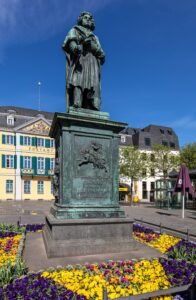
Image: Belisarius xambeui.JPG — Totodu74, CC BY-SA 3.0