The Anglo-Saxons were an Old English-speaking cultural community formed through interaction between North Sea migrants and Britain’s existing Romano-British populations. After Roman rule ended around 410, war leaders built separate kingdoms, whose later transformation through Christianization, Viking conquest and Wessex expansion led to Æthelstan’s unification of England in 927.
How did migration produce kingdoms, and how did those kingdoms become England? If you follow the connections between boat journeys, royal gifts, monasteries and fortified towns, the process becomes clearer. Even shopping rules and street names preserve parts of this history.
Where did the Angles, Saxons and Jutes come from and how did they settle in Britain?
Anglo-Saxon communities occupied much of present-day England and southeastern Scotland. Their emergence belonged to the period between the end of Roman government around 410 and the Norman Conquest of 1066. Across these centuries, Britons, Anglo-Saxons and Vikings competed for power. [1, 2]
Bede supplied an influential account of the migrants’ origins. Writing in a work completed in 731, he associated arrivals in 449 with three groups. The Angles came from Angeln, the Saxons from present-day Lower Saxony, and the Jutes from Jutland. [3]
That account was written centuries after the arrivals it described. Archaeology reveals a more complex population than Bede’s picture of clearly separated groups. You should therefore treat those names as a starting point for understanding migration, rather than a complete description of everyone who crossed the sea. [3]
Connections also predated the fifth-century migrations. Saxon mercenaries had served with the Roman army in Britain. Military service already linked the island with the continent before the larger movements associated with Anglo-Saxon settlement. [4]
The North Sea crossings were not always permanent departures. Migrants travelled by boat, and some returned to the continent to bring more family members to Britain. Settlement could develop through repeated journeys and family connections. [3]
How did migrants interact with Britain’s existing populations?
Anglo-Saxon society emerged through contact between newcomers and Romano-British communities. It was an Old English-speaking cultural community. The term describes a cultural community formed over time, rather than simply everyone arriving from one continental homeland. [1]
The scale of migration has been debated. One explanation emphasizes large population movements. Another gives greater weight to existing Britons adopting the Germanic language and ways of life of a smaller migrant group. These explanations differ over how much movement was needed to produce cultural change. [3]
A study published in Nature in 2022 examined genomes from 460 ancient individuals, including 278 from England. Its results supported substantial migration against an explanation based only on a small incoming elite. In the sampled individuals from eastern England, the researchers modelled continental North Sea ancestry at levels reaching 76%. [5]
That figure concerns the sampled eastern English individuals. It is not a percentage for every Anglo-Saxon community. The same research also complicates assumptions about status: men buried with weapons were no more likely to have migrant ancestry than local ancestry. [5]
How did Christianization and Viking settlement change society?
Christianity had become established in Roman Britain during the fourth century. It survived among British communities after Roman government ended. The later conversion of Anglo-Saxon rulers therefore took place in an island where Christianity already had a history. [8]
In 597, Pope Gregory the Great sent Augustine to Kent. Augustine converted King Æthelberht and founded a monastery at Canterbury. The king’s wife, the Frankish princess Bertha, was already Christian. Religious change thus involved both royal households and a mission from overseas. [8]
Christian practice was not uniform. At the Synod of Whitby in 664, Northumbria’s King Oswiu chose the Roman method of calculating Easter over the Irish tradition. The decision concerned how a Christian kingdom would observe its religious calendar. [8]
Monasteries also supported learning. Working within the scholarly environment of Wearmouth-Jarrow, Bede completed his Ecclesiastical History of the English People around 731. Across his life, he wrote or translated about 40 books on religion, history, astronomy and other subjects. [9]
Viking attacks brought another source of change. The assault on the church of St Cuthbert at Lindisfarne in 793 was an early raid that attracted attention across Europe. The arrival of the Viking Great Army in 865 led to a much larger political upheaval. [2, 7]
Northumbria, Mercia and East Anglia collapsed under the army’s campaigns. Wessex continued the struggle. Alfred, its king from 871 to 899, defeated a Viking army at Edington in 878. The Viking leader Guthrum later received Christian baptism. [4, 7]
Alfred strengthened defence through a network of fortified centres called burhs. His settlement with Guthrum recognized Viking control across extensive northern and eastern territories. These became associated with the arrangement known as the Danelaw. [4, 7]
How did separate kingdoms become a unified England?
Before unification, political authority grew around successful war leaders. Victory and valuable gifts helped leaders build followings. By joining smaller communities together, they created kingdoms such as Northumbria, Mercia and Wessex. Royal power depended on the ability to attract and reward supporters. [6]
Around 650–800, the principal Anglo-Saxon kingdoms were Kent, Mercia, Northumbria, East Anglia, Essex, Sussex and Wessex. Their relative strength changed. Northumbria’s seventh-century dominance gave way to the rise of Mercia, based in the Midlands. [4, 7]
Mercia became especially powerful under Offa, who ruled from 757 to 796. Yet Mercian strength did not produce the eventual unified kingdom. Viking conquest altered the political landscape, while Wessex survived as the kingdom that continued resisting the invading army. [7]
From the 910s, Edward the Elder and his sister Æthelflæd expanded into Danelaw territory south of the Humber. Æthelflæd held the title Lady of the Mercians. Both figures belong in the account of how territories came under the authority that preceded a united England. [7]
Æthelstan brought England’s separate kingdoms under one rule in 927. He is recognized as the first King of the English. In 937, he reinforced his leading position in Britain by winning at Brunanburh against an alliance that included the Scottish king and Scandinavians from Dublin. [11]
Unification also connects with everyday life. Under Æthelstan, buying and selling were largely restricted to burh centres, encouraging town life. Monetary rules sought to control silver weight and punish counterfeiting. If you think about where you shop and how you trust a payment, these regulations offer a familiar connection with royal government. [11]
Why is the Norman Conquest of 1066 considered a turning point?
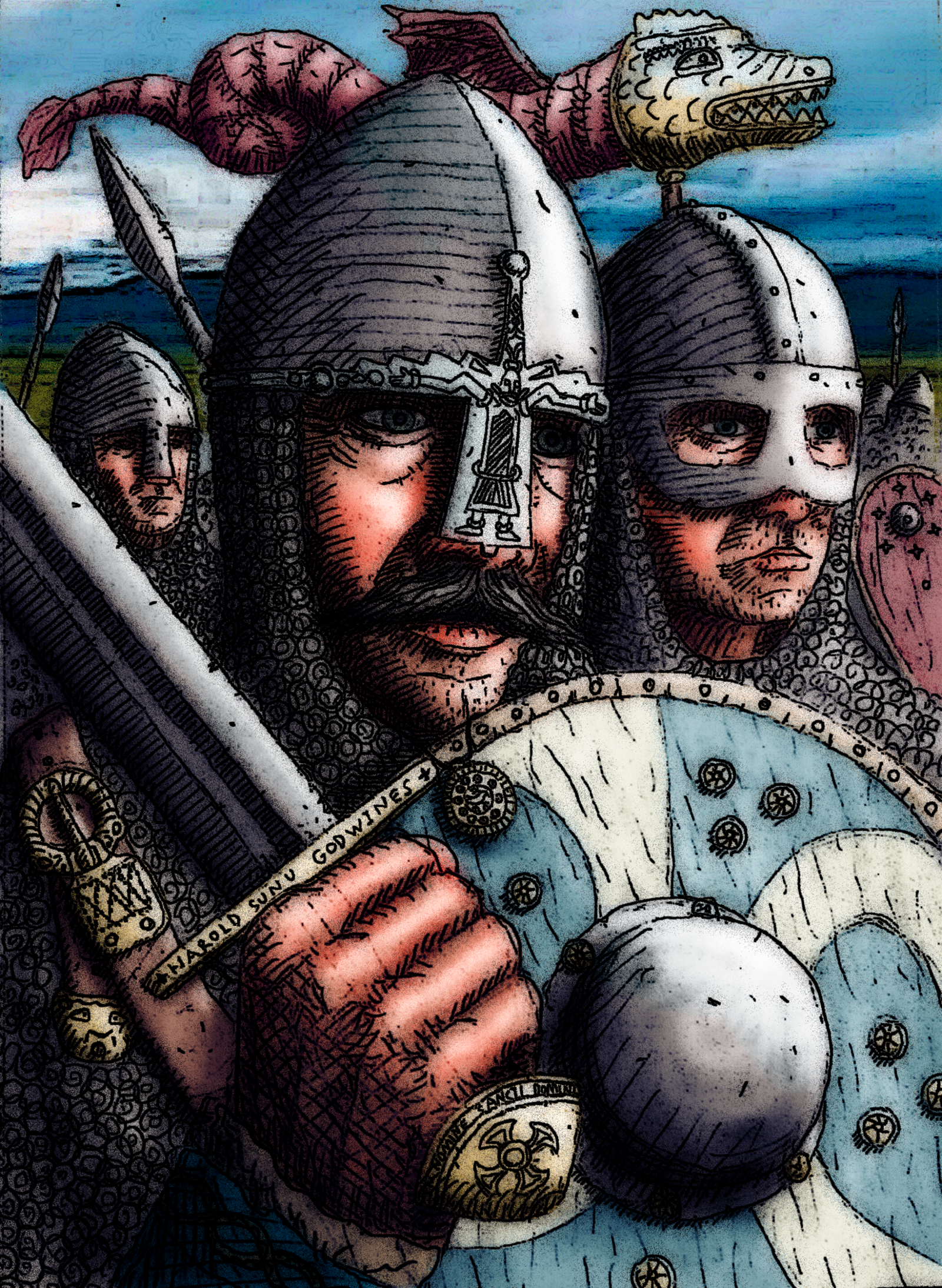
On 14 October 1066, William, Duke of Normandy, defeated King Harold’s army at Hastings. Harold was killed. William was crowned king of England on 25 December that year. The conquest placed the existing kingdom under a new ruler. [12]
Its effects extended beyond the throne. Norman-French nobles replaced much of the existing ruling elite. The new authorities built castles to secure control over the country. Changes in landholding and the means of enforcing power made the conquest a major political turning point. [13]
Language reveals both change and continuity. French was used in government and among major landowners. Latin served the church and legal records. English remained the population’s spoken language, so the replacement of rulers did not erase English speech. [14]
Details you won’t find in guidebooks
At Sutton Hoo in Suffolk, the seventh-century ship burial presented excavators with an unusual problem in 1939. The wooden ship had not survived. Its marks in the sand and its iron rivets nevertheless revealed the form of a vessel about 27.3 metres long. [15]
Black fragments from the burial were once thought to be pine tar used in ship repairs. Analysis published in 2016 identified them as bitumen. Their chemical and isotopic characteristics pointed to a Middle Eastern origin, adding a connection beyond the North Sea to this burial’s material history. [15]
You can also encounter Viking settlement through an ordinary street address. The ending in Nottingham’s Fletcher Gate comes from the Old Norse word gata, meaning street or road. Here, “gate” does not refer to an entrance. [10]
Timeline
- Fourth century: Christianity became established in Roman Britain.
- Around 410: Roman rule in Britain ended.
- Fifth century: Migrants crossed the North Sea to Britain.
- 597: Augustine’s mission reached Kent.
- Around 650–800: Seven principal Anglo-Saxon kingdoms dominated the political landscape.
- 664: Oswiu chose Roman Easter calculations at Whitby.
- 731: Bede completed his Ecclesiastical History of the English People.
- 757–796: Offa ruled Mercia.
- 793: Vikings attacked Lindisfarne.
- 865: The Viking Great Army arrived.
- 878: Alfred won at Edington.
- 910s: Edward and Æthelflæd conquered Danelaw territories south of the Humber.
- 927: Æthelstan united England’s kingdoms.
- 937: Æthelstan won at Brunanburh.
- 14 October 1066: William defeated Harold’s army at Hastings.
- 25 December 1066: William was crowned king of England.
FAQ
Who were the Anglo-Saxons?
They were an Old English-speaking cultural community formed through interaction between migrants and existing Romano-British populations. They lived across much of present-day England and southeastern Scotland.
Where did the Angles, Saxons and Jutes come from?
Bede associated the Angles with Angeln, the Saxons with present-day Lower Saxony and the Jutes with Jutland. Archaeology indicates a more complex population than these separate categories suggest.
Who united the kingdoms of England?
Æthelstan brought England’s separate kingdoms under one rule in 927. His achievement followed expansion by Edward the Elder and Æthelflæd into Danelaw territory south of the Humber.
Did English disappear after the Norman Conquest?
No. French became a language of government and major landowners, while Latin served the church and legal records. English remained the spoken language of the population.
Sources
- Wikipedia — Anglo-Saxons en.wikipedia.org
- English Heritage — Early Medieval England english-heritage.org.uk
- Our Migration Story — The Anglo-Saxon invasion and the beginnings of the ‘English’ ourmigrationstory.org.uk
- Historical Association — Anglo-Saxons: a brief history history.org.uk
- Nature — The Anglo-Saxon migration and the formation of the early English gene pool nature.com
- English Heritage — Early Medieval: Power and Politics english-heritage.org.uk
- English Heritage — Introduction to Early Medieval England english-heritage.org.uk
- English Heritage — Early Medieval: Religion english-heritage.org.uk
- Durham Cathedral — The Venerable Bede durhamcathedral.co.uk
- University of Nottingham — Arrival and Settlement nottingham.ac.uk
- The Royal Family — Athelstan royal.uk
- English Heritage — History of Battle Abbey and Battlefield english-heritage.org.uk
- Kent Historic Environment Record — Medieval Kent heritage.kent.gov.uk
- London Museum — How the Norman conquest changed London londonmuseum.org.uk
- PLOS ONE — Identification, Geochemical Characterisation and Significance of Bitumen journals.plos.org
Image: Harold godwinson, Late anglo-saxon warriors, Hastings 1066.png — Rowyn flowerdew, CC0