Marcus Licinius Crassus was a Roman general and politician who lived approximately from 115 to 53 BC, amassed wealth through property, mines and slaves, and allied with Caesar and Pompey. He lost the campaign around Carrhae, near modern Harran in Turkey, because Roman operational choices left his army exposed to mobile Parthian cavalry and sustained arrow attacks. He was killed during a meeting in 53 BC.
How did a politician with such resources reach that end? Crassus’s path runs from confiscated houses and the suppression of Spartacus’s revolt to an alliance with political rivals and a disastrous eastern campaign. If you visit Harran, that sequence connects a place in today’s Şanlıurfa province with a struggle over wealth, political influence and military command.
How did Crassus acquire his wealth, and how reliable are ancient accounts?
Crassus expanded his fortune by buying confiscated properties cheaply during Sulla’s political purges. Their previous owners had been killed. His rise also had a military foundation: in 82 BC, he commanded the right wing of Sulla’s army at the Battle of the Colline Gate and played an important part in the victory.
Property was only part of his income. David William Drummond Pugh’s doctoral thesis abstract identifies silver mines in Spain, housing and slaves among his sources of revenue. Crassus therefore drew wealth from several kinds of assets, rather than a single business.
Plutarch gives the most striking figures. According to his account, Crassus’s fortune grew from no more than 300 talents initially to 7,100 talents before the Parthian campaign. These are an ancient author’s estimates. Pugh’s 1981 thesis takes a different position, arguing that Plutarch’s figure for the total fortune is too low.
The disagreement matters when you encounter a precise statement about Crassus’s wealth. Plutarch supplies numbers, but Pugh disputes their adequacy. The figures should retain their attribution instead of becoming an unquestioned balance sheet.
Plutarch also describes purchases made during house fires. Crassus allegedly exploited owners’ fear to buy burning buildings and neighbouring properties cheaply. For an everyday comparison, think of selling your home under urgent pressure: the need to sell can weaken your bargaining position. That pressure is central to Plutarch’s account.
The interpretation remains contested. In a 2013 academic discussion, Martin Stone argues that the fire-profit story reflects a hostile source and requires attention to its political dimension. Crassus’s property holdings and the moral portrait built around them therefore need separate consideration.
How did suppressing Spartacus’s revolt affect his political career?
Crassus suppressed the slave revolt led by Spartacus in 71 BC. The victory gave him a major military achievement before his consulship. Its aftermath was brutal: approximately 6,000 prisoners were crucified along the Via Appia on his orders.
Plutarch describes severe punishment within Crassus’s own army as well. From soldiers who had fled, 500 were selected and divided into groups of ten. One man in each group was chosen by lot and killed. This was the punishment called decimation.
Victory did not give Crassus uncontested credit. According to Plutarch, Pompey killed fleeing rebels and claimed a share in ending the war. Crassus received an ovation rather than the greater triumphal procession. The dispute over recognition placed military success beside political rivalry.
In 70 BC, Crassus became consul alongside Pompey. Suppressing the revolt thus preceded advancement to the consulship, but it also sharpened the question of who deserved credit. The two rivals would later cooperate in a broader alliance.
Why did he ally with Caesar and Pompey?
Caesar mediated between Crassus and Pompey, helping bring them into the political alliance formed in 60 BC. It became known as the First Triumvirate. Their previous rivalry did not prevent cooperation when an alliance offered greater influence.
Plutarch presents Caesar’s argument directly: competition between Crassus and Pompey strengthened Cato and their other opponents. Joining forces would allow them to direct Roman politics. In this account, the alliance answered a practical political problem created by their rivalry.
Following the meeting at Luca in 56 BC, Crassus and Pompey became consuls again in 55 BC, and Crassus received the province of Syria for five years. That appointment provided the command from which he undertook his Parthian campaign.
An ancient interpretation connects the expedition with Crassus’s desire for personal glory. Encyclopaedia Iranica places greater emphasis on the prolonged competition between Roman and Parthian expansion. Personal ambition belongs in the discussion, but so does that wider conflict.
Why was the Roman army defeated in the Parthian campaign?
In spring 53 BC, Crassus crossed the Euphrates at Zeugma. His force comprised approximately seven legions, 4,000 cavalry and 4,000 light infantry. He advanced through Mesopotamia toward the campaign that ended around Carrhae.
King Artavasdes II of Armenia had proposed a mountainous route. Such terrain would reduce the effectiveness of Parthian cavalry. Crassus instead chose the Mesopotamian approach, making his route an important part of the explanation for the defeat.
Expected Armenian assistance also failed to arrive. The Parthian king, Orodes II, attacked Armenia, preventing Artavasdes from sending the anticipated help. Crassus’s campaign therefore faced both the consequences of his chosen route and the loss of support.
Accounts of treacherous guides offer a more dramatic explanation, but they require caution. Encyclopaedia Iranica states that betrayal cannot be proved. It also rejects certainty that the spring route was waterless. Neither claim should carry the explanation for the Roman defeat.
At Carrhae, Crassus faced forces commanded by Surena. Roman heavy infantry struggled to reach Parthian mounted archers in close combat. The archers could shoot from a distance, withdraw and continue shooting while retreating. Roman troops could not force them into the kind of engagement they needed.
The attacks also had a supply system behind them. Surena’s reserve arrows travelled on approximately 1,000 camels. This defeated the Roman calculation that the Parthians would eventually exhaust their ammunition. If you picture Carrhae only as cavalry circling infantry, you miss the supplies that kept the pressure going.
Plutarch describes another damaging development involving Crassus’s son Publius. He pursued the enemy with 1,300 cavalry, 500 archers and eight cohorts. His force was drawn away from the main army and surrounded. Separation turned the pursuit into an isolated engagement.
The defeat resulted from these factors working together: the operational route, unavailable Armenian support, mobile archers, sustained ammunition supplies and the isolation of Publius’s force. Plutarch estimates that approximately 20,000 Romans were killed and 10,000 captured across the campaign. Those totals describe the campaign, rather than a securely isolated count for the battle alone.
What evidence supports accounts of his death and the molten-gold story?
Plutarch places Crassus’s death in a struggle during a meeting. He does not treat the killer’s identity as certain. Instead, he characterizes details about who killed Crassus as conjecture.
Cassius Dio preserves alternative possibilities. Crassus may have been killed by a Roman trying to prevent his capture, or by an enemy who saw that he was wounded. These alternatives show why a detailed reconstruction of his final moments requires careful attribution.
Dio then reports that some people said molten gold was poured into Crassus’s mouth. He introduces this after describing the death and presents it as hearsay. His passage does not establish that molten gold killed Crassus.
Plutarch offers a different dramatic account of the aftermath. He claims that Crassus’s severed head was used during a performance of Euripides’s Bacchae before Orodes II. This, too, should remain an attributed ancient account. Neither dramatic story resolves the uncertainty surrounding the killing itself.
Details you won’t find in guidebooks
Plutarch says Crassus acquired more than 500 enslaved architects and building craftsmen. This detail adds a workforce to the familiar account of his property purchases. It belongs to the same fire-related narrative whose hostile framing Stone questions.
Another detail concerns his name. Despite Crassus’s wealth, no ancient source gives either him or his father the nickname Dives, meaning wealthy. His financial reputation should not turn that word into an anciently attested personal label.
Surena’s approximately 1,000 ammunition camels also deserve attention. Their role links a practical supply arrangement to the Romans’ failed expectation that the arrows would stop. At Carrhae, transport helped sustain the battlefield tactics.
Timeline
- Approximately 115 BC: Marcus Licinius Crassus was born.
- 82 BC: He commanded Sulla’s right wing at the Colline Gate.
- 71 BC: He suppressed Spartacus’s revolt.
- 70 BC: He served as consul alongside Pompey.
- 60 BC: He formed the First Triumvirate with Caesar and Pompey.
- 56 BC: The meeting at Luca took place.
- 55 BC: He became consul again with Pompey and received the Syrian command.
- 53 BC: He suffered defeat at Carrhae and was killed during a meeting.
FAQ
Who was Marcus Licinius Crassus?
Crassus was a Roman general and politician who lived approximately from 115 to 53 BC. He suppressed Spartacus’s revolt and formed a political alliance with Caesar and Pompey.
Why did Crassus lose at Carrhae?
Parthian mounted archers kept Roman heavy infantry from closing into combat, while reserve arrows sustained their attacks. Crassus’s route through Mesopotamia, the loss of expected Armenian support and the isolation of Publius’s force also contributed.
Where is Carrhae today?
Ancient Carrhae is present-day Harran in Turkey’s Şanlıurfa province. The battle took place in the surrounding area in 53 BC.
Was Crassus killed by molten gold?
That is not an established account of his death. Cassius Dio reports the molten-gold story as hearsay after describing Crassus’s death, while Plutarch places his killing in a struggle during a meeting.
Sources
- Plutarch, Life of Crassus penelope.uchicago.edu
- University of St Andrews, David William Drummond Pugh, doctoral thesis abstract research-repository.st-andrews.ac.uk
- Martin Stone, Antichthon, A Year of One’s Own: Dating the Praetorship of Marcus Crassus cambridge.org
- Encyclopaedia Iranica, Carrhae iranicaonline.org
- Cassius Dio, Roman History, Book 40 penelope.uchicago.edu
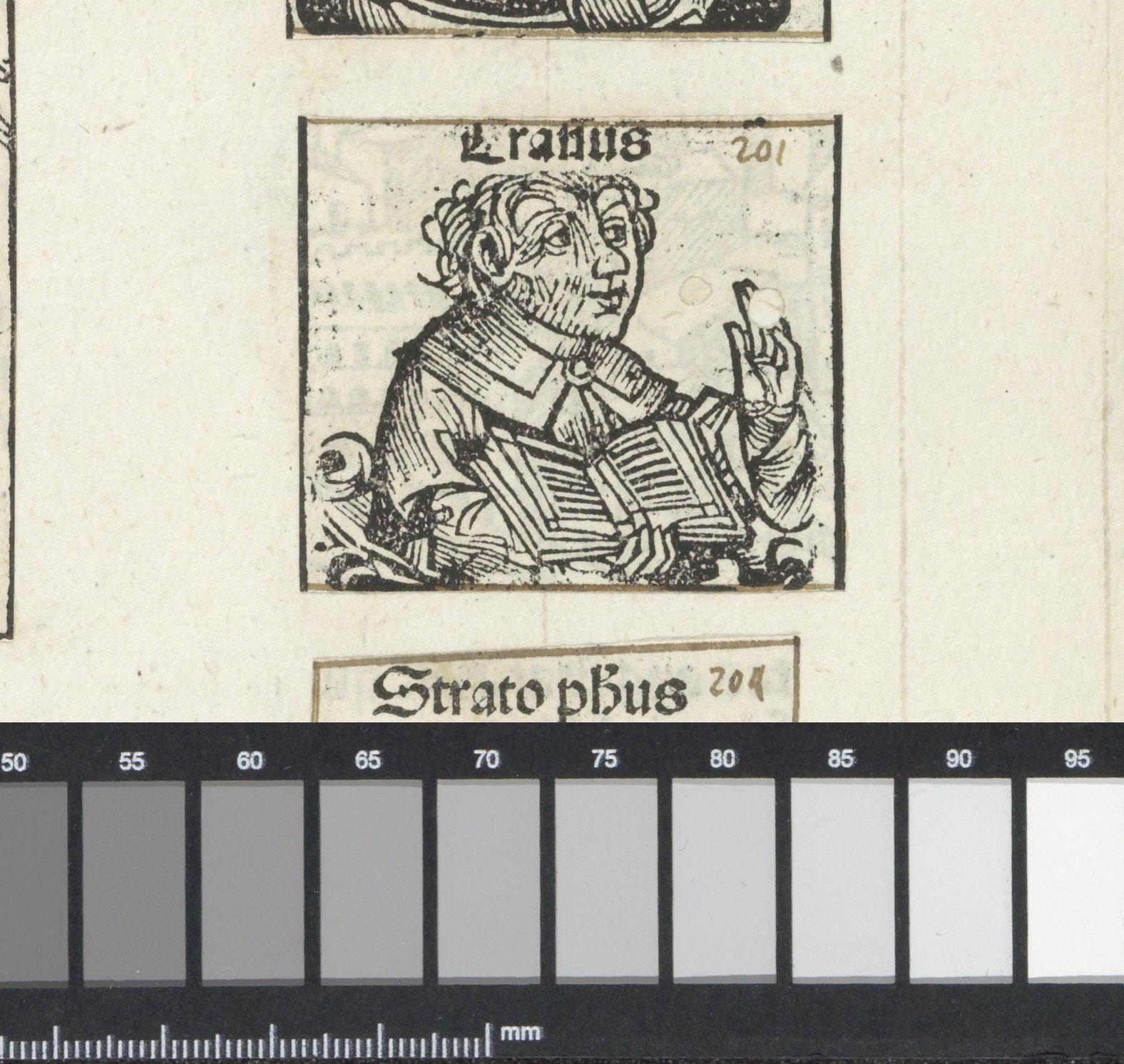
Image: Marcus Licinius Crassus Crassus (titel op object) Liber Chronicarum (serietitel), RP-P-2016-49-21-7.jpg — Rijksmuseum, CC0