The short answer sits in northern Turkey. “Veni, vidi, vici” is tied to the victory Caesar won in 47 BC near ancient Zela, today the town of Zile in Tokat province. The longer answer depends on which Roman writer you trust. Plutarch describes a letter sent to Rome. Suetonius describes a placard displayed at a triumph in Rome a year later. This article walks through both, then covers the questions people type next: his death, his grave, Cleopatra, the Shakespeare play and the films.
Who was Julius Caesar?
Gaius Julius Caesar lived from 100 BC to 44 BC. He was a Roman soldier, politician and writer. In 60 BC he formed a political alliance with Pompey and Crassus, known as the First Triumvirate. In 49 BC he crossed the Rubicon river with his army. That act opened a civil war against Pompey and his rivals in the Senate. On 9 August 48 BC he defeated Pompey’s army at Pharsalus in Greece.
Where did Caesar say “Veni, vidi, vici”?
The battle behind the phrase was fought near Zela in 47 BC. Treccani dates the victory to 2 August 47 BC. Zela is today Zile, a district of Tokat in Turkey. The defeated ruler was Pharnaces, son of Mithridates VI, according to Plutarch’s Life of Caesar, chapter 50.
Plutarch says Caesar described the speed of the victory in a three-word message to a friend in Rome: “Veni, vidi, vici.” In this telling, the words were written, not shouted from a hilltop. Appian also places the phrase in a message sent to Rome after Zela.
So if you stand in Zile today, you are standing in the right geography. The battle happened nearby. But the sources do not point to a single spot where Caesar spoke the words aloud. Zile Municipality’s own page on Zile Castle calls the story that the phrase was spoken at the castle a “rivayet,” meaning a tradition or legend. A specific speaking point inside the castle cannot be confirmed from that source.
The placard in Rome: a second version
Suetonius gives a different setting. According to him, “Veni, vidi, vici” was displayed on a placard in the Pontic triumph held in Rome in 46 BC. The placard stressed how quickly the war had ended. Historian Ida Östenberg, writing in The Classical Quarterly (Cambridge University Press), argues that Suetonius’s account of the triumph placard deserves priority in historical reliability over the letter story in Plutarch and Appian.
Östenberg also reads the phrase as more than a victory report. In her view it was a propaganda message. It belittled Pompey’s earlier successes in Pontus. It also challenged Rome’s traditional political norms. Three words did a lot of work.
Julius Caesar quotes: why these three words stick
Plutarch noticed something about the Latin. Each word in “Veni, vidi, vici” ends with the same sound. He wrote that this gives the phrase a brevity and harmony that cannot be fully carried into other languages. You hear the loss in English: “I came, I saw, I conquered” is longer and drops the rhyme.
The other famous line is tied to his death. Suetonius reports that Caesar said nothing during the attack except a first groan. He adds that some writers claimed Caesar said to Brutus, in Greek, “You too, my child?” Suetonius records the claim without endorsing it.
Julius Caesar and Cleopatra
The relationship began in Alexandria in 48 BC. In 47 BC Caesar defeated Ptolemy XIII, which secured Cleopatra’s position in ruling Egypt. University College London’s Egyptian chronology gives 23 June 47 BC as the birth date of Cleopatra’s son Caesarion.
Was Caesarion Caesar’s son? Suetonius records two views. Mark Antony stated that Caesar had acknowledged the boy. But Gaius Oppius, a friend of Caesar, wrote a work arguing the child was not Caesar’s. The dispute was alive in Caesar’s own circle.
Julius Caesar death: where did he die?
Caesar was stabbed to death on 15 March 44 BC. The attack took place during a Senate meeting in the Curia of Pompey in Rome. The leaders of the conspiracy included Marcus Junius Brutus, Gaius Cassius Longinus, Decimus Brutus and Gaius Trebonius.
Suetonius gives a medical detail. Caesar received 23 wounds. The physician Antistius examined the body. He judged only one wound fatal: the second one, in the chest.
Julius Caesar grave
The search term points to a temple, not a tomb. The main monument tied to his remains is the Temple of Divus Julius in the Roman Forum. It stands on the spot where Caesar’s body was burned. Augustus dedicated the temple in 29 BC. If you search for “Julius Caesar grave,” this is the site the results mean.
Julius Caesar books: what he wrote
Caesar’s surviving works are two commentaries. De Bello Gallico covers his campaigns in Gaul. De Bello Civili covers the civil war.
Three more books travel with them: the Alexandrian War, the African War and the Spanish War. Their authorship is uncertain. LacusCurtius, the classics site at the University of Chicago, treats them separately from Caesar’s certain works.
Julius Caesar by William Shakespeare
Folger Shakespeare Library notes that Shakespeare may have written Julius Caesar in 1599 for performance at the Globe Theatre. The play deals with Caesar’s murder by his friends and political allies. It leaves open whether Brutus is a hero or a traitor.
Julius Caesar movie
The 1953 film Julius Caesar adapted Shakespeare’s play.
Details you won’t find in guidebooks
- Placard, not letter? Suetonius puts the phrase on a placard in the 46 BC triumph in Rome, stressing how fast the war ended. Östenberg argues this version is more reliable than the letter story.
- The rhyme is the point. Plutarch pointed out that the three Latin words share an ending sound, which gives the phrase a compactness other languages cannot fully copy.
- 23 wounds, one fatal. Suetonius says the physician Antistius found only the second wound, in the chest, to be fatal.
- The uncertain books. The Alexandrian, African and Spanish War narratives are transmitted with Caesar’s works, but their author is unknown.
The calendar on your phone
In 46 BC Caesar reformed the calendar. The Julian calendar had a 365-day year and one extra day every four years. Every leap year on your phone’s calendar follows a rule set in that reform.
Timeline
- 100 BC Gaius Julius Caesar is born.
- 60 BC Caesar, Pompey and Crassus form a political alliance.
- 49 BC Caesar crosses the Rubicon; civil war begins.
- 48 BC Caesar defeats Pompey at Pharsalus and begins his relationship with Cleopatra in Alexandria.
- 47 BC Victory at Zela; the “Veni, vidi, vici” letter story is tied to this battle.
- 46 BC According to Suetonius, the phrase is displayed on a placard in the Pontic triumph in Rome.
- 15 March 44 BC Caesar is killed at the Senate meeting in the Curia of Pompey.
- 29 BC Augustus dedicates the Temple of Divus Julius where Caesar’s body was burned.
- 1599 Year in which, according to the Folger Shakespeare Library, Shakespeare may have written Julius Caesar for the Globe Theatre.
FAQ
Where did Caesar say “Veni, vidi, vici”?
The phrase is tied to his victory near ancient Zela in 47 BC, today Zile in Tokat, Turkey. Plutarch says Caesar wrote it in a message to a friend in Rome. Suetonius says it appeared on a placard in the Pontic triumph in Rome in 46 BC.
Did Caesar say it inside Zile Castle?
Zile Municipality itself calls the castle story a “rivayet,” a tradition. The battle was fought nearby, but no source confirms a specific speaking point inside the castle.
Who did Caesar defeat at Zela?
Pharnaces, son of Mithridates VI, according to Plutarch’s Life of Caesar, chapter 50. Treccani dates the victory to 2 August 47 BC.
What were Caesar’s last words?
Suetonius reports that Caesar said nothing during the attack except a first groan. He adds that some writers claimed Caesar said to Brutus in Greek, “You too, my child?”
Is there a Julius Caesar grave to visit?
The main monument is the Temple of Divus Julius in the Roman Forum. It stands where Caesar’s body was burned, and Augustus dedicated it in 29 BC.
Sources
- Zile Belediyesi — Zile Kalesi site.zile.bel.tr
- Treccani — Veni, vidi, vici treccani.it
- University of Victoria, Internet Shakespeare Editions — Plutarch, Life of Caesar 50 hcmc.uvic.ca
- Cambridge University Press, The Classical Quarterly — Ida Östenberg, Veni Vidi Vici and Caesar’s Triumph cambridge.org
- University of Chicago, LacusCurtius — Caesar, Gallic War: Introduction penelope.uchicago.edu
- Wikipedia — Julius Caesar en.wikipedia.org
- University College London — Ptolemy XV Caesarion ucl.ac.uk
- University of Chicago, LacusCurtius — Suetonius, Life of Julius Caesar penelope.uchicago.edu
- Wikipedia — Assassination of Julius Caesar en.wikipedia.org
- Turismo Roma — La Roma monumentale turismoroma.it
- Vikipedi — Jül Sezar tr.wikipedia.org
- University of Chicago, LacusCurtius — Caesar: The Wars penelope.uchicago.edu
- Folger Shakespeare Library — Julius Caesar folger.edu
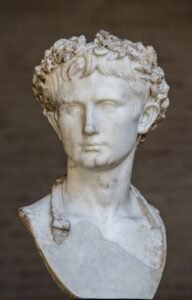
Image: The “Tusculum portrait”, a rare bust of Julius Caesar in his lifetime, 45 – 43 BC, Moi, Auguste, Empereur de Rome exhibition, Grand Palais, Paris – 14628246546.jpg — Following Hadrian, CC BY-SA 2.0