The conquest of Mecca took place on 11 January 630, corresponding to 20 Ramadan 8 AH, according to the generally accepted date given by the TDV İslâm Ansiklopedisi. Muhammad led the Muslim army that took the city from Quraysh, although historical accounts differ over the precise day of entry.
How did a treaty promising ten years of peace lead to an army entering Mecca? The answer begins with an attack on an allied tribe. Following that chain of events helps you understand the failed negotiations, the entry through four approaches and the decisions that followed at the Kaaba.
When did the conquest of Mecca happen in 630 CE?
The clearest date to remember is 11 January 630. Its Hijri equivalent is 20 Ramadan 8. TDV presents this as the generally accepted date, while Turkish Wikipedia also uses 11 January 630 for the conquest.
The exact day is less settled than that short answer might suggest. English Wikipedia’s discussion of older accounts lists entry dates of 10, 17–18, 19 or 20 Ramadan. These are competing reports about the day within Ramadan. They should accompany, rather than obscure, the generally accepted date.
For a short study answer, you can therefore write: “The conquest of Mecca occurred in 630 CE, generally dated to 11 January, or 20 Ramadan 8 AH.” This gives both calendar dates while preserving the distinction between a commonly accepted date and differing historical reports.
What does the conquest of Makkah mean?
The conquest of Mecca means the taking of Mecca in the Hijaz from Quraysh by a Muslim army under Muhammad’s command. The event covered both the military entry and the establishment of Muslim authority in the city. Attab ibn Asid’s subsequent appointment as governor gave that authority a local administrator.
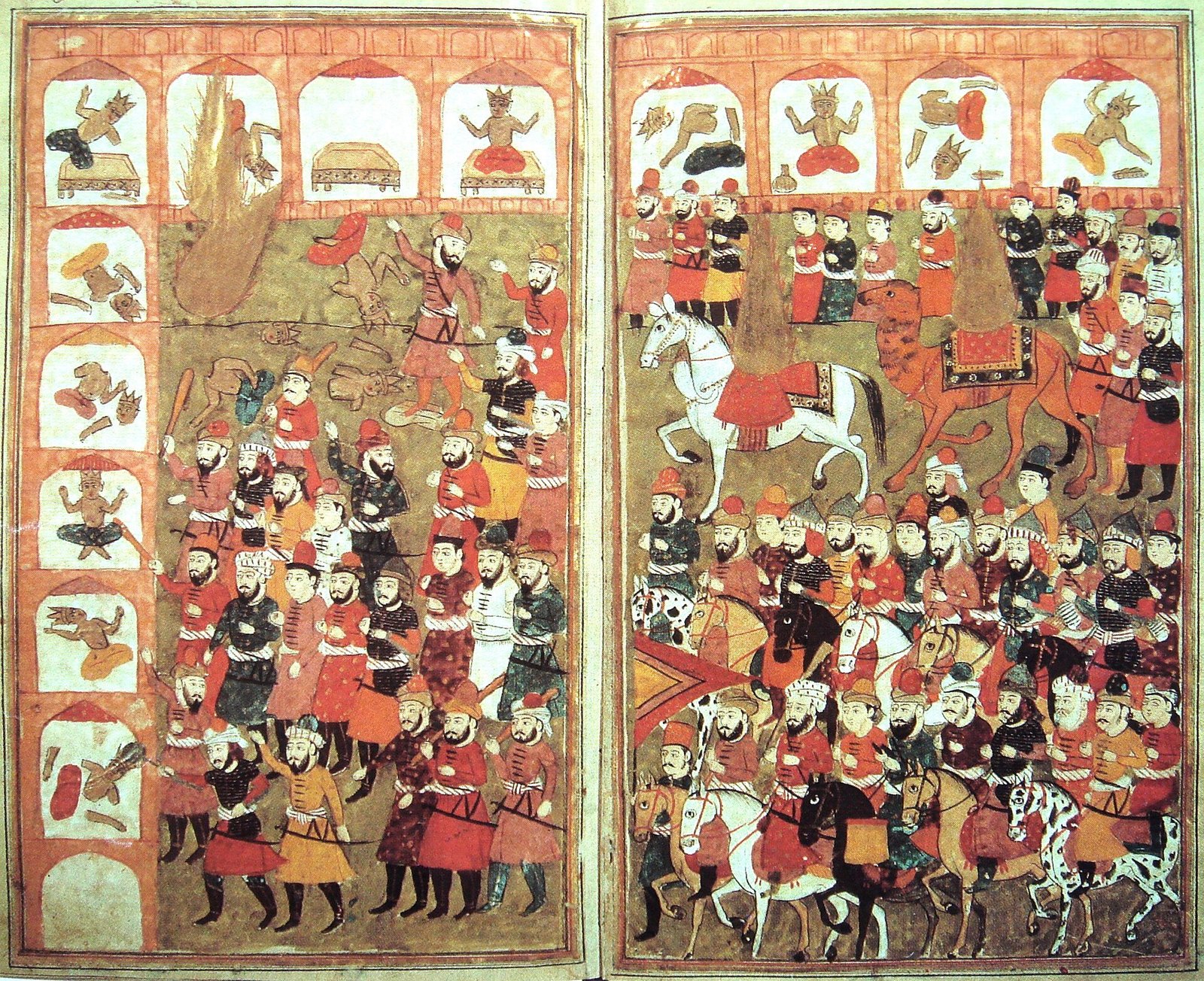
The entry also brought changes at the Kaaba. Conquest accounts describe the removal of 360 idols and Bilal al-Habashi’s call to prayer from its roof. These actions help explain why accounts of the event discuss worship alongside troop movements and political control.
What caused the conquest of Mecca by Muhammad?
The Treaty of Hudaybiyyah, concluded in 628, provided for ten years of peace between the Muslims and Quraysh. Other Arab tribes could ally themselves with either side. Those alliances formed part of the treaty arrangement and became central to its breakdown.
The immediate breach came when Banu Bakr, an ally of Quraysh, attacked Khuzaa, which was allied with the Muslims. The attack on Khuzaa therefore affected the wider peace agreement. It supplied the direct reason for the campaign against Mecca.
Muhammad demanded that Quraysh pay compensation for the Khuzaa members who had been killed or end its alliance with Banu Bakr. Quraysh later sent Abu Sufyan to Medina to renew the treaty. His mission failed, leaving the diplomatic attempt without an agreement.
How did Muhammad prepare for the entry into Mecca?
According to Turkish Wikipedia, Muhammad left Medina on 4 January 630, or 13 Ramadan 8, with approximately 10,000 men. Before entering Mecca, the army camped at Marr al-Zahran. This halt belonged to the approach to the city, before the final entry.
Preparations included measures to conceal the campaign’s destination. Departures from Medina were controlled, and guards were stationed at passes on the road to Mecca. These restrictions show that managing the movement of information formed part of the preparations alongside assembling the army.
A safety announcement offered protection to people who entered Abu Sufyan’s house, remained in their own homes or took refuge in the Sacred Mosque. You can connect this to an everyday decision: staying inside your own home was one of the announced ways to remain safe during the army’s arrival.
How did the army enter the city?
Muhammad divided the army into four columns and instructed them to meet at Safa. The troops received orders to avoid fighting unless they encountered resistance. The entry plan therefore combined several approaches with an explicit restriction on initiating combat.
Khalid ibn al-Walid’s column entered from the south. It met armed resistance near the slopes of Handama and overcame it. This clash matters when describing the conquest: the orders sought to limit fighting, but fighting still occurred during the entry.
The reported death toll varies. TDV records accounts giving two or three Muslim deaths and either twelve or twenty-eight deaths among the Meccans. These alternatives should remain separate. Combining them into a single confident total would conceal the disagreement between the reports.
The legal character of the conquest also became a subject of debate. TDV records the view that Mecca was taken peacefully, alongside the view that it was conquered through warfare but its land was not distributed. The debate concerns how the takeover should be classified.
What happened at the Kaaba and after the entry?
According to conquest narratives, 360 idols were removed from the Kaaba while Muhammad recited verse 81 of Surah al-Isra. Bilal al-Habashi climbed onto the Kaaba’s roof and gave the call to prayer. Both actions feature in accounts of the religious changes accompanying the takeover.
A general amnesty followed, but it had exceptions. Approximately ten people were initially excluded, and some of them were later pardoned. Describing the amnesty as general preserves its broad scope; mentioning the exclusions explains how it was applied.
Attab ibn Asid, who became Muslim during the conquest, was appointed governor of Mecca. He is recorded as being approximately twenty years old at the time. His appointment was one of the practical administrative consequences of the city’s change of control.
Why was the conquest of Mecca so important?
The conquest ended the wars between the Muslims and Quraysh. It also accelerated the spread of Islam across the Arabian Peninsula. These consequences extended beyond the entry itself, linking the settlement in Mecca to a wider change in the peninsula.
The requirement to migrate from Mecca to Medina ended with the conquest. Muhammad subsequently returned to Medina. The end of that requirement was a further consequence of the change in Mecca’s position, alongside the military settlement and the appointment of a governor.
Two Quranic references deserve distinction. Diyanet’s commentary primarily associates the conquest mentioned in the opening verse of Surah al-Nasr, the 110th surah, with Mecca’s conquest. Surah al-Fath, the 48th surah, belongs to the Hudaybiyyah context in Hijri year 6 and principally assesses that treaty.
Details you won’t find in guidebooks
The term tuleqa was used for the Quraysh members released at the conquest. Its dictionary meaning is “people who have been set free.” The term gives you a specific word connected to the treatment of the defeated community and the releases that accompanied the settlement.
Muhammad stayed in his tent at Hajun after the conquest. He did not reclaim the house that had been sold after his migration. This detail places his accommodation outside the familiar account of the army’s entry and the events at the Kaaba.
The concealment measures also extended beyond a general wish for secrecy. Controls operated at Medina’s exits, while guards watched passes on the Mecca road. These were concrete steps taken before an army of approximately 10,000 reached the city.
Why are there conquest commemorations around New Year in Turkey?
If you encounter a New Year’s Eve commemoration in Turkey, its timing has a separate explanation. In a 2019 interview with Independent Türkçe, former MGV chairman Nevzat Laleli said these events began in 1991 as an alternative to New Year celebrations.
That commemorative timing does not establish 31 December or 1 January as the historical conquest date. TDV gives 11 January 630 as the generally accepted date. Keeping the modern observance separate from the historical event helps you interpret references to the conquest during a visit to Turkey.
Timeline
- 628 / Hijri 6: The Treaty of Hudaybiyyah establishes a ten-year peace and permits tribal alliances with either side.
- Before the conquest: Banu Bakr attacks Khuzaa. The treaty is breached, and diplomatic efforts fail.
- 4 January 630 / 13 Ramadan 8: Muhammad leaves Medina with approximately 10,000 men, according to Turkish Wikipedia.
- 11 January 630 / 20 Ramadan 8: Mecca is conquered on TDV’s generally accepted date. Armed resistance during the entry is overcome.
- After the conquest: The Kaaba’s idols are removed, an amnesty with exceptions is applied and a governor is appointed.
- 1991: New Year’s Eve conquest commemorations begin in Turkey, according to the former MGV chairman interviewed by Independent Türkçe.
FAQ
When did the conquest of Mecca happen?
The generally accepted date given by the TDV İslâm Ansiklopedisi is 11 January 630, corresponding to 20 Ramadan 8 AH. Other accounts give different days within Ramadan.
In which Hijri year was the conquest of Makkah?
The conquest took place in Hijri year 8. TDV gives its generally accepted date as 20 Ramadan 8.
Why did Muhammad march on Mecca?
Banu Bakr, an ally of Quraysh, attacked Khuzaa, which was allied with the Muslims. This breached the Treaty of Hudaybiyyah, and subsequent diplomatic efforts failed.
Was the conquest of Mecca entirely peaceful?
The troops were ordered to avoid fighting unless resisted. Khalid ibn al-Walid’s southern force nevertheless encountered armed resistance near Handama and overcame it.
Why was the conquest of Mecca important?
It ended the wars between the Muslims and Quraysh and accelerated Islam’s spread in the Arabian Peninsula. The Kaaba’s idols were removed, a general amnesty with exceptions was applied and a governor was appointed.
Sources
- TDV İslâm Ansiklopedisi — Mekke islamansiklopedisi.org.tr
- Vikipedi — Mekke’nin Fethi tr.wikipedia.org
- Wikipedia — Conquest of Mecca, including Dates en.wikipedia.org
- TDV İslâm Ansiklopedisi — Hudeybiye Antlaşması islamansiklopedisi.org.tr
- TDV İslâm Ansiklopedisi — Tulekā islamansiklopedisi.org.tr
- TDV İslâm Ansiklopedisi — Muhammed islamansiklopedisi.org.tr
- Diyanet Kur’an Platformu — Nasr Suresi 1–3. Ayetlerin Tefsiri kuran.diyanet.gov.tr
- Diyanet Dijital — Fetih Sûresi Türkçe Meal dijital.diyanet.gov.tr
- Independent Türkçe — Mekke’nin fethi kutlamaları nasıl başladı? indyturk.com
Image: Muhammad destroying idols – L'Histoire Merveilleuse en Vers de Mahomet BNF.jpg — Unknown authorUnknown author, Public domain