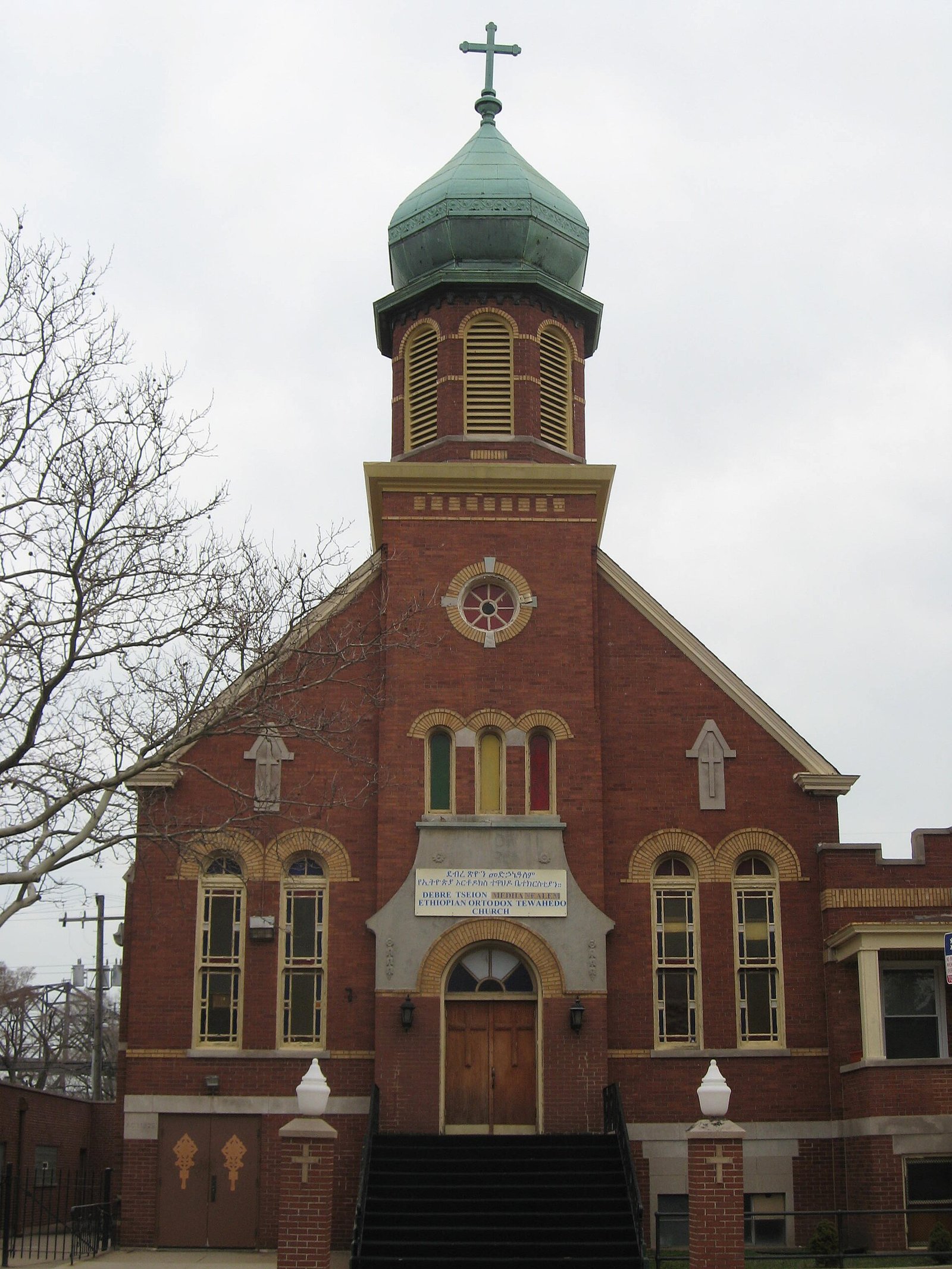
The Ethiopian Orthodox Tewahedo Church took institutional shape in fourth-century Aksum through King Ezana’s conversion and Frumentius’s consecration as its first bishop by Athanasius of Alexandria. Its leaders subsequently came from Egypt through the Alexandrian connection, until a gradual transfer to Ethiopian leadership culminated in its own patriarchate in 1959.
How did a church linked so closely to Alexandria develop its own leadership? You can follow the answer through Ezana’s coins, the Ge’ez language, monastic manuscripts, and the appointments of Ethiopian bishops. These reveal different parts of the story: royal adoption, religious teaching, cultural preservation, and administrative independence.
How did Christianity take root under Frumentius and King Ezana?
Aksum stood on international trade routes connecting India and the Roman Empire across the Red Sea. This setting matters because the account of Frumentius places Christian merchants within the story of the church’s beginnings. Religious contacts accompanied commercial connections.
According to the church histories of Rufinus and Socrates Scholasticus, Frumentius came from Tyre. A disaster during a sea journey brought him to the Aksumite court. There, he established contact with Christian Roman merchants. This is the narrative through which those historians explain his early activity in Aksum.
Frumentius received episcopal consecration from Athanasius, the patriarch of Alexandria, during the fourth century. As Ethiopia’s first bishop, he supplied an institutional connection between Aksumite Christianity and Alexandria. Ethiopian believers remember him as Abba Salama Kassate Berhan, meaning “Father of Peace and Revealer of Light.”
King Ezana’s conversion in the middle of the fourth century marked Christianity’s adoption at the level of the state. Crosses appeared on Aksumite coins during his reign. If you want a material sign of royal religious change, these coins provide one: Christian imagery entered the kingdom’s currency.
Archaeology adds evidence beyond royal objects and written accounts. At Beta Samati, radiocarbon dating places the basilica’s earliest use in the fourth century. The dating came from agricultural seeds recovered from two separate layers. It therefore provides an independently dated setting for early Christian worship.
Ezana’s conversion, Frumentius’s consecration, and the Beta Samati basilica illuminate different aspects of the church’s emergence. One concerns royal commitment. Another concerns episcopal authority. The third supplies physical evidence of a Christian building in use during the same century.
What does Tewahedo mean, and what was the dispute over the Council of Chalcedon?
Tewahedo is a Ge’ez word meaning “made one” or “united.” In the church’s name, it expresses the union of Christ’s humanity and divinity. The term points directly to the teaching around which Ethiopian Christian identity developed within the Oriental Orthodox tradition.
The Council of Chalcedon in 451 defined Christ as one person acknowledged in two natures. Its wording specified that these natures existed without confusion, change, division, or separation. The Ethiopian Church belongs to the Oriental Orthodox churches that do not accept the council’s teaching.
The historical issue attached to that name is precise: the council’s formulation concerning Christ’s humanity and divinity. Understanding that dispute helps you read “Tewahedo” as a statement of belief.
Terminology needs care. Ethiopian teaching has sometimes been called “Monophysite.” The church instead adopts the description “Miaphysite,” affirming Christ’s humanity and divinity as united. Keeping that distinction in view avoids presenting its teaching as though Christ’s humanity simply disappears.
Church tradition connects the arrival of the Nine Saints around 480 with opposition to Chalcedonian teaching. It describes them as religious figures from Rome, Constantinople, and Syria. Their attributed work links the doctrinal story to the development of monasteries and religious literature in Ethiopia.
How did Ge’ez and monasteries preserve religious culture?
The Nine Saints are credited with spreading monastic life and translating the Bible and religious works into Ge’ez. These activities connected religious teaching with a language through which it could be transmitted. Translation and monastic institutions thus occupy the same part of the church’s remembered development.
Ge’ez remains a language of worship in the Ethiopian Church. Some portions of services are also performed in Amharic. The continued use of Ge’ez provides a connection between the church’s religious literature and its worship, while Amharic also has a place within services.
Monasteries served as centers of learning and manuscript production. Dabra Hayq Estifanos in Amhara is one example. Its writing workshops produced illustrated manuscripts, bringing religious texts and images together within monastic scholarship.
Think of the concentration required when you copy a long text by hand. That everyday comparison offers a way into Ethiopian manuscript culture: the demanding work of manuscript production was considered an important part of a monk’s spiritual training. Making a book could itself belong to religious formation.
Preservation also depended on location. During the Adal attacks of 1531–1543, many churches, libraries, and monasteries were destroyed. Some early works survived in remote monasteries that were difficult to reach. The surviving objects therefore reflect both cultural production and the uneven consequences of destruction.
How did the Ethiopian Church move from Alexandrian oversight to autocephaly in 1959?
For a long period after Frumentius, the church’s hierarchical heads were sent from Egypt through its Alexandrian connection. Ethiopian religious culture developed through Ge’ez worship and monastic learning while senior ecclesiastical appointments remained tied to Alexandria. Cultural development and administrative leadership followed different paths.
In 1881, four Egyptian bishops were sent to Ethiopia, strengthening the hierarchy. That appointment shows the continuing role of Egypt in supplying church leadership. The later movement toward Ethiopian appointments changed this established arrangement in stages.
A Coptic–Ethiopian agreement in 1948 opened the way for an Ethiopian metropolitan to succeed Metropolitan Qerillos. Emperor Haile Selassie supported the agreement. It created a route toward Ethiopian leadership through an arrangement with the Coptic Church.
Five Ethiopian bishops were consecrated in 1948. The Ethiopian Church’s own history presents these consecrations as a principal step in the recognition of its autonomy. Abuna Basilios was among those bishops and became archbishop in 1951.
In 1959, the Coptic patriarch Cyril VI made Basilios Ethiopia’s first patriarch. This established the autocephalous structure with a patriarch of its own. You can therefore understand independence as the completion of a sequence involving bishops, an archbishop, and finally a patriarch.
There is a dating discrepancy. The World Council of Churches’ profile gives 1950 for autocephaly. The Ethiopian Church’s historical account instead describes the consecrations of 1948 and the archbishopric of 1951 as stages culminating in Basilios’s patriarchate in 1959. These dates should remain distinct when tracing the process.
Administrative independence did not end ecclesiastical communion. After 1959, the Ethiopian Church maintained communion with the Coptic Church of Alexandria and other Oriental Orthodox churches. Its own patriarchate changed the structure of leadership while preserving those religious relationships.
Timeline
- Fourth century: Athanasius of Alexandria consecrated Frumentius as Ethiopia’s first bishop.
- Middle of the fourth century: Ezana adopted Christianity, and crosses appeared on Aksumite coins.
- Fourth century: Radiocarbon evidence places the earliest use of the Beta Samati basilica in this period.
- 451: The Council of Chalcedon formulated its teaching on Christ’s two natures, which the Oriental Orthodox tradition did not accept.
- Around 480: According to church tradition, the Nine Saints arrived in Ethiopia.
- 1531–1543: Adal attacks caused extensive losses among churches, monasteries, and libraries.
- 1881: Four Egyptian bishops were sent to Ethiopia.
- 1948: A Coptic–Ethiopian agreement was reached, and five Ethiopian bishops were consecrated.
- 1951: Basilios became archbishop.
- 1959: Basilios became the first Ethiopian patriarch, completing the establishment of the autocephalous patriarchate.
Details you won’t find in guidebooks
The early Christian basilica at Beta Samati measured 18.7 by 12.4 metres and had a three-part plan. These dimensions give the archaeological evidence a physical scale beyond the broad statement that Christianity was present in fourth-century Aksum.
Outside the basilica’s eastern wall, excavators found a stone pendant bearing a cross. It also carried signs that researchers propose reading in Ge’ez as “venerable cross.” The proposed reading should be distinguished from the directly observable cross on the object.
Church and monastery grounds also preserved more than books. In the northern and central Ethiopian highlands, their sacred lands are among the few areas retaining native forest biodiversity. The cultural role of these institutions therefore has a visible counterpart in the landscapes around them.
FAQ
Who helped establish the Ethiopian Church?
Frumentius became Ethiopia’s first bishop through consecration by Athanasius of Alexandria in the fourth century. King Ezana’s conversion in the middle of that century established Christianity at the level of the Aksumite state.
What does Tewahedo mean?
Tewahedo means “made one” or “united” in Ge’ez. It expresses the union of Christ’s humanity and divinity.
When did the Ethiopian Church become independent?
The establishment of its own patriarchate in 1959 completed a process that included Ethiopian episcopal consecrations in 1948 and Basilios’s elevation to archbishop in 1951. The World Council of Churches gives 1950, creating a discrepancy between the accounts.
Did independence end the church’s relationship with Alexandria?
No. After gaining administrative independence in 1959, the Ethiopian Church remained in communion with the Coptic Church of Alexandria and other Oriental Orthodox churches.
Sources
- UCL — Christian Art and Faith in the Ethiopian Empire ucl.ac.uk
- The Metropolitan Museum of Art — African Christianity in Ethiopia metmuseum.org
- Ethiopian Orthodox Church — The Hierarchy ethiopianorthodox.org
- World Council of Churches — Ethiopian Orthodox Tewahedo Church oikoumene.org
- Antiquity — Beta Samati: Discovery and Excavation of an Aksumite Town cambridge.org
- CNEWA — The Ethiopian Orthodox Tewahedo Church cnewa.org
- New Advent — Council of Chalcedon newadvent.org
- English Wikipedia — Ethiopian Orthodox Tewahedo Church en.wikipedia.org
Image: Ethiopian Orthodox Church.jpg — Zol87 from Chicago, Illinois, USA, CC BY-SA 2.0