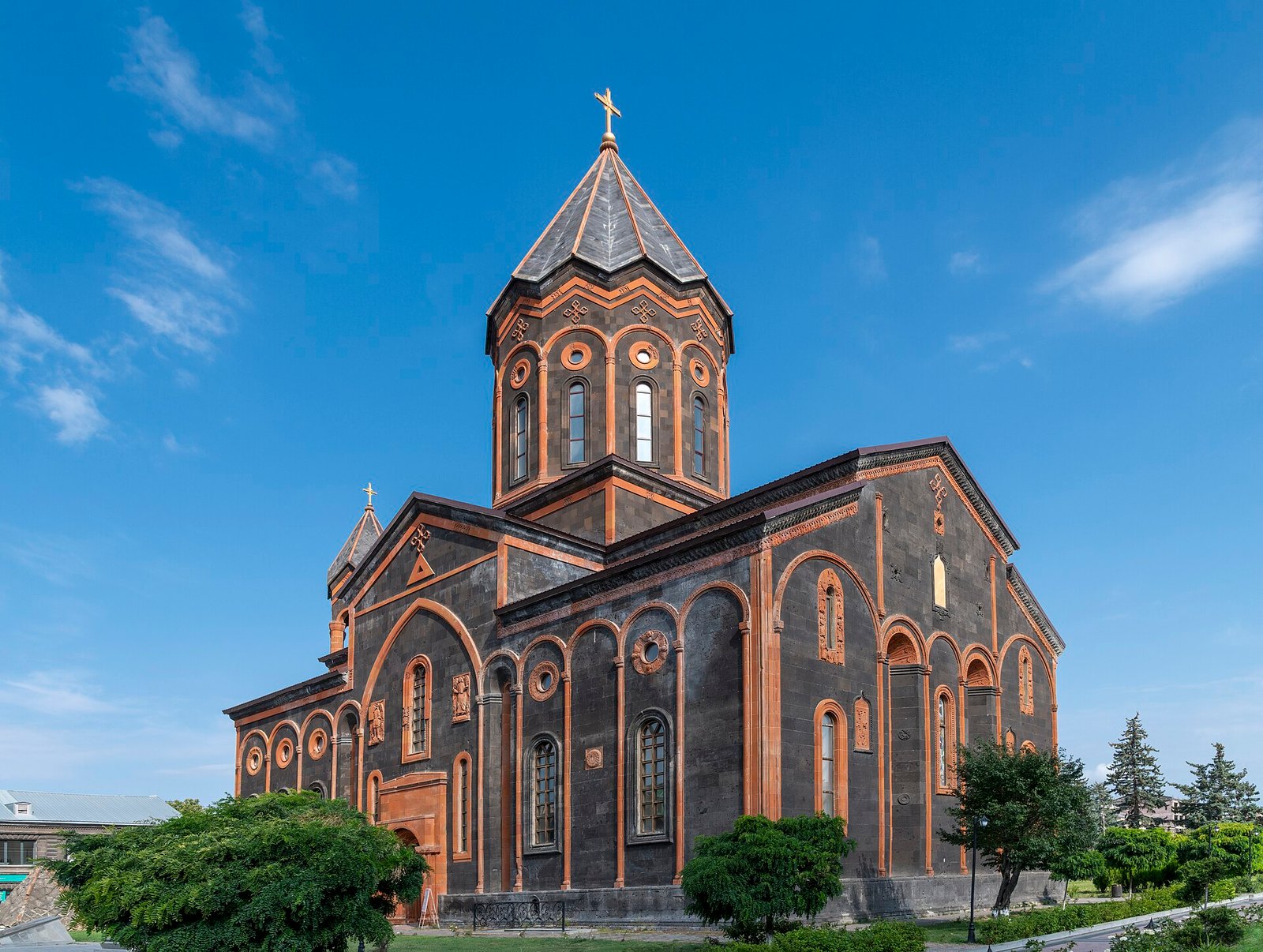
The Armenian Apostolic Church traces its origins to the apostles Thaddeus and Bartholomew, while written evidence identifies a bishop of Armenia around 260. Royal support strengthened Christianity in the fourth century, traditionally dated to 301. Its distinct tradition developed through institutional autonomy, Armenian religious texts, and the rejection of Chalcedon through later councils at Dvin.
A letter, an alphabet, and a cathedral reveal different parts of this history. If you are exploring Armenian Christianity while travelling in Turkey, the church’s Istanbul patriarchate belongs to an institutional structure that also includes Echmiadzin, Cilicia, and Jerusalem. Understanding that structure begins with separating apostolic tradition from dated evidence.
How can apostolic foundation traditions be distinguished from documented history?
The church’s foundation tradition places Thaddeus and Bartholomew in Armenia during the first century. Its name, “apostolic,” expresses this connection to the apostles. That tradition explains how the church understands its beginnings; a surviving written reference provides a different kind of evidence.
Around 260, Dionysius of Alexandria mentioned Meruzanes, bishop of Armenia, in a letter. This is an early documentary trace of Armenian Christianity. It identifies a bishop centuries before the councils that later helped define the church’s position within Christianity.
The account associated with Agathangelos requires another distinction. It tells the story of the king’s conversion, but Robert W. Thomson dates its Armenian form to the second half of the fifth century. The author’s claim to eyewitness knowledge does not fit that later composition.
When you read about the church’s origins, keep these layers separate. The apostolic missions belong to its foundation tradition. The reference to Meruzanes is a dated written trace. Agathangelos preserves a conversion narrative whose surviving Armenian form is later than the events it describes.
How is Armenia’s adoption of Christianity as a state religion dated?
Church tradition gives 301 as the year Christianity became Armenia’s official state religion. This date anchors the church’s account of royal conversion. It should nevertheless be distinguished from scholarly arguments about the baptism of King Trdat.
Robin Darling Young considers 314 more likely for the king’s baptism. Her argument places it after Christianity had been permitted in Rome. Thomson also proposes approximately 314 for Gregory the Illuminator’s consecration as bishop of Armenia at Caesarea in Cappadocia, which he accepts as a historical event.
Neither date means the whole country became Christian at once. Young describes gradual missionary activity connected with neighbouring Syriac-speaking and Greek-speaking regions. Royal conversion and the spread of Christianity among the population therefore belong to related but different processes.
Institutional independence also developed during the fourth century. Under King Pap, the Armenian Church stopped seeking approval from Caesarea in Cappadocia for appointments of its catholicos. This change gave the church greater control over the appointment of its own head.
How did Armenian language shape the church’s tradition?
Around 405, Mesrop Mashtots created the Armenian alphabet. Translations of the Bible and liturgical texts followed. Armenian consequently became a language in which scripture and worship could be transmitted through written texts.
The importance of this translation work extends beyond the church’s own services. Some early Christian writings survive only through ancient Armenian translations. Irenaeus’s Demonstration of the Apostolic Preaching is one example. Armenian textual tradition therefore preserves material whose survival depends on those translations.
The alphabet and institutional autonomy mark different developments. Under Pap, the church gained control over appointments without Caesarea’s approval. After Mashtots, Armenian translations gave scripture and liturgy a written linguistic foundation. Both help explain how a distinct ecclesiastical tradition developed.
What roles did Chalcedon and the councils of Dvin play in the separation?
The Armenian Apostolic Church accepts the first three ecumenical councils. It does not accept the Council of Chalcedon, held in 451. Armenian representatives were absent from that council because an uprising had created political turmoil in the country.
The separation developed through subsequent councils. At Dvin in 506, a council approved Emperor Zeno’s Henotikon, a document intended to reconcile churches. This decision belongs to the history of attempts at agreement after Chalcedon.
A later Armenian council rejected Chalcedon’s ecumenical authority and the formula of two natures after the union. McGuckin dates this council to 555. Another chronology gives 554 for the Second Council of Dvin. The difference concerns its date; the rejection remains central to its significance.
The Third Council of Dvin, held in 609–610, addressed relations with the Georgian Church, which had accepted Chalcedonian Christology. Dvin thus figures in a sequence of decisions about doctrine and church relations, extending well beyond the original council of 451.
The Armenian Church describes its position as miaphysite. It affirms the unity of Christ’s divinity and humanity and rejects the teachings of both Nestorius and Eutyches. Its rejection of Chalcedon must be understood alongside those affirmations.
What are the historical differences between Armenian Apostolic, Armenian Catholic and Eastern Orthodox churches?
The Armenian Apostolic Church is a self-governing national church within the Oriental Orthodox family. Eastern Orthodox churches of the Byzantine tradition accept the first seven ecumenical councils. The Armenian Apostolic Church’s acceptance of the first three marks a central distinction between these church families.
The Armenian Catholic Church is a separate Eastern Catholic church in communion with the See of Rome. In 1742, Pope Benedict XIV confirmed Abraham Ardzivian, formerly an Armenian Apostolic bishop, as Armenian Catholic patriarch of Cilicia, based in Lebanon.
If you encounter these names, council acceptance and communion with Rome provide useful historical distinctions. “Armenian” does not by itself mean “Armenian Apostolic.” The Armenian Catholic Church shares the Armenian designation while belonging to a different ecclesiastical communion.
Later dialogue also matters. On 13 December 1996, Pope John Paul II and Catholicos Karekin I issued a joint declaration affirming their common belief that Jesus is true God and true man. This agreement belongs alongside the earlier history of doctrinal separation.
Why did Echmiadzin become an important religious centre?
Echmiadzin brings together a sacred foundation narrative, a historic cathedral, and the catholicosal seat. UNESCO dates the cathedral’s foundation to 301–303 and associates it with King Trdat III and Gregory the Illuminator. This places its founding tradition within the period of royal Christianization.
The building’s architectural history requires a separate chronology. Fresno State distinguishes the first fourth-century church from the present cross-shaped plan. It attributes the basis of that plan to rebuilding under Vahan Mamikonian in the 480s. The foundation date and the surviving plan therefore describe different stages.
In 1441, the catholicosal seat returned from Sis in Cilicia to Echmiadzin at Vagharshapat. This return added institutional importance to the cathedral’s sacred associations. Echmiadzin is the church’s principal spiritual centre, within a wider structure that includes the Cilician catholicosate and the patriarchates of Istanbul and Jerusalem.
In 2000, UNESCO inscribed Echmiadzin Cathedral, surrounding historic churches, and the archaeological site of Zvartnots on the World Heritage List. For you as a visitor, the cathedral’s history includes both its early foundation and later rebuilding.
Details you won’t find in guidebooks
“Echmiadzin” means “the descent of the Only Begotten.” The name refers to Gregory’s vision, recounted by Agathangelos, in which Christ struck the ground with a golden hammer. The place-name itself therefore carries part of the cathedral’s sacred foundation narrative.
Investigations in 1955–1956 and 1959 found the remains of a fire-temple hearth beneath the altar of the eastern apse. This discovery adds an archaeological layer beneath the cathedral’s Christian architectural history.
A fifth-century relief on the cathedral’s northern wall identifies Saint Paul and Saint Thecla in Greek rather than Armenian. That detail sits alongside the wider history of Armenian translation following the creation of the alphabet around 405.
The church calendar provides an everyday connection. Christmas is combined with the celebration of Theophany on 6 January, rather than observed as a separate feast in late December. If you are arranging a family meal around the Armenian Church’s Christmas celebration, 6 January is the relevant date.
Timeline
- First century: Church tradition places the missions of Thaddeus and Bartholomew in Armenia.
- Around 260: Dionysius of Alexandria mentions Meruzanes, bishop of Armenia.
- 301: Traditional date for Christianity becoming the state religion.
- 301–303: UNESCO’s foundation dates for Echmiadzin Cathedral.
- Around 314: Proposed date for Gregory’s consecration and an alternative date for Trdat’s baptism.
- Fourth century: Under Pap, catholicosal appointments cease to require Caesarea’s approval.
- Around 405: Mesrop Mashtots creates the Armenian alphabet.
- 451: Chalcedon meets without Armenian representatives.
- 480s: Echmiadzin is rebuilt under Vahan Mamikonian.
- 506: Dvin approves the Henotikon.
- 554/555: The Second Council of Dvin rejects Chalcedon’s authority; chronologies differ.
- 609–610: The Third Council of Dvin addresses relations with the Georgian Church.
- 1441: The catholicosal seat returns from Sis to Echmiadzin.
- 1742: Benedict XIV confirms Ardzivian as Armenian Catholic patriarch.
- 13 December 1996: John Paul II and Karekin I issue their joint declaration.
- 2000: Echmiadzin and Zvartnots receive World Heritage inscription.
FAQ
Who founded the Armenian Apostolic Church?
Church tradition traces its foundation to the first-century missions of Thaddeus and Bartholomew. A documented early reference appears around 260, when Dionysius of Alexandria mentioned Meruzanes, bishop of Armenia.
Did Armenia adopt Christianity in 301 or 314?
The church traditionally dates the adoption of Christianity as the state religion to 301. Robin Darling Young considers 314 more likely for King Trdat’s baptism and stresses that Christianization developed gradually.
Is the Armenian Apostolic Church Eastern Orthodox?
It belongs to the Oriental Orthodox family. It accepts the first three ecumenical councils, while Eastern Orthodox churches of the Byzantine tradition accept the first seven.
Why is Echmiadzin important?
Echmiadzin combines a sacred foundation tradition with a historic cathedral. The catholicosal seat returned there from Sis in 1441, and it remains the church’s principal spiritual centre.
Sources
- World Council of Churches — Armenian Apostolic Church, Mother See of Holy Etchmiadzin oikoumene.org
- Turkish Wikipedia — Ermeni Apostolik Kilisesi tr.wikipedia.org
- John A. McGuckin — Armenian Christianity, The Concise Encyclopedia of Orthodox Christianity, pp. 40–43 catalogimages.wiley.com
- Robert W. Thomson, Encyclopaedia Iranica — Agathangelos iranicaonline.org
- Robin Darling Young — The Conversion of Armenia as a Literary Work umnlibraries.manifoldapp.org
- English Wikipedia — Armenian Apostolic Church en.wikipedia.org
- Ronald Roberson, CNEWA — Orthodox Church cnewa.org
- Ronald Roberson, CNEWA — The Armenian Catholic Church cnewa.org
- Vatican — John Paul II, General Audience, 22 January 1997 vatican.va
- UNESCO — Cathedral and Churches of Echmiatsin and the Archaeological Site of Zvartnots whc.unesco.org
- Fresno State Armenian Studies Program — Etchmiadzin cah.fresnostate.edu
Image: Holy Saviour's Church, Gyumri, Armenia (2026).jpg — Petar Milošević, CC BY-SA 4.0