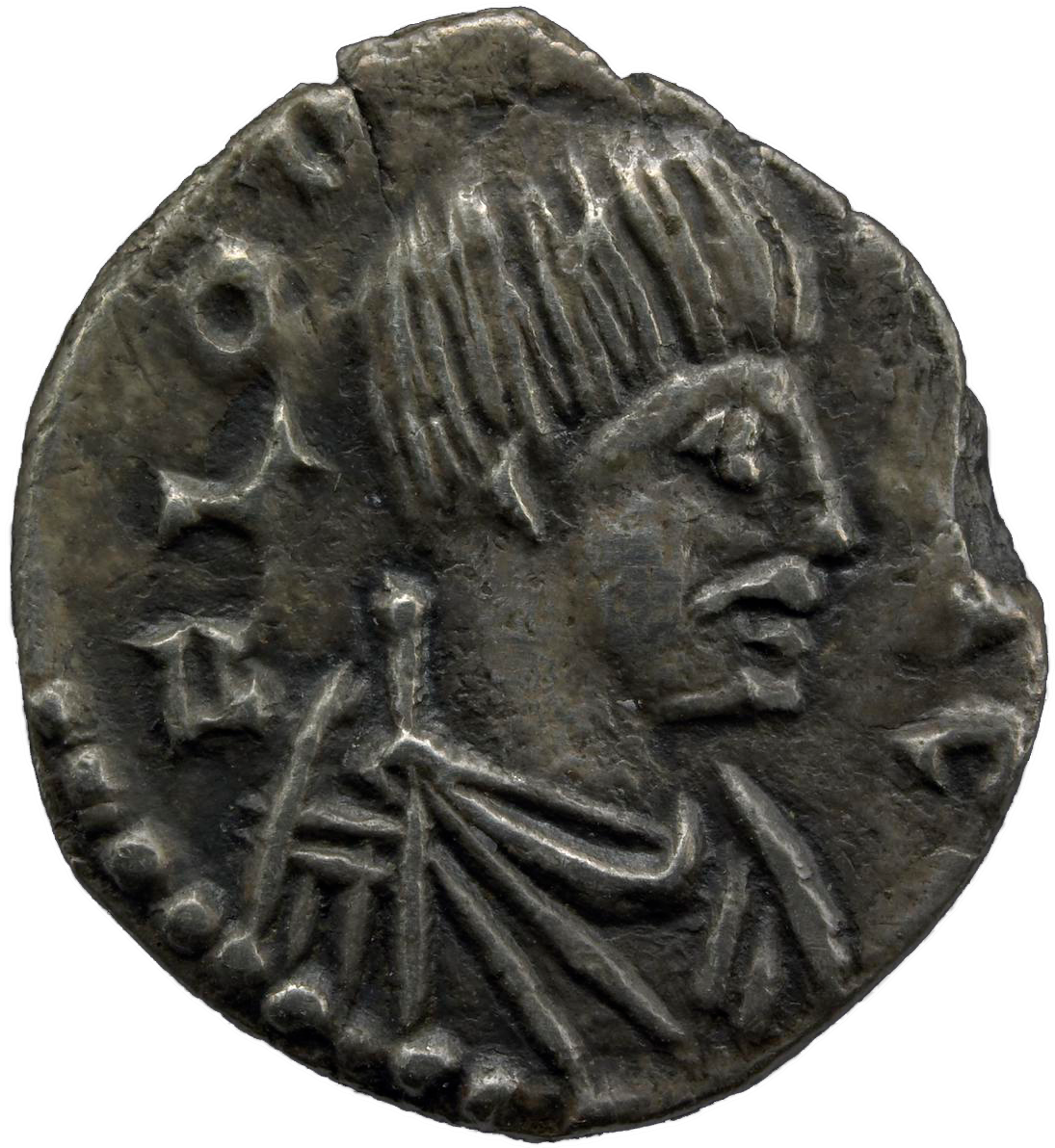
Odoacer was a military ruler who governed Italy from 476 to 493 as king, preserving Roman law and administration without becoming emperor. After his relationship with the eastern emperor Zeno turned hostile, Theoderic invaded Italy with imperial approval and eventually killed him. The killing followed an agreement to share power; accounts differ over conspiracy, revenge, and the breaking of an oath.
The puzzle is how Odoacer could remove Romulus Augustulus yet keep Roman officials, imperial names on coins, and traditional institutions. If you follow his titles, his dealings with Zeno, and the siege of Ravenna, you can see how military kingship operated alongside claims of imperial authority. Those same details explain why 476 is a more complicated turning point than a single deposition suggests.
How did Odoacer take power in 476?
Born around 433, Odoacer was already involved in struggles over Roman power before becoming king. In 472, he fought on Ricimer’s side against the emperor Anthemius. His rise in 476 began with a dispute over what soldiers in Italy should receive.
The soldiers demanded a third of the country’s land. Orestes refused. That refusal triggered the revolt that brought Odoacer to power. On 23 August 476, the soldiers proclaimed him king. Five days later, Orestes was captured at Placentia and killed.
According to the traditional dating, Odoacer deposed the child emperor Romulus Augustulus on 4 September 476. He spared Romulus and sent him to Campania. The removal therefore ended the boy’s reign without ending his life.
The soldiers’ demand also raises a question about the settlement that followed. The traditional account describes a distribution of land. Giorgio Scrofani argues that the third assigned to the soldiers may instead have been a share of tax revenue. These interpretations describe different ways of supporting the military force behind Odoacer’s kingship.
The distinction has an everyday parallel. Giving someone part of your property differs from assigning them part of your income. Applied to the soldiers’ settlement, the question is whether they received land itself or revenue drawn from it. Scrofani’s interpretation keeps that distinction open.
Through which institutions and claims to authority did he rule Italy without becoming emperor?
Odoacer retained Roman law, traditional administrative structures, and Roman officials in senior positions. His military accession did not lead him to replace the machinery of government. He governed through institutions that continued to operate under a king.
The Roman Senate also helped frame his authority. Its delegation to Constantinople declared that one emperor was sufficient. It asked Zeno to grant Odoacer the title of patricius and responsibility for governing Italy. The proposal connected his practical control to recognition from the eastern emperor.
Odoacer’s own surviving official document uses the title rex, meaning king. It adds no ethnic or geographical qualifier. That wording matters: the document identifies his rank without defining his kingship through a named people or territory.
Coinage expressed a different part of his position. Until Julius Nepos died in 480, Odoacer issued coins in Nepos’s name. Afterward, he issued them in Zeno’s name. If you look only at the imperial names, you see continuing allegiance to emperors during a period when Odoacer controlled Italy.
His son Thela complicates the picture. Odoacer gave him the title Caesar, which can be interpreted as an imperial claim. Laury Sarti instead reads it as an attempt to secure succession to the kingship. The title alone therefore does not settle how far Odoacer’s ambitions extended.
This combination also affects the meaning of 476. The traditional account places the end of the Western Roman Empire in that year. Sarti emphasizes Nepos’s death in 480 and the continuing Roman imperial idea. Odoacer’s coins and preserved institutions help explain that interpretation.
How did his relationship with the eastern emperor Zeno change?
Zeno’s initial response combined formal reservation with practical acceptance. Officially, he told Odoacer to approach Julius Nepos. In a private letter, however, he addressed Odoacer as patricius. He thus acknowledged Odoacer’s effective government while maintaining a different formal position.
After Nepos was murdered in 480, Odoacer campaigned in Dalmatia. He brought the region under his control within two years. His power therefore extended beyond the Italian government that the Senate had asked Zeno to entrust to him.
Religion became another point of friction. Odoacer followed Arian Christianity, yet in 482 he supported Pope Simplicius against Zeno’s religious compromise decree. In this dispute, his alignment placed him against the eastern emperor’s policy.
The conflict also acquired a military dimension. In 487 and 488, Odoacer’s forces defeated the Rugians, whom Zeno had encouraged against him. The emperor who had earlier acknowledged his practical authority was now associated with military pressure against his rule.
Thomas Hodgkin interprets Zeno’s support for Theoderic’s Italian expedition as serving two purposes. It could resolve the Odoacer problem and move the Ostrogoths away from the vicinity of Constantinople. Supporting the invasion offered Zeno a way to address both concerns.
The sources disagree over who proposed the expedition. Jordanes attributes the initiative to Theoderic, while Procopius attributes it to Zeno. Both accounts nevertheless accept imperial approval. The disagreement concerns the proposal’s origin, rather than whether the emperor sanctioned it.
How did Theoderic’s invasion end Odoacer’s rule?
Theoderic entered Italy in 489 and defeated Odoacer at the Isonzo on 28 August. A second defeat followed at Verona on 30 September. These victories began the military sequence that eventually confined Odoacer to Ravenna.
On 11 August 490, Odoacer lost again at the Adda. He withdrew to Ravenna, where he endured a siege lasting roughly three years. The campaign therefore continued long after Theoderic’s initial victories.
Bishop Johannes of Ravenna mediated an agreement reached on 25 February 493. It promised to spare Odoacer’s life and provided for the two kings to share power. The settlement explicitly allowed Odoacer to survive the end of the siege.
Theoderic entered Ravenna on 5 March. On 15 March, he killed Odoacer while they were dining together. The promised arrangement of shared government ended with one king killing the other.
Why did Theoderic do it? Procopius presents the killing as a move to prevent an alleged conspiracy by Odoacer. Marcellinus emphasizes the violation of an oath. John of Antioch presents a revenge narrative. These accounts offer competing explanations, rather than a single agreed motive.
Anonymus Valesianus describes a wider killing on the same day. According to this account, Theoderic ordered the deaths of Odoacer’s family and whichever of his soldiers could be found. The violence extended beyond the man killed at the meal.
Where do sources disagree about his origins and final days?
Odoacer’s ancestry has competing explanations. His family has been linked to the Huns. MacGeorge and Macbain instead argue that he was half Scirian and half Thuringian. You should therefore treat a single, confident ethnic label with care.
His name also attracts different interpretations. The traditional explanation derives Odoacer from the Germanic elements auda and wakra. Reynolds and Lopez proposed a Turkish derivation in 1946. That proposal concerns the name’s origin; the separate debate over his family background remains distinct.
Accounts also differ over the death of his wife, Sunigilda. Some describe her being stoned. Herwig Wolfram’s account describes death by starvation. Alongside the competing explanations for Odoacer’s murder, this disagreement shows how differently the final destruction of his household was narrated.
Details you won’t find in guidebooks
Romulus Augustulus received an annual income of 6,000 gold pieces after his deposition. Odoacer’s treatment of the former emperor contrasts sharply with his own death after a promise that his life would be spared.
Odoacer did not date his official documents by the years of his own reign. He also used imperial names on coins. Both details help explain how his kingship coexisted with continued acknowledgment of imperial authority.
His silver coin portrait includes a moustache but lacks the diadem that signaled imperial status. If you examine that combination alongside the title rex, the distinction between presenting himself as king and presenting himself as emperor becomes easier to follow.
The Ravenna siege also left a concrete measure of scarcity. Anonymus Valesianus reports that a modius of wheat cost six gold pieces. The recorded price gives the long siege a household dimension: the struggle between the kings affected access to food.
Timeline
- Around 433 Odoacer was born.
- 472 He fought alongside Ricimer against Anthemius.
- 23 August 476 His soldiers proclaimed him king.
- 4 September 476 Traditional date of Romulus Augustulus’s deposition.
- 480 Julius Nepos was murdered.
- 487–488 Odoacer’s forces defeated the Rugians.
- 489 Theoderic entered Italy and won at the Isonzo and Verona.
- 11 August 490 Defeat at the Adda forced Odoacer back to Ravenna.
- 25 February 493 An agreement provided for shared rule.
- 5 March 493 Theoderic entered Ravenna.
- 15 March 493 Theoderic killed Odoacer.
FAQ
Who was Odoacer?
Odoacer was a military ruler, born around 433, who governed Italy from 476 to 493. He followed Arian Christianity and ruled as king without taking the title of emperor.
Did Odoacer kill Romulus Augustulus?
No. Odoacer spared Romulus, sent him to Campania, and granted him an annual income of 6,000 gold pieces.
Did Odoacer rule independently of Zeno?
Odoacer exercised practical control over Italy while acknowledging imperial authority. He issued coins in Julius Nepos’s name until 480 and afterward in Zeno’s name.
Why did Theoderic kill Odoacer?
Accounts disagree. Procopius presents the killing as preventing an alleged conspiracy, Marcellinus emphasizes a broken oath, and John of Antioch gives a revenge narrative.
Sources
- Turkish Wikipedia — Odoacer tr.wikipedia.org
- English Wikipedia — Odoacer en.wikipedia.org
- Encyclopaedia Britannica, 1911 — Odoacer penelope.uchicago.edu
- Anonymus Valesianus — Second Part, sections 38, 53, and 56 penelope.uchicago.edu
- Giorgio Scrofani — Odoacre, Treccani/) treccani.it
- Laury Sarti — The Empire’s Western Territories doi.org
- Thomas Hodgkin — Italy and Her Invaders, Book IV, Chapter III penelope.uchicago.edu
Image: Coin of Odoacer at the British Museum (obverse).png — British Museum (photo), CC BY-SA 4.0