John D. Rockefeller became rich by expanding oil refining, reinvesting profits, cutting costs and buying competitors, while securing favorable railroad terms. Standard Oil was broken up because the Supreme Court ruled in 1911 that its combination unreasonably restrained interstate oil trade and violated the Sherman Antitrust Act. Rockefeller received proportional shares in the 34 resulting companies, so the breakup did not erase his fortune.
How could the breakup of Standard Oil leave Rockefeller holding shares across 34 companies? If you follow his path from a Cleveland bookkeeping job to refinery ownership, the answer becomes clearer. His fortune grew through business expansion; the court decision later divided the organization while preserving shareholders’ proportional ownership.
How did Rockefeller get his start in business?
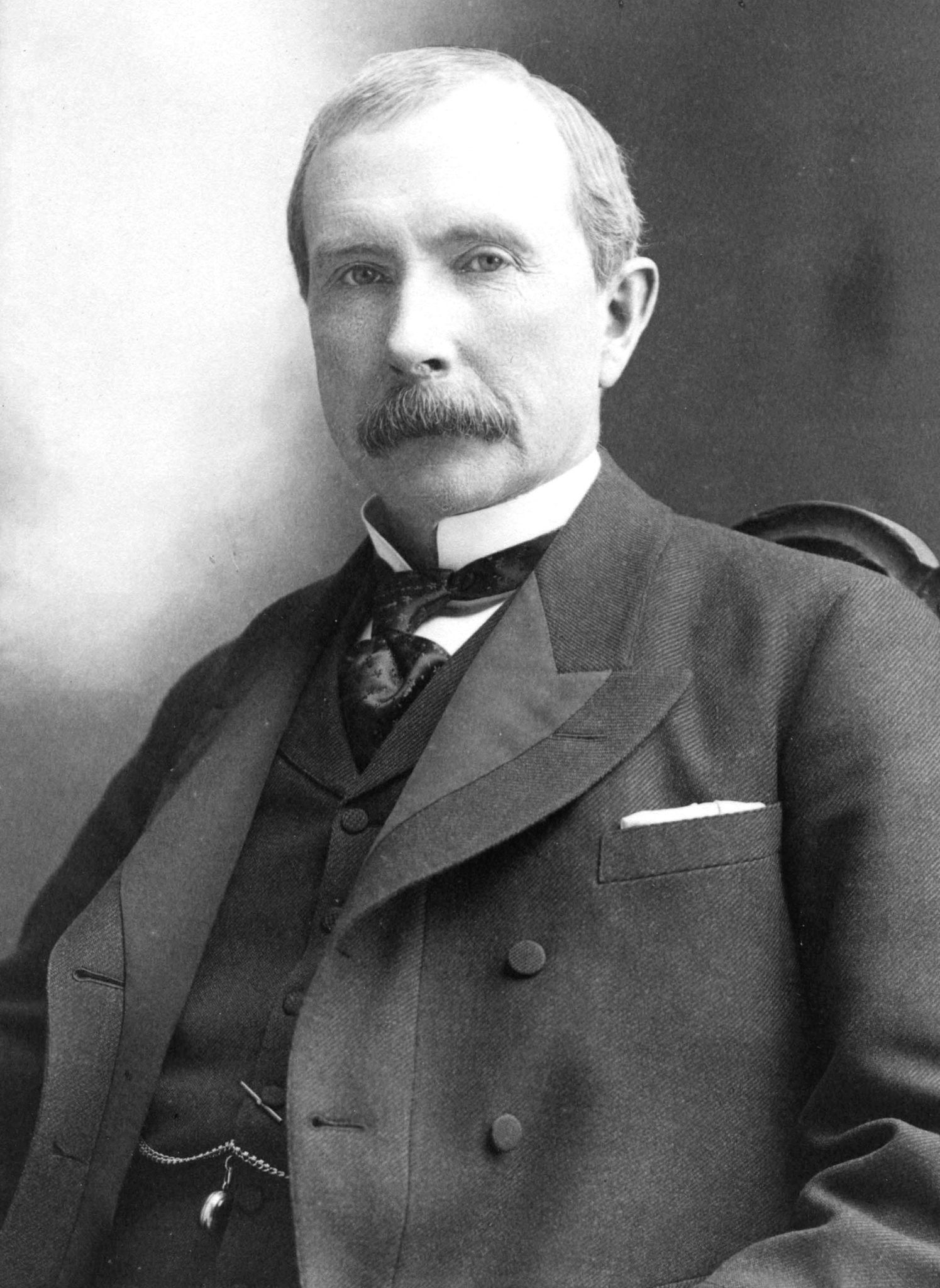
John Davison Rockefeller was born on July 8, 1839, in Richford, New York. In September 1855, he began working in Cleveland as an assistant bookkeeper for merchants Henry B. Tuttle and Isaac L. Hewitt. His early business experience therefore came through accounting and commerce, before his entry into petroleum refining.
In 1859, Rockefeller formed a commission business with Maurice B. Clark. He contributed $1,000 in savings and another $1,000 borrowed from his father. Savings, borrowing and partnership supplied the capital for this early venture. These were also methods he would use as his oil interests expanded.
Rockefeller and Clark entered oil refining in Cleveland with Samuel Andrews in 1863. A disagreement among the partners led to the refinery being auctioned in 1865. Rockefeller bought it for $72,500 and formed Rockefeller & Andrews with Andrews. The purchase gave him control of the refinery around which he would build further investments.
How did oil refining make Rockefeller rich?
Growing demand for kerosene helped Rockefeller’s oil investments during the 1860s and 1870s. Kerosene was used for lighting. If you think about the household task of lighting a room, you have an everyday connection to his business: Rockefeller’s refining investments served demand for a product used for that purpose.
After taking control of the refinery in 1865, Rockefeller borrowed heavily to finance expansion. He also put profits back into the business. Refining earnings thus became capital for further growth. Borrowing allowed him to commit more money than the business had already accumulated through profits alone.
Rockefeller reduced costs by taking control of supplies used by his refinery. He established his own barrel workshop and bought white oak forest land to supply barrel timber. His attention extended beyond the oil itself. The containers needed to handle the refinery’s products also became part of his cost-cutting efforts.
On January 10, 1870, Rockefeller founded Standard Oil Company with his brother and business partners. The company was organized with $1 million in capital. Its partners included William Rockefeller, Samuel Andrews, Henry M. Flagler and Stephen V. Harkness. Standard Oil brought these participants into the business’s next stage of expansion.
How did Standard Oil gain such a large market share?
Standard Oil expanded through purchases of rival refineries. By 1872, it had acquired almost all the refining businesses in Cleveland and two refineries in the New York metropolitan area. Buying existing operations was therefore a central part of its growth, alongside Rockefeller’s reinvestment of profits and efforts to reduce costs.
Special railroad agreements gave Standard Oil another advantage after 1870. These arrangements provided low transportation charges and secret rebates. You need to consider those shipping terms alongside refinery efficiency: Standard Oil’s competitive position depended partly on privileges secured through its dealings with railroads.
About ten years after its founding, Standard Oil controlled 90 percent of American oil refining capacity. That figure concerns refining capacity. It describes the scale reached by the business Rockefeller had entered in Cleveland in 1863, through a combination of investment, acquisitions, cost control and favorable transportation arrangements.
What was the Standard Oil trust?
The Standard Oil trust agreement of January 1882 centralized management across 40 companies, including Standard Oil of Ohio. Their shares came under the control of nine trustees. The arrangement provided a way to direct a large collection of companies through a concentrated governing structure.
Ohio challenged the trust through a lawsuit. In 1892, the case resulted in an order dissolving the trust’s Ohio structure. This was an earlier legal challenge to Standard Oil, preceding the federal proceedings that eventually produced the 1911 breakup.
In 1899, Standard Oil reorganized its New Jersey company as a holding company. That company held shares in the other companies. The organizational form changed, while ownership through the New Jersey company provided the framework for the combined business.
Why was Standard Oil broken up?
Ida Tarbell helped bring Standard Oil’s competitive methods before the public. Her investigation appeared in book form in 1904 as The History of the Standard Oil Company. It increased public opposition to the company by examining the methods behind its expansion.
The United States Department of Justice sued Standard Oil in 1906 for violating the Sherman Act. A federal court ordered the company dissolved in 1909. The case then reached the Supreme Court, which upheld the breakup decision on May 15, 1911.
The Supreme Court found that the Standard Oil combination unreasonably restrained interstate trade in petroleum. It held that the combination violated the Sherman Antitrust Act of 1890.
The Court applied the “rule of reason.” Under this interpretation, the Sherman Act prohibited unreasonable restraints of trade rather than every commercial restraint. If you want the precise reason for the breakup, this distinction matters: the judgment identified an unlawful restriction of trade, rather than treating every business agreement as prohibited.
The resulting breakup divided Standard Oil into 34 independent companies in 1911. The remedy dismantled the combined organization through which its businesses had been held together. It also created the separate companies in which Rockefeller and the other shareholders received proportional stakes.
Did breaking up Standard Oil make Rockefeller poorer?
Rockefeller and the other Standard Oil shareholders received shares in each of the 34 companies in proportion to their existing holdings. Their ownership therefore continued across the separated businesses. The breakup changed the corporate organization without simply cancelling the investors’ stakes.
In 1916, five years after the breakup, newspaper headlines reported that Rockefeller’s fortune had reached a billion dollars. The sequence explains why the dissolution of Standard Oil and the continuation of Rockefeller’s wealth belong in the same story. He remained a shareholder after the company was divided.
Was Standard Oil’s dominance already declining?
Figures cited by Crandall and Winston show that Standard Oil’s share of American refining capacity fell from 82 percent to 64 percent between 1899 and 1911. Its share was therefore declining before the breakup judgment. This later period should be distinguished from the earlier point when it controlled about 90 percent of refining capacity.
The explanation that Standard Oil eliminated rivals through predatory pricing is disputed. Economist John S. McGee challenged that account in a 1958 study. The debate over pricing methods sits alongside the court’s documented conclusion that Standard Oil had unreasonably restrained interstate trade.
Details you won’t find in guidebooks
Rockefeller completed a six-month business course at Folsom Mercantile College in three months in 1855. That same year, he began his assistant bookkeeping job in Cleveland. His commercial training and first accounting employment both preceded the commission partnership he established in 1859.
His barrel-making arrangements included an unusually specific transportation saving. Timber was dried in kilns on his forest land before it was shipped to Cleveland. Drying reduced its shipping weight. Cost control thus reached back to the preparation of wood before it arrived at the refinery’s barrel workshop.
The refinery also earned revenue from products besides kerosene. It used paraffin, benzene and petrolatum, including petrolatum used in ointments. Rockefeller’s business drew income from several refinery outputs, extending the value obtained from its operations beyond the lighting product that helped drive demand.
Rockefeller and Flagler agreed to participate in the South Improvement plan. It proposed payments to participants from shipments made by outside refiners as well. Producers organized a boycott, and the plan collapsed in 1872 before implementation. Its proposed terms should therefore be distinguished from arrangements that actually operated.
Timeline
- July 8, 1839: Rockefeller was born in Richford, New York.
- September 1855: He began working as an assistant bookkeeper in Cleveland.
- 1859: He formed a commission partnership with Maurice B. Clark.
- 1863: Rockefeller, Clark and Samuel Andrews entered oil refining.
- 1865: Rockefeller bought the partners’ refinery for $72,500.
- January 10, 1870: Standard Oil Company was founded.
- 1872: Standard Oil had acquired almost all Cleveland refineries.
- January 1882: The trust agreement centralized control over 40 companies.
- 1892: Ohio’s lawsuit resulted in an order dissolving the Ohio trust structure.
- 1899: The New Jersey company became a holding company.
- 1904: Tarbell’s investigation appeared in book form.
- 1906: The Department of Justice filed its antitrust lawsuit.
- 1909: A federal court ordered Standard Oil dissolved.
- May 15, 1911: The Supreme Court upheld the breakup decision.
- 1911: Standard Oil separated into 34 independent companies.
- 1916: Newspapers reported Rockefeller’s billion-dollar fortune.
FAQ
How did Rockefeller become rich?
He moved from a commission business into oil refining, borrowed to expand, reinvested profits and reduced production costs. Standard Oil also gained advantages through railroad agreements and purchases of competing refineries.
Why was Standard Oil broken up?
In 1911, the Supreme Court ruled that Standard Oil unreasonably restrained interstate oil trade in violation of the Sherman Antitrust Act. The company was divided into 34 independent companies.
Did the breakup destroy Rockefeller’s fortune?
No. Rockefeller received proportional shares in the 34 companies created by the breakup. In 1916, newspaper headlines reported that his fortune had reached a billion dollars.
Did Standard Oil use predatory pricing?
That explanation remains disputed. Economist John S. McGee challenged the claim in a 1958 study, while the 1911 judgment rested on Standard Oil’s unlawful restraint of trade.
Sources
- Wikipedia — John D. Rockefeller tr.wikipedia.org
- Case Western Reserve University — Rockefeller, John D case.edu
- Rockefeller Archive Center — John D. Rockefeller rockarch.org
- PBS American Experience — Biography: John D. Rockefeller, Senior pbs.org
- Library of Congress — Standard Oil Established guides.loc.gov
- Supreme Court Historical Society — Standard Oil Company v. United States civics.supremecourthistory.org
- Case Western Reserve University — BP America case.edu
- United States Supreme Court — Standard Oil Co. of New Jersey v. United States, 221 U.S. 1 supreme.justia.com
- Wikipedia — John D. Rockefeller en.wikipedia.org
- Crandall and Winston — Does Antitrust Policy Improve Consumer Welfare? brookings.edu
Image: Portrait of J. D. Rockefeller.jpg — Published by Scientific American Compiling Dep't, New York. , Public domain