The United States has a naval base at Guantánamo Bay in Cuba because lease agreements signed in 1903 gave it control of the site, and a 1934 treaty preserved those arrangements without a fixed expiration date. The agreements recognize Cuba’s ultimate sovereignty while granting the United States complete jurisdiction and control within the leased area. Cuba disputes the arrangement as imposed and unlawful; the United States maintains that it remains legally valid.
How can Cuban sovereignty coexist with American control? You can follow the answer through the wording of the 1903 agreements, the survival of the lease in 1934, and Cuba’s objections since 1959. The base’s later history adds evacuated families, a water dispute, migrants, and the arrival of detainees in 2002.
Where is Guantánamo Bay Naval Base located?
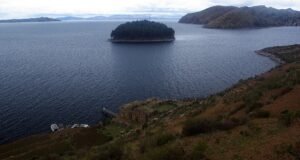
Guantánamo Bay Naval Base occupies approximately 117 square kilometres of land and water in southeastern Cuba. It stands on Guantánamo Bay. Its approximate coordinates are 19.91750° north and 75.16000° west, a useful starting point if you are searching for the base on Google Maps.
The bay divides the installation into Leeward Point and Windward Point. The airfield lies on the Leeward Point side. When you examine a map, that division helps explain why the base’s geography includes both land and water. The leased area cannot be understood simply as a single patch of coastline.
Guantánamo Bay Naval Base history: how did the lease begin?
US forces and their Cuban allies seized Guantánamo Bay in 1898 during the war against Spain. They used it as a forward operating base. This military use preceded the lease agreements that later defined American control of the site.
The next legal step came on 2 March 1901. Article VII of the Platt Amendment required Cuba’s government to sell or lease land to the United States for coaling stations or naval bases. Guantánamo’s lease developed within that framework.
Cuba’s president signed the first agreement on 16 February 1903. US President Theodore Roosevelt signed it on 23 February. Article II restricted the leased areas to use as coaling stations or naval bases. The agreement therefore specified a purpose as well as an area.
Article III established the distinction at the heart of the dispute. It recognized Cuba’s ultimate sovereignty while granting the United States complete jurisdiction and control within the leased areas. If you read “Cuban territory” and “American control” together, both descriptions reflect elements of the agreement’s wording.
The February agreement also protected free passage through the leased waters for vessels engaged in Cuban trade. Alongside its provisions for military use and control, it expressly addressed the movement of commercial shipping.
What did the Guantánamo Bay lease cost?
A supplementary lease signed in Havana on 2 July 1903 set the annual payment at 2,000 US dollars in gold coin. This July agreement supplied financial and practical terms alongside the provisions established in February.
Adjustments linked to the dollar price of gold brought the annual rent to 4,085 US dollars in 1974. The original figure and the later amount belong to different stages of the payment arrangement. The 1903 obligation was specifically expressed in gold coin.
The July agreement also allocated responsibility for the boundary fences. Article II placed their construction and maintenance costs on the United States. The lease thus covered physical responsibilities at the edge of the base, as well as the annual payment to Cuba.
Why did the 1934 treaty preserve the base?
The new Treaty of Relations, signed in Washington on 29 May 1934, repealed the 1903 Treaty of Relations while preserving the Guantánamo lease arrangements. The change to the broader treaty relationship therefore left the base’s lease provisions in place.
Article III stated that those provisions would continue until both governments agreed to modify or terminate them. It also preserved the existing boundaries unless the United States abandoned the base or the two governments agreed otherwise. The text established conditions for change without setting a fixed end date.
An everyday comparison is a rental agreement: the payment clause tells you what is owed, while the termination clause tells you how the arrangement ends. At Guantánamo, the annual rent and the conditions preserved in 1934 answer different questions. Reading the payment figure alone does not explain the base’s continued presence.
Why does Cuba dispute the US naval base?
Since 1959, Cuba’s government has argued that the base rests on an arrangement imposed by force and constitutes an occupation contrary to international law. This position challenges the legitimacy of the arrangement itself. It is more than a disagreement about the amount of rent.
The United States takes the opposing position. It maintains that its control rests on valid legal rights created by the 1903 leases and preserved by the 1934 treaty. The disagreement concerns both the agreements’ legitimacy and their continuing legal effect.
Fidel Castro also disputed the meaning of a rent payment. He said that only the cheque for 1959 had been cashed after the revolution, and that this happened through a mix-up. That account forms part of the dispute over Cuba’s response to the lease.
Timeline
- 1898: US forces and Cuban allies seized Guantánamo Bay for operations against Spain.
- 2 March 1901: Article VII of the Platt Amendment provided for land sales or leases for US coaling stations or naval bases.
- 16–23 February 1903: The Cuban and US presidents signed the first lease agreement.
- 2 July 1903: The supplementary lease set annual rent at 2,000 US dollars in gold coin.
- 29 May 1934: A new Treaty of Relations preserved the Guantánamo lease arrangements.
- 1959: Cuba’s post-revolutionary government opposed the American presence.
- October–December 1962: Military families were evacuated during the Cuban Missile Crisis and later permitted to return.
- 6 February 1964: Cuba notified the United States that it would stop supplying water during a dispute over detained Cuban fishermen.
- 1974: Annual rent reached 4,085 US dollars.
- Late 1994: Approximately 45,000 migrants were housed at the base.
- 11 January 2002: The first 20 detainees transferred from Afghanistan arrived.
Guantánamo Bay Naval Base housing, address and airport
Military families living at the base were evacuated during the Cuban Missile Crisis in October 1962. They were permitted to return in December. Housing at Guantánamo therefore has a history tied directly to the political confrontation surrounding the installation.
The base’s housing office states that it must accommodate everyone because housing support outside the base is unavailable. Temporary accommodation may be used while permanent housing becomes available. Its published location is Gendreau Road, and its military mailing address is FPO AA 34009-0001.
The active military airfield is Leeward Point Field. Its IATA code is NBW, and its ICAO code is MUGM. These identifiers refer to the airfield on the Leeward Point side of the bay; the housing office’s street and postal details identify a different facility.
Guantánamo Bay Naval Base prisoners: when did detention begin?
The US military transferred the first 20 detainees from Afghanistan to Guantánamo on 11 January 2002. That date marks the beginning of these detainee transfers. The agreements establishing the naval base dated back to 1903.
The installation had also housed a large migrant population. By late 1994, the number of migrants accommodated there reached approximately 45,000. This episode belongs to the base’s history before the detainee arrivals of 2002.
Details you won’t find in guidebooks
Guantánamo was not the only location described in the February 1903 agreement. Article I also specified an area at Bahía Honda in northwestern Cuba. The document’s geographical scope extended beyond the bay that became central to the continuing dispute.
The July agreement addressed privately owned property within the base boundaries. Cuba was to purchase those properties, with their cost covered through advances on American rent payments. This provision connected the international lease to individual property holdings inside the designated area.
Article III of the July agreement prohibited people or companies from establishing commercial, industrial, or other enterprises within the leased areas. Along with the February restriction to coaling stations or naval bases, it placed explicit limits on uses of the leased space.
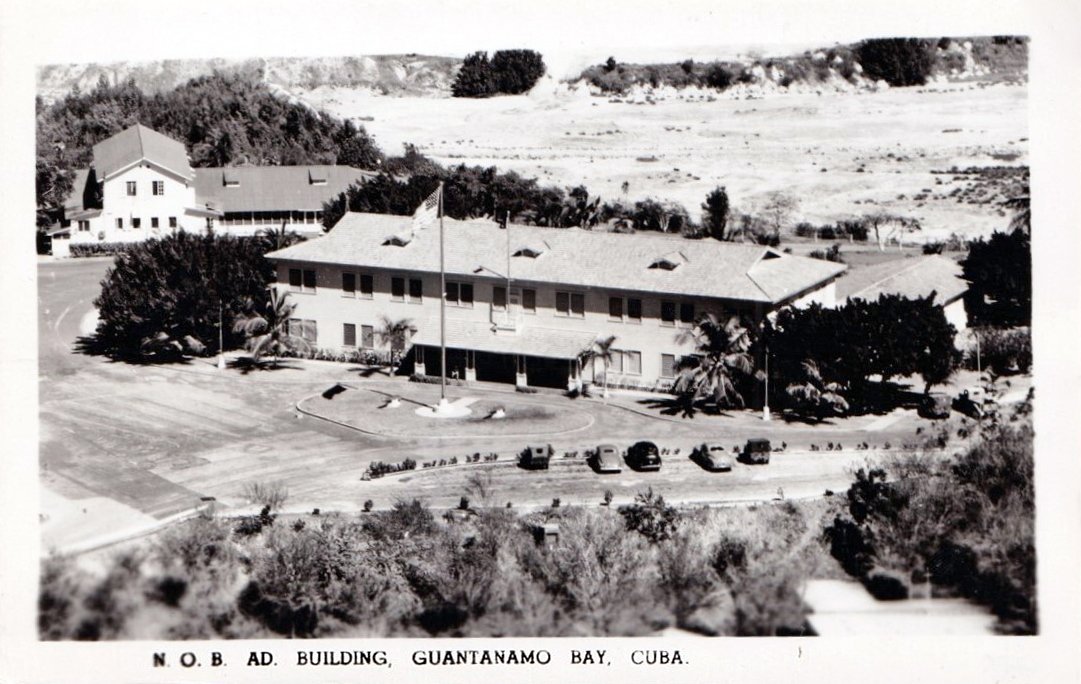
Photographs also preserve specific parts of this history. The aerial headquarters photograph in the English Wikipedia article shows Bulkeley Hall. A separate naval photograph, catalogued as NH 105694, documents the removal of a section of the pipeline from Cuba during the 1964 water crisis.
That water dispute had a stated trigger. On 6 February 1964, Cuba issued a diplomatic note announcing that it would stop supplying the base with water. It demanded the release of Cuban fishermen held in the United States.
FAQ
Why does the US have a naval base in Cuba?
The base rests on lease agreements signed in 1903 and preserved by a 1934 treaty. They recognize Cuba’s ultimate sovereignty while giving the United States complete jurisdiction and control within the leased area.
When does the Guantánamo Bay lease expire?
The 1934 treaty sets no fixed expiration date. Its Article III preserves the lease provisions until both governments agree to change or terminate them.
Why does Cuba dispute the base?
Since 1959, Cuba’s government has argued that the arrangement was imposed and amounts to an unlawful occupation. The United States maintains that the lease agreements and the 1934 treaty provide a valid legal basis for its control.
When did prisoners first arrive at Guantánamo?
The US military transferred the first 20 detainees from Afghanistan to Guantánamo on 11 January 2002. The naval base’s lease arrangements date to 1903.
Sources
- Türkçe Vikipedi — Guantanamo Körfezi Deniz Üssü tr.wikipedia.org
- English Wikipedia — Guantanamo Bay Naval Base en.wikipedia.org
- US Navy — NS Guantanamo Bay History cnrse.cnic.navy.mil
- US National Archives — Platt Amendment archives.gov
- Yale Law School, Avalon Project — Agreement of 23 February 1903 avalon.law.yale.edu
- US Department of State, Office of the Historian — Supplementary Lease Agreement of 1903 history.state.gov
- Yale Law School, Avalon Project — Treaty of 29 May 1934 avalon.law.yale.edu
- US Department of Justice — Bush v. Gherebi, Petition Appendix justice.gov
- US Department of State, Office of the Historian — Telegram of 8 February 1964 history.state.gov
- Naval History and Heritage Command — Photograph NH 105694 history.navy.mil
- Congressional Research Service — Report R44137 everycrsreport.com
- George Mason University — The Guantanamobile Project Timeline chnm.gmu.edu
Image: Guantanamo Bay Naval Base – N. O. B. Building.jpg — Unknown author, Public domain