Henry III’s conflict with the barons changed Parliament by making regular meetings a means of holding royal government accountable under the Provisions of Oxford in 1258. Simon de Montfort’s Parliament of 1265 then brought county knights and town representatives together to discuss national matters beyond taxation. Their participation continued under Edward I, although the controls imposed on Henry were removed after Montfort’s defeat.
How did a king who inherited his throne at nine end up a prisoner of his own opponents? The route runs through demands for money, a council empowered to supervise government, and a parliament concerned with a captive prince. If you follow those connections, the significance of 1265 becomes clearer. Henry’s rebuilding of Westminster Abbey also reveals the religious ambitions of the king at the centre of the struggle.
How did Henry III become king as a child?
Henry was born at Winchester Castle on 1 October 1207. His parents were King John and Isabella of Angoulême. A member of the Plantagenet dynasty, he ruled England from 1216 to 1272, a reign lasting approximately 56 years.
When John died in 1216, Henry was nine. The First Barons’ War was already underway. Rebel barons supported Prince Louis of France, so inheriting the crown did not mean that Henry’s position was secure. His kingship began amid a struggle over who should rule England.
Political uncertainty prompted a hurried coronation at Gloucester on 28 October 1216. Royalists led by William Marshal then secured victories at Lincoln and Sandwich in 1217. These successes protected the child king’s throne. Henry received a second coronation at Westminster Abbey on 17 May 1220.
Henry took over government from the regency in 1227, after the restoration of an order based on acceptance of Magna Carta. His childhood therefore connected royal survival with arrangements that acknowledged limits on kingship. Later, his own demands for financial support would bring the relationship between authority and accountability back into dispute.
Why did requests for money become a political crisis?
Henry’s need for additional taxation led to more frequent parliaments. The barons used these occasions to demand reforms in exchange for financial support. Money and the conduct of government became connected: obtaining resources required Henry to face complaints about how royal power was exercised.
An everyday comparison can help you follow this bargaining. Think of someone asking for more money from a shared budget while the other contributors demand a say in spending decisions. Henry’s barons similarly linked their financial support to changes in government. The dispute concerned both resources and the authority to direct them.
Several pressures fed the reform crisis of 1258. Court factions competed for influence. Widespread famine and military failures in Wales added to the difficulties. Henry had also accepted a large financial obligation to the papacy for an attempt to acquire Sicily. Together, these problems gave the reformers grounds to demand structural changes.
How did the Provisions of Oxford restrict royal authority?
The Provisions of Oxford of 1258 required Henry to accept the authority of a council of fifteen. Its selection involved twenty-four people: twelve nominated by the king and twelve by the reformers. Those twenty-four would choose the council that would supervise government.
The arrangement also changed control over major appointments. Leading officers, including the justiciar and chancellor, were to be chosen by the council and answerable to it. This placed a body between the king and important officials. Appointment and accountability were both subject to the reform settlement.
Parliament was to meet regularly three times a year so that government could be held accountable. You can see why this mattered alongside the council’s powers. The provisions addressed who supervised government, who selected its leading officers, and how often its conduct would come under parliamentary scrutiny.
The settlement proved vulnerable to divisions among its supporters. Henry exploited disagreements between the reforming barons and recovered control in 1261. He also obtained papal condemnation of the Provisions of Oxford. The requirement that he accept the council’s authority had therefore failed to secure a lasting agreement.
Why were the conflict with Simon de Montfort and the Parliament of 1265 significant?
In January 1264, Louis IX of France acted as arbitrator and declared the Provisions of Oxford entirely invalid. Simon de Montfort and his allies rejected that decision. The disagreement over reform remained unresolved, and in May Montfort defeated Henry at the Battle of Lewes. He captured the king and took control of government.
Montfort governed in the king’s name. He established a council of nine selected by himself and two close allies. Most members were his supporters. This detail matters when assessing his reforming reputation: the government that followed Henry’s defeat concentrated influence among Montfort’s own political allies.
On 14 December 1264, Montfort issued the summons for a parliament that assembled at Westminster on 20 January 1265. Two knights were called from each county, two representatives from towns, and four people from each of the Cinque Ports. The summons brought county and urban representation into the same parliamentary gathering.
The significance lay in the business they were summoned to discuss together. For the first time, county knights and town representatives were called to the same parliament to consider national matters beyond approval of taxation. The meeting extended their joint participation beyond the financial bargaining that had helped drive earlier parliamentary gatherings.
Montfort’s purposes remain open to contrasting interpretations. He has been presented as a principled reformer and as an opportunist who enriched his family. UK Parliament stresses that he did not consciously create the House of Commons in 1265. His assembly was an important step in the development of representation, but its later consequences should not be confused with his intentions.
What survived Montfort’s defeat?
Montfort’s control ended at the Battle of Evesham on 4 August 1265. A royalist army commanded by Henry’s son Edward defeated and killed him. The restrictions on Henry were subsequently removed. The council arrangements had not established permanent supervision of the king.
The practice of summoning representatives had a longer future. Edward I continued to call county and town representatives to Parliament. During the early decades of the fourteenth century, these representatives became distinct from the Lords. When you trace the connection with the Commons, this continued participation is central to the story.
The Statute of Marlborough in 1267 also combined restored royal authority with retained reform commitments. Henry undertook to preserve Magna Carta and some provisions of the Provisions of Westminster. His recovery of power therefore coexisted with acceptance of parts of the reform programme.
Why did Henry III rebuild Westminster Abbey?
Henry rebuilt Westminster Abbey to emulate the great churches of France, provide a new shrine for Saint Edward, and arrange his own burial near the saint. Demolition of the church surviving from the eleventh century and construction of its Gothic replacement began in 1245.
The rebuilding and the new shrine cost approximately £45,000. This was a substantial project running through the same reign as the parliamentary struggle. Henry’s financial obligation over Sicily helped feed the crisis of 1258; his plans for Westminster expressed his devotion to Saint Edward and his ambitions for the abbey.
The rebuilt abbey was consecrated on 13 October 1269. Saint Edward’s remains were transferred to the new shrine that year. Westminster thus connects several parts of Henry’s story: his second coronation, his religious patronage, and his eventual burial.
Timeline
- 1 October 1207: Henry was born at Winchester Castle.
- 1216: He inherited the throne at nine and was crowned at Gloucester on 28 October.
- 1217: Royalist victories at Lincoln and Sandwich protected his throne.
- 17 May 1220: Henry was crowned again at Westminster Abbey.
- 1227: He took over government from the regency.
- 1245: Westminster Abbey’s Gothic rebuilding began.
- 1258: The Provisions of Oxford subjected Henry to a council of fifteen.
- 1261: Henry regained control of government.
- May 1264: Montfort defeated and captured Henry at Lewes.
- 20 January 1265: Montfort’s Parliament assembled at Westminster.
- 4 August 1265: Montfort was defeated and killed at Evesham.
- 1267: The Statute of Marlborough reinforced royal authority while retaining some reforms.
- 13 October 1269: The rebuilt Westminster Abbey was consecrated.
- 16 November 1272: Henry died.
Details you won’t find in guidebooks
Henry’s first coronation lacked the royal crown. A simple gold circlet belonging to his mother, Isabella, was used instead. This small object gives a concrete sense of the hurried arrangements made for the child king in 1216.
The Parliament of 1265 also had an immediate practical concern: discussing the conditions for releasing the captive Prince Edward. Alongside its importance for representation, the assembly dealt with the consequences of Montfort’s victory and the confinement of members of the royal family.
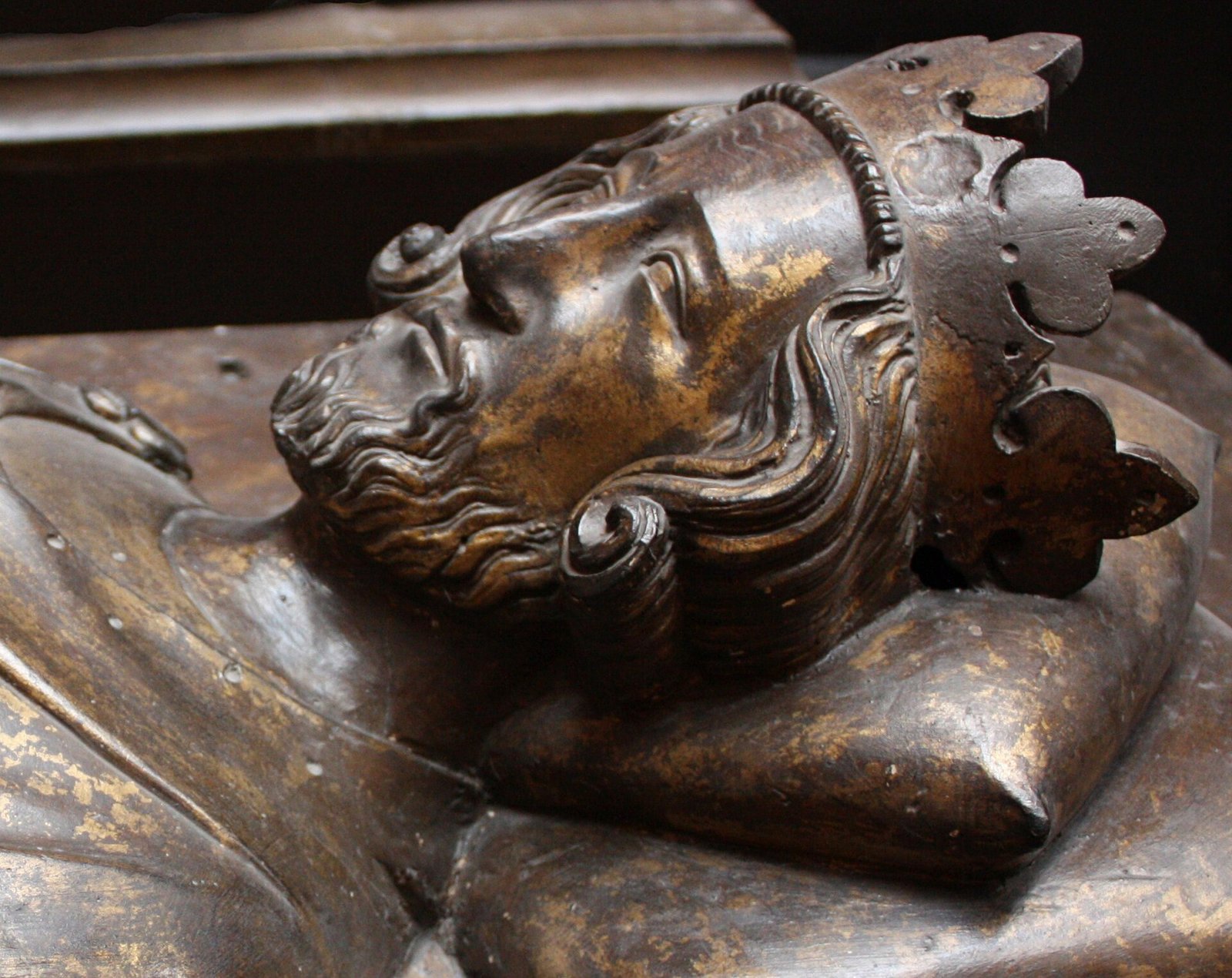
A wax effigy represented Henry’s body in his funeral procession after his death on 16 November 1272. He was buried at Westminster Abbey on 20 November. His body was transferred to his monument there in 1291, while his heart was delivered to the abbess of Fontevraud in France according to his will.
FAQ
How did Henry III’s conflict with the barons change Parliament?
The Provisions of Oxford required Parliament to meet three times a year to hold government accountable. In 1265, Simon de Montfort summoned county knights and town representatives together to discuss national matters beyond taxation.
Did Simon de Montfort establish the House of Commons in 1265?
Montfort did not consciously establish the House of Commons. His Parliament helped develop a representative practice that continued under Edward I, with county and town representatives separating from the Lords in the early decades of the fourteenth century.
Why was Henry III crowned twice?
Political uncertainty prompted a hurried coronation at Gloucester on 28 October 1216. Henry received a second coronation at Westminster Abbey on 17 May 1220.
Why did Henry III rebuild Westminster Abbey?
Henry wanted to emulate the great churches of France, provide a new shrine for Saint Edward and secure his own burial near the saint.
Sources
- Westminster Abbey — Henry III westminster-abbey.org
- English Wikipedia — Henry III of England en.wikipedia.org
- Türkçe Vikipedi — III. Henry tr.wikipedia.org
- The Royal Family — Henry III royal.uk
- UK Parliament — The Reforms of 1258 parliament.uk
- UK Parliament — The Provisions of Oxford parliament.uk
- UK Parliament — Responses to the Provisions of Oxford parliament.uk
- UK Parliament — 1265 Simon de Montfort Parliament parliament.uk
- UK Parliament — Simon De Montfort’s parliament parliament.uk
- UK Parliament — Simon de Montfort’s Parliament parliament.uk
- UK Parliament — Simon De Montfort’s Legacy parliament.uk
- UK Parliament — Montfort’s downfall parliament.uk
Image: Henry III funeral head.jpg — Valerie McGlinchey, CC BY-SA 2.0