Çayönü’s Skull Building was a Neolithic house of the dead, used for primary and secondary burials and associated with preparing human bodies after death. It held the remains of hundreds of people. Human sacrifice has been proposed, but disputed blood identifications and cut marks compatible with treatment after death do not establish it as a proven practice.
The strongest clue is the combination of collected skulls, fragmented skeletons and complete remains. If you follow those different kinds of evidence, the building becomes more understandable. Its changing rooms, burial deposits and cut-marked bones explain why the sacrifice claim needs careful examination.
What was the Cayonu Skull Building?
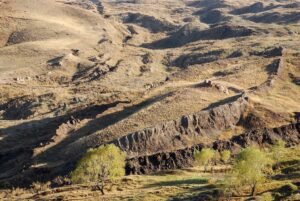
Çayönü Höyüğü lies about seven kilometres southwest of Ergani, in Diyarbakır, near Sesverenpınar village and north of Boğazçay. Excavations began in 1964 through the joint work of Robert Braidwood and Halet Çambel. Linda and Robert Braidwood’s 1984–1985 report places the discovery of the Skull Building’s first traces in the 1981 excavation season.
A 2024 World Neolithic Congress abstract by Yasemin Yılmaz, Aslı Erim Özdoğan and Françoise Le Mort describes it as a house of the dead from the Pre-Pottery Neolithic. That description reflects its burial deposits. Human bones occurred in both primary and secondary burial contexts.
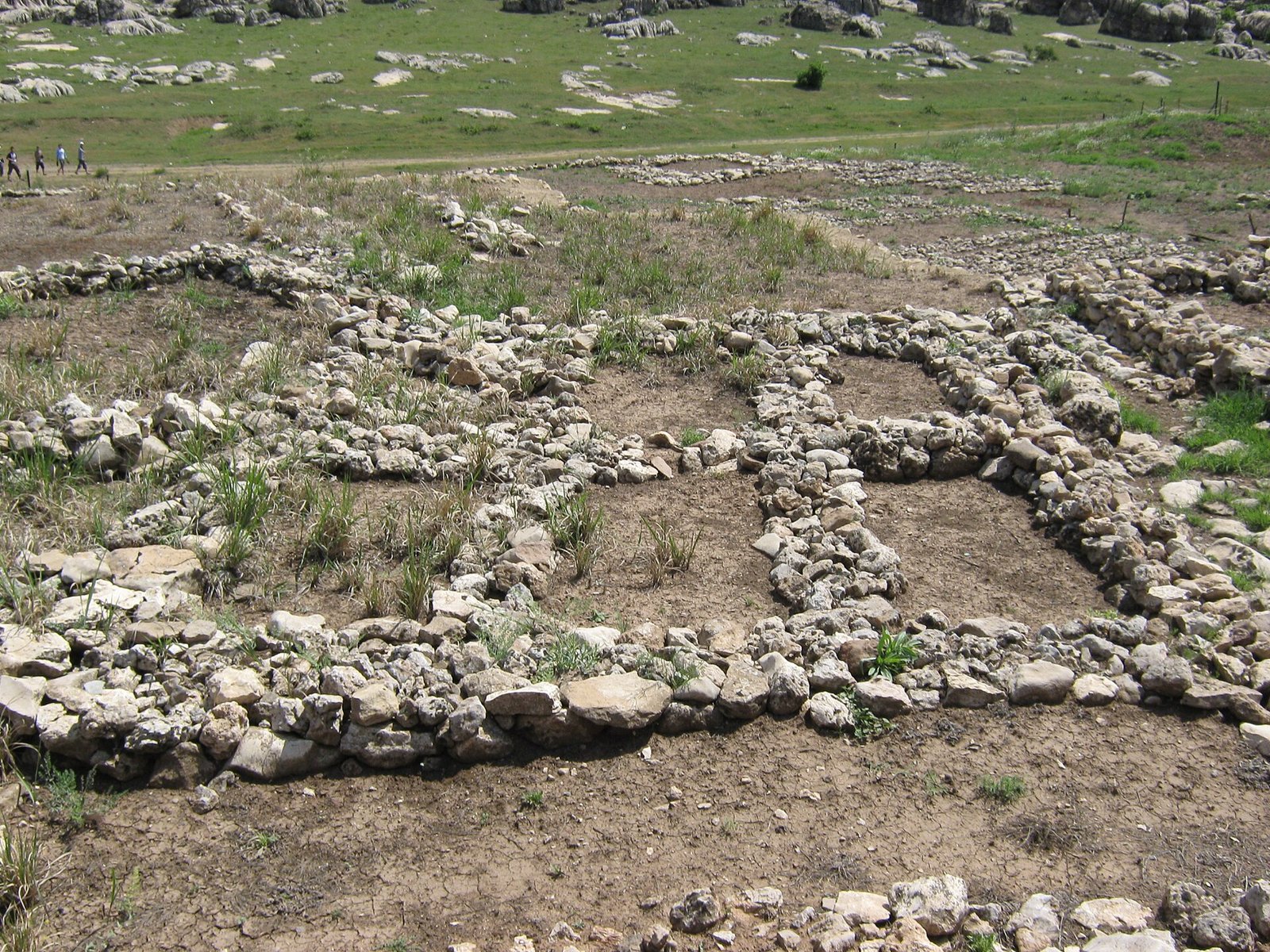
The same abstract distinguishes two buildings placed one above the other. The lower structure, BM 1, had an oval plan. The later structure above it, BM 2, was rectangular. In BM 1, pits beneath a plastered floor held multiple individuals. In BM 2, multiple-person deposits occupied rectangular cells and pits.
The 1984–1985 report describes a large southern front room and three smaller rear rooms to the north. Two rear rooms contained more than forty burned and broken skull vaults. Pits beneath room floors held fragmentary skeletons. These finds connect the architecture directly with the handling and storage of human remains.
Was human sacrifice practiced at Cayonu?
Human sacrifice is an interpretation of some evidence from the Skull Building. One important argument concerns a large stone slab south of the building and a knife. Claims that these objects carried human and animal blood helped support the sacrifice interpretation.
Thomas H. Loy and Andrée R. Wood conducted blood-residue research at Çayönü between 1984 and 1987. They published their findings in the Journal of Field Archaeology in 1989. They reported identifying blood from humans, wild cattle, sheep and goats in residues from the Skull Building.
Their reported procedure used Labstix to screen for haemoglobin. Haemoglobin crystallisation served for species identification, with immunological methods used for laboratory confirmation. These technical details matter because the sacrifice argument depends partly on whether the blood identifications were reliable.
Lichter’s 2016 assessment reports that Smith and Wilson’s 2001 work rejected the method used to identify the Çayönü blood residues. The reported human blood therefore cannot serve as an unquestioned foundation for a sacrifice claim. You need to distinguish the original identification from the later criticism of its method.
Even Loy and Wood’s 1989 abstract proposed a ritual or funerary function that remained unresolved. It referred to more than ninety skulls alongside complete and fragmentary skeletons. The original publication’s description was therefore more cautious than a definite claim that the building existed for human sacrifice.
The 1987 excavation assessment also argued against treating the structure solely as a place where people were sacrificed. It identified several functions, including preparing remains for secondary burial. The presence of both complete and fragmentary skeletons was central to that assessment.
Why were skulls collected at Cayonu?
The skulls were part of a wider treatment of the dead that also involved other skeletal remains. Karina Croucher’s 2010 assessment describes disarticulated and fragmented human remains belonging to approximately 450 people. Calling the structure a Skull Building should therefore not obscure the rest of its contents.
Croucher describes more than ninety skulls in a western cellar. They belonged to women and men aged eighteen to fifty. The skulls stood in north–south rows, with faces directed east or west. Their arrangement provides evidence of deliberate placement within that deposit.
Croucher also considered different explanations for admission to the building. Membership in a select group was one possibility. The timing or circumstances of death were others. These remain interpretations of who entered the burial deposits, rather than a demonstrated explanation of the skull collection’s religious meaning.
You can therefore separate two questions: what people did with skulls, and what that treatment meant to them. The western cellar provides concrete evidence for arrangement and retention. Croucher’s alternatives show why that arrangement alone cannot establish a single rule governing inclusion.
Cayonu secondary burial evidence
The 2024 congress abstract explicitly identifies both primary and secondary burial contexts in the Skull Building. Croucher’s account adds the large body of disarticulated and fragmented remains. Together, these findings place the skull deposits within a broader sequence of burial and bodily treatment.
Françoise Le Mort’s examination of pit BM 2-129 offers more specific evidence. The deposit contained fifteen individuals: at least six adults and nine children or adolescents. Three individuals had cutting-tool marks on the atlas or axis vertebrae. Le Mort judged these marks compatible with separating the head from the body after death.
Le Mort also identified cuts on skull fragments from at least two adults in that pit. She suggested that these could relate to removing soft tissue from the skull. This interpretation concerns preparing remains after death. It does not identify those cuts as evidence of the act that killed the individuals.
The everyday-life link is the distinction you make between a person’s death and the later handling of their remains. At Çayönü, Le Mort’s interpretation places specific cutting actions after death. Those marks can therefore inform an account of mortuary treatment without establishing a sacrificial killing.
Burial practice also changed after the building closed. Lichter states that secondary burials gave way to primary burials in bent positions beneath the floors of cell-plan houses. He places that change after the Skull Building’s closure at the end of the stone-paved buildings phase.
Timeline
- PPNA/Early PPNB: According to the 2024 congress abstract, use began during the grid-plan and channelled building phases.
- End of Middle PPNB: The building was abandoned at the end of the stone-paved buildings phase.
- 1964: Robert Braidwood and Halet Çambel began excavations at Çayönü.
- 1981: The Skull Building’s first traces appeared, according to the Braidwoods’ report.
- 1984–1987: Loy and Wood conducted their blood-residue research.
- 1985: The final renovation phase was dismantled and moved to Diyarbakır Museum.
- 1988: Özbek’s report recorded remains of 148 individuals from the Skull Building that year.
- 1989: Loy and Wood published their blood-residue analysis.
- 1990: The transferred architectural phase was reconstructed for display.
- 2024: Yılmaz, Erim Özdoğan and Le Mort presented research examining more than 100,000 human bones.
Details you won’t find in guidebooks
The 2024 study compared bone weights by anatomical region across more than 100,000 human bones. Its scale extends the discussion beyond the skulls. The material studied includes the wider human skeletal assemblage from the building.
Metin Özbek’s report on the 1988 excavation recorded 157 individuals that year. Of these, 148 came from the Skull Building and nine from other spaces. His account also describes four cellars made with large stone blocks in the building phase under examination.
The architecture has its own history of movement. The final renovation phase was dismantled in 1985 and transferred to Diyarbakır Museum. It was reconstructed for display in 1990. This was a particular architectural phase of a building that had undergone change.
The 1991 conservation report describes an earlier phase left at the excavation site. It included basement spaces used to store skeletons. When protective earth was removed, these spaces were exposed only enough to show their depth. For a traveler, that conservation history helps explain the relationship between the excavated remains and the transferred architecture.
FAQ
What was Çayönü’s Skull Building used for?
It served as a Neolithic house of the dead. Its human remains occur in primary and secondary burial contexts, with evidence also associated with preparing bodies after death.
Was human sacrifice practiced at Çayönü?
The evidence does not establish human sacrifice as a proven practice. Blood identifications used to support the claim were challenged, and some cut marks are consistent with treatment after death.
Why were skulls collected at Çayönü?
The skulls formed part of the building’s treatment and storage of human remains. Croucher suggested that inclusion could relate to group membership, the timing of death or its circumstances.
What evidence supports secondary burial at Çayönü?
The evidence includes disarticulated remains, separately arranged skulls and cut marks compatible with removing heads after death. The 2024 congress abstract explicitly identifies both primary and secondary burial contexts.
Sources
- Oriental Institute — 1984–1985 Annual Report isac.uchicago.edu
- Yasemin Yılmaz, Aslı Erim Özdoğan and Françoise Le Mort — Silent House: The Skull Building, World Neolithic Congress 2024 worldneolithiccongress.org
- Karina Croucher — Tactile engagements, 2010 bradscholars.brad.ac.uk
- Metin Özbek — Son Buluntuların Işığında Çayönü Neolitik İnsanları kvmgm.ktb.gov.tr
- Thomas H. Loy and Andrée R. Wood — Blood Residue Analysis at Çayönü Tepesi, Turkey, 1989 tandfonline.com
- Clemens Lichter — Burial Customs of the Neolithic in Anatolia, 2016 researchgate.net
- Ministry of Culture — 1987 Çayönü excavation assessment ukaas.ktb.gov.tr
- Françoise Le Mort — Modifications artificielles et restes humains, BM 2-129 examination revue-archeologique-picardie.fr
- Ministry of Culture — 1991 Çayönü conservation and site arrangement report ukaas.ktb.gov.tr
Image: Cayönü – Zellplangebäude.jpg — Krähenstein, CC BY-SA 3.0