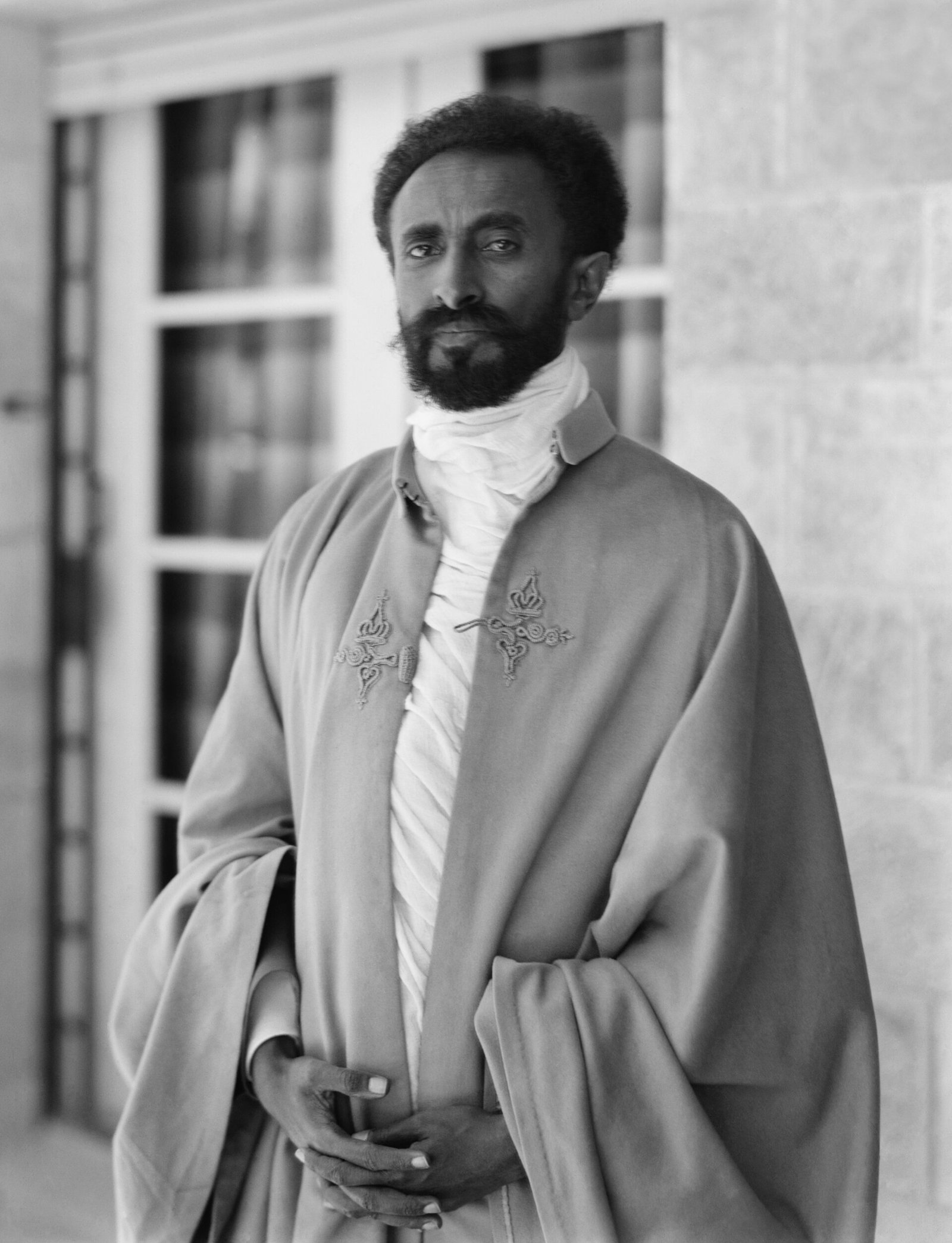
Haile Selassie was Ethiopia’s last reigning emperor. Crowned on 2 November 1930, he lost his throne on 12 September 1974. His rule encompassed Italian invasion, exile, a return to Addis Ababa and efforts toward African unity. It ended after famine, rising living costs, strikes and army unrest shook his government.
If you know him through Rastafari, his overthrow adds another part of the story. Many Rastafari regard him as divine. In Ethiopia, the military committee called the Derg removed him from power at 82. He died in custody the following year, and the explanation of his death became disputed.
Who was Haile Selassie I, and where was he born?
Haile Selassie was born Tafari Makonnen on 23 July 1892. His birthplace was Ejersa Goro, in eastern Ethiopia. In 1916, he became regent and heir to the throne under Empress Zewditu. His route to the imperial crown therefore included years of authority before his coronation in 1930.
The name Haile Selassie means approximately “Power of the Trinity” in Ge’ez. You will encounter both Tafari Makonnen and Haile Selassie in accounts of his life. Tafari Makonnen was his birth name; Haile Selassie was the name under which he was crowned emperor.
On 16 July 1931, he introduced Ethiopia’s first written constitution. It provided for a legislature with two chambers. This was an early constitutional measure of his reign, preceding the Italian invasion that would force him into exile.
How did invasion and exile shape his reign?
Mussolini’s Italy began invading Ethiopia in 1935. Haile Selassie spent 1936–1941 in exile. In 1936, he appealed to the League of Nations for help against Italian aggression. His appeal did not secure intervention capable of stopping the occupation.
His return followed the defeat of the Italians by British forces and Ethiopian resistance fighters. On 5 May 1941, he entered Addis Ababa again. His exile had interrupted his rule, but the occupation had not permanently ended his position as emperor.
On 27 August 1942, Haile Selassie approved legislation reinforcing the legal abolition of slavery. It also imposed severe penalties on the slave trade. This measure belongs alongside the 1931 constitution when considering the legal changes made during his reign.
What did Haile Selassie do for African unity?
In May 1963, Haile Selassie hosted the Addis Ababa meeting at which leaders of 32 independent African states signed the founding charter of the Organization of African Unity. His role as host placed him at the centre of this initiative for cooperation between African states.
That international role forms part of his legacy alongside his opposition to Italian occupation. The Addis Ababa gathering established the organization in 1963. Eleven years later, famine and unrest within Ethiopia helped bring his own government down.
What did Haile Selassie say about race and peace?
For readers searching for Haile Selassie quotes, his address to the United Nations General Assembly on 4 October 1963 is a central reference. He argued that lasting peace required abandoning ideas of racial superiority. He also called for basic rights to be recognized equally for everyone.
You can connect this argument with the African unity meeting he hosted earlier that year. The May gathering concerned cooperation among independent African states. His October address concerned racial equality and peace. Both belong to his international activity in 1963.
How was Ethiopia’s last emperor overthrown?
Haile Selassie’s overthrow followed a crisis with several connected pressures. Famine exposed failures of government. Rising living costs brought unrest into Addis Ababa. Army mutinies and a general strike then challenged the government’s ability to maintain control.
In an African Studies Review article, Peter Koehn states that more than 200,000 people had died in the famine by 1974. He identifies concealment of the disaster as a factor that accelerated the emperor’s fall. The famine therefore mattered both as a catastrophe and as a crisis of government credibility.
The connection to everyday life is direct: food costs reach into your household budget. In Addis Ababa, four days of unrest over the cost of living in February 1974 left five people dead. Economic pressure had become a public challenge to the government.
Army mutinies added to that pressure. Prime Minister Aklilu Habte-Wold resigned on 27 February 1974. Endelkachew Makonnen replaced him. This change at the head of government did not end the wider crisis.
In March, a four-day general strike disrupted life across Ethiopia despite government concessions. The sequence matters: unrest over prices, military rebellion and organized stoppages all preceded the emperor’s removal. His fall was the endpoint of months of upheaval.
The Derg was formed in June 1974 as a military committee. On 12 September, it deposed the 82-year-old emperor. Haile Selassie was then held under house arrest in the palace in Addis Ababa. Ethiopia’s last reigning emperor had become a prisoner in the capital.
Haile Selassie’s death: what happened in custody?
Haile Selassie died in Addis Ababa on 27 August 1975, aged 83. The Derg attributed his death to respiratory failure following prostate surgery. Doctor Asrat Woldeyes rejected the explanation that surgical complications were responsible.
The dispute later acquired a further dimension. In 1994, Ethiopian prosecutors reported finding senior Derg documents ordering Haile Selassie’s killing in 1975. They brought charges against former military rulers. The reported documents challenged the medical explanation issued after his death.
His remains were buried at Holy Trinity Cathedral in Addis Ababa on 5 November 2000. That burial took place decades after his death in custody. The treatment of his remains became another part of the history of his overthrow.
What was Haile Selassie’s religion, and why does Rastafari revere him?
Haile Selassie’s own religion was Christianity within the Ethiopian Orthodox Tewahedo Church. Rastafari developed in Jamaica during the 1930s. Early followers interpreted Ras Tafari’s coronation in 1930 as the fulfilment of biblical prophecy.
Many Rastafari regard Haile Selassie as divine. Interpretations differ, including understandings of him as a manifestation of God or the returned Messiah. These are religious beliefs about the emperor. His own church affiliation was Ethiopian Orthodox Christianity.
He arrived in Jamaica on 21 April 1966. Rastafari tradition remembers that visit as Grounation Day. The date links the historical emperor’s journey to the religious significance that followers attached to him.
What are the stories about Haile Selassie’s miracles?
The Gleaner’s account of the 1966 visit describes rain stopping as the emperor’s aircraft appeared. People in the crowd interpreted this as divine intervention. The account records their understanding of the event; it does not establish supernatural causation.
The rain story belongs to the reception of Haile Selassie in Jamaica on 21 April 1966. Alongside the interpretation of his coronation as prophecy fulfilled, it shows how followers attached religious meaning to events in his life.
Who were Haile Selassie’s children?
Haile Selassie and Menen Asfaw had six children: Tenagnework, Asfaw Wossen, Zenebework, Tsehai, Makonnen and Sahle Selassie. These names connect the emperor’s family history with a life more often discussed through coronation, diplomacy and revolution.
Timeline
- 23 July 1892: Born Tafari Makonnen in Ejersa Goro.
- 1916: Became regent and heir under Empress Zewditu.
- 2 November 1930: Crowned emperor as Haile Selassie.
- 16 July 1931: Introduced Ethiopia’s first written constitution.
- 1935: Mussolini’s Italy began invading Ethiopia.
- 1936: Appealed to the League of Nations and began exile.
- 5 May 1941: Returned to Addis Ababa.
- 27 August 1942: Approved legislation reinforcing slavery’s abolition.
- May 1963: Hosted the founding meeting of the Organization of African Unity.
- 4 October 1963: Addressed the United Nations on racial equality and peace.
- 21 April 1966: Arrived in Jamaica.
- February–March 1974: Unrest, army mutinies and a general strike shook his government.
- 12 September 1974: Deposed by the Derg.
- 27 August 1975: Died in custody.
- 1992: His buried remains were found.
- 1994: Prosecutors announced documents concerning orders for his killing.
- 5 November 2000: His remains were buried at Holy Trinity Cathedral.
Details you won’t find in guidebooks
In 1900, Abuna Yohannes ordained Tafari as a deacon alongside the future Ras Imru. His connection with church life thus preceded his coronation by decades. This detail also gives context to his Ethiopian Orthodox religious affiliation.
His exile home was Fairfield House in Bath, England. Haile Selassie later donated it to the city. The building was used to accommodate elderly people, giving his place of exile a subsequent role in everyday care.
According to the Pitt Rivers Museum, his remains were discovered in 1992 beneath a toilet at the palace. The Ethiopian government refused to give his 2000 reburial the status of a state funeral.
FAQ
Where was Haile Selassie born?
He was born Tafari Makonnen on 23 July 1892 in Ejersa Goro, in eastern Ethiopia.
Who overthrew Haile Selassie?
The Derg, a military committee formed in June 1974, deposed him on 12 September 1974. He was 82.
What was Haile Selassie’s religion?
He was a Christian belonging to the Ethiopian Orthodox Tewahedo Church. Many Rastafari regard him as divine, with differing interpretations of that belief.
How did Haile Selassie die?
He died in custody on 27 August 1975. The Derg attributed his death to respiratory failure following prostate surgery, but doctor Asrat Woldeyes rejected the complication explanation. In 1994, prosecutors reported finding documents ordering his killing.
Sources
- Vikipedi — Haile Selassie tr.wikipedia.org
- Wikipedia — Haile Selassie en.wikipedia.org
- Dictionary of African Christian Biography — Haile Selassie I (A) dacb.org
- Dictionary of African Christian Biography — Haile Selassie I (B) dacb.org
- African Union — About the African Union au.int
- Christian Stokke, Anthropology of Consciousness — Consciousness Development in Rastafari anthrosource.onlinelibrary.wiley.com
- TIME/LIFE — Haile Selassie in Jamaica: Color Photos From a Rastafari Milestone time.com
- The Gleaner — All Hail: The State Visit of Emperor Haile Selassie I old.jamaica-gleaner.com
- Peter Koehn, African Studies Review — Ethiopia: Famine, Food Production, and Changes in the Legal Order cambridge.org
- Pitt Rivers Museum, University of Oxford — The Burial of Emperor Haile Selassie prm.web.ox.ac.uk
Image: Selassie restored.jpg — American Colony (Jerusalem). Photo Dept., photographer., Public domain