Vlad the Impaler is one of the most famous rulers of the 15th century. He is also one of the most misunderstood. He ruled Wallachia, in what is now southern Romania, three times: in 1448, from 1456 to 1462, and in 1476. As a boy, he lived for a time as a hostage of the Ottomans. This article separates what the sources support from what is only repeated.
Vlad the Impaler: real name and where he is from
He is usually called Vlad III. He was born in roughly 1428–1431. He was the second son of Vlad II Dracul, ruler of Wallachia. So the answer to “where is he from” is Wallachia, a principality in today’s southern Romania.
He had several brothers. Mircea was his older brother. Radu was his younger brother. Vlad Călugărul was a half-brother on his father’s side.
His names tell a story:
- Dracula means ‘son of Dracul’. It comes from his father’s nickname. His father belonged to the Order of the Dragon.
- Țepeș is the Romanian nickname. It points to impalement, the punishment he used.
- Kazıklı Voyvoda is the Ottoman form. The Ottoman historian Tursun Bey used it around 1500. It means roughly ‘the Impaling Voivode’.
So the Ottomans were already calling him ‘the Impaler’ within a few decades of his death.
Childhood as a hostage at the Ottoman court
In 1442, during the reign of Murad II, Vlad and his brother Radu were held as hostages. The aim was to guarantee their father’s loyalty to the Ottomans.
Think of it as a security deposit on a rented flat, only with children. The father could not break his promise without risking his sons.
Where were they held? Sources disagree. Radu Cârciumaru’s 2023 study names Eğrigöz Castle in Anatolia. A local story in Tokat says Vlad spent seven years in Tokat Castle. In a 16 October 2014 Anadolu Agency report, the Tokat Culture and Tourism Director called that claim a ‘rumor’. If you visit Tokat, treat the dungeon story as local legend, not documented history.
What did he learn there? We do not really know. Cârciumaru notes that clear data about Vlad’s childhood is missing. He assumes Vlad learned Turkish, soldiering and politics while a hostage. That is an assumption, not a record.
Turkish Wikipedia says Vlad studied alongside Prince Mehmed. Treat that with the same caution. The uncertainty about his childhood limits how firmly it can be stated.
Timeline
- c. 1428–1431: Vlad III is born.
- 1442: Vlad and Radu are held as hostages by the Ottomans.
- 1447: His father, Vlad II, and his brother Mircea are killed.
- 1448: His first reign begins with Ottoman support. It is short.
- 1456: His second reign begins.
- 1459: Turkish Wikipedia dates his refusal to pay tribute to the Ottomans to this year.
- 16–17 June 1462: He launches a night attack near Târgoviște aimed at Mehmed II.
- 1462: Radu becomes ruler of Wallachia. Vlad is arrested on the order of Matthias Corvinus.
- 1476: Vlad returns to the throne for a third time.
- December 1476–January 1477: He dies fighting Basarab Laiotă’s forces.
- 1897: Bram Stoker’s Dracula is published.
- 1933: A dig at Snagov finds no grave under the stone linked to Vlad.
From hostage to prince
Vlad’s father and his older brother Mircea were killed in 1447, during János Hunyadi’s intervention in Wallachia. The next year, Vlad took the Wallachian throne for the first time with Ottoman support. He lost it in the same year to Vladislav II.
He won it back in 1456 by defeating Vladislav II. That began his second reign, which lasted until 1462.
The relationship with the Ottomans then collapsed. Turkish Wikipedia dates his refusal to pay them tribute from 1459. On the night of 16–17 June 1462, he carried out a night raid near Târgoviște. The target was Mehmed II.
Vlad the Impaler and his brother Radu
In 1462, the Ottomans backed Radu, Vlad’s younger brother. Radu replaced Vlad as ruler of Wallachia. The two had been hostages together as boys. Now they stood on opposite sides.
Vlad looked for help from Matthias Corvinus, King of Hungary. Instead, on the king’s order, he was arrested.
Vlad the Impaler: wife and religion
His second wife was Justina Szilágyi. She was a cousin of Matthias Corvinus. That marriage connected Vlad to the Hungarian king who had held him prisoner.
Vlad was raised Orthodox. One account says he became Catholic as part of a deal to get out of captivity in Hungary. This is a claim, not a settled fact.
How many people did he impale?
The numbers are shaky. Laonikos Chalkokondyles reports 20,000 victims at Târgoviște. Dénes Harai’s 2025 research suggests an estimate of 1,600–1,700 people. Harai also shows the figure has never been settled.
One Ottoman source stands out. Enverî took part in the 1462 campaign. According to Harai, he wrote that he saw a field full of impaled people. He gave no number.
Vlad the Impaler: castle and where he lived
Two castles are tied to his name. Neither link is simple.
Poienari Castle. The Argeș County Museum says that in the phase attributed to Vlad, builders added a wall about 60 metres long and three semicircular towers.
Bran Castle. Bran’s official page says no document confirms that Vlad conquered the castle. It also repeats a claim that he was held there for two months in 1462. So the castle’s own site does not treat the connection as proven.
He also spent part of his childhood in Ottoman hands, in a place that is still disputed. And in 1462 he was a prisoner in Hungary.
Vlad the Impaler and the vampire
The popular idea is that Vlad was the model for Stoker’s vampire. The evidence is thinner than the legend.
Stanley Stepanic of the University of Virginia says the 1897 character is not based on Vlad’s life. He says Stoker found the name Dracula in his historical reading.
Elizabeth Miller adds a detail. In an 1820 book by William Wilkinson, Stoker read that Dracula meant ‘devil’. He copied that explanation into his notes in capital letters.
So the link is mostly about a name. It is not a biography turned into a novel.
Vlad the Impaler: death and cause of death
Vlad died during his third reign, in December 1476 or January 1477. He was fighting forces of Basarab Laiotă, who was backed by the Ottomans.
The exact cause of death is disputed:
- Jacob Unrest says an Ottoman assassin killed him.
- Fyodor Kuritsyn says his own soldiers killed him, mistaking him for a Turk.
Details you won’t find in guidebooks
- The Ottomans named him early. Tursun Bey called him ‘Kazıklı Voyvoda’ around 1500.
- An empty grave. A tomb at Snagov is attributed to Vlad. In 1933, Dinu V. Rosetti dug beneath the stone linked to him. He found no grave.
- An eyewitness with no number. Enverî saw a field of impaled people during the 1462 campaign and wrote no figure.
- A name read as ‘devil’. Stoker noted the ‘devil’ meaning of Dracula in capital letters.
- Walls with measurements. Poienari’s Vlad-era phase includes a roughly 60-metre wall and three semicircular towers.
FAQ
Was Vlad the Impaler the real Dracula?
He is the historical figure behind the name. Dracula meant ‘son of Dracul’, after his father’s nickname. But Stanley Stepanic of the University of Virginia says Stoker’s 1897 character is not based on Vlad’s life. Stoker found the name while reading history.
Where was Vlad held hostage?
Historian Radu Cârciumaru’s 2023 study names Eğrigöz Castle in Anatolia. A local story places him in Tokat Castle for seven years. In 2014 the Tokat Culture and Tourism Director called that story a ‘rumor’.
How did Vlad the Impaler die?
He died in December 1476 or January 1477, fighting forces of the Ottoman-backed Basarab Laiotă. Jacob Unrest says an Ottoman assassin killed him. Fyodor Kuritsyn says his own soldiers killed him, mistaking him for a Turk.
Sources
- Vikipedi — III. Vlad tr.wikipedia.org
- Wikipedia — Vlad the Impaler en.wikipedia.org
- Radu Cârciumaru — Vlad the Impaler, the Truth Behind the Myth centerprode.com
- Anadolu Ajansı — Drakula’nın kaldığı zindanlar kameralarla gözetlenecek aa.com.tr
- Dénes Harai — Counting the Stakes, Transactions of the Royal Historical Society doi.org
- Argeș County Museum — Cetatea Poienari cetateapoienari.ro
- Bran Castle — Count Dracula bran-castle.com
- University of Virginia — Dissecting ‘Dracula’: A Chat With Vampire Expert Stanley Stepanic archive.news.virginia.edu
- PBS FRONTLINE/WORLD — Interview with the Vampire Queen: Elizabeth Miller panhandlepbs.org
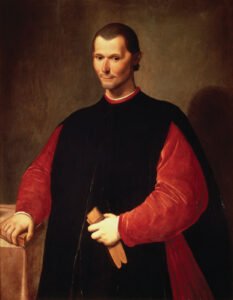
Image: Vlad Ţepeş, the Impaler, Prince of Wallachia (1456-1462) (died 1477).jpg — AnonymousUnknown author, Public domain