Who was T. E. Lawrence of Arabia?
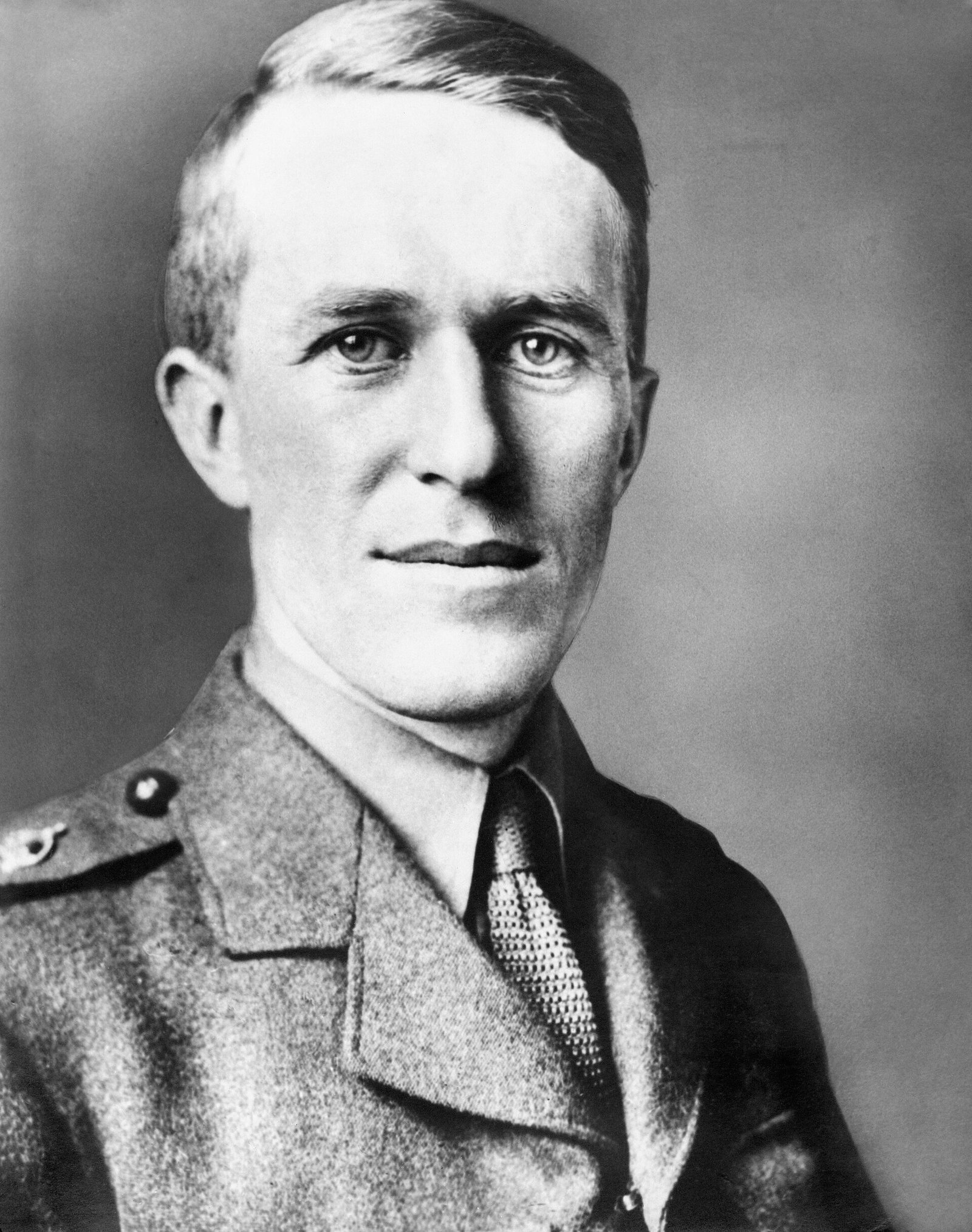
Thomas Edward Lawrence was a British officer, archaeologist, diplomat and writer. Born in Tremadog, Wales, on 16 August 1888, he became associated with the Arab Revolt through his work with Emir Faisal. His wartime position was that of a liaison officer. He was not the revolt’s sole director.
If you want to understand Lawrence, start with archaeology as well as warfare. He studied history at Jesus College, Oxford, between 1907 and 1910. In 1909, he walked about 1,600 kilometres alone through Ottoman Syria to study Crusader castles. His engagement with the region therefore preceded his army service.
Between 1910 and 1914, Lawrence took part in archaeological work for the British Museum, chiefly at Carchemish. For readers interested in Turkey, Carchemish provides a concrete starting point in his biography. His responsibilities there included making a photographic record of the excavation.
How much of the film is historically accurate?
David Lean’s 1962 film Lawrence of Arabia, starring Peter O’Toole, draws on the real Aqaba campaign, but the National Army Museum judges its presentation of the attack to be excessively dramatized.
The historical capture of Aqaba was a collective operation. Arab forces took the town on 6 July 1917 after an overland campaign led by Sharif Nasir. Auda Abu Tayi and Lawrence participated. You should keep those roles distinct: Lawrence took part in a campaign whose leadership and forces extended beyond him.
The same care applies to Damascus. Lawrence entered the city on 1 October 1918, several hours after its formal surrender. His arrival belongs in the story, but the timing matters. Entering a city after its surrender is a more precise description than treating his arrival as the surrender itself.
Deraa requires another distinction: an account can be important without being independently confirmed. Lawrence said Ottoman soldiers captured him there on 20 November 1917, beat him and sexually assaulted him. There is no independent testimony supporting his account. Some researchers reject it; Malcolm Brown, John E. Mack and Jeremy Wilson found it credible.
What did Lawrence actually do in the Arab Revolt?
Lawrence joined the British Army in October 1914 and received an intelligence posting in Cairo. In 1916, he was sent to the Hejaz to serve as a liaison between Britain and Hashemite forces. He worked with Emir Faisal as one of the British officers attached to that effort.
The guerrilla strategy Lawrence supported aimed to tie down Ottoman forces by attacking the Hejaz railway. It did not make the immediate capture of Medina its priority. The distinction helps explain the place of railway attacks in his wartime record: their purpose was to keep Ottoman troops committed there.
Arab independence also created a political problem. Britain and France had reached the secret Sykes–Picot arrangement in 1916. That arrangement conflicted with the expectations of Arab independence Lawrence supported. His work with Arab forces therefore sat alongside a British diplomatic commitment that pulled in a different direction.
His later fame had a further source. The American journalist Lowell Thomas began shows in London in 1919 that helped make Lawrence famous after the war. His public reputation thus involved both his wartime activities and Thomas’s presentation of them to audiences.
Timeline
- 16 August 1888: Born in Tremadog, Wales.
- 1907–1910: Studied history at Jesus College, Oxford.
- 1910–1914: Participated in archaeological work for the British Museum, chiefly at Carchemish.
- October 1914: Joined the British Army.
- 1916: Began liaison work in the Hejaz.
- 6 July 1917: Arab forces captured Aqaba after a campaign in which he participated.
- 1 October 1918: Entered Damascus after its formal surrender.
- 1922: Joined the RAF as John Hume Ross.
- 1926: The revised subscribers’ edition of Seven Pillars of Wisdom appeared.
- 1927: Revolt in the Desert was published.
- 1932: The New York edition of his Odyssey translation appeared.
- 13 May 1935: Suffered a motorcycle accident in Dorset.
- 19 May 1935: Died from his injuries.
T. E. Lawrence’s Seven Pillars of Wisdom
Seven Pillars of Wisdom is Lawrence’s account of his experiences during the Arab Revolt. Its revised subscribers’ edition appeared in 1926. When you encounter the title, remember that it is a participant’s account: its author was also one of the people whose actions it describes.
The disputed Deraa episode makes that relationship especially relevant. Lawrence’s description of his alleged captivity has divided researchers. Brown, Mack and Wilson accepted its credibility, while others rejected it. The disagreement concerns an episode in his own account, rather than an event established by independent testimony.
Revolt in the Desert followed in March 1927. It was an abridged version of Seven Pillars of Wisdom. These titles therefore represent two forms of Lawrence’s revolt narrative. Their relationship matters if you are choosing between the longer account and its shortened form.
T. E. Lawrence’s books and the Odyssey
Lawrence’s writing extended beyond his account of the Arab Revolt. The Mint describes his experiences as an enlisted man in the RAF. His brother Arnold edited the work, and it appeared after Lawrence’s death. Its subject belongs to a different phase of his service from his work with Faisal.
That later military career involved assumed names. Lawrence joined the RAF in 1922 as John Hume Ross. In 1923, he entered the Tank Corps as T. E. Shaw. These names belong to the same man whose earlier activities included archaeology, intelligence work and liaison duties.
Lawrence also translated Homer’s Odyssey into English prose. Oxford University Press’s New York edition dates to 1932. This was translation work, distinct from the personal experiences described in Seven Pillars of Wisdom and The Mint.
The manuscript of his Odyssey translation survives in the British Library as Add MS 45930. George Bernard Shaw donated it to the library in 1944. The catalogue number gives this part of Lawrence’s literary life a specific surviving object, alongside the published edition.
T. E. Lawrence quotes: “It is their war”
“It is their war” appears in Lawrence’s Twenty-Seven Articles, published in the Arab Bulletin on 20 August 1917. The wording belongs to a dated text. It can therefore be placed within his wartime work rather than treated as a quotation detached from its setting.
The phrase also fits a basic fact about his position. Lawrence was a liaison officer working with Faisal, among other British officers. Arab leaders and forces had their own roles. At Aqaba, for example, Sharif Nasir led the overland campaign in which Lawrence and Auda Abu Tayi participated.
Details you won’t find in guidebooks
Lawrence was responsible for the photographic record at Carchemish for four years. In the 1911 season alone, he took about 200 photographs. This was a sustained excavation responsibility, giving photography a substantial place in his archaeological work.
A school friend recalled an earlier photographic solution. Lawrence wanted to appear in a class photograph himself. He reportedly operated the camera shutter with a bicycle pump connected by rubber tubing. The account describes a practical answer to the problem of being both photographer and subject.
The Ashmolean Museum preserves an Arab robe worn by Lawrence and dated to 1916. Its inventory number is EA1965.176. The garment is a surviving object associated with the year he began liaison work in the Hejaz.
His house at Clouds Hill in Dorset offers an everyday connection. If you have ever tried to keep damp out of a bedroom, you can recognise the household problem behind his alterations. Lawrence had the bedroom lined with aluminium to protect it from damp and insulated the bathroom with cork.
T. E. Lawrence’s death and burial
Lawrence suffered a motorcycle accident in Dorset on 13 May 1935. According to Historic England’s account, he changed direction to avoid two cyclists and was thrown from the motorcycle. He died from his injuries on 19 May, aged 46.
His grave is in the churchyard of St Nicholas Church at Moreton, Dorset. Moreton and Clouds Hill belong to the final part of a life that had also included Oxford, Carchemish, Cairo and the Hejaz. His burial place gives that biography a specific final location.
FAQ
What was T. E. Lawrence’s role in the Arab Revolt?
He served as a liaison between Britain and Hashemite forces from 1916. He worked with Emir Faisal and was one of several British officers involved.
What is Seven Pillars of Wisdom?
It is Lawrence’s account of his experiences during the Arab Revolt. Its revised subscribers’ edition appeared in 1926.
Which work by Homer did Lawrence translate?
Lawrence translated the Odyssey into English prose. The New York edition published by Oxford University Press dates to 1932.
How did T. E. Lawrence die?
He suffered a motorcycle accident in Dorset on 13 May 1935 and died from his injuries on 19 May, aged 46.
Sources
- Wikipedia — T. E. Lawrence en.wikipedia.org
- National Army Museum — Lawrence of Arabia: The man behind the robes nam.ac.uk
- Oxford History of Science Museum — T. E. Lawrence and his Cameras mhs.ox.ac.uk
- Vikipedi — Thomas Edward Lawrence tr.wikipedia.org
- Perseus Catalog — The Odyssey of Homer catalog.perseus.org
- British Library — Add MS 45930 searcharchives.bl.uk
- Ashmolean Museum — Arab Robe Worn by T. E. Lawrence ashmolean.org
- National Trust — History of Clouds Hill nationaltrust.org.uk
- Historic England — Clouds Hill, list entry 1120423 historicengland.org.uk
Image: Te lawrence.jpg — Harris & Ewing, Public domain