Where was the Ghana Empire? Was it in modern-day Ghana?
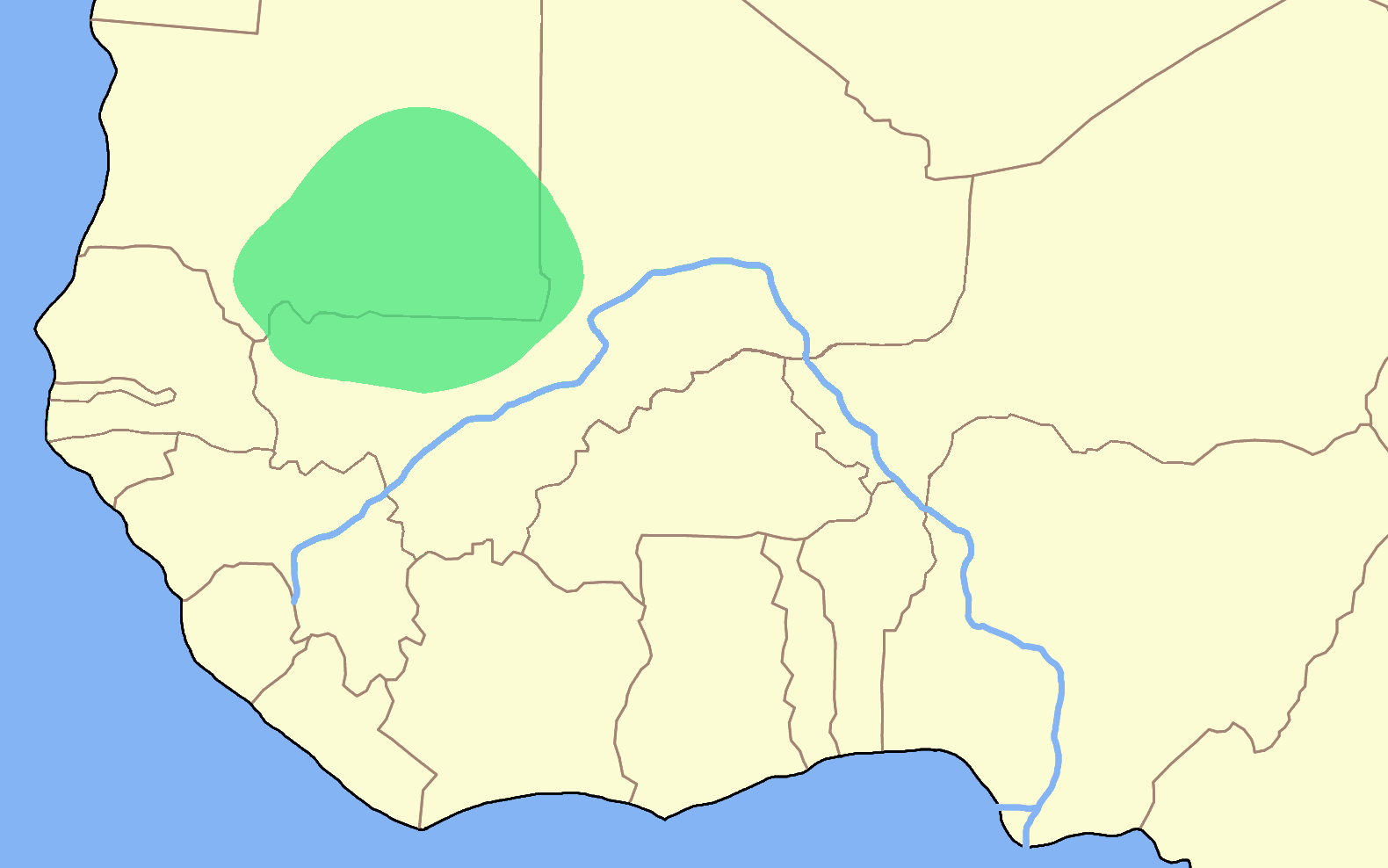
The Ghana Empire was in West Africa’s Sahel belt. Its core occupied parts of what are now southeastern Mauritania and western Mali. It was not located in modern-day Ghana. The shared name connects two different territories through a later act of historical remembrance.
The modern country took its name when the Gold Coast became independent under Kwame Nkrumah in 1957. The choice honoured the earlier African kingdom. It did not mean that the new country occupied the medieval empire’s homeland.
If you are looking for the old Ghana Empire on a modern map, begin with Mauritania and Mali. Looking within the present Republic of Ghana places you in the wrong territory. Keeping those locations separate makes the empire’s trade, capital and political history much easier to follow.
What is the Ghana Empire? A definition
The Ghana Empire was a monarchy associated with the Soninke people. It was also known as Wagadou and Awkar. It ranked among West Africa’s earliest known large political formations and rose through trade across the Sahara.
The name itself needs care. In medieval Arabic sources, Ghāna could mean the ruler, the city he governed or the country. A reference to “Ghana” therefore does not always describe the same geographical or political unit. Its meaning depends on the passage in which it appears.
The Metropolitan Museum of Art describes Ghana as a Soninke empire. That connection provides a firmer starting point for understanding its formation than treating one proposed founding year as certain. The beginning of the ruling dynasty has not been securely established.
Ghana Empire map: where is the old empire located?
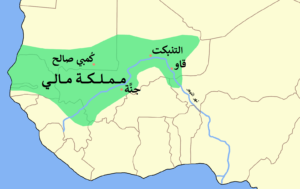
The empire’s core lay in the Sahel, across southeastern Mauritania and western Mali. Those modern place names provide a useful geographical reference. They should not be read as a complete outline of the empire at every stage of its history.
Historian Kevin C. MacDonald identifies both the extent of Ghana’s territory and the locations of its capitals as disputed. If you use a Ghana Empire map, treat its border lines as a reconstruction. The central location is clearer than the precise reach of its authority.
Koumbi Saleh, in Mauritania, is commonly associated with Ghana’s capital. However, excavations have produced no inscription that conclusively establishes that identity. The archaeological site is important to the discussion, but its identification as the capital remains a theory.
Who founded the Ghana Empire?
Ghana’s formation is associated with the Soninke people. Its beginnings are dated differently in historical accounts. English Wikipedia uses an approximate date of AD 300. MacDonald places Ghana or Wagadu’s development around AD 400–1150 and traces its roots to earlier local exchange networks.
Those networks involved farming and herding communities in the first millennium BC. In MacDonald’s interpretation, the state grew from existing patterns of exchange. This places its formation within a longer local development, rather than reducing it to a single founding event.
Some versions of Soninke oral tradition name Dyabe, the son of Dinga, as Wagadu’s founder. This is a legendary foundation story, rather than a documented founder’s biography. You can distinguish the two claims: the Soninke connection concerns the state’s formation, while Dyabe belongs to a particular oral account.
Ghana Empire history: how did gold trade build its power?
The Metropolitan Museum of Art connects Ghana’s rise with the growth of trans-Saharan gold trade during the fifth century. Between the seventh and eleventh centuries, these exchanges linked Mediterranean economies seeking gold with regions south of the Sahara that supplied it.
Ghana’s political development therefore belonged to a trading world that crossed the desert. By 1050, it had become powerful enough to control Audaghost, a Muslim Berber trading town. That control provides a concrete measure of its influence over a major commercial settlement.
Gold also appeared within the ruler’s system of authority. The king reserved gold bullion for himself, while other people could possess gold dust. This distinction separated royal control of one form of gold from the gold available to others.
Salt brought revenue too. In the arrangement reported by the eleventh-century writer al-Bakri, salt entering the country was taxed at one gold dinar. Salt leaving it was taxed at two. The different charges show how the movement of goods could produce income for the ruler.
What was the Ghana Empire’s religion?
Traditional African beliefs existed in Ghana before Islam spread there. Muslim merchants and scholars later became part of its commercial and administrative life. Their presence did not make every part of Ghana’s religious history identical.
Muslims served as advisers and scribes under Ghana’s rulers. Their knowledge of writing was used in government. Islam’s place in the empire therefore involved administrative work as well as the activities of merchants.
Al-Bakri’s eleventh-century description presents the capital as two settlements about 10 kilometres apart. Muslim merchants lived in one, while the ruler lived in the other. His account gives a specific picture of how the royal settlement and the merchant community were arranged.
What has archaeology found at Koumbi Saleh?
Excavations at Koumbi Saleh have revealed stone houses and a Friday mosque. These remains provide evidence of a settled urban community. They have not, however, revealed the ruler’s settlement described in al-Bakri’s account.
Radiocarbon dating places occupation at the site between the late fifth century and the fourteenth century. Its urban phase is dated approximately to the eleventh through fourteenth centuries. The occupation dates and the period of urban growth describe different stages of the site’s history.
Mauritania submitted the archaeological site of Kumbi Saleh to the UNESCO World Heritage Tentative List on 14 June 2001. For a reader interested in historical places, this is the archaeological location to connect with discussions of Ghana’s possible capital.
Details you won’t find in guidebooks
The Soninke concealed the locations of gold sources from Muslim merchants, according to the Metropolitan Museum of Art. The Bambuk mines were a particular concern. Access to gold did not necessarily give a visiting trader access to knowledge of where it originated.
Al-Bakri’s description of the royal court includes dogs wearing collars decorated with gold and silver. This detail places precious metals within the visible display of royal wealth, beyond the exchanges that brought gold into trade.
For an everyday comparison, think about the difference between a purchase price and an added charge. Ghana’s salt taxes concerned goods entering and leaving the country. The one-dinar entry charge and two-dinar exit charge show why movement mattered alongside the goods themselves.
Why did the Ghana Empire decline?
By the end of the twelfth century, Ghana was losing its leading position in the gold trade. Trans-Saharan routes were beginning to turn towards the Bure goldfield instead of Audaghost. This shift forms part of the explanation for the weakening of its commercial advantage.
A familiar account places an Almoravid conquest of Ghana in 1076–1077. That military conquest is disputed. Conrad and Fisher argue that the claim rests on misinterpretations of Arabic sources. Those dates should therefore not be treated as an uncontested end to Ghana’s history.
By the middle of the fourteenth century, Ghana’s ruler was subordinate to the Mali Empire. This later relationship is distinct from the disputed conquest account. Ghana’s changing position unfolded across a longer period than a single proposed invasion date suggests.
Timeline
- Around AD 300: English Wikipedia uses this approximate founding date; MacDonald places Ghana or Wagadu’s development around AD 400–1150.
- Fifth century: Growing trans-Saharan gold trade is associated with the Soninke state’s rise.
- By 1050: Ghana can control the trading town of Audaghost.
- Eleventh century: Al-Bakri describes Ghana’s capital, commerce and royal court.
- 1076–1077: These are the traditional dates assigned to a disputed Almoravid conquest.
- Late twelfth century: Ghana loses its predominance in the West African gold trade.
- By the mid-fourteenth century: Ghana’s ruler is subordinate to the Mali Empire.
- 1957: The independent Gold Coast adopts the name Ghana.
- 14 June 2001: Mauritania submits Kumbi Saleh to UNESCO’s World Heritage Tentative List.
Ghana Empire history: JSS2 notes and key facts
For a short study answer, begin with location: Ghana’s core was in southeastern Mauritania and western Mali. Then identify the Soninke connection and the importance of trans-Saharan gold trade. These facts explain where the state developed, which people are associated with it and how its power grew.
Keep the main uncertainties separate from those facts. The founding date, territorial boundaries and identification of Koumbi Saleh as the capital remain disputed. So does the proposed Almoravid conquest of 1076–1077. Modern Ghana’s adoption of the name in 1957 belongs to a much later history.
FAQ
Was the Ghana Empire in modern-day Ghana?
No. Its core lay in southeastern Mauritania and western Mali. Modern Ghana adopted the historic name when the Gold Coast became independent in 1957.
Who founded the Ghana Empire?
The empire’s formation is associated with the Soninke people. Some Soninke oral traditions name Dyabe, son of Dinga, as Wagadu’s founder, but this is a legendary account.
What religion did the Ghana Empire follow?
Traditional African beliefs preceded the spread of Islam. Muslim merchants and scholars later served as advisers and scribes within the administration.
Was Koumbi Saleh the capital of the Ghana Empire?
Koumbi Saleh is commonly associated with Ghana’s capital. That identification remains uncertain because no excavated inscription has confirmed it, and the ruler’s settlement described by al-Bakri has not been found.
Sources
- English Wikipedia — Ghana Empire en.wikipedia.org
- Stanford University — The Spread of Islam in West Africa spice.fsi.stanford.edu
- Turkish Wikipedia — Gana İmparatorluğu tr.wikipedia.org
- Metropolitan Museum of Art — The Trans-Saharan Gold Trade metmuseum.org
- Kevin C. MacDonald — Ghana, Empire of, Wiley onlinelibrary.wiley.com
- English Wikipedia — Koumbi Saleh en.wikipedia.org
- UNESCO World Heritage Centre — Site archéologique de Kumbi Saleh whc.unesco.org
Image: GHANA empire map BLANK.png — Borvan53, CC BY-SA 4.0