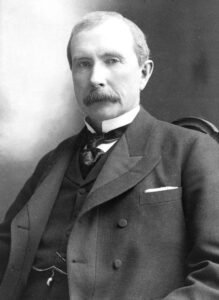
Ralph Waldo Emerson was an American thinker, essayist, and poet who helped establish transcendentalism, a movement emphasizing personal spiritual experience and intuition. Through Nature and Self-Reliance, he encouraged independent judgment, influenced American literature, and connected individual transformation with social change.
How did a Boston minister become an advocate of intellectual independence and resistance to a slavery law? Emerson’s path connects religious disagreement, writing, support for younger authors, and public opposition to slavery. If you follow those connections, his influence becomes clearer than it does through the idea of self-reliance alone.
Who was Ralph Waldo Emerson?
Emerson was born in Boston on May 25, 1803, and died in Concord on April 27, 1882. His work crossed several forms: philosophical essays, poetry, public addresses, and magazine editing. Those activities gave his ideas several routes into American intellectual life.
His influence also worked through personal relationships. He helped Thoreau publish poems and essays, praised Walt Whitman’s Leaves of Grass, and edited The Dial. His career therefore involved both developing his own arguments and helping other writers reach readers.
Why did Emerson leave the ministry?
Emerson became a Unitarian minister at Boston’s Second Church in 1829. He left the ministry in 1832 after disagreements over the administration of communion and doubts about communal prayer. His departure involved specific religious practices and questions about their authority.
Personal loss accompanied this religious uncertainty. His first wife, Ellen, died in 1831, leaving him deeply shaken. In his journal in June 1832, he described the ministerial profession as outdated. Bereavement and dissatisfaction with his profession belonged to the same difficult period.
The questions continued after he left church employment. In his 1838 Harvard address, Emerson rejected biblical miracles. The theologian Andrews Norton condemned the address that same year as an insult to religion. Emerson’s developing religious position thus produced an explicit public disagreement.
What historical circumstances gave rise to transcendentalism?
Transcendentalism emerged during the first half of the nineteenth century in liberal Unitarian circles in New England. These circles were moving away from Calvinist understandings of human beings. Emerson’s arguments developed within this changing religious environment.
New ways of reading the Bible also mattered. Works by Schleiermacher appeared in English in 1825, followed by works by Herder in 1833. Their treatment of the Bible as a product of history and culture encouraged transcendentalists to question religious authority.
Emerson was among the founders of the Transcendental Club. Its first informal meeting took place in Cambridge on September 8, 1836. The movement therefore had a setting for conversation as well as arguments expressed through individual books and addresses.
The pressure of majority opinion supplied another context. The National Humanities Center interprets Self-Reliance as a response to Jackson-era mass politics and culture. In this reading, Emerson’s 1841 essay addressed the pressure placed on individuals to conform to the majority.
What did Nature and Self-Reliance argue?
Published in 1836, Nature presented the natural world as a source of spiritual truth, beauty, and symbols. Its opening urged people to establish their own relationship with the universe instead of inheriting the religious experiences of earlier generations. Personal experience stood at the center of this argument.
Nature therefore linked spiritual understanding with an individual’s encounter with the world. Emerson’s emphasis on beauty and symbols made nature meaningful beyond its physical presence. If you approach the book through its opening argument, its central invitation is to form a relationship with the universe yourself.
Self-Reliance, published in 1841, turned toward the individual’s relationship with society. Emerson urged readers to trust their intuition. He argued that gaining social approval should not require surrendering intellectual independence. The essay challenged conformity at the level of personal judgment.
You can connect this argument to an everyday decision: whether to repeat an opinion merely because the people around you accept it. Emerson’s principle asks you to preserve your own judgment. That ordinary situation gives a practical way into his argument about intuition and social approval.
The essay also proposed a relationship between personal and social change. Transformed individuals could become people whose example guided others. In that account, self-reliance had consequences beyond the person practicing it. Individual development could help create the conditions for wider change.
Emerson’s 1837 address The American Scholar supplied a related account of education. It identified three sources: nature, books, and action. Together, these placed direct experience and activity alongside reading. Oliver Wendell Holmes later described the address as America’s declaration of intellectual independence.
How did Emerson influence Thoreau and American literature?
Emerson’s influence on Thoreau included help with publication. Thoreau lived in Emerson’s household from 1841 to 1843. During that period, Emerson helped bring the younger writer’s poems and essays into The Dial, giving practical support to his literary work.
The magazine itself was an important part of transcendentalist activity. The Dial appeared from 1840 to 1844. Margaret Fuller edited it first, and Emerson directed it during its final two years. His literary role thus included selecting and circulating the work of others.
Emerson also supported Thoreau’s life at Walden through access to land. Thoreau built his cabin on property Emerson allowed him to use. He moved into it on July 4, 1845. This connection rested on a concrete arrangement between the two writers.
Whitman received a different form of encouragement. Emerson wrote a letter praising Leaves of Grass on July 21, 1855. The letter connected Emerson’s judgment with another American writer’s work, although Whitman’s subsequent use of that praise raised a question of permission.
His influence extended into philosophy as well. Emerson’s ideas about change, the value of everyday experience, and human will influenced the American pragmatists William James and John Dewey. His intellectual legacy therefore reached beyond the writers he personally encouraged.
How did his involvement in abolitionism develop?
Emerson’s opposition to slavery became more central over time. Nature welcomed the abolition of the slave trade in 1836. Yet abolitionism only moved to the center of his intellectual concerns during the 1840s. His public commitment developed across those years.
A major moment came in 1844. Emerson delivered an address marking the anniversary of emancipation in the British West Indies. The speech became a turning point in his public antislavery activity, placing abolition more firmly within his work as a speaker.
In 1851, he addressed the people of Concord about the Fugitive Slave Law of 1850. He called for its repeal and advocated disobeying it while it remained in force. His defense of independent judgment now included an explicit demand to resist a law.
Emerson later marked emancipation through poetry. In 1863, he read Boston Hymn before an audience of 3,000 celebrating Lincoln’s Emancipation Proclamation. This public reading brought together his writing and his opposition to slavery.
His views on race nevertheless contained contradictions. Race, dated 1856, questioned claims that races were pure and unchanging. Fate, published in 1860, included ideas of racial hierarchy. These positions complicate the relationship between his abolitionism and his understanding of human difference.
Details you won’t find in guidebooks
Emerson drafted Nature in an upstairs study at the Old Manse in Concord. The room overlooked the river and the North Bridge battlefield of the American Revolution. The setting places the book’s argument about personal encounters with nature within a specific working space.
After Emerson became editor in 1842, The Dial published translations from Chinese and Indian philosophy under the heading Ethnical Scriptures. His editorial work therefore brought these philosophical writings into the same magazine that published transcendentalist authors.
The setting of his 1844 abolitionist speech reveals resistance to his public activity. Churches refused to host the meeting, so it took place in the courthouse. Thoreau rang the bell announcing it. Their connection extended into the practical work of organizing the event.
Whitman published Emerson’s praise without permission in the New York Tribune on October 10, 1855. He then printed a sentence of praise from the letter on the spine of the 1856 edition of Leaves of Grass. A personal letter became part of the book’s public presentation.
Timeline
- May 25, 1803: Emerson was born in Boston.
- 1829: He became a minister at Boston’s Second Church.
- 1831: His first wife, Ellen, died.
- 1832: He left the ministry.
- 1836: Nature appeared, and the Transcendental Club began meeting.
- 1837: He delivered The American Scholar.
- 1838: His Harvard religious address provoked controversy.
- 1841: Self-Reliance appeared.
- 1842–1844: He edited The Dial.
- 1844: He delivered his address commemorating emancipation in the British West Indies.
- July 4, 1845: Thoreau moved into the Walden cabin on Emerson’s land.
- 1851: Emerson advocated disobedience to the Fugitive Slave Law.
- July 21, 1855: He wrote his letter praising Whitman’s Leaves of Grass.
- 1863: He read Boston Hymn at an Emancipation Proclamation celebration.
- April 27, 1882: He died in Concord.
FAQ
Who was Ralph Waldo Emerson?
Ralph Waldo Emerson was an American thinker, essayist, and poet. Born in Boston in 1803, he helped establish transcendentalism and argued for personal intuition and intellectual independence.
What did Emerson mean by self-reliance?
His 1841 essay urged individuals to trust their intuition and preserve independent judgment instead of surrendering it for social approval. It also connected personal transformation with wider social change.
How did Emerson help Thoreau?
Emerson helped publish Thoreau’s poems and essays in The Dial while Thoreau lived in his household from 1841 to 1843. He also allowed Thoreau to build the Walden cabin on his land.
Was Emerson an abolitionist?
Yes. Abolitionism became central to his thinking during the 1840s. In 1851, he called for repeal of the Fugitive Slave Law and urged disobedience while it remained in force.
Sources
- Türkçe Vikipedi — Ralph Waldo Emerson tr.wikipedia.org
- Stanford Encyclopedia of Philosophy — Ralph Waldo Emerson plato.stanford.edu
- English Wikipedia — Ralph Waldo Emerson en.wikipedia.org
- Stanford Encyclopedia of Philosophy — Transcendentalism, Summer 2022 plato.stanford.edu
- National Park Service — Longfellow and Emerson nps.gov
- National Humanities Center — Individualism in Ralph Waldo Emerson’s Self-Reliance americainclass.org
- National Park Service — The Old Manse nps.gov
- The Thoreau Society — Thoreau’s Life thoreausociety.org
- Library of Congress — Emerson to Whitman, 21 July 1855 loc.gov
- Indiana University Lilly Library — Leaves of Grass, 1856 collections.libraries.indiana.edu
Image: Ralph Waldo Emerson by Josiah Johnson Hawes 1857.jpg — Josiah Johnson Hawes, Public domain