Gunpowder originated in China through the accumulated work of pharmacists, alchemists and craftspeople; it cannot be credited to a single inventor. A Chinese text from around 850 records a precursor mixture, while the military handbook Wujing zongyao preserves the earliest surviving true gunpowder formulas from 1044.
The Chinese name huoyao means “fire medicine,” a clue to gunpowder’s connection with alchemy and the search for immortality. If you follow its story from burned workrooms to Ottoman siege guns, you can see how a material explored by alchemists became a military technology. Along the way, ceramic bombs, military manuals and names such as “Chinese snow” help trace its development.
Where does gunpowder come from?
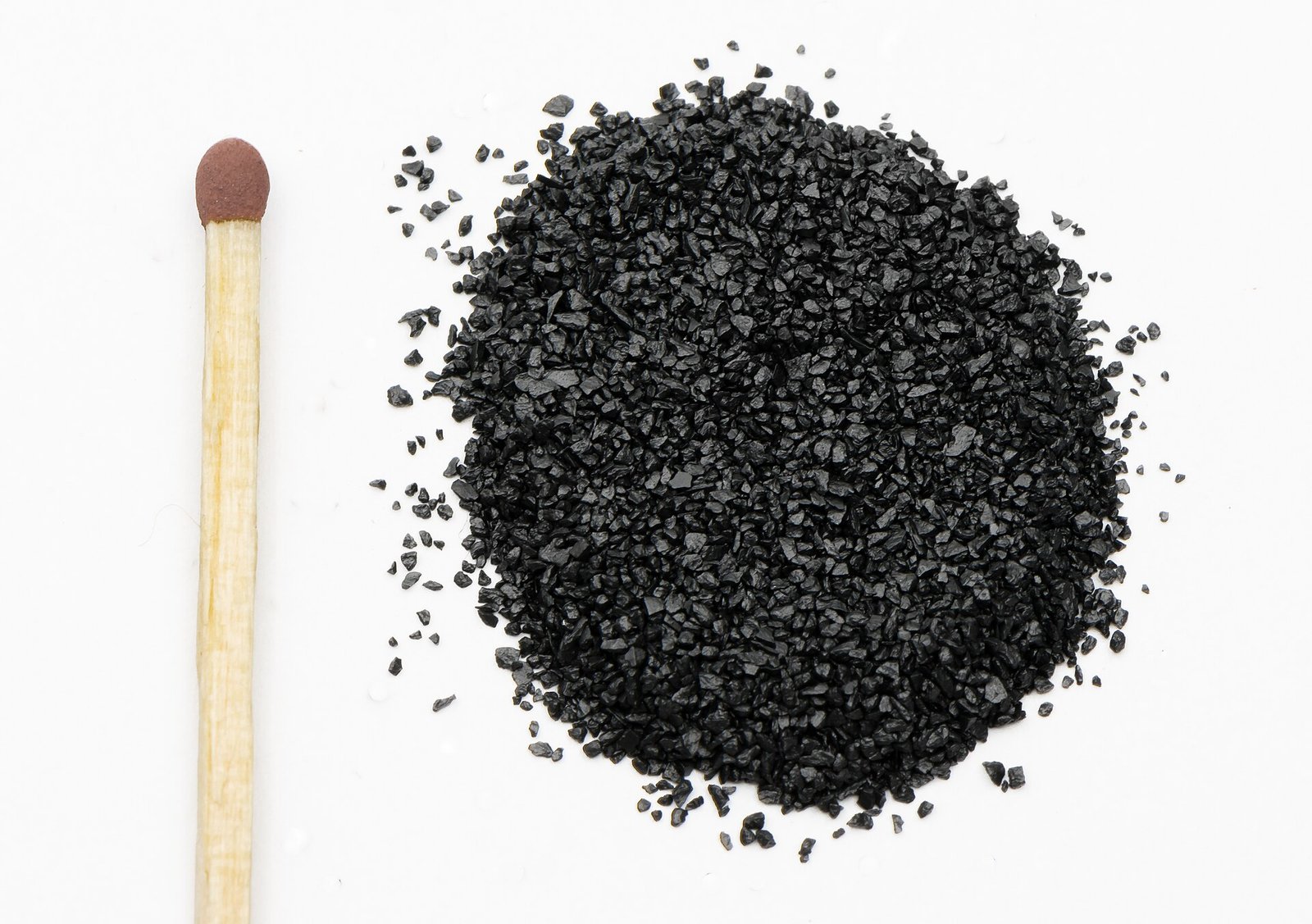
Historical black powder contains saltpetre, sulphur and charcoal. It is a manufactured mixture, rather than a single mineral taken ready-made from the ground. Its geographical origin and its material ingredients therefore answer different parts of the same question: it emerged in China, and people produced it by combining separate substances.
For an everyday comparison, think of a mixture you use in a kitchen: the finished material has to be made from ingredients. Black powder likewise depended on combining substances.
Chinese alchemical work provides the setting for its emergence. People seeking immortality experimented with mixtures that could produce dangerous flames. The connection with medicine survives in huoyao, although the material later appears in military records as a means of setting targets alight and powering weapons.
Who invented gunpowder in China?
No single person receives credit for inventing gunpowder. It developed through accumulated knowledge among Chinese pharmacists, alchemists and craftspeople. That shared development matters: the story includes experimental mixtures, written formulas, production methods and different ways of using fire in weapons.
A Chinese text dated to around 850 supplies early written evidence for a precursor mixture. This is a different milestone from the surviving formulas recorded in 1044. You should keep those dates separate: an early account of a combustible mixture and a military handbook documenting gunpowder represent different stages of development.
The Zhenyuan miaodao yaolüe, dated to around the middle of the ninth century, describes the dangers of alchemical mixtures. Flames burned people’s hands and faces. They even set working buildings alight. This account places injury and accidental fire within the early written history of the material.
How did gunpowder become a weapon?
The Wujing zongyao of 1044 records the earliest surviving true gunpowder formulas. It also discusses production on a large scale. Its military setting shows that gunpowder had become a material armies needed to describe and manufacture, beyond the dangerous mixtures associated with alchemical work.
From the late Tang period or the beginning of the Song period, small gunpowder packets were attached to arrows in China. Wrapped in paper or bamboo, they were used to ignite targets. These weapons joined a familiar projectile with a package intended to carry fire to its destination.
Song armies also used bombs containing gunpowder and pieces of iron. Catapults hurled them towards the enemy. Early fire lances offered another approach: bamboo or metal tubes projected flames. Arrows, catapult bombs and fire lances show several military applications of gunpowder within China.
By the thirteenth century, both Chinese and Mongol forces used gunpowder weapons widely. One way Mongol armies acquired Chinese military technology was by capturing Chinese engineers and artillery specialists and taking them into their service. The movement of skilled people formed part of this technological exchange.
How did gunpowder spread beyond China?
One explanation links gunpowder’s westward spread to Mongol expansion. In this account, technology learned in China travelled through Central Asia and the Middle East towards Europe during the thirteenth century. The precise route by which gunpowder reached Europe remains unknown.
That explanation needs careful treatment. Timothy May questions the strength of evidence for regular Mongol use of gunpowder weapons outside China. Chinese and Mongol use, the recruitment of specialists and later records elsewhere all belong to the story, but they should not be treated as proof of every proposed step along a single route.
Knowledge of gunpowder is documented in the Islamic world between 1240 and 1280. The Syrian writer Hasan al-Rammah included gunpowder recipes in his work. His terminology also points towards China: he called saltpetre “Chinese snow,” fireworks “Chinese flowers” and rockets “Chinese arrows.”
In Europe, the English thinker Roger Bacon mentioned gunpowder in Opus Majus and Opus Tertium in 1267. These references establish a written presence for gunpowder in his works. They belong alongside, but are distinct from, later records and illustrations of actual gunpowder weapons.
Royal Armouries identifies a Florentine record from 1326 as an unambiguous early record of gunpowder weapons in Western Europe. A manuscript by Walter de Milemete from the same year contains one of Europe’s earliest cannon illustrations. Together, the record and image provide concrete evidence for early European artillery.
What does gunpowder history mean for visitors to Turkey?
For travelers to Turkey, the Ottoman siege of Istanbul in 1453 provides a direct connection. The Ottomans used large cannon during the siege. This makes the event an important example of gunpowder siege warfare, centuries after the Chinese military formulas of 1044.
If you are exploring Istanbul’s history, gunpowder also leads beyond the siege itself. Ottoman powder works operated in Istanbul, Edirne and Gelibolu. Production was supervised through strict records. The material behind the cannon therefore had a history of manufacturing and administrative control as well as battlefield use.
The Turkish word barut has its own documentary trail. The TDV İslâm Ansiklopedisi considers its origin uncertain and associates an early use with the work of İbnü’l-Baytâr, who died in 1248. The word appears in a linguistic history that sits alongside the movement of gunpowder knowledge and its later Ottoman production.
Details you won’t find in guidebooks
Two ceramic bombs recovered from a wreck off Takashima, Japan, offer physical evidence associated with the Mongol invasion of 1281. X-rays showed that one contained gunpowder alone. The other contained gunpowder and more than a dozen square pieces of iron shrapnel.
Those contents make the finds especially informative. The bombs connect ceramic containers with gunpowder, while the iron-filled example also preserves evidence of its internal fragments. Alongside descriptions of Chinese bombs containing iron, these objects give you a material counterpart to written accounts of gunpowder weapons.
Manufacturing also involved a practical transport problem. Vibration could cause the ingredients in a powder mixture to separate. The development of granulated powder reduced that problem. Gunpowder’s history therefore includes changes in the material itself, as well as changes in the weapons that used it.
By the late nineteenth century, smokeless powders and new propellants such as cordite were changing black powder’s place in firearms. The traditional mixture of saltpetre, sulphur and charcoal belongs to a longer history in which later propellants altered what weapons used.
What was the Gunpowder Plot?
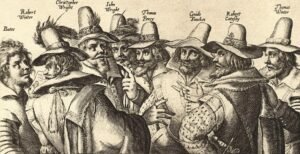
The Gunpowder Plot of 1605 was a plan to blow up England’s Parliament. The conspirators placed 36 barrels of gunpowder in a storage space beneath the House of Lords. Guy Fawkes guarded the barrels prepared for the parliamentary opening on 5 November.
Fawkes belongs to the history of gunpowder’s use, rather than its invention. The Chinese formulas in the Wujing zongyao date to 1044, long before the plot. Keeping these events separate helps distinguish a famous episode involving gunpowder from the much earlier development of the material.
Timeline
- Around 850: A Chinese text records a mixture considered a precursor to gunpowder.
- 1044: The Wujing zongyao records gunpowder formulas and large-scale production.
- Thirteenth century: Chinese and Mongol forces use gunpowder weapons widely.
- 1240–1280: Gunpowder knowledge is documented in the Islamic world.
- 1267: Roger Bacon mentions gunpowder in his writings.
- 1281: Ceramic bombs associated with the Mongol invasion of Japan later become archaeological evidence from a wreck off Takashima.
- 1326: Florence records gunpowder weapons, and Walter de Milemete’s manuscript includes a cannon illustration.
- 1453: Ottoman forces use large cannon during the siege of Istanbul.
- 1605: Conspirators prepare 36 barrels for the Gunpowder Plot in England.
- Late nineteenth century: Smokeless powders and new propellants such as cordite change black powder’s place in firearms.
FAQ
Who invented gunpowder?
Gunpowder cannot be credited to one person. It developed through the accumulated work of pharmacists, alchemists and craftspeople in China.
Where does gunpowder come from?
Gunpowder originated in China. Historical black powder is a manufactured mixture of saltpetre, sulphur and charcoal.
When was gunpowder invented?
A Chinese text from around 850 records a mixture considered a precursor to gunpowder. The Wujing zongyao of 1044 preserves the earliest surviving true gunpowder formulas.
Did Guy Fawkes invent gunpowder?
No. Guy Fawkes guarded 36 barrels prepared for the 1605 Gunpowder Plot, centuries after Chinese texts had recorded gunpowder formulas.
Sources
- Academy of Chinese Studies — Gunpowder and Firearms in Ancient China mainuat.chiculture.org.hk
- University of Washington — Firearms depts.washington.edu
- Columbia University — Song Dynasty China: Gunpowder afe.easia.columbia.edu
- Wikipedia — Gunpowder en.wikipedia.org
- Vikipedi — Barut tr.wikipedia.org
- Royal Armouries — The Hundred Years’ War 1337–1453 royalarmouries.org
- Archaeology — James P. Delgado, Relics of the Kamikaze archive.archaeology.org
- TDV İslâm Ansiklopedisi — Barut islamansiklopedisi.org.tr
- National Park Service — Gunpowder home.nps.gov
Image: 2023 Czarny proch Vesuvit LC (3).jpg — Jacek Halicki, CC BY-SA 4.0