Who are the Māori people of New Zealand?
The Māori are the Indigenous Polynesian people of New Zealand’s main islands. New Zealand is also called Aotearoa. Their ancestors came from eastern Polynesia, and their language belongs to the Polynesian branch of the Austronesian language family. [1][2]
If you are asking who the Māori are today, start with their own reported identity. In New Zealand’s 2023 census, 887,493 people identified with the Māori ethnic group. They represented 17.8% of the country’s population. [3]
Māori history also reaches places familiar to readers interested in Turkey. A Māori contingent landed at Anzac Cove on 3 July 1915. During the early August assault at Chunuk Bair, 17 of its soldiers were killed and 89 wounded. [4]
Māori origins: where did their ancestors come from?
Archaeological, linguistic and anthropological evidence points to migration from Polynesia. Te Ara places the first arrivals from eastern Polynesia between 1250 and 1300. This gives Māori origins a geographical setting across the sea from New Zealand. [5][6]
The settlement chronology remains debated. A 2017 study by Richard Walter and colleagues argues that mass migration in the early fourteenth century produced strong archaeological evidence of settlement. Its model places emphasis on the rapid appearance and spread of those traces. [7]
You should therefore distinguish the broad origin from the precise arrival date. The evidence identifies Polynesian migration, while Te Ara’s arrival range and Walter’s mass migration model describe the chronology differently. [5][6][7]
Language provides another connection. Māori’s close relatives include Cook Islands Māori, Tahitian and Tuamotuan. These relationships place the language within a wider Polynesian family, alongside the archaeological evidence for migration. [2]
Māori traditions: family, community and food
Before European contact, Māori society included iwi, hapū and whānau. An iwi was a large tribal grouping. A hapū brought together several whānau, or extended families, and served as the principal political unit. A hapū could contain roughly a hundred to several hundred people. [8]
These terms describe different scales of belonging. Whānau referred to extended family, while hapū linked families within a political community. Iwi named the larger tribal grouping. Keeping those distinctions in mind helps you understand how kinship and political organisation connected. [8]
Food offers an everyday-life link to Māori traditions. Hāngī is a cooking method using a shallow earth pit. Hot stones and water create steam, and meat and vegetables cook beneath a covering. If you usually think about cooking through pots and ovens, hāngī gives you a concrete example of preparing food in the ground. [9]
Māori religion: creation stories and present-day beliefs
In one traditional Māori creation account, Tāne, the god of the forest, separates Ranginui, the sky father, from Papatūānuku, the earth mother. Their separation allows their children to emerge from darkness. It is one account within traditional Māori religious belief. [10]
Contemporary religious affiliation varies. In the 2018 New Zealand census, 53.5% of Māori reported no religion. Christianity accounted for 29.9%, while 7.7% reported Māori religions, beliefs and philosophies. Traditional creation narratives and census affiliations describe different aspects of Māori religious life. [1]
Māori haka: who performs it, and why?
Haka is a Māori performance tradition that women and men can perform. It has connections with preparation for war, but it also serves social and ceremonial purposes. Calling every haka a war dance leaves out those other functions. [11]
When you encounter haka, remember both points: participation includes women, and its purposes extend beyond warfare. The tradition cannot be explained through military preparation alone. [11]
Māori tattoos: what is tā moko?
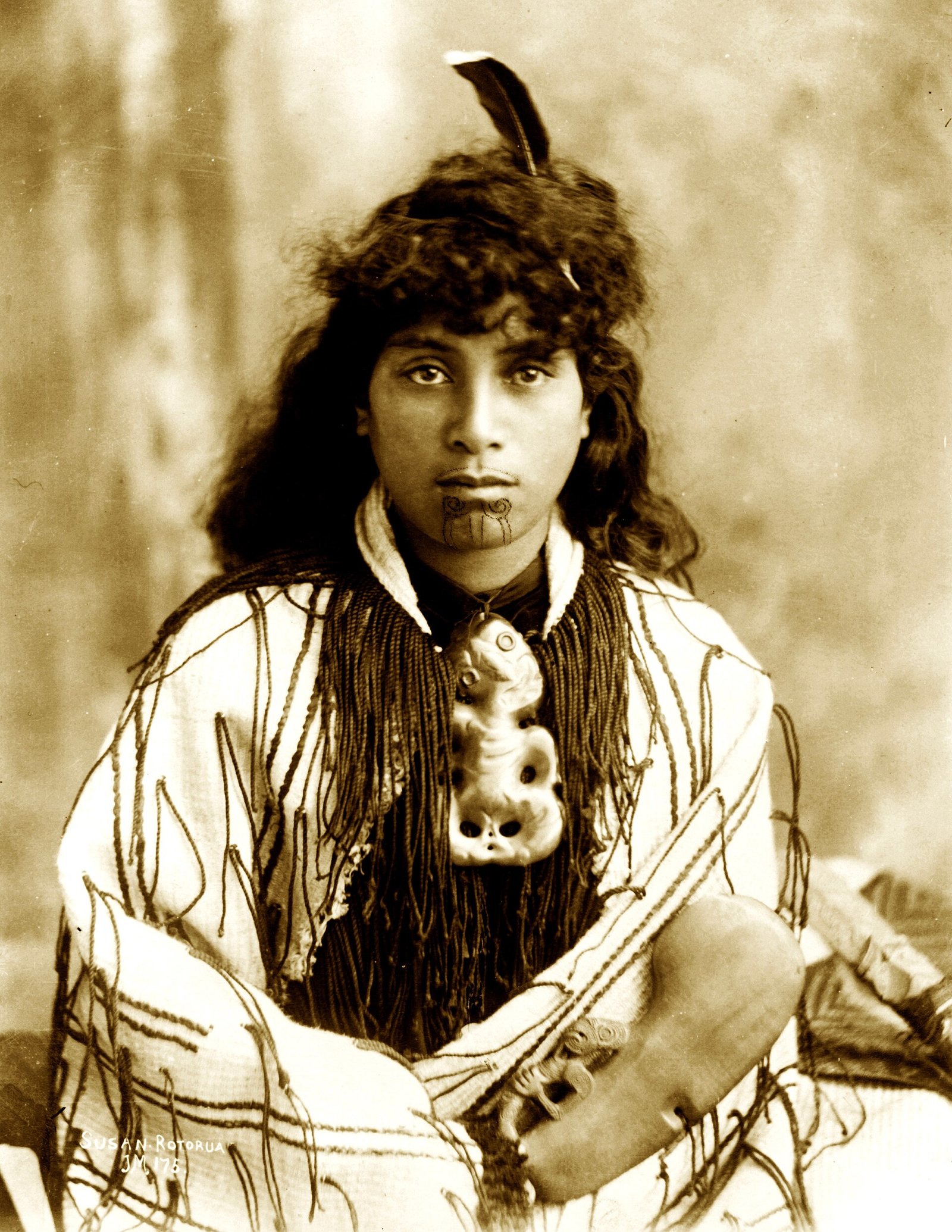
Tā moko is worn by both men and women. The Australian Museum identifies the face and buttocks among traditional sites for men. For women, it lists the chin, lips and shoulders. These locations show that traditional practice included several parts of the body. [12]
The traditional technique also involved carving the skin. The Australian Museum describes tools made from albatross bone for this work. Tā moko therefore has a material history involving specific tools as well as traditional placement on the body. [12]
Were the Moriori an earlier mainland people?
The Moriori are the Indigenous people of Rēkohu and Rangihaute, islands 767 kilometres southeast of mainland New Zealand. They share Polynesian origins with Māori. They are a separate Indigenous people whose island homeland matters to understanding their history. [13]
The claim that Moriori were a separate people living on mainland New Zealand before Māori is contradicted by archaeological findings. Roger Duff’s excavations at Wairau Bar in Marlborough established that the early moa hunters there were Māori. [14]
In 1835, about 900 people from Ngāti Mutunga and Ngāti Tama travelled from Wellington to the Chatham Islands. They attacked Moriori and enslaved survivors. Naming the communities involved keeps this event attached to its historical participants. [15]
Other recorded violence also requires specific context. NZ History identifies the killing and eating of some Ngāti Toa chiefs at Kaiapoi in 1829 among the causes of Te Rauparaha’s revenge expedition in 1830. This is a documented instance of historical cannibalism. [16]
What did the Treaty of Waitangi mean?
The Treaty of Waitangi was first signed on 6 February 1840 at Waitangi in the Bay of Islands. The initial signatories included Māori chiefs and William Hobson, representing the British Crown. [17]
Its English and Māori texts differ over authority. The English text expresses a transfer of sovereignty. The Māori text uses kāwanatanga, meaning governorship, while recognising the chiefs’ tino rangatiratanga, or full chiefly authority. Those wording differences are central to interpreting the agreement. [18]
In its 2014 first-stage report on the Te Paparahi o Te Raki inquiry, the Waitangi Tribunal concluded that the northern chiefs who signed in February 1840 had not ceded sovereignty. That finding concerns those northern signatories and their agreement. [19]
Timeline
- 1250–1300: Te Ara’s date range for the first arrivals from eastern Polynesia.
- Early fourteenth century: Walter and colleagues’ alternative model places mass migration here.
- 1769–1770: Tupaia communicates with Māori during James Cook’s voyage.
- 1829: Some Ngāti Toa chiefs are killed and eaten at Kaiapoi.
- 1835: Ngāti Mutunga and Ngāti Tama migrants attack Moriori and enslave survivors.
- 6 February 1840: The Treaty of Waitangi receives its first signatures.
- 3 July 1915: The Māori contingent lands at Anzac Cove.
- August 1915: At Chunuk Bair, 17 Māori contingent soldiers are killed and 89 wounded.
- 1 August 1987: Māori becomes an official language of New Zealand.
- 2014: The Waitangi Tribunal reports that the northern February 1840 signatories did not cede sovereignty.
- 2023: The census records 887,493 people identifying with the Māori ethnic group.
Details you won’t find in guidebooks
Tahitian navigator Tupaia could communicate with Māori during Cook’s 1769–1770 voyage because their languages were closely related. The linguistic connection had an immediate practical use when people met. [2]
Despite New Zealand’s abundant clay, Māori did not produce pottery. Their distant ancestors had known the technology, but it had been abandoned in Polynesia after reaching Samoa and Tonga. Clay availability alone did not determine whether pottery was made. [6]
Karaka kernels required extensive processing because they were poisonous. Māori preparation included soaking and cooking for as long as 12 hours to make them edible. This food practice depended on knowledge of both the ingredient and its treatment. [9]
A study of returning Māori Pioneer Battalion soldiers found an average height of 170.9 centimetres and an average weight of 74.3 kilograms. Those measurements describe the studied First World War soldiers. They do not establish an average for every Māori person. [20]
Māori people today: where do they live?
In the 2023 census, 84.9% of New Zealand’s Māori population lived on the North Island. The remaining 15.1% lived on the South Island. These figures describe the distribution within New Zealand. [1]
Ethnic identity and descent are separate census concepts. Alongside the 887,493 people identifying ethnically as Māori, Stats NZ recorded 978,246 people of Māori descent. The totals answer different questions about identity and ancestry. [3][21]
Māori identity cannot be reduced to one skin-colour category. In 2023, 409,401 people identifying as Māori also reported European ethnicity. That was 46.1% of the Māori ethnic population. The census figures allow overlapping ethnic affiliations. [1]
Language also belongs in this present-day picture. Māori became one of New Zealand’s official languages when the Māori Language Act took effect on 1 August 1987. Its official status is a dated legal milestone in Māori history. [22]
FAQ
Who are the Māori, and where are they from?
The Māori are the Indigenous Polynesian people of New Zealand’s main islands. Their ancestors migrated from eastern Polynesia.
What religion do Māori people follow?
Māori religious affiliations vary. In the 2018 census, 53.5% reported no religion, 29.9% Christianity, and 7.7% Māori religions, beliefs and philosophies.
Is haka only a war dance performed by men?
No. Women and men can perform haka, which has social and ceremonial functions as well as associations with preparation for war.
How tall are Māori people?
A study of returning First World War Māori Pioneer Battalion soldiers found an average height of 170.9 centimetres. That figure describes the studied soldiers, not all Māori people.
Where do Māori people live?
In the 2023 census, 84.9% of New Zealand’s Māori population lived on the North Island and 15.1% on the South Island.
Sources
- Wikipedia — Māori people en.wikipedia.org
- Te Ara — Austronesian languages teara.govt.nz
- Stats NZ — 2023 Census population counts stats.govt.nz
- NZ History — Māori Contingent at Gallipoli nzhistory.govt.nz
- Vikipedi — Maoriler tr.wikipedia.org
- Te Ara — Māori arrival and settlement teara.govt.nz
- Richard Walter and colleagues — Mass Migration and the Polynesian Settlement of New Zealand doi.org
- Te Ara — The significance of iwi and hapū teara.govt.nz
- Te Ara — Māori foods: kai Māori teara.govt.nz
- Te Ara — Ngā atua: the gods teara.govt.nz
- New Zealand Police — Police haka police.govt.nz
- Australian Museum — The Meaning of Tā Moko australian.museum
- Te Ara — Origins of the Moriori people teara.govt.nz
- Te Ara — Ideas about Māori origins teara.govt.nz
- Te Ara — Moriori teara.govt.nz
- NZ History — Captain Stewart and the Elizabeth nzhistory.govt.nz
- NZ History — Treaty of Waitangi signed nzhistory.govt.nz
- Te Papa — The content of the Treaty of Waitangi tepapa.govt.nz
- Waitangi Tribunal — Report on Stage 1 of the Te Paparahi o Te Raki Inquiry waitangitribunal.govt.nz
- Te Ara — Average heights and weights teara.govt.nz
- Stats NZ — Māori and iwi population concepts in the 2023 Census stats.govt.nz
- NZ History — Te reo Māori recognised as official language nzhistory.govt.nz
Image: Susan, Rotorua, New Zealand, ca. 1905.jpg — Josiah Martin, Public domain