Who was Tonyukuk?
Tonyukuk was a statesman of the Second Göktürk Khaganate. He worked as an adviser and a commander. He served three khagans in turn: İlteriş, Kapgan and Bilge.
He was also family. Tonyukuk was Bilge Kağan’s father-in-law.
His titles show how much power he held. They include Bilge, Boyla Baga Tarkan and Apa Tarkan. Kutlug Kağan gave him the post of Apa Tarkan, which meant running both military and administrative affairs.
The word bilge in front of his name was used for a ruler, a wise person, a scholar and a learned man. So “Bilge Tonyukuk” is a title and a name together.
Is he really the “first Turkish statesman”?
The phrase is popular, but treat it as a nickname. It is not a firm ranking of Turkish history. What the sources do support is this: Tonyukuk helped found and strengthen the Second Göktürk Khaganate, and he left a text in his own voice. Few figures of his age did that.
Raised in China, loyal to the steppe
Ankara University’s open course material says Tonyukuk grew up in China and learned Chinese politics. That gave him a rival’s-eye view of the empire next door.
The inscription itself opens on this point. In modern Turkish, its first lines say that Bilge Tonyukuk was born in the land of the Tabgach (the Chinese) and that the Turkic people were then subject to the Tabgach.
Picture a diplomat who studied abroad and then used that schooling against his host. That is roughly the career the text describes.
Tonyukuk timeline
The dates below are the ones commonly given. Several are uncertain.
- Around 646: the date given for Tonyukuk’s birth, in China.
- First half of the 8th century: Tonyukuk had his own inscription carved. The exact year is debated.
- Around 726: the date given for his death, though the Türk Dünyası Ansiklopedisi marks it with a question mark.
- 1897: the botanist Yelizaveta Klements found the inscription.
- 2020: the 1300th anniversary of the monument’s erection was included in UNESCO’s anniversaries programme.
What does “Tonyukuk” mean?
Nobody can say for certain. A 2019 study by Hakan Aydemir found no scholarly agreement even on how to read the name. It might be Tońukuk, Tuńukuk or another form.
The meaning is just as open. Three theories exist:
- İlhami Durmuş reads it as “the first vizier from the common people.”
- Sertkaya reads it as “a person of deep and clear thought.”
- Giraud reads it as “one whose garment is blessed with oil.”
Only the “Bilge” part is well understood.
How do you write it?
The common English spelling is Tonyukuk. You will also see Tunyukuk in research titles, and Tuńukuk in technical readings. Pick one spelling and keep it throughout your own work.
For the monument, the UNESCO Turkish National Commission uses the Turkish form Bilge Tonyukuk Anıtı in its official announcement. In English, “the Tonyukuk inscription” or “Tonyukuk monument” both work.
The Tonyukuk inscription: what it is
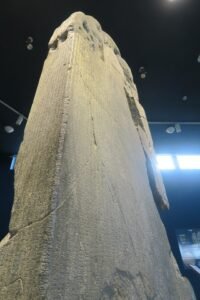
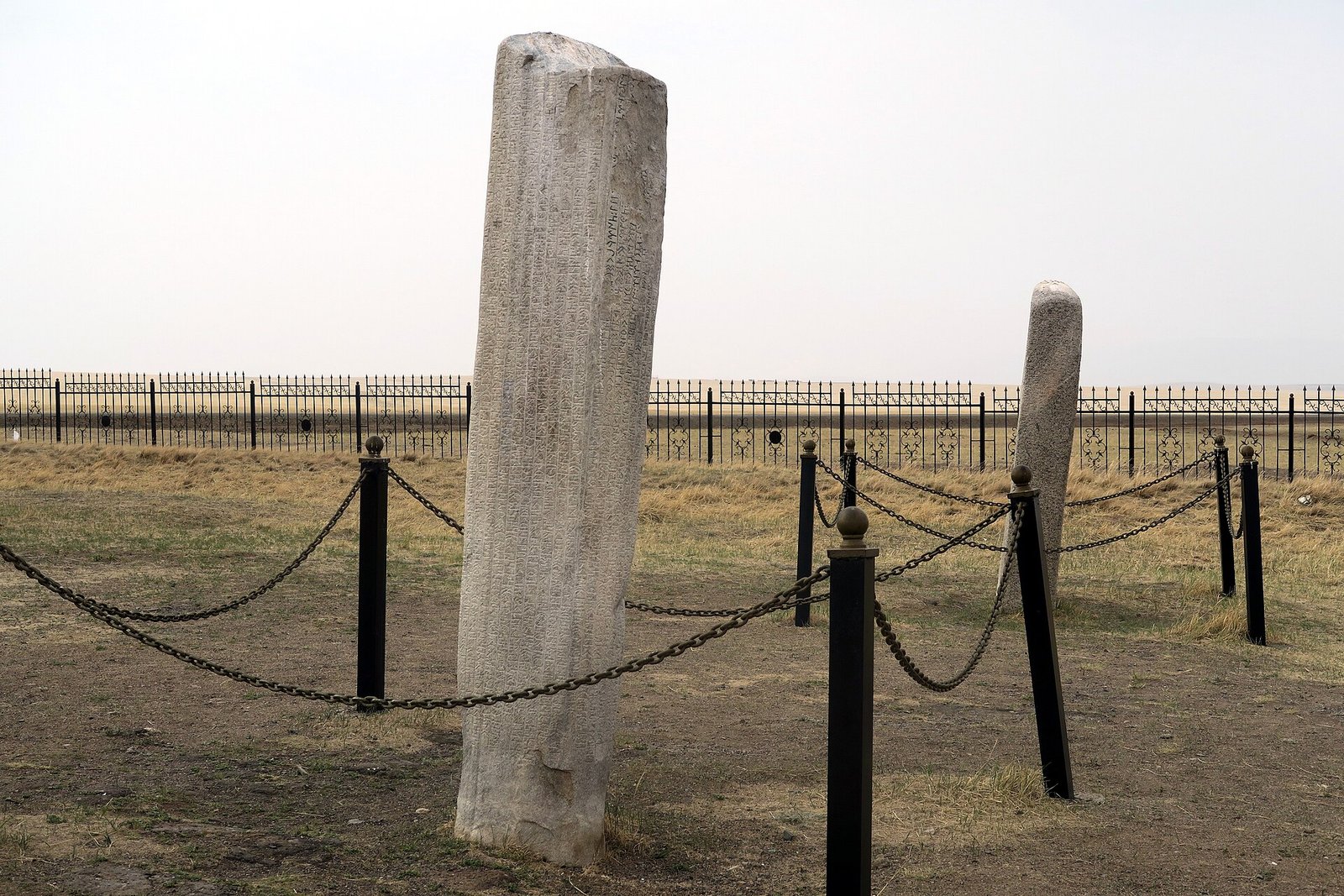
Tonyukuk dictated the inscription himself, before his death, in his own name. It consists of two stones, each with four faces.
The language is Turkic. The script is the Göktürk alphabet, often called the Orkhon script.
The text has 62 lines. The first stone carries 35 and the second carries 27. The TDV Islamic Encyclopedia notes that Tonyukuk is the narrator, and that he must also have been the author.
The subject is the Second Eastern Turkic Khaganate’s fight for independence, and the part Tonyukuk played in its successes. That makes it an unusual document. A senior official tells his own story, rather than a ruler praising himself.
Where is the Tonyukuk monument?
It stands in Mongolia, at Bain Tsokto in the Nalayh district of Ulaanbaatar. The site lies in the valley of the Tuul River.
The other great Orkhon inscriptions are about 360 kilometres to the west. Yet Tonyukuk’s text is grouped with them because it comes from the same period and deals with similar events.
Yelizaveta Klements, a botanist, found it in 1897. A plant specialist spotting one of the oldest Turkic texts is a good reminder that many such finds happen by chance.
When was it erected?
Scholars have not settled this. One view says 720–725. Another proposes 732–734. The TDV Islamic Encyclopedia gives a wide range of 716–734.
The gap matters. It affects how historians connect the text to the reigns of Bilge Kağan and his predecessors.
Tonyukuk inscription: read it yourself
You can read translations of the inscription in modern Turkish, and the TÜBİTAK Bilim Genç article cited below is a readable starting point. The original is in Göktürk letters, so most visitors and students rely on translations.
Here is one passage worth finding. Lines 13 and 14 use a comparison about thin and thick things. What is thin bends and breaks easily. What is thick is hard to break apart.
You know this from daily life. A single thread snaps in your fingers, while a rope made of many threads will not. The text uses the same logic about strength.
Details you won’t find in guidebooks
- A small army and a big win. In Ahmet Taşağıl’s account, Tonyukuk beat a Dokuz Oğuz army of 6,000 with a force of 2,000. That victory stopped an alliance with China and the Khitans from forming.
- He argued against building cities. According to an account based on Chinese sources, Tonyukuk opposed Bilge Kağan’s idea of founding cities and Buddhist temples. His reason was to keep the military strength of a mobile way of life.
- A clan mark is carved on the stone. The west face of the first stone carries the tamga, the mark of the clan Tonyukuk belonged to.
- The two stones are not equal. The first is 243 centimetres tall. The second is 217 centimetres.
- A name puzzle in Chinese records. Hirth proposed that Tonyukuk is the person called Ashide Yuanzhen in Chinese sources. Chen Hao disagrees, pointing to the chronology of the names and the reliability of the sources. The question is still open.
Tonyukuk monument today
In 2020 the 1300th anniversary of the monument’s erection was added to UNESCO’s Anniversaries Programme. Türkiye proposed it. The Turkish National Commission’s announcement calls it the Bilge Tonyukuk Anıtı.
If you travel to Mongolia, the site is near Ulaanbaatar, in the Nalayh district. Ask locally for Bain Tsokto and the Tuul valley. If you stay home, a good translation lets you hear the same voice.
FAQ
Who was Tonyukuk?
Tonyukuk was a statesman of the Second Göktürk Khaganate. He advised and commanded for the khagans İlteriş, Kapgan and Bilge, and he was Bilge Kağan’s father-in-law.
Where is the Tonyukuk inscription?
It stands at a place called Bain Tsokto in the Nalayh district of Ulaanbaatar, Mongolia, in the valley of the Tuul River.
What language and script is the inscription written in?
The language is Turkic and the script is the Göktürk alphabet. The text runs for 62 lines across two stones.
When was the inscription erected?
Scholars disagree. Proposed dates include 720–725 and 732–734, and the TDV Islamic Encyclopedia gives a range of 716–734.
How is the name spelled?
Tonyukuk is the common spelling. Variants such as Tuńukuk exist because scholars do not agree on how the name was read. The UNESCO Turkish National Commission writes the monument as Bilge Tonyukuk Anıtı.
Sources
- TÜBİTAK Bilim Genç — Türk dili, tarihi ve kültürüne ışık tutan Tonyukuk yazıtı bilimgenc.tubitak.gov.tr
- Türk Dünyası Ansiklopedisi — Tonyukuk (Ahmet Taşağıl) turkdunyasiansiklopedisi.gov.tr
- İlhami Durmuş — Bilge Tonyukuk dergipark.org.tr
- Hakan Aydemir — Tonyukuk / Tunyukuk Adı Üzerine dergipark.org.tr
- Wikipedia — Tonyukuk en.wikipedia.org
- Wikipedia — Tonyukuk inscriptions en.wikipedia.org
- Vikipedi — Tonyukuk tr.wikipedia.org
- Vikipedi — Tonyukuk Yazıtı tr.wikipedia.org
- TDV İslâm Ansiklopedisi — Orhon Yazıtları islamansiklopedisi.org.tr
- Ankara Üniversitesi Açık Ders — I. ve II. Köktürk Kağanlığı acikders.ankara.edu.tr
- UNESCO Türkiye Millî Komisyonu — 1300. Yıl Dönümü Lansmanı unesco.org.tr
Image: Bilge Tonyukuk – Orkhon Inscriptions.jpeg — Vezirtonyukuk, CC BY-SA 4.0