What is Tengrism?
Tengrism is a name used for Tengri-centred beliefs among Turkic and Mongol communities on the Eurasian steppe.
The key word is Old Turkic tengri. In historical texts it can mean the sky. It can also mean a divine being. The two meanings sit side by side, which is why you will often see the faith called the Sky God belief.
There was no single creation story shared by every community. Information about cosmology is pieced together from different oral narratives. That is why you should treat any neat, one-page summary of Tengrism with caution.
Tengrism Meaning and Name
The name of Tengri in Old Turkic letters is written 𐱅𐰭𐰼𐰃. This sequence of signs spells a word. It is a written form of the name, not a standalone emblem.
A later note from the 11th century adds a twist. Kashgarli Mahmud recorded that the Turks also called mountains and trees they considered great tengri. So the word could stretch beyond one single sky deity.
How Old Is Tengrism?
Nobody can give you a founding date. Some researchers link the Xiongnu word c’en-li, found in Chinese sources, with the form tengri from the 3rd century BCE. Others disagree about the origin of the word. That date marks a word in the sources, not the start of a religion.
The firm evidence is later. The Kul Tigin inscription (732) and the Bilge Kagan inscription (735) are among the main written witnesses of Tengri belief in the 8th century.
Tengrism Gods and Spirits
Tengri stood at the top. According to the Orkhon inscriptions, the Turks saw Tengri as the source of political power and of a ruler’s authority. A khan did not rule on his own right. He ruled because Tengri allowed it.
But Tengri was not alone. The belief world included other powers:
- Earth-water spirits. The Orkhon inscriptions use the word iduk, meaning sacred, for earth-water beings linked with mountains, rivers and forests.
- Umay. Turkic belief describes Umay as one of the sacred beings who protect families and babies.
- Ancestors. In the cult of ancestors, people believed the spirits of the dead could do good or harm to the living. They offered sacrifices to them.
So the picture is crowded. A sky above, spirits in the landscape, and ancestors close to home.
Tengrism Beliefs: One God or Many Powers?
This is the biggest argument in the field. Harun Gungor reads the Sky God belief as monotheistic. He also points out that Tengri was not imagined in human or animal form.
Other researchers accept Tengri’s superior position but disagree. They cite earth-water powers, ancestor spirits and protective beings. In their view, early Turkic belief cannot be reduced to strict monotheism.
There is a second dispute. Scholars do not agree on how Tengrism relates to shamanism. Some studies count shamanic practice as a core part. Others treat Tengri-centred belief as a separate matter.
Tengrism Book: Is There a Holy Text?
No. Traditional Turkic religion was shaped by beliefs and practices passed between generations. It did not rest on a shared written scripture.
Still, written sources exist. The Orkhon inscriptions are not a holy book, but they are the best 8th-century witness. And there is a stranger document: Irk Bitig.
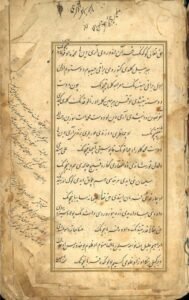
Irk Bitig was found in Mogao Cave 17 at Dunhuang. It is an Old Turkic manual for divination by dice, dated by the British Library to the 8th to 10th centuries. It is a fortune-telling handbook, not a creed.
Worship: Sacrifice, Prayer and Tents
Practice was concrete. Animals were sacrificed to the Sky God. Tying rags to trees was also counted as a bloodless offering. If you have ever tied a strip of cloth to a tree and made a wish, you have repeated a gesture that scholars place in this category.
Harun Gungor explains that traditional Turkic religion had no regular individual worship. There were, however, personal prayers, and tents were regarded as places of worship.
Group ceremonies could be large. Among the Kachins, the Tigir Tayh ceremony reportedly continued until the late 19th century. The communal prayer was followed by a sheep sacrifice and by drinking kumis, milk and ayran.
Tengrism and Islam
The two did not simply replace each other overnight. A 2022 study by N. Shaimerdinova argues that Tengrism and Islam coexisted for centuries in the customs and ceremonies of Turkic peoples. That is a theory, but it fits a simple linguistic fact.
After the Turks became Muslim, the word tanri stayed in use. The names Allah and Huda also became common. If you speak Turkish, you use the old word today when you say tanri.
Tengrism in Turkey and Today
After the Soviet Union collapsed in the 1990s, movements to revive Tengrism gained visibility among some Turkic communities in Kyrgyzstan, Kazakhstan and Russia.
Be careful with the link to the past. Harun Gungor rejects drawing a direct connection between the historical traditional Turkic religion and the modern Tengrism movements in Kyrgyzstan and the Altai.
What about Turkiye? A 2026 study by Melih Coban examined 21 social media accounts that post about Tengrism. It did not measure how many believers live in the country. So any number you see for followers is not backed by that research. The same goes for the question of how many people follow Tengrism worldwide.
Timeline
- 3rd century BCE: The Xiongnu word c’en-li, which some researchers connect with tengri, appears in sources. This is not a founding date of the belief.
- 732: The Kul Tigin inscription is erected.
- 735: The Bilge Kagan inscription is erected.
- 8th-10th centuries: The period to which the British Library dates Irk Bitig.
- 11th century: Kashgarli Mahmud records the use of the word tengri.
- Late 19th century: The Tigir Tayh ceremony is reported to have continued among the Kachins.
- 1990s: Revival movements become visible after the Soviet collapse.
- 2004: The Orkhon Valley Cultural Landscape enters the UNESCO World Heritage List.
- 2017: UNESCO lists Mongolia’s traditional sacred-site ceremonies for urgent safeguarding.
- 2026: A study of Tengrism’s social media visibility in Turkiye is published.
Details You Won’t Find in Guidebooks
- The red dots at the head of the 65 omens in Irk Bitig record the results of throwing a four-sided die three times.
- The last entry in Irk Bitig says an unnamed monk wrote the text at the Dayuntang Manichaean monastery and dedicated it to his elder brother.
- Among the Kachins, as reported from Gumilev, one of two yearly ceremonies excluded shamans. The other was open to everyone.
- According to UNESCO, the sacred mountain and ovoo stone-pile ceremonies at Burkhan Khaldun took shape from a blend of older shamanic and Buddhist practices.
Where to See the Evidence
The inscriptions stand in the Orkhon Valley in Mongolia. The Orkhon Valley Cultural Landscape covers 121,967 hectares and was added to the UNESCO World Heritage List in 2004.
UNESCO also took Mongolia’s traditional ceremonies for the invisible sacred beings of the sky, earth and mountains onto its Intangible Cultural Heritage list in need of urgent safeguarding in 2017.
FAQ
Is Tengrism a religion with a holy book?
No. Traditional Turkic religion did not rest on a shared written scripture. Beliefs and practices passed down from generation to generation. Irk Bitig is a dice-divination manual, not a scripture.
How old is Tengrism?
There is no fixed founding date. Some researchers link a Xiongnu word from Chinese sources, c’en-li, dated to the 3rd century BCE, with the word tengri, but scholars disagree about its etymology. The strongest written evidence is the 8th-century Orkhon inscriptions.
Was Tengrism monotheistic?
Scholars disagree. Harun Gungor treats the Sky God belief as monotheistic and notes that Tengri was not imagined in human or animal form. Others point to earth-water spirits, ancestor spirits and protective beings and argue the system cannot be reduced to strict monotheism.
How many people follow Tengrism today?
No reliable count is available. A 2026 study of Tengrism in Turkiye examined 21 social media accounts and did not measure how many believers there are in the country.
What happened to the word tengri after Islam?
After the Turks became Muslim, the word tanri stayed in use. The names Allah and Huda also became common.
Sources
- Vikipedi — Tengricilik tr.wikipedia.org
- Akademik Dil ve Edebiyat Dergisi — Eski Turkcede Tengri Sozcugu Uzerine dergipark.org.tr
- TDV Islam Ansiklopedisi — Orhon Yazitlari islamansiklopedisi.org.tr
- TDV Islam Ansiklopedisi — Turk, Din islamansiklopedisi.org.tr
- TDV Islam Ansiklopedisi — Tanri islamansiklopedisi.org.tr
- Religions — The Theological Transformation of Tengrism mdpi.com
- Religions — Back to the Roots? Tengrism as a Challenge to Islam in Contemporary Turkiye mdpi.com
- British Library, International Dunhuang Programme — Beliefs, rituals and practices idp.bl.uk
- Erdem — Lev Nikolayevic Gumilev’in Geleneksel Turk Dini ile Ilgili Gorusleri erdem.gov.tr
- Wikipedia — Tengrism en.wikipedia.org
- De Gruyter — Tengrism in the life of Turkic peoples degruyterbrill.com
- UNESCO — Mongolian traditional practices of worshipping the sacred sites ich.unesco.org
- UNESCO — Great Burkhan Khaldun Mountain and its surrounding sacred landscape whc.unesco.org
- Wikipedia — Orkhon Valley en.wikipedia.org
Image: Burana, Kyrgyzstan (44662000081).jpg — Ninara from Helsinki, Finland, CC BY 2.0