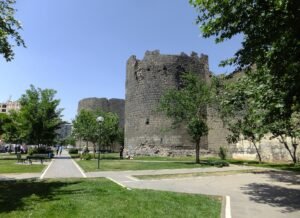
Mersin is a port city on the Mediterranean coast of southern Türkiye. Its story has two layers. One is very old: a mound with settlement traces from the 7000s BC. The other is young: a 19th-century harbor town that grew fast on cotton and rail. This guide walks through both, and then looks at the debate over the city’s name.
Mersin in which country? A quick orientation
Mersin is in Türkiye, the country many English speakers still call Turkey. The city is the centre of the province of the same name. It sits on the Mediterranean coast between Antalya to the west and Adana to the east.
That position explains much of its history. A coast with harbors attracts traders. A fertile plain behind it produces goods worth shipping. Both facts keep returning in the sections below.
Mersin history: the ancient layers
The oldest evidence lies at Yumuktepe Mound in the Toroslar district. Its settlement history goes back to the 7000s BC. Excavations restarted there in 1993 under Veli Sevin. Since 2001, Isabella Caneva has led the work.
Yumuktepe was not only a prehistoric village. The digs showed that in the 10th to 13th centuries the mound was a centre strengthened by walls. These walls are represented by at least three building levels. In June 2025, an excavation report described a horseshoe-shaped hearth and a silo from the Early Bronze Age.
Further west, in the Mezitli district, lies Soli. In 67 BC, under arrangements made by Pompey (Pompeius), part of the pirate population was settled there. After that the city was called Pompeiopolis. In AD 130, during his tour of Anatolia, the Roman emperor Hadrian gave financial support to the harbor works at Soli.
The ancient harbor is still readable on the ground. It consists of two breakwaters placed about 200 metres apart. If you visit, look for that gap. It shows how large the port was meant to be.
A modern city from a late village
Here is a point that surprises many visitors. The modern city is not a direct continuation of Yumuktepe, Soloi or Zephrium. The Turkish Islamic Encyclopedia (TDV) states that Mersin developed from a village that appeared after those ancient settlements.
Around 1836, the French traveller Charles Texier visited. He noted that the village of Mersin had become the landing place, or iskele, of Tarsus. In other words, it served as Tarsus’s port.
Trade then kept growing. On 2 September 1857, an order set up a market every Friday at Mersin Pier, because trade there had become busy. A weekly market is something you probably know from your own neighbourhood. In Mersin, one was ordered into being to handle a harbor’s traffic.
Cotton, rails and the rise of the port
The American Civil War of 1861–1865 disrupted cotton supply. This raised the importance of Mersin Port, the export gate for production from the Çukurova plain. Next time you pull a cotton shirt from your drawer, remember that a shortage of cotton on another continent helped a small port town grow.
Rail made the link stronger. The Tarsus section of the Mersin–Tarsus–Adana railway opened officially on 4 May 1886. The full line to Adana opened on 1 August 1886.
Buildings from this period still mark the city centre:
- Eski Cami (Old Mosque): built in 1870 in the name of Bezm-i Âlem Valide Sultan.
- Müftü Camii: built beside Müftü Deresi in 1884 by Müftü Emin Efendi as a mosque and madrasa.
- Latin Catholic Church: on Uray Caddesi. Work began on the basis of an 1853 decree of Sultan Abdülmecid, and the complex with its clock tower was completed in 1898.
- Avniye Camii: built in 1898.
- Ulu Cami: the present mosque replaced the 1898 Yeni Cami, which stood on the old Customs Square, known today as Ulu Çarşı.
Historical sites in Mersin province
The province is much larger than the city. Several sites lie along the coast and in the Taurus foothills.
Soli Pompeiopolis (Mezitli). Besides its harbor, the site has a modern-era story. A 2023 exhibition announcement from the Ministry of Culture records photographs taken when Atatürk visited the ruins on 21 May 1938. At that time the place was called Viranşehir.
Korykos (Erdemli). The ancient city spreads over 113.4 hectares around Kızkalesi. According to the file submitted to UNESCO, 14 churches from the 4th to 7th centuries are preserved there. The site was submitted to the UNESCO World Heritage Tentative List on 15 April 2014.
Alahan Monastery (Mut). This monastery was submitted to the Tentative List on 25 February 2000.
Mamure Castle (Anamur). About 6 kilometres southeast of Anamur, the castle covers 23,500 square metres and has 39 towers. It was submitted to the Tentative List on 13 April 2012.
Kırkkaşık Bedesteni (Tarsus). This covered market was built in 1579 by İbrahim Bey, son of Piri Paşa of the Ramazanoğulları dynasty.
The origin of the name Mersin
Two explanations compete.
The first says the name comes from the myrtle, a plant called Myrtus in Latin, which grows in the area. In Turkish, the plant is called mersin. This is the explanation many people hear first.
The second says the name comes from a Turkmen community called Mersinoğlu. This view stands as an alternative to the plant explanation.
Metin Tuncel argues for the community origin. He points to Evliya Çelebi, who in 1671 recorded a village named Mersinoğlu. He also points to tribal (oymak) records. For him, these are the evidence against the plant theory.
There is also an early written form to know. Thomas Dallam travelled in 1599–1600. His memoirs mention a place called Mersina, 30 miles east of Korykos. So the name was already in use by the very end of the 16th century.
No single explanation has settled the matter. If you want to judge for yourself, start with the Evliya Çelebi record of 1671 and the Dallam text.
Independence years and the name İçel
After the First World War, Mersin was occupied by French forces. Following the Ankara Agreement of 20 October 1921, the French withdrew, and the date of liberation is recorded as 3 January 1922.
The province of Mersin was founded in 1924. In 1933 it was merged with İçel province, whose centre had been Silifke. The merged province, with Mersin as its centre, took the name İçel. This produced a curious situation. The city was called Mersin, but the province was called İçel.
That ended on 20 June 2002. A law adopted in the Turkish parliament (TBMM) changed the name of İçel back to Mersin.
Timeline
- 7000s BC: Settlement history at Yumuktepe reaches this period.
- 67 BC: Under Pompey’s arrangements, part of the pirates are settled at Soli. The city becomes Pompeiopolis.
- AD 130: Hadrian funds harbor works at Soli.
- 1579: Kırkkaşık Bedesteni is built in Tarsus.
- 1599–1600: Thomas Dallam’s travel account mentions Mersina.
- 1671: Evliya Çelebi records a village named Mersinoğlu.
- Around 1836: Charles Texier describes Mersin as the landing place of Tarsus.
- 2 September 1857: A Friday market is ordered at Mersin Pier.
- 1861–1865: The American Civil War raises the importance of Mersin Port for Çukurova cotton.
- 1870: Eski Cami is built.
- 1884: Müftü Camii and its madrasa are built.
- 1886: The Mersin–Tarsus–Adana railway opens in two stages.
- 1898: The Latin Catholic Church complex is completed and Avniye Camii is built.
- 3 January 1922: The French occupation of Mersin ends.
- 1924: Mersin province is founded.
- 1933: Mersin and İçel are merged under the name İçel.
- 21 May 1938: Atatürk visits Soli Pompeiopolis.
- 1993: Yumuktepe excavations restart under Veli Sevin.
- 2000: Alahan Monastery is submitted to the UNESCO Tentative List.
- 2002: İçel is renamed Mersin.
- 2012: Mamure Castle is submitted to the UNESCO Tentative List.
- 2014: Korykos is submitted to the UNESCO Tentative List.
- 2025: Early Bronze Age hearth and silo finds at Yumuktepe are announced.
Details you won’t find in guidebooks
- A wooden minaret gave a mosque its nickname. Avniye Camii, built in 1898, is also known as Tahtalı Camii. Its minaret was originally made of wood, and tahta means wood.
- The market order of 1857. The decision to hold a market every Friday at Mersin Pier is dated 2 September 1857. It is a small piece of paper trail behind the city’s trade boom.
- The spoon market. Kırkkaşık Bedesteni in Tarsus takes its name from spoon decorations on its outer walls. It has seven domes and 25 rooms in total.
- A hearth from the Bronze Age. The 2025 Yumuktepe report mentions a horseshoe-shaped hearth. It is a reminder that the mound is still giving up new material.
- A visit under another name. When Atatürk visited Soli Pompeiopolis in 1938, the place was known as Viranşehir.
FAQ
In which country is Mersin?
Mersin is in Türkiye (Turkey). It lies on the Mediterranean coast in the south of the country, between Antalya and Adana.
Where does the name Mersin come from?
There are two main explanations. One links the name to the myrtle plant (Myrtus) that grows in the area. The other derives it from a Turkmen community called Mersinoğlu. Evliya Çelebi recorded a village of that name in 1671.
How old is the settlement history around Mersin?
The settlement history of Yumuktepe Mound, in the Toroslar district, reaches back to the 7000s BC. The modern city, however, grew from a village that appeared after the ancient settlements.
When did Mersin get its name back as a province?
The province, which had been called İçel since 1933, was renamed Mersin again by a law adopted in the Turkish parliament on 20 June 2002.
Which historical sites in Mersin province are on UNESCO’s Tentative List?
Alahan Monastery in Mut (submitted 25 February 2000), Mamure Castle near Anamur (13 April 2012) and the Ancient City of Korykos (15 April 2014).
Sources
- Mersin İl Kültür ve Turizm Müdürlüğü — Tarihçe mersin.ktb.gov.tr
- TDV İslâm Ansiklopedisi — Mersin islamansiklopedisi.org.tr
- Mersin İl Kültür ve Turizm Müdürlüğü — Sanat, Kültür ve Eğlence mersin.ktb.gov.tr
- Mersin İl Kültür ve Turizm Müdürlüğü — Camiler, Kiliseler mersin.ktb.gov.tr
- Wikipedia — Mersin Province en.wikipedia.org
- Vikipedi — Mersin tr.wikipedia.org
- Türkiye Kültür Portalı — Yumuktepe kulturportali.gov.tr
- Anadolu Ajansı — Yumuktepe Höyüğü’nde Erken Tunç Çağı’na ait yeni bulgulara ulaşıldı aa.com.tr
- Türkiye Kültür Portalı — Soli Pompeipolis kulturportali.gov.tr
- Türkiye Kültür Portalı — Kırkkaşık Bedesteni kulturportali.gov.tr
- UNESCO World Heritage Centre — Ancient City of Korykos whc.unesco.org
- UNESCO World Heritage Centre — Alahan Monastery whc.unesco.org
- UNESCO World Heritage Centre — Mamure Castle whc.unesco.org
- Kültür Varlıkları ve Müzeler Genel Müdürlüğü — Cumhuriyet, Atatürk ve Arkeoloji Sergisi kvmgm.ktb.gov.tr
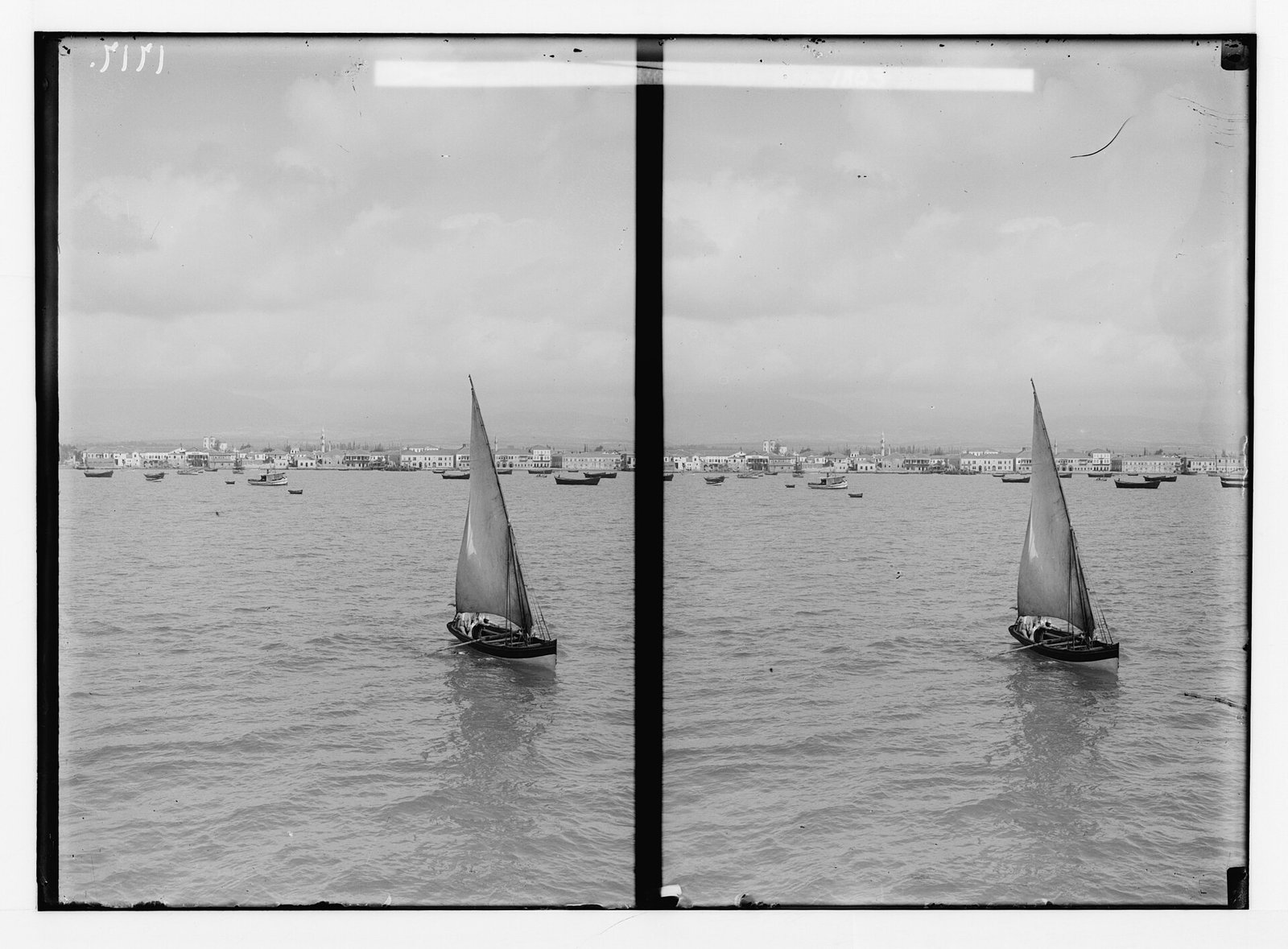
Image: Mersina. Mersina from the sea LOC matpc.02199.jpg — Matson Collection, Public domain