Cusco is important because it was the Inca state’s political, religious and administrative capital, governing a large part of the South American Andes in the 15th and 16th centuries. Its surviving Inca city plan and Spanish colonial architecture earned it UNESCO World Heritage status in 1983.
A temple once lined with gold, a cathedral on a ruler’s palace site and a modern rainbow flag reveal different chapters of Cusco’s past. If you follow these connections, the city becomes more than a collection of monuments. Its streets show how imperial government, worship, conquest and rebuilding occupied the same ground.
Where is Cusco, Peru, and what is its altitude?
Cusco, also spelled Cuzco, lies in southeastern Peru, in the Andes near the Huatanay River and the Sacred Valley. Its elevation is approximately 3,400 metres above sea level. This mountain setting places the former capital within the Andean landscape that the Inca state governed.
The city’s history reaches well beyond its imperial role. UNESCO describes a settlement history of more than 3,000 years before Cusco became the Inca capital. Pachacutec’s transformation therefore belongs to a much longer story of occupation.
How did Cusco become the Inca capital?
Pachacutec reorganized Cusco in the 15th century and made it the capital of Tawantinsuyu. The city concentrated political authority, religious institutions and administration. These functions explain why Cusco mattered across a territory extending through much of the Andes.
Its layout separated the ruling family’s residences and religious and administrative buildings from areas used for agriculture and craft production. An everyday comparison is the way you distinguish government offices, homes and workplaces within a city. In Cusco, the placement of these activities formed part of the capital’s organization.
The capital also had upper and lower divisions, called hanan and hurin. Its division into four suyu provided a model for the empire’s four-region organization. Cusco’s internal geography thus reflected the structure of Tawantinsuyu itself.
Was Cusco designed as a puma?
The puma-plan theory holds that Pachacutec designed Cusco in the shape of a seated puma. An academic chapter published by University Press of Colorado presents this account as supported by most of its sources. It offers an interpretation of the capital’s overall form.
A critical study available through University of California eScholarship examines the Puma City image differently. It treats the form used in 20th-century conservation planning as a mythological-historical construction justified through colonial accounts. The puma outline should therefore be presented as a debated interpretation.
What changed after the Spanish conquest?
Francisco Pizarro’s forces captured and plundered Cusco in November 1533. Pizarro established its Spanish municipal government in March 1534. In 1535, he moved the administrative centre to Lima, changing Cusco’s position within the new political order.
Spanish rule preserved the basic Inca urban plan while adding churches, monasteries and mansions over earlier structures. Many of these buildings used Baroque forms. The result joins an inherited street pattern with buildings created under colonial government.
Earthquakes also shaped the city you see. The 1650 earthquake destroyed much of its building stock, and Baroque architecture became prominent during reconstruction. Another earthquake, in May 1950, damaged every church and approximately 90 percent of the houses.
What should you see in historic Cusco?
Qorikancha
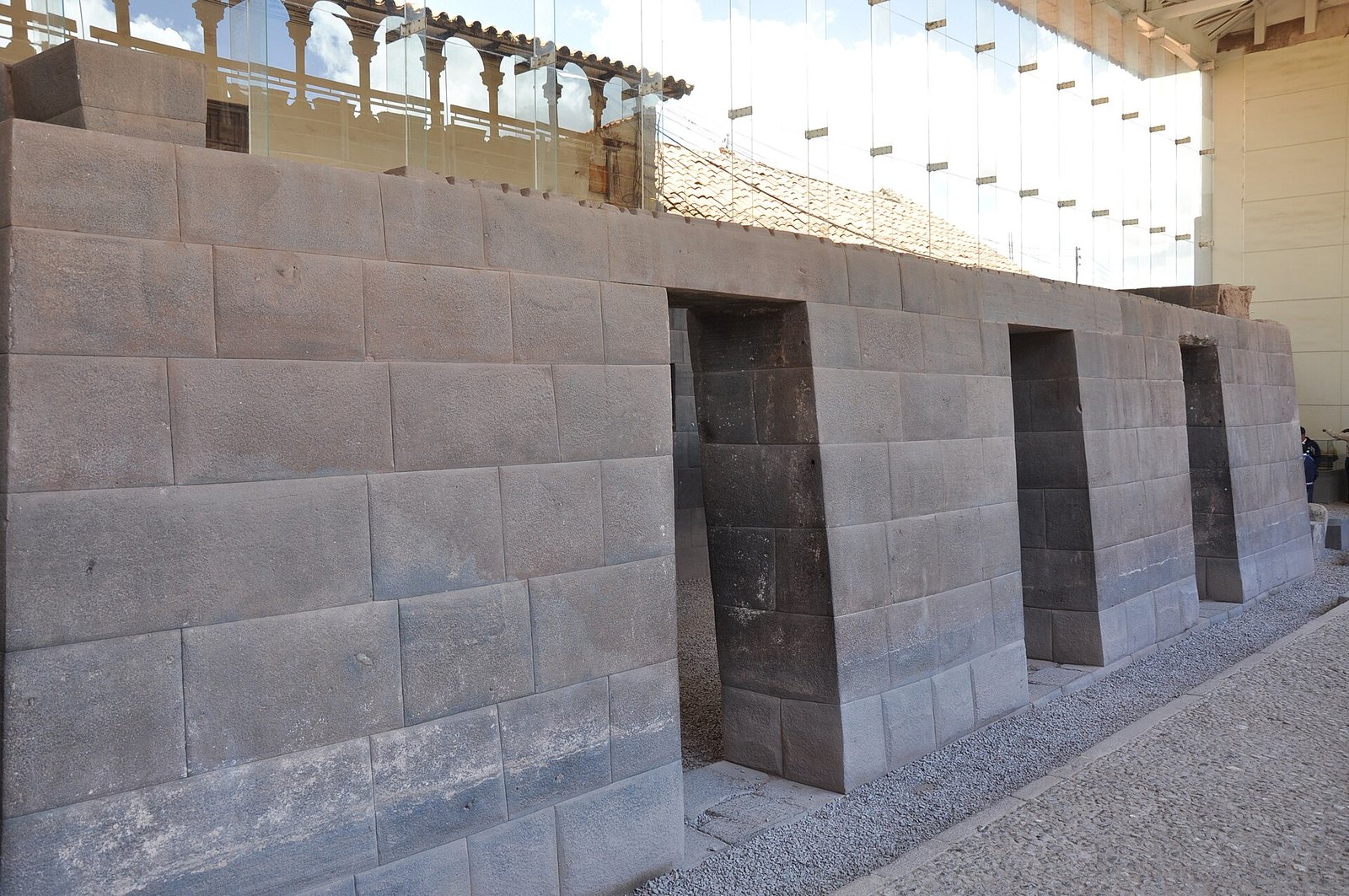
Qorikancha was an important Inca sanctuary dedicated to Inti, the Sun god. It provides a direct connection to the religious role of the capital. Its importance also helps explain why worship belonged at the centre of Cusco’s imperial organization.
Cusco Cathedral
Construction of Cusco Cathedral began in 1560 on the site of the palace of the Inca ruler Viracocha. This is a particularly clear example of a colonial religious building occupying an earlier seat of authority. The location connects the cathedral to both Inca rule and Spanish government.
The Twelve-Angled Stone
The Twelve-Angled Stone stands within a large wall on Hatunrumiyoc Street. That wall belonged to Inca Roca’s palace. When you look at the stone, its palace setting gives it historical meaning beyond the shape that made it famous.
Saqsaywaman
Inca construction at Saqsaywaman began under Pachacutec. Work continued during the reigns of Topa Inka Yupanqui, Huayna Capac and Huascar. Its building history therefore spans several rulers, rather than a single episode under the ruler who reorganized Cusco.
Saqsaywaman Archaeological Park contains 96 archaeological sites, including Q’enqo and Tambomachay. The park’s scope places Saqsaywaman within a broader archaeological landscape. Cusco’s surviving history extends beyond the buildings of the historic centre.
The Regional Historical Museum
The Regional Historical Museum occupies the house of Inca Garcilaso de la Vega. Founded on 1 March 1967, it has 13 permanent exhibition rooms. It adds a museum setting to a visit otherwise centred on temples, palace walls and colonial buildings.
Details you won’t find in guidebooks
Qorikancha’s interior walls were covered with gold during the Inca period. This detail adds another dimension to its dedication to Inti. The temple’s religious importance was expressed through its interior surfaces as well as its role within the capital.
Cusco Cathedral contains a Last Supper painting by Marcos Zapata. On the table shared by Jesus and the apostles is cuy, the guinea pig of Andean cuisine. The painting brings a familiar local food into a Christian religious scene.
Some stones from Saqsaywaman were reused during the colonial period to build churches and mansions in Cusco. This creates a material connection between the Inca complex and the colonial city. Earlier masonry became part of later construction.
Cusco’s ceque system consisted of 41 conceptual lines extending from the Sun Temple into the city and surrounding area. Sacred places marked these lines. Alongside the divisions into hanan, hurin and four suyu, this system added a religious organization to the capital’s geography.
What does the Cusco flag mean historically?
Cusco’s seven-coloured flag has a documented modern origin. Raúl Montesinos Espejo designed it in 1973 for Radio Tahuantinsuyo’s 25th anniversary. The municipality officially adopted it in 1978.
Its association with Cusco should not be confused with evidence for an ancient imperial flag. PROMPERÚ states that research indicates the Incas did not have the concept of a flag. The design belongs to the city’s modern history, despite its association with the Inca past.
Timeline
- 15th century: Pachacutec reorganized Cusco as the Inca imperial capital.
- November 1533: Pizarro’s forces captured and plundered the city.
- March 1534: Spanish municipal government was established.
- 1535: Pizarro moved the administrative centre to Lima.
- 1560: Construction of Cusco Cathedral began.
- 1650: An earthquake destroyed much of the city’s building stock.
- May 1950: An earthquake damaged every church and approximately 90 percent of houses.
- 1 March 1967: The Regional Historical Museum was founded in the house of Inca Garcilaso de la Vega.
- 1973: Raúl Montesinos Espejo designed the seven-coloured flag.
- 1978: Cusco’s municipality officially adopted the flag.
- 1983: UNESCO inscribed Cusco on the World Heritage List.
FAQ
What is Cusco’s altitude?
Cusco stands approximately 3,400 metres above sea level in the Andes of southeastern Peru.
Sources
- UNESCO — City of Cuzco whc.unesco.org
- Turkish Wikipedia — Cusco tr.wikipedia.org
- PROMPERÚ — Qorikancha, Templo y Convento de Santo Domingo target2.promperu.gob.pe
- PROMPERÚ — Centro histórico de Cusco peru.travel
- English Wikipedia — Cusco en.wikipedia.org
- Peru Ministry of Culture, Cusco Directorate of Culture — Saqsaywaman culturacusco.gob.pe
- Peru Ministry of Culture — Museo Histórico Regional de Cusco museos.cultura.pe
- University Press of Colorado — The Inka Capital Cusco as the Model of an Imperial Cultural Landscape read.upcolorado.com
- University of California eScholarship — From Tawantinsuyu to the Pumallactan: Cusco, Peru, and the Many Lives of Pachacuti’s City escholarship.org
- PROMPERÚ — Conoce la historia y significado de la bandera del Cusco peru.travel
- PROMPERÚ — Machupicchu: Santuario Histórico de Machupicchu peru.travel
Image: Lascar One of the original walls of The Temple of Coricancha (Cuzco) (4578192444).jpg — Jorge Láscar from Australia, CC BY 2.0