Was Lagertha real?
Lagertha’s historical existence has not been confirmed. She is a legendary Norwegian warrior described as a wife of Ragnar Lodbrok. The central written account appears in Saxo Grammaticus’s Gesta Danorum. It gives her battles, a marriage, children and political power. Those details form a story, but they do not establish a verified life.
The Danish Society for Language and Literature dates the Latin Gesta Danorum to around 1200. Lagertha’s narrative appears in its ninth book, in sections 9.4.1–9.4.11. If you want to understand the warrior behind the name, this is the essential starting point: a particular account by a named author, rather than an independently confirmed biography.
A useful everyday comparison is a forwarded message. Knowing who passed it on helps you assess its claims, but does not prove every detail. Here, the identifiable storyteller is Saxo. His account preserves Lagertha’s legend. The separate question of whether she lived requires evidence beyond the narrative itself.
Lagertha and Ragnar: how their story begins
Saxo places Lagertha in the Norwegian valley he calls Gaulardale. Her emergence as a warrior follows an act of violence against a royal family. In his narrative, the Swedish king Frø kills the Norwegian king Siward. He then confines women from Siward’s family in a brothel.
Ragnar travels to Norway to avenge Siward, his grandfather. Women wearing men’s clothing join his army, and Ragnar accepts their support. Lagertha stands out among these fighters. Her introduction therefore belongs to a revenge story, with the women’s participation tied directly to Frø’s treatment of Siward’s family.
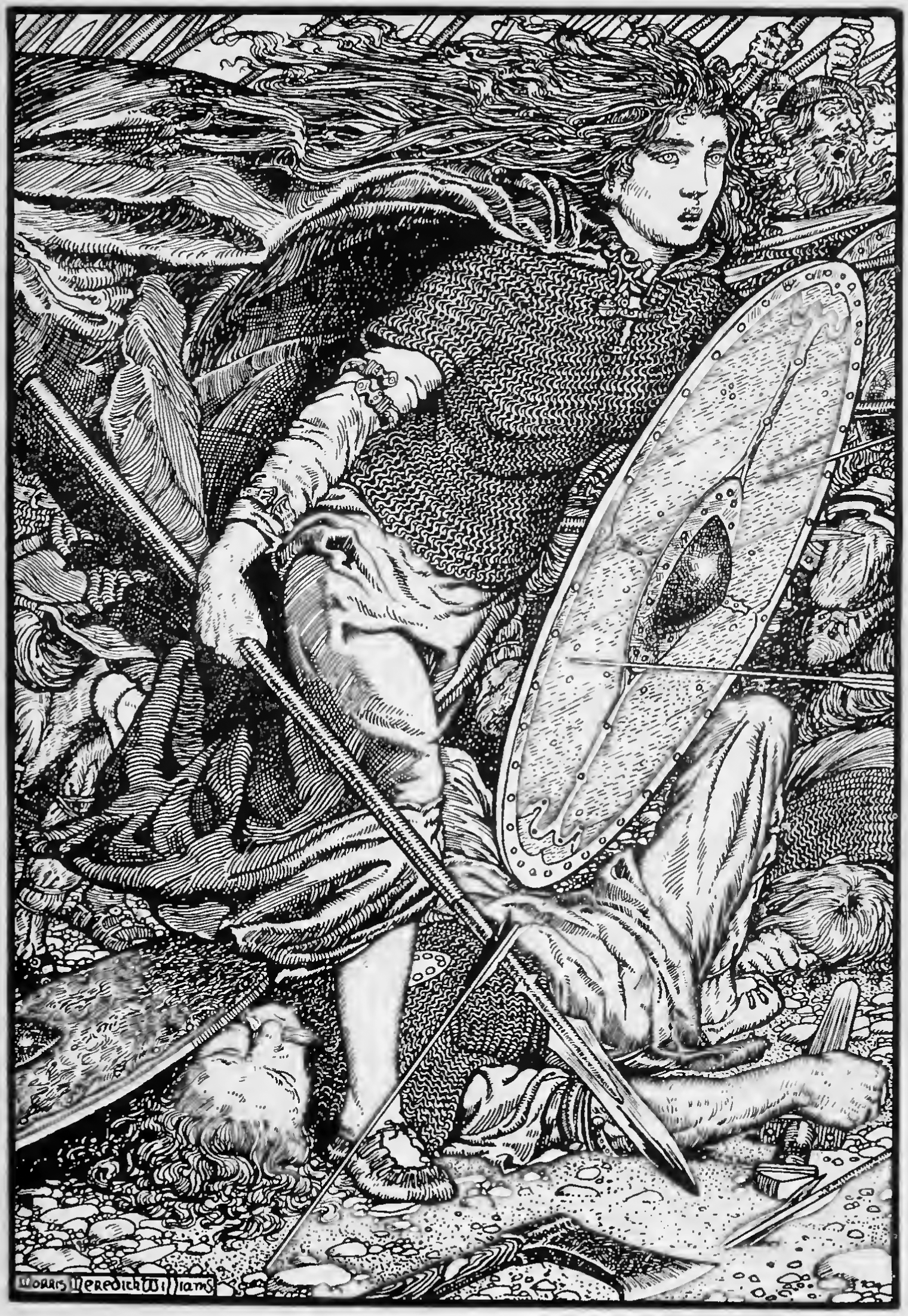
Saxo describes Lagertha as an Amazon. Her loose hair falls over her shoulders and reveals that she is a woman during battle. The detail gives the scene a visible marker: a warrior dressed for the fight, whose hair makes her recognizable within the account.
Ragnar later seeks Lagertha as a wife. She places a bear and a dog at the entrance to her home to keep him away. Saxo says Ragnar kills the bear with a spear and strangles the dog. He then marries her. The animal encounter is part of the legend’s courtship sequence, not independent evidence for the marriage.
Lagertha and Ragnar: marriage, children and separation
Saxo names three children from the marriage: a son called Fridleif and two daughters whose names he does not supply. This is the family described in his Lagertha narrative. When you follow her relationship with Ragnar, these are the children attached to their marriage in that text.
The marriage ends when Ragnar wants to marry Thora. Saxo also connects the separation to Ragnar’s memory of the animals guarding Lagertha’s home. The bear and dog thus have a role beyond the courtship scene. Their presence returns as part of the explanation for his decision to divorce her.
Lagertha later comes to Ragnar’s aid despite their separation. Saxo gives her a force of 120 ships. In the ensuing battle, Ragnar’s son Siward is wounded. Lagertha attacks the enemy from behind and helps defeat Harald’s forces. Her military role continues after her role as Ragnar’s wife has ended.
What was Lagertha’s real name?
The name Saxo records is Lathgertha. Lagertha, Ladgertha and Ladgerda are alternative spellings for the same legendary figure. Turkish Wikipedia gives Hlaðgerðr as the Old Norse form. These forms help connect references that might otherwise look like accounts of different women.
For historical reading, “real name” needs care. Lathgertha identifies the name in Saxo’s account; it does not turn the character into a verified person. If you encounter Ladgerda or Ladgertha, the spelling alone does not indicate another biography. The references concern the same legendary warrior.
Lagertha’s costume: what does Saxo describe?
Saxo’s account includes women joining Ragnar’s army in men’s clothing. It also singles out Lagertha’s loose hair during combat. Those are concrete details about her appearance within the story. They support a discussion of how Saxo presents her, rather than a complete reconstruction of her wardrobe.
Clothing also matters in Lagertha’s later seizure of power. Saxo says she hides a spearhead in her garment before killing her subsequent husband. In that episode, the garment conceals a weapon. The narrative gives clothing a practical role in the action, just as male dress accompanies the women’s entry into Ragnar’s army.
Lagertha’s death: where does her story end?
Saxo’s Lagertha narrative ends with her taking sole control after returning to Norway. She kills her subsequent husband at night with the concealed spearhead. The closing action concerns her acquisition of power. It is the husband’s death that marks this final episode.
That ending matters when reading about Lagertha’s life. Her last position in Saxo’s narrative is as a ruler who has removed her husband. A retelling that follows this account should keep its endpoint there: the woman who first appears as a fighter ultimately takes authority for herself.
Why historians question Lagertha’s historicity
Judith Jesch’s assessment treats the narratives in the first nine books of Gesta Danorum as largely fictional. Lagertha’s story falls within that group. This scholarly judgment concerns the character of the material itself, including the part of Saxo’s work that contains her marriage and military exploits.
Hilda Ellis Davidson and Nora K. Chadwick proposed a possible connection between Lagertha and the goddess Þorgerðr Hǫlgabúðr. This is a theory about the figure’s identity and background. It offers a way to interpret the legend, rather than confirmation that a Norwegian woman lived through the events Saxo describes.
The distinctions are straightforward. Saxo supplies a narrative about Lathgertha. Jesch questions the historical character of the surrounding books. Davidson and Chadwick suggest a possible divine connection. None of these positions establishes Lagertha as a documented individual, even though each helps explain how her story can be read.
Does the Birka warrior grave prove Lagertha existed?
Birka grave Bj.581 lies in Sweden and dates to the middle of the 10th century. It was excavated in 1878. The burial enters discussions of Lagertha because it provides material evidence relevant to women and warfare. Its date belongs to the grave, however, and cannot serve as a date for Lagertha’s life.
DNA findings published in 2017 identified two X chromosomes and no Y chromosome in the buried individual. The 2019 Antiquity reassessment accepts the biological sex determination as reliable. That finding concerns the person buried at Birka. It does not identify her as the woman in Saxo’s story.
The grave contained a sword, an axe, a fighting knife, two spears, two shields and 25 armour-piercing arrows. Charlotte Hedenstierna-Jonson and her colleagues argued in their 2019 reassessment that the woman was a high-status professional warrior. Their interpretation connects the burial’s contents with a military role.
A different reading appears in UNESCO’s 2023 discussion. Archaeologist Leszek Gardeła notes that weapons may also reflect symbolic choices made by those arranging a burial. The disagreement concerns what the objects demonstrate about the woman’s life. The 2019 study itself also emphasizes the limits of drawing conclusions about an entire society from one grave.
Details you won’t find in guidebooks
Saxo’s figure of 120 ships gives Lagertha’s return to Ragnar a substantial scale within the legend. She arrives after their divorce and contributes to victory through an attack from behind. The sequence presents her as someone able to bring forces and influence the outcome of a battle.
The Birka burial also contained two horses, gaming pieces in the dead person’s lap and a game board nearby. These objects belong alongside the weapons when considering the grave’s contents. You can examine that whole assemblage while still keeping the archaeological individual separate from Saxo’s legendary Lagertha.
Timeline
- Middle of the 10th century: The period assigned to Birka grave Bj.581. This is not a date for Lagertha’s life.
- Around 1200: The Latin Gesta Danorum, containing Lagertha’s narrative in its ninth book, is dated to this period.
- 1878: Birka grave Bj.581 is excavated.
- 2017: DNA research identifying the buried individual as biologically female is published.
- 2019: Antiquity publishes a reassessment of the grave and its interpretation as a woman warrior’s burial.
- 2023: UNESCO publishes a discussion including Leszek Gardeła’s alternative interpretation of weapons in the burial.
FAQ
Was Lagertha real?
Lagertha’s historical existence has not been confirmed. Her story appears in the ninth book of Saxo Grammaticus’s Gesta Danorum, dated to around 1200.
What was Lagertha’s real name?
Saxo records the name Lathgertha. Lagertha, Ladgertha and Ladgerda are alternative spellings, while Hlaðgerðr is given as the Old Norse form.
Were Lagertha and Ragnar married?
In Saxo’s narrative, Lagertha marries Ragnar and has a son named Fridleif and two unnamed daughters. Their marriage belongs to the legend rather than a confirmed biography.
Sources
- Wikipedia — Lagertha en.wikipedia.org
- Det Danske Sprog- og Litteraturselskab — Gesta Danorum dsl.dk
- Saxo Grammaticus — The Danish History, Book Nine gutenberg.org
- Vikipedi — Lagertha tr.wikipedia.org
- Uppsala University — First genetic proof that women were Viking warriors uu.se
- Antiquity — Viking warrior women? Reassessing Birka chamber grave Bj.581 cambridge.org
- UNESCO — Viking women in a new light unesco.org
Image: Lathgertha by Morris Meredith Williams.png — Morris Meredith Williams (1881-1973), Public domain