Was the Emu War real?
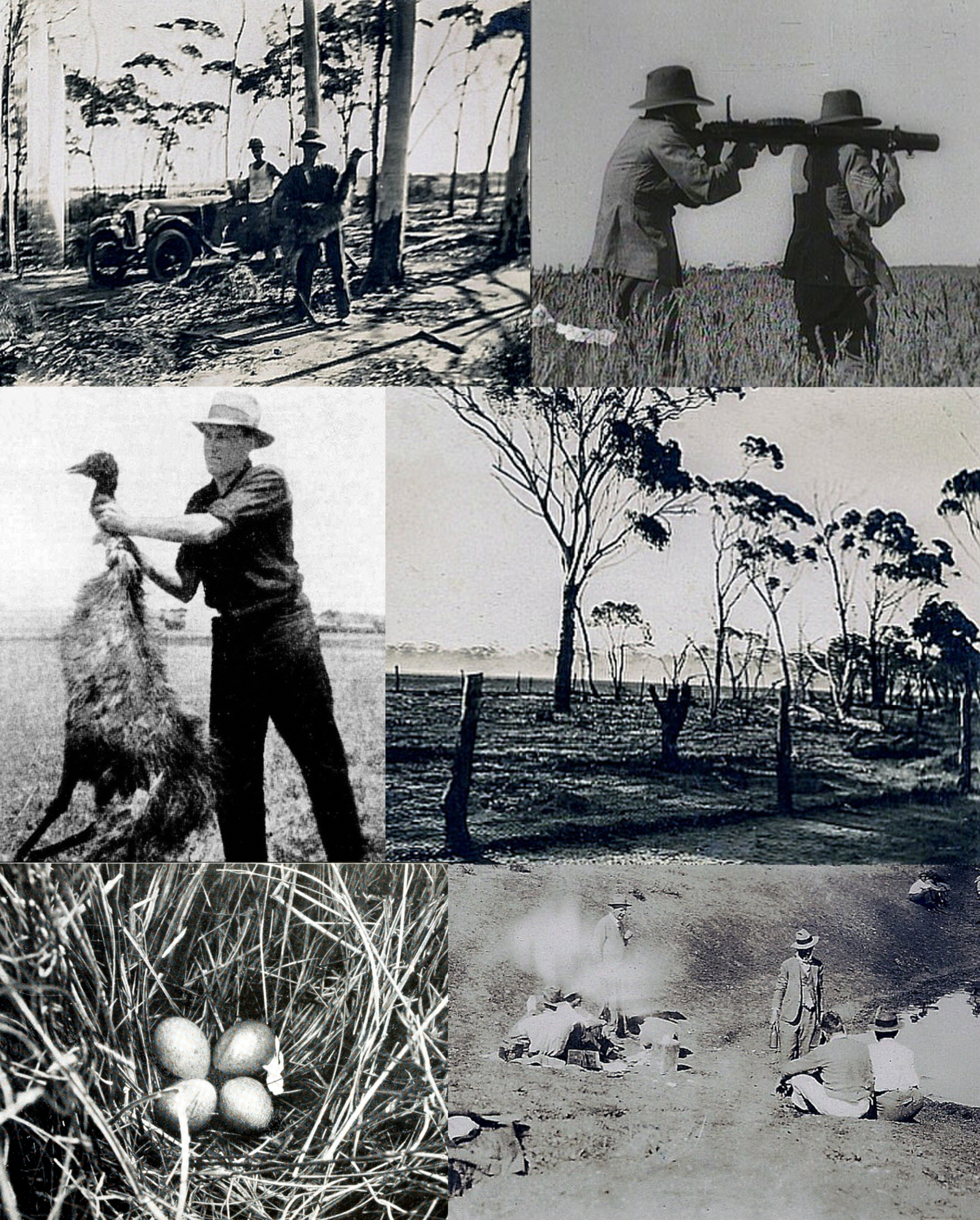
Yes, the Emu War was real. Between 2 November and 10 December 1932, Australian soldiers took part in a wildlife-control operation against emus damaging farmland. There was a break between deployments. The setting was Campion in Western Australia, and the weapons included two Lewis machine guns.
If you have encountered the story as a joke, its central detail is true: soldiers were sent against birds. But the name can obscure the purpose. The operation aimed to protect crops, and the press began calling it the “Emu War.” It was not a conflict between states.
Where did the Emu War happen in Australia?
The operation centred on Campion, in Western Australia’s Wheatbelt. Campion lies about 303 kilometres east of Perth and is now an abandoned settlement. The country was Australia, not Austria. That distinction matters when you place this episode on a map.
Three members of the Royal Australian Artillery travelled from Perth by train. They reached Campion on 2 November 1932. Their arrival brought a military response to a farming problem involving damaged grain crops, broken fences and large numbers of migrating birds.
Why did Australia send soldiers against birds in 1932?
After the First World War, the Australian government gave some returning soldiers land to farm in Western Australia. These former servicemen became part of the Wheatbelt’s farming population. Their later request for machine guns came from people who had already seen such weapons used during the war.
The Great Depression added financial pressure. Wheat prices fell in the early 1930s, and farmers expanded their planted acreage to protect their income. In 1932, roughly 20,000 emus moved into farms after the breeding season. They damaged grain and fences.
Broken fences created a second problem. Rabbits could enter through gaps made by emus, increasing the agricultural damage. Think of a damaged fence around your own garden: the opening matters as well as the animal that made it. In the Wheatbelt, emus and rabbits became connected problems.
Former soldier farmers asked Defence Minister Sir George Pearce to allow machine guns to be used against the birds. Their wartime experience helps explain the request. They had witnessed the weapons’ destructive power and wanted that firepower applied to the flocks entering their fields.
What happened during the Emu War of 1932?
Major G. P. W. Meredith led a military team of three men. They were assigned two Lewis machine guns and 10,000 rounds of ammunition. The operation had originally been planned for October 1932. Rain scattered the emus over a wider area, delaying the start until 2 November.
The opening encounters exposed a practical difficulty. On 2 November, an attempt to drive about 50 emus into an ambush became difficult when the birds split into smaller groups and escaped. The soldiers had machine guns, but the flock did not remain a single concentrated target.
On 4 November, the team attempted an ambush involving roughly 1,000 emus. A machine gun jammed, and only 12 birds were killed. The contrast between the size of the flock and the result illustrates the difficulty of the operation.
Negative press coverage and debate in parliament followed. On 8 November, Pearce withdrew the soldiers and machine guns. The first attempt had lasted only part of the month, and the withdrawal did not end the farmers’ requests for military assistance.
Timeline
- After the First World War: Some returning soldiers were settled as farmers in Western Australia.
- 1932: About 20,000 emus entered farms, worsening damage to crops and fences.
- 2 November 1932: The military operation began at Campion.
- 4 November 1932: A machine gun jammed during an ambush involving about 1,000 birds.
- 8 November 1932: Pearce stopped the first military attempt.
- 12–13 November 1932: A renewed intervention was approved, and soldiers returned to operations.
- 10 December 1932: Meredith was recalled, ending the military operation.
- 1934: A six-month period produced 57,034 claims under an emu bounty system.
- 1943 and 1948: Renewed requests for military help were rejected.
Was there an Emu War 2?
There was a second military attempt within the 1932 operation. Farmers requested further help, supported by Western Australian Premier James Mitchell. A renewed intervention was approved on 12 November. Operations began again on 13 November, and Meredith was recalled on 10 December.
If you search for “Emu War 2,” this return to the field is the historical distinction to keep in mind. The withdrawal on 8 November was followed by another deployment that same month. It was a resumed attempt to address the farming problem.
Farmers also sought military assistance in 1934, 1943 and 1948. The government rejected those requests. These later appeals show that demands for soldiers continued beyond 1932, but they did not produce another approved military campaign.
What were the Emu War casualties?
Meredith’s final report recorded 986 confirmed emu deaths after 9,860 rounds had been fired. Those figures should be kept together. They describe the reported confirmed deaths and ammunition expenditure, rather than every possible death among birds that escaped after being wounded.
Meredith also claimed that 2,500 wounded emus subsequently died. That additional figure is disputed. Historian Greg Beyer, as cited by English Wikipedia, considers the estimate questionable and probably inflated. Adding it to the confirmed count without qualification would hide an important difference in the evidence.
For human casualties, Meredith’s report after the first operation recorded none among the military team. The scope of that statement matters: it belongs to his account of the first attempt. You should read it separately from the final figures concerning emu deaths.
Who won the Emu War?
“ The emus won” is shorthand for the operation’s broad failure to reduce the bird population effectively. The soldiers’ weapons did not deliver the control farmers had sought. Birds scattered during an ambush, a gun jammed, and the first deployment ended in withdrawal.
There was also a favourable assessment of the campaign. A Coolgardie Miner report dated 23 August 1935 argued that the machine-gun method had saved the remaining wheat, despite criticism. English Wikipedia cites this report. It offers a different measure of success: protecting the crop that remained.
These assessments concern different outcomes. The familiar verdict focuses on ineffective population control. The newspaper defence focused on wheat saved. Neither turns the episode into a conventional military victory, but the distinction helps explain why its result has attracted competing descriptions.
Details you won’t find in guidebooks
Pearce attached financial conditions to the deployment. The state government was to provide the soldiers’ transport. Farmers were to cover food, accommodation and ammunition costs. The military response therefore came with specific obligations for the people requesting assistance.
The team tried mounting a machine gun on a truck to chase emus. The attempt failed because the vehicle could not keep up with the birds, while the jolting prevented effective aiming. Mobility alone did not solve the difficulty of bringing the weapon to bear.
A period newsreel catalogue description held by the State Library of Western Australia records an emu being chased by a car. Its speed was measured at 45 miles per hour. This is a reported measurement from that filmed pursuit, rather than a speed to assign to every bird in the operation.
There was also an unusual tax story. Period newspapers examined by Merredin library manager Wendy Porter reported that two farmers tried to pay their taxes with emus. Their attempt was rejected. The birds had become part of arguments about money as well as crop protection.
A bounty system produced a much larger administrative count. During six months in 1934, 57,034 emu bounty claims were recorded. That figure counts claims under the reward system. It should not be confused with Meredith’s 986 confirmed deaths from the military operation.
What does the Emu War meme leave out?
The press’s “Emu War” label captures the striking sight of soldiers using machine guns against birds. The fuller story includes falling wheat prices, former soldiers farming settlement land, and fence damage that also let rabbits into fields. These details explain why farmers sought help.
An oversimplified account can also merge different casualty figures. Meredith reported 986 confirmed deaths and separately claimed another 2,500 deaths among wounded birds. Keeping those figures apart preserves the distinction between the recorded count and the disputed estimate.
FAQ
Was the Emu War real?
Yes. It was a military wildlife-control operation conducted in Western Australia between 2 November and 10 December 1932, with a break between two deployments.
Who won the Emu War?
The claim that the emus won describes the operation’s broad failure to reduce the bird population effectively. This was a wildlife-control operation, rather than a war between states.
What were the Emu War casualties?
Meredith’s final report recorded 986 confirmed emu deaths from 9,860 rounds. His additional claim that 2,500 wounded birds died is disputed. His report after the first operation recorded no human casualties.
Was there an Emu War 2?
A second military attempt began on 13 November 1932, following the first withdrawal on 8 November. Later requests for military assistance in 1934, 1943 and 1948 were rejected.
Sources
- Wikipedia — Emu Savaşı tr.wikipedia.org
- ABC News — Australia’s Emu War spawns feature film, jokes and memes 90 years on abc.net.au
- Forces News — The Great Emu War: How Australia was beaten by a bird forcesnews.com
- Wikipedia — Emu War en.wikipedia.org
- State Library of Western Australia — Western Australia declares war on emus purl.slwa.wa.gov.au
- Wikipedia — Campion, Western Australia en.wikipedia.org
Image: TheGreatEmuWarcolage.png — 子ファース, Public domain