Zheng Yi Sao was a Chinese pirate leader who took control of the Guangdong pirate confederation after her husband Zheng Yi died in 1807. Supported by Zhang Bao, she exercised overall leadership through alliances among captains, shared treasure arrangements, and severe disciplinary rules whose authorship remains disputed. In 1810, amid military pressure and internal divisions, she negotiated amnesty with the Qing authorities and left piracy.
How did someone whose name meant “Zheng Yi’s wife” become the confederation’s leading figure? The answer connects her negotiating work before 1807 with the divided command she later shared with Zhang Bao. If you follow the fleet figures, the rules, and the stalled amnesty talks separately, you can see how her authority worked—and where familiar claims need care.
Where do the names Zheng Yi Sao and Ching Shih come from?
Zheng Yi Sao was born Shi Yang around 1775 in Xinhui, Guangdong. In 1801, aged 26, she married the pirate leader Zheng Yi. The name by which she became known therefore followed her marriage rather than her birth.
“Zheng Yi Sao” means “Zheng Yi’s wife.” It identifies her through her husband’s name. “Ching Shih” is another Latin-letter rendering of 鄭氏, written Zhèng Shì in Mandarin pinyin and used to mean “Zheng’s wife.” When you encounter these names, they refer to the same historical woman.
The distinction matters when tracing her career. Shi Yang names the woman born in Xinhui. Zheng Yi Sao and Ching Shih are the forms attached to her marriage and subsequent pirate leadership. Her husband died in 1807, but Zheng Yi Sao remained the name associated with her command.
How did she assume leadership within the pirate confederation?
Zheng Yi returned to the Chinese coast after the collapse of Tây Sơn patronage in Vietnam. In 1805, he established the Guangdong Pirate Confederation. It brought together six fleets, each with its own captain and a different flag colour. The organisation therefore contained several commands within a larger alliance.
Zheng Yi Sao helped negotiate that union in 1805. She also participated in pirate activities while her husband was alive. Her involvement in leadership preceded his death: she had already worked on the agreements connecting the fleets and their captains.
After Zheng Yi died in 1807, she assumed control with the support of his adopted son, Zhang Bao. Their positions were distinct. Zheng Yi Sao exercised informal overall leadership of the confederation. Zhang Bao became the formal commander of the Red Flag Fleet. Understanding that division helps explain why both appear in accounts of command and surrender.
The alliance had limits. During the siege of Lantau, Black Fleet leader Guo Podai failed to help Zhang Bao. That refusal weakened relations between the pirate groups. A confederation assembled through agreements among captains could also be weakened when a captain withheld support.
How reliable are claims about her fleet’s size and disciplinary rules?
The estimate of roughly 400 ships and 40,000–70,000 pirates refers to the confederation under Zheng Yi in 1805. It describes an estimated total for a particular organisation at a particular date. It should not automatically become the size of Zheng Yi Sao’s personal fleet throughout her career.
At the 1810 surrender, her personal command comprised 24 ships and 1,433 pirates. The collective surrender associated with Zheng Yi Sao and Zhang Bao recorded 17,318 people and 226 ships. These figures concern different groups. If you compare them without separating personal command from collective strength, the scale of her fleet becomes misleading.
Reported disciplinary provisions required booty to be recorded. Two-tenths went to those who captured it, while eight-tenths entered a common treasury. This arrangement linked individual gains to shared funds. As an everyday comparison, think of a household budget: money entering a shared account has to be distinguished from money available to one person.
The reported punishments were severe. Taking goods from the common treasury without permission carried the death penalty. Violence against captive women was also punishable by death. These provisions addressed both access to shared property and conduct toward captives. They show the importance attached to enforcing rules within the pirate organisation.
Their authorship needs greater care. Duman discusses Dian Murray’s interpretation linking the rules to Zhang Bao. Yuan Yonglun’s 1830 account, Jinghai fenji, also attributes three rules to him. Calling the provisions Zheng Yi Sao’s personal code therefore presents a disputed attribution as settled fact.
The Hong Kong Maritime Museum adds another caution. It identifies Jinghai fenji, published in Guangzhou in November 1830, as a government-aligned narrative requiring careful assessment. You can use its account while still distinguishing reported rules from certainty about who wrote them.
Discipline also needs to be considered alongside the confederation’s activities. Its pirates plundered ships, demanded food and money from Guangdong villages, and kidnapped civilians for ransom. The rules governing the treasury and captives existed within an organisation that imposed these demands on coastal communities.
How was the 1810 amnesty negotiated?
Military pressure and divisions among the fleets shaped the approach to amnesty in 1810. Guo Podai’s failure to support Zhang Bao at Lantau had weakened the alliance. His departure also features in an interpretation that gives military pressure and internal fragmentation a decisive role in the eventual settlement.
The negotiations did not proceed without resistance. At a meeting in February 1810, a request to retain 80 ships and 5,000 people was rejected by Bai Ling. Talks stalled. Those figures describe what the negotiators sought to keep at that stage, rather than the force finally recorded at surrender.
Zheng Yi Sao subsequently went to Guangzhou with a delegation of women and children. There she negotiated directly with Bai Ling. Her personal participation connects the settlement to the negotiating role she had already performed during the confederation’s formation in 1805.
The agreement’s meaning remains open to interpretation. One reading emphasises her ability to bargain from strength. Another gives greater weight to military pressure and Guo Podai’s departure. The rejected February demand, the weakened alliance, and her direct talks all belong in an explanation of how amnesty was secured.
The collective surrender in 1810 recorded 17,318 people, 226 ships, 1,315 cannon, and 2,798 other weapons alongside Zheng Yi Sao and Zhang Bao. These totals describe the scale of that surrender. They should be kept separate from both the earlier confederation estimate and her smaller personal command.
Duman’s account of the amnesty terms includes permission for pirates to retain their wealth. It also includes government financial support for their transition to civilian life. The settlement thus addressed property and the practical circumstances of leaving piracy, as well as surrender itself.
After the amnesty, Zhang Bao became a lieutenant in the Qing navy. He participated in suppressing the pirate fleets that remained. His subsequent service forms part of the settlement’s outcome: a former pirate commander entered the navy and acted against continuing piracy.
Timeline
- Around 1775: Shi Yang was born in Xinhui, Guangdong.
- 1801: She married Zheng Yi at the age of 26.
- 1805: Zheng Yi established the Guangdong Pirate Confederation. Zheng Yi Sao helped negotiate the union.
- 1807: Zheng Yi died. Zheng Yi Sao assumed leadership with Zhang Bao’s support.
- 1810: Military pressure and divisions among fleets helped create the conditions for amnesty negotiations.
- 1810: Zheng Yi Sao and Zhang Bao reached an agreement with the Qing authorities and left piracy.
- 1830: Yuan Yonglun’s Jinghai fenji was published in Guangzhou.
- 1844: Zheng Yi Sao died, aged about 69.
Details you won’t find in guidebooks
The Hong Kong Maritime Museum’s siege narrative describes Zheng Yi Sao sprinkling garlic water over pirates. The practice rested on a belief that it would protect them from bullets. This reported action places a belief in supernatural protection within the same siege account that describes strained relations between the fleets.
Richard Glasspoole, an officer aboard the Marquis of Ely, was captured by the Red Fleet before the siege of Lantau. He left a firsthand account of the events. His position as a captive is a concrete part of the account’s background, alongside the museum’s caution about the government-aligned Jinghai fenji.
Zheng Yi Sao reportedly operated a gambling house after leaving piracy. She died in 1844, aged about 69. Her later life therefore extended beyond the 1810 agreement that ended her pirate career.
FAQ
Who was Zheng Yi Sao?
Born Shi Yang around 1775 in Xinhui, Guangdong, she became the leader of the Guangdong pirate confederation after Zheng Yi died in 1807. Zhang Bao supported her leadership.
Did Zheng Yi Sao personally command 70,000 pirates?
The estimated 40,000–70,000 pirates refer to the confederation under Zheng Yi in 1805. Her personal command at surrender in 1810 comprised 24 ships and 1,433 pirates.
Did she write the pirate disciplinary rules?
Their authorship is disputed. Yuan Yonglun’s 1830 account attributes three rules to Zhang Bao, and the Dian Murray interpretation discussed by Aslı Can Duman also connects authorship to him.
What happened after the 1810 amnesty?
Zhang Bao became a lieutenant in the Qing navy and helped suppress remaining pirate fleets. Zheng Yi Sao reportedly operated a gambling house and died in 1844, aged about 69.
Sources
- Google Arts & Culture — Meet Legendary Pirate Zheng Yi Sao artsandculture.google.com
- Türkçe Vikipedi — Zheng Yi Sao tr.wikipedia.org
- English Wikipedia — Zheng Yi Sao en.wikipedia.org
- Duman — Çin Tarihinde Deniz Haydutluğu Olgusu ve Zheng Yi Sao doi.org
- Hong Kong Maritime Museum — Pacifying the South China Sea artsandculture.google.com
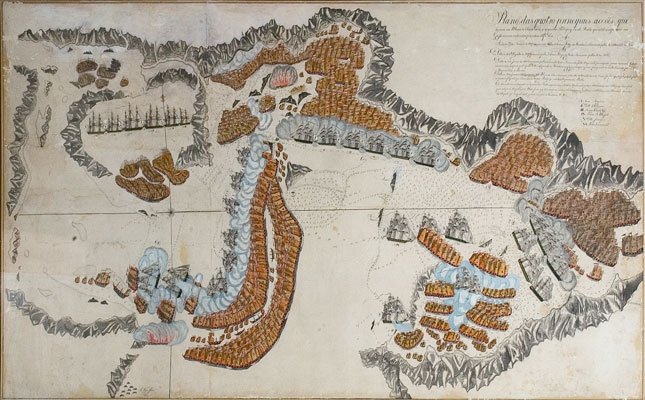
Image: Portuguese Navy Fighting Pirates in the Pearl River Delta.jpg — Unknown authorUnknown author, CC0