Who was Rasputin?
Grigori Yefimovich Rasputin was born on 21 January 1869. His birthplace was Pokrovskoye, a village on the Tura River in Siberia. His family were farmers. Less than fifty years later he was one of the best-known names in the Russian Empire.
He is remembered as the “mad monk” who captured the tsar’s court. He was killed in Petrograd on the early morning of 30 December 1916. He was 47. The story of his death has been retold so often that it is hard to separate the facts from the legend. This article keeps the two apart.
From a Siberian village to the palace
Rasputin married Praskovya Dubrovina in February 1887. The couple had seven children. Only three reached adulthood: Dmitri, Maria and Varvara.
In 1897 he visited the St. Nicholas Monastery in Verkhoturye. Sources count this visit as an important step in his religious change. That was the road that eventually led him to the capital.
He met Tsar Nicholas II and Tsarina Alexandra in November 1905. About a year later, in late 1906, he began to act as a religious healer for the couple’s only son, Alexei.
Was Rasputin a monk?
No. Despite the nickname, he had no official position in the Russian Orthodox Church. The label “monk” was a nickname, not a church rank.
If you read a headline calling him a monk, treat it as shorthand. He was a peasant with religious fame, not a clergyman.
The healer of the heir
Alexei had hemophilia, a blood disorder in which bleeding is hard to stop. The family’s trust in Rasputin grew out of this illness. They believed he could help the boy.
The explanation is still debated. The popular version says Rasputin stopped Alexei’s bleeding with supernatural power. Some historians offer a plainer reason. In their view, the bleeding may have eased because aspirin was no longer being given.
Think of it like a family doctor who tells you to stop a medicine and you recover. You might credit the doctor’s touch, when the real change was what you stopped taking.
Did Rasputin rule Russia?
The rumor mill said yes. Two points matter here.
First, Nicholas II left the capital in 1915 to take command of the army. That increased the influence of Alexandra and Rasputin over the government.
Second, historians disagree about how far that influence went. Siobhan Peeling’s entry in the 1914–1918-online encyclopedia says his effect on wartime government may have been exaggerated. It adds that the rumors about him damaged the monarchy’s reputation. So the gossip may have done more harm than the man’s actual decisions.
The rumor that he was Alexandra’s lover also lacks support. TIME’s review says no evidence confirms a secret relationship.
He was also a target long before 1916. In July 1914, Rasputin survived an attempt to kill him with a knife.
Why was Rasputin killed?
The plotters had a political goal. Prince Felix Yusupov and the other conspirators believed that getting rid of Rasputin would help Nicholas II rebuild the monarchy’s standing. They saw him as the cause of the crown’s damaged image.
It was a plan by nobles who wanted to protect the throne. It did not save it. Their target was a rumor as much as a man.
The night of the murder
The killing took place at Yusupov’s Moika Palace in Saint Petersburg. At the time, Russia used the Julian calendar, so the date there was 17 December. Elsewhere in Europe it was 30 December 1916.
Yusupov told the story himself in a memoir published in 1928. In his account, Rasputin was invited to the palace to meet Princess Irina. She was not at the palace at the time. The memoir claims Rasputin was given cakes and wine containing cyanide, then shot.
Afterward, his body was thrown from the Petrovsky Bridge into the Malaya Nevka River. The drowning is where the old legend gets most dramatic: poisoned, shot, then drowned.
What was the cause of death?
Modern forensics casts doubt on the legend. Roger Byard published a forensic evaluation of Rasputin’s death. He reached three conclusions:
- Poison: The cyanide story may have been invented.
- Shot at a distance: Yusupov described shots fired from a distance. Byard points to a forehead wound visible in a photograph attributed to Rasputin’s body. In his reading, that wound fits a shot with the muzzle touching the skin.
- Drowning: Because that forehead wound would have been fatal, Byard says Rasputin was dead before he went into the water.
So the answer to “cause of death” is not as neat as the legend. The best-supported reading in our sources is a fatal gunshot, not drowning.
There is also a family objection. Rasputin’s daughter Maria published a book in 1929. She disputed the poisoned-cake story and said her father did not like sweets.
What happened to his grave and body?
Rasputin was buried at Tsarskoye Selo. In March 1917 his grave was opened and his remains were burned.
The Provisional Government ordered the grave destroyed. It feared the site would become a place of pilgrimage and devotion. Even after death, officials treated him as someone with a following.
As for the court’s reaction to the murder: Nicholas II removed Yusupov and Grand Duke Dmitri from the palace.
Rasputin museum and the body part claim
If you travel to Saint Petersburg, the place to go is the Yusupov Palace. It holds an exhibition of historical documents and photographs in rooms tied to the killing.
The palace’s Rasputin murder route covers two spaces. One is the conspirators’ room, which Felix used as a study. The other is the dining room in the basement.
A separate museum of erotica in the same city displays an organ labelled as Rasputin’s. Be cautious about it. Historian Antony Beevor told EL PAÍS in 2026 that the attribution cannot be verified. He also said no historical record shows that anything was cut from the body after death. Treat the claim as a legend, not a documented fact.
Timeline
- 21 January 1869: Rasputin is born in Pokrovskoye, Siberia.
- February 1887: He marries Praskovya Dubrovina.
- 1897: He visits the St. Nicholas Monastery in Verkhoturye.
- November 1905: He meets Nicholas II and Alexandra.
- Late 1906: He begins acting as a healer for Alexei, who has hemophilia.
- July 1914: He survives a knife attack.
- 1915: The tsar takes army command, and Rasputin’s influence at court grows.
- 30 December 1916: (17 December, Julian calendar) He is killed at the Yusupov Palace in Petrograd.
- March 1917: His grave at Tsarskoye Selo is opened and his remains are burned.
- 1928: Yusupov’s memoir of the murder is published.
- 1929: Maria Rasputin publishes her book disputing Yusupov’s account.
Details you won’t find in guidebooks
- In Yusupov’s own story, Rasputin came to the palace to meet Princess Irina. She was not there.
- Maria Rasputin challenged the poisoned-cake tale by saying her father did not like sweets.
- Nicholas II sent Yusupov and Grand Duke Dmitri away from the palace after the killing.
- The Provisional Government destroyed the grave because it feared a shrine would form there.
FAQ
Was Rasputin really a monk?
No. He was nicknamed the “mad monk”, but he held no official position in the Russian Orthodox Church.
Why was Rasputin killed?
Prince Felix Yusupov and the other conspirators thought that removing Rasputin would let Nicholas II restore the monarchy’s reputation.
What was Rasputin’s cause of death?
The legend says poison, bullets and drowning. A 2024 forensic evaluation by Roger Byard reads a photographed forehead wound as a fatal contact-range shot, which suggests he was dead before he entered the water.
Can you visit the place where Rasputin was killed?
Yes. The Yusupov Palace in Saint Petersburg runs a Rasputin murder exhibition with documents and photographs. Its route includes the conspirators’ room and the basement dining room.
Is a Rasputin body part really on display in Saint Petersburg?
A museum there shows an organ labelled as his. Historian Antony Beevor said in 2026 that this cannot be verified and that no historical record says anything was cut from the body after death.
Sources
- Vikipedi — Grigori Rasputin tr.wikipedia.org
- Wikipedia — Grigori Rasputin en.wikipedia.org
- TIME — 5 Myths and Truths About Rasputin time.com
- 1914–1918-online — Rasputin, Grigorii Efimovich encyclopedia.1914-1918-online.net
- Library of Congress — Gregory Rasputin guides.loc.gov
- Yusupov Palace — History of the palace yusupov-palace.ru
- Yusupov Palace — Rasputin murder exhibition yusupov-palace.ru
- Smithsonian Magazine — What Really Happened During the Murder of Rasputin? smithsonianmag.com
- Roger W. Byard — The death of Rasputin—A forensic evaluation link.springer.com
- National Geographic — Poisoned, shot, or drowned? nationalgeographic.com
- EL PAÍS — Antony Beevor interview on Rasputin english.elpais.com
- Macmillan / Farrar, Straus and Giroux — Rasputin us.macmillan.com
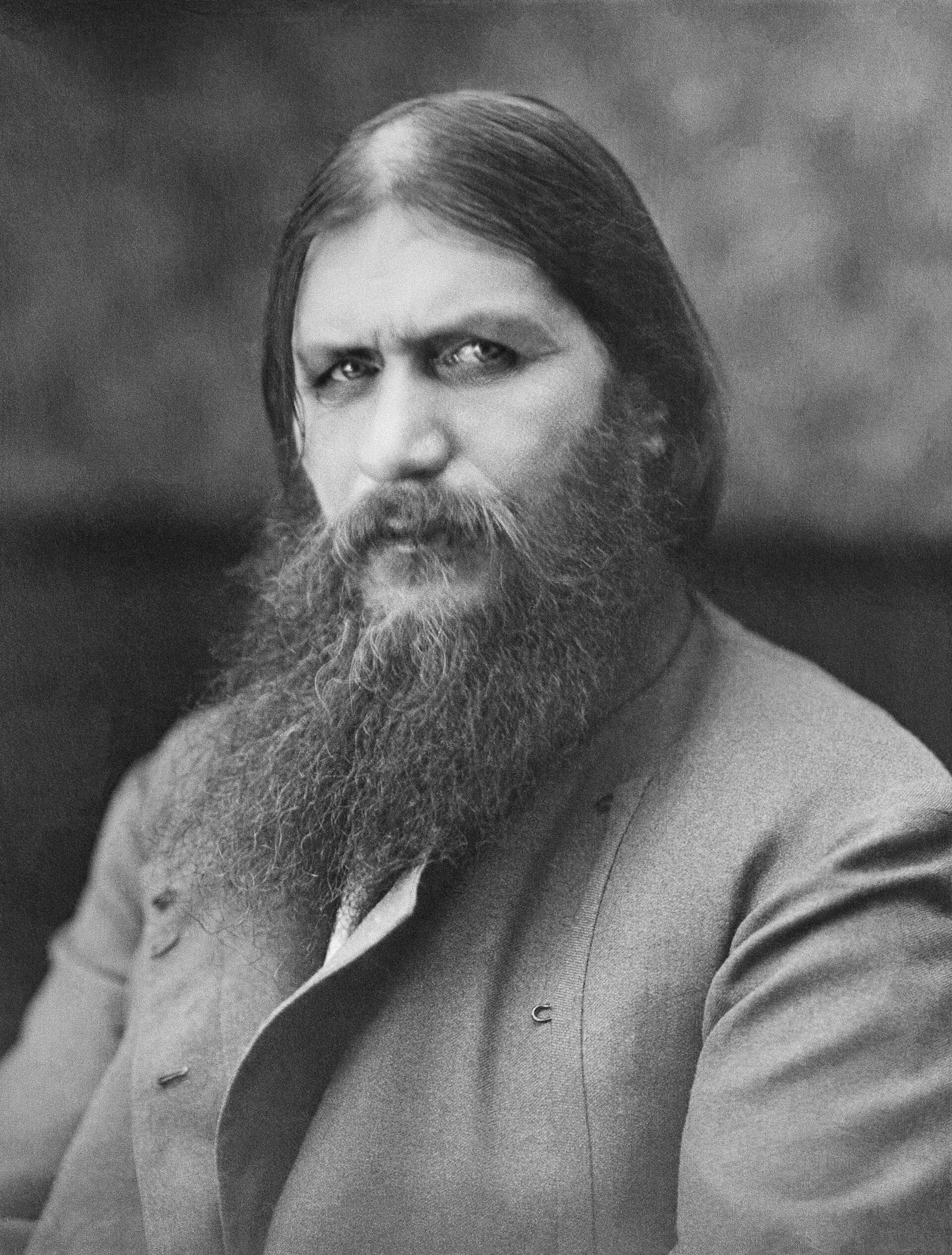
Image: Rasputin PA.jpg — Unknown authorUnknown author, Public domain