Why did the Songhai Empire fall?
The Songhai Empire fell in 1591 because internal political struggles left it vulnerable to a Moroccan invasion. At Tondibi, Morocco’s arquebuses and cannon defeated a larger Songhai army without comparable firearms. Moroccan forces then occupied Gao, the imperial capital. Central imperial rule collapsed, although Songhai resistance continued farther south.
You need to follow three connected developments to understand the defeat. Dynastic conflict weakened Songhai’s unity. Morocco’s Sultan Ahmad al-Mansur sought control of the trans-Saharan gold trade. His army’s firearms supplied the decisive advantage at Tondibi. That battlefield victory brought down the central empire, but it did not secure lasting control across all its former territories.
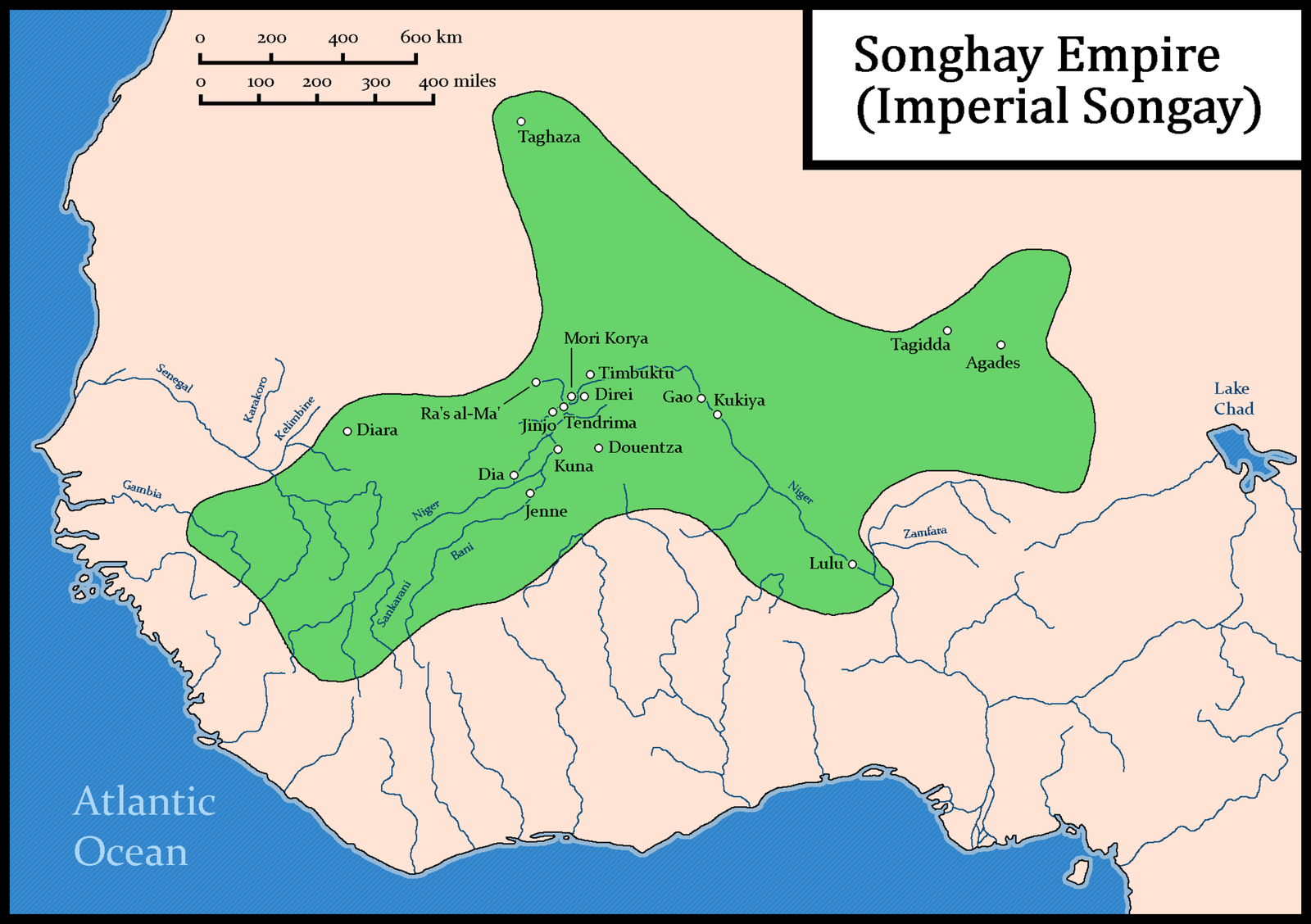
Where was the Songhai Empire located? Map and capital
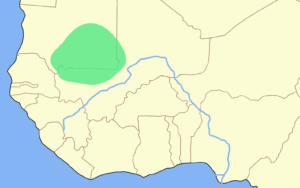
Songhai developed during the fifteenth and sixteenth centuries around the Niger River in West Africa’s Sahel. Its capital, Gao, stands in present-day Mali. The river, the capital, and the trading centers provide useful reference points when you picture the empire’s location.
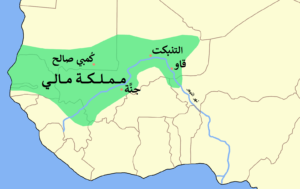
A Songhai Empire map needs careful reading. The Metropolitan Museum of Art explains that Songhai and Mali lacked the fixed geopolitical borders associated with modern states. You should therefore avoid treating a sharply drawn outline as a permanent boundary. Gao and Timbuktu help locate imperial power without implying that its limits stayed constant.
Songhai Empire history and leaders: How did it grow?
Songhai strengthened its independence at Gao as the Mali Empire weakened. It then expanded into former Malian territories. This relationship explains why Songhai and Mali appear together in accounts of West African imperial history: Songhai’s expansion followed the weakening of an earlier regional power.
Sonni Ali’s reign, from 1464 to 1492, transformed Songhai into a major empire through conquest. He captured Timbuktu in 1468. The city was an important center of Saharan trade, making its capture part of the story of both territorial growth and commercial power.
Muhammad Ture overthrew Sonni Baru in 1493 and founded the Askia dynasty. Known as Askia Muhammad, he ruled until 1528. His accession marked a change of dynasty within the expanding state. Much later, struggles following Askia Dawud’s death in 1582/1583 weakened political unity before Morocco’s invasion.
Songhai Empire vs Mali Empire: Why did trade matter?
The connection between Songhai and Mali involved both territory and trade. Songhai expanded into former Malian lands after Mali weakened. Its wealth depended on taxing commerce that connected southern gold-producing regions with Saharan salt sources, including Taghaza.
An everyday comparison helps explain the value of that income. Think of a household budget that depends on a regular payment. Control over that payment matters as much as the money already available. For Songhai, taxes on gold-and-salt commerce were a source of wealth. For Ahmad al-Mansur, controlling the gold trade offered a way to strengthen his kingdom’s economy, according to historian Lansiné Kaba.
Why did Morocco invade Songhai?
Ahmad al-Mansur’s ambitions brought Morocco into conflict with Songhai over Saharan commerce. In 1589 or early 1590, he demanded that Askia Ishaq II pay gold in return for salt production. The Songhai ruler refused. The demand linked the coming conflict directly to the resources and trade routes that supported imperial wealth.
In 1590, al-Mansur sent an expedition south under Judar Pasha, a commander of Spanish origin. Songhai faced this invasion after years of dynastic struggles. Morocco’s economic objectives and Songhai’s weakened political unity therefore converged before the armies met at Tondibi.
How did Morocco win the Battle of Tondibi in 1591?
Judar Pasha commanded the Moroccan army at Tondibi. Askia Ishaq II led Songhai’s forces. Songhai had the larger army, but Morocco possessed arquebuses and cannon. Songhai lacked comparable firearms. The difference in weapons helps explain how the smaller force overcame its numerical disadvantage.
Accounts of the fighting describe an advance by Songhai infantry, followed by a cavalry charge. Moroccan arquebus and cannon fire repelled these attacks. Greater numbers did not overcome the defenders’ firepower. At Tondibi, the weapons available to each army mattered more than numerical superiority.
Army totals remain disputed. Estimates for the Moroccan expedition range from about 4,000 to 20,000. A figure attributed to the Tarikh al-Fattash gives Songhai 18,000 cavalry and 9,700 infantry. Other accounts give 12,500 cavalry and 30,000 infantry. These conflicting totals should not be combined into a single precise count.
The battle’s date also requires care. The widely used date is 13 March 1591. Kaba notes that the Tarikh es-Sudan gives 12 April, while other sources support March. The year and outcome provide a firmer foundation for explaining Songhai’s fall than an unqualified claim about the exact day.
What happened after Gao fell?
After Tondibi, the Songhai government evacuated Gao. Judar Pasha’s army occupied the capital. The defeat and occupation brought down the central imperial structure. Morocco’s victory therefore had consequences beyond the battlefield: Songhai lost the capital from which its empire had been governed.
Occupation also affected Timbuktu’s scholarly community. In 1594, the occupying administration arrested a group of scholars, including Ahmad Baba, and deported them to Marrakesh. This episode shows that the consequences of conquest reached the empire’s learned urban circles as well as its rulers and soldiers.
Did Songhai resistance end in 1591?
Songhai resistance continued under Askia Nuhu in the southern Dendi region. The collapse of central rule did not end organized opposition. If you follow the story only as far as Gao’s occupation, you miss the continued fighting that limited Morocco’s ability to turn victory into wider control.
Kaba links the stalled Moroccan advance in Dendi to prolonged resistance and conditions in the fly-infested southern swamps. Terrain and continued opposition complicated the campaign after Tondibi. The same force that won a major battle could not impose lasting control throughout the former empire.
Songhai Empire religion and architecture
Islam was influential at the Songhai court and in its cities. A substantial part of the population continued traditional religious practices. Songhai’s religious history therefore includes both an Islamic courtly and urban presence and the persistence of other practices among its people.
Gao’s Tomb of Askia gives that history a surviving architectural focus. UNESCO dates its construction under Askia Muhammad to 1495. Its pyramidal structure rises 17 meters and exemplifies Sahelian earthen architecture. The monument connects the capital with the Askia dynasty that ruled before the crisis of 1591.
Details you won’t find in guidebooks
The Askia monument is a complex rather than a pyramid alone. UNESCO lists two flat-roofed mosques, a cemetery, and an open-air assembly area alongside the pyramidal structure. These elements place worship, burial, and gathering within the same monumental setting at Gao.
Askia Ishaq II offered a substantial peace settlement to obtain the Moroccan army’s withdrawal. It included 100,000 in gold and 1,000 enslaved people. The offer reveals both the scale of the proposed settlement and the inclusion of human beings among its terms.
Ahmad al-Mansur was dissatisfied with Judar Pasha’s progress despite the victory at Tondibi. In August 1591, he sent Mahmud Pasha to replace him. Winning the battle and occupying Gao had not satisfied the sultan’s expectations for the expedition.
Kaba describes another revealing development by 1612: Moroccan musketeers refused to fight Songhai archers whose mobility they could not match. Firearms had proved decisive at Tondibi. Continuing resistance exposed the limits of that advantage under different fighting conditions.
Timeline
- 1464–1492: Sonni Ali expanded Songhai through conquest.
- 1468: Sonni Ali captured Timbuktu.
- 1493: Muhammad Ture founded the Askia dynasty.
- 1495: The Tomb of Askia was built, according to UNESCO’s dating.
- 1528: Askia Muhammad’s reign ended.
- After 1582/1583: Dynastic struggles followed Askia Dawud’s death.
- 1589 or early 1590: Al-Mansur demanded gold from Askia Ishaq II, who refused.
- 1590: Judar Pasha’s Moroccan expedition began.
- 1591: Morocco won at Tondibi; the exact battle date is disputed.
- 1591: Gao was occupied and central imperial rule collapsed.
- August 1591: Al-Mansur sent Mahmud Pasha to replace Judar Pasha.
- 1594: Ahmad Baba and other scholars were deported to Marrakesh.
- By 1612: Kaba records Moroccan musketeers refusing combat against mobile Songhai archers.
FAQ
Why did the Songhai Empire fall?
Dynastic struggles weakened political unity after Askia Dawud’s death in 1582/1583. Morocco then defeated Songhai at Tondibi in 1591 through its advantage in arquebuses and cannon, occupied Gao, and brought down central imperial rule.
Where was the Songhai Empire located, and what was its capital?
Songhai developed around the Niger River in West Africa’s Sahel. Its capital was Gao, in present-day Mali.
Did the Songhai Empire have a verified flag?
The Wikimedia Commons file called “Flag of the Songhai Empire.jpg” cites the uploader’s own work. It does not establish an authentic historical flag.
What should a Songhai Empire essay explain about 1591?
Connect internal dynastic struggles, Morocco’s interest in trans-Saharan gold trade, and its firearms advantage at Tondibi. Distinguish the collapse of central imperial rule from the continuing Songhai resistance in Dendi.
Sources
- Wikipedia — Songhai Empire en.wikipedia.org
- Vikipedi — Songhay İmparatorluğu tr.wikipedia.org
- The Metropolitan Museum of Art — The Empires of the Western Sudan metmuseum.org
- South African History Online — Songhai, African Empire, 15–16th Century sahistory.org.za
- UNESCO World Heritage Centre — Tomb of Askia whc.unesco.org
- Lansiné Kaba — Archers, Musketeers, and Mosquitoes: The Moroccan Invasion of the Sudan and the Songhay Resistance (1591–1612), The Journal of African History, 1981 cambridge.org
- Wikipedia — Moroccan invasion of the Songhai Empire en.wikipedia.org
- Wikipedia — Battle of Tondibi en.wikipedia.org
- Wikimedia Commons — Flag of the Songhai Empire.jpg commons.wikimedia.org
Image: Map of the Songhay Empire.png — HetmanTheResearcher, CC BY-SA 4.0