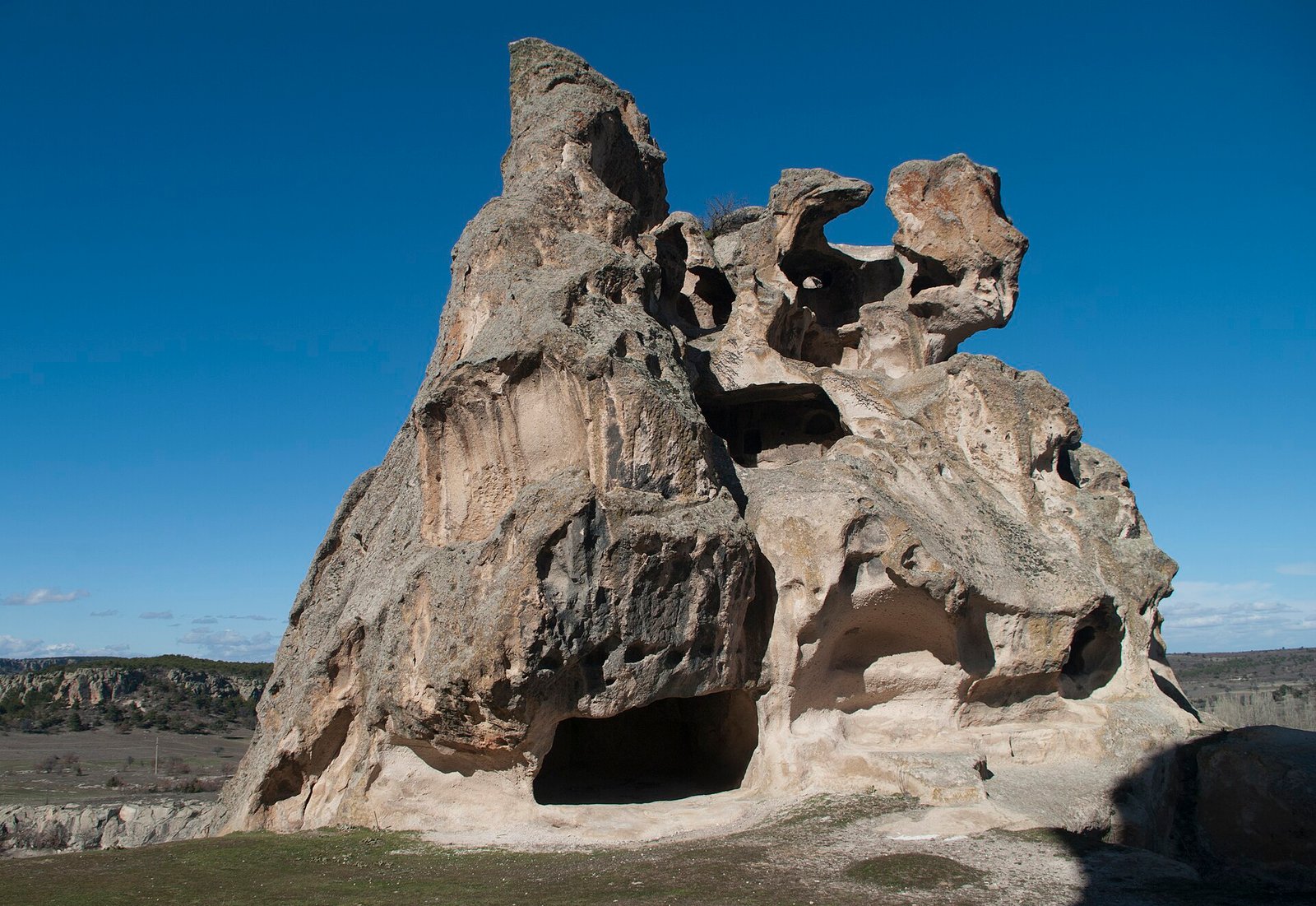
What is the Phrygian Valley?
The “Phrygian Valley” is a popular name for Mountainous Phrygia. It is a historical region, not one canyon. It spreads across three Turkish provinces: Eskişehir, Afyonkarahisar and Kütahya. Volcanic tuff cliffs and deep valleys shape the land.
UNESCO added Mountainous Phrygia to its World Heritage Tentative List on 13 April 2015. It is listed as a candidate for cultural heritage. That means it is a nominee, not an inscribed site.
The key to the whole region is the rock. Tuff from the Türkmen Dağı volcano covers the Phrygian highlands east of Kütahya. It is soft and easy to carve. People used it to make temples, tombs and shelters.
So when you search for the Phrygian Valley in Turkey, expect many sites over a wide area. Some are open-air shrines. Some are tombs. Some are later Roman and Byzantine rooms cut into the same stone.
Phrygian Valley in Eskişehir: Midas City
The best-known stop is Midas City, in Eskişehir’s Han district. It lies just west of Yazılıkaya village, at the southern end of the Yazılıkaya Valley.
The city stands on a tuff plateau. The plateau is about 650 metres long and 320 metres wide. It rises 60–70 metres above the valley floor. Think of a long, flat-topped block of rock standing in the landscape.
Carved façades, altars and niches cover the rock. According to the Ministry of Culture and Tourism, these are open-air worship arrangements. They were dedicated to the cult of the Mother Goddess Matar Kubileya.
The Midas Monument
The Midas Monument is the centrepiece. It is a rock façade facing east, 17 metres high and 16.5 metres wide. Geometric patterns cover its surface.
The name comes from a Phrygian inscription at the upper left. It contains the word Midai. The village name Yazılıkaya comes from the writing on the monument.
The upper-left inscription is 11 metres long. Its letters measure about 45 × 40 centimetres.
How old is it?
Official sources disagree. The Culture Portal presents the view that places the Midas Monument in the first half of the 6th century BC. The Eskişehir Metropolitan Municipality tourism portal gives the 8th–7th centuries BC.
Both are official tourism sources. Treat the date as an open question, not a settled fact.
Phrygian Valley in Afyon: Göynüş, Döğer and Ayazini
The Afyonkarahisar side offers a different kind of visit.
Göynüş Valley
Göynüş Valley is in the İhsaniye district. Its Aslantaş tomb has an entrance framed by reliefs of two standing lions. Lion cubs stand beneath their feet.
About 500 metres from Aslantaş and Yılantaş is the Maltaş Monument. Its façade has a cult niche measuring 2 × 2 metres.
Döğer and Emre Lake
Around the town of Döğer, in İhsaniye, you will find Aslankaya, Kapıkaya I and Kapıkaya II. These rock monuments work as open-air temples. They were dedicated to the Mother Goddess Cybele.
Emre Lake lies in the same area, inside the Phrygian Valley. It is about 50 kilometres from Afyonkarahisar.
The Phrygian Valley Nature Park covers the İhsaniye part of the region. The Afyonkarahisar Provincial Directorate of Culture and Tourism gives its area as 54.756 hectares. The General Directorate of Nature Conservation and National Parks records its declaration date as 1 June 2017.
Ayazini
Ayazini is reached from the Afyonkarahisar–Eskişehir road. Turn right at kilometre 27 and drive about 4.7 kilometres.
The tombs here belong to the Roman and Byzantine periods. They include two-storey chambers and pediments with Medusa heads. Some carry reliefs of a husband and wife, showing the people buried there.
Ayazini also has a church cut into the rock. Its apse and dome are carved into the tuff so that they can be seen from the outside too.
Phrygian Valley cart ruts and tracks
Searches for “phrygian valley tracks” and “cart ruts” usually lead to Ayazini. Northwest of the settlement lie the Three Churches. A historic road runs from there to the valley to the north.
The Ayazini site’s own information page says you can see ruts on that road, and it ties them to ox-cart wheels. The marks come from wheels pressed repeatedly into soft stone.
Think of the grooves a tractor wears into a dirt lane. Here, the lane is rock, and the wear stayed.
Phrygian Valley in Kütahya
The Kütahya side is the third part of the region. The Provincial Directorate of Culture and Tourism describes valleys in the east of the province. They stretch from around Sabuncupınar, Söğüt, İnli, Sökmen, Fındık and İncik to around Ovacık and İnlice.
In Sabuncupınar, the Kütahya Special Provincial Administration restored an old government building in 2011. It now serves as the Phrygian House, where visitors to the valley can rest and stay.
Phrygian Valley map and tour: the Phrygian Way
You do not need a tour bus to see the region. The Phrygian Way is a marked walking and cycling route of 506 kilometres in total. It starts on three branches and meets at Midas City in Yazılıkaya.
The whole route carries red-white marks. Information boards stand at the start and end points. Direction signs stand at important junctions. If you have followed red-white marks on a hiking trail at home, the system will feel familiar.
For a map, keep one thing in mind: Midas City is the meeting point of the three branches.
Visiting Midas City
The Ministry of Culture and Tourism record, checked on 25 October 2026, lists Midas Yazılıkaya as free and open every day. Visiting hours are 08.00–17.00. Confirm this before you go, because opening details can change.
Who studied it?
The first systematic excavations at Midas City ran from 1937 to 1939. Albert Gabriel and C. H. Emilie Haspels led them. A second period began in 1948. Halet Çambel, a lecturer at Istanbul University, took responsibility for the fieldwork.
Timeline
- 8th–7th or 6th century BC: Official sources give different dates for the Midas Monument.
- 3rd–1st centuries BC: The period of the Gerdekkaya Funerary Monument in Seyitgazi. It was used with changes in the Roman and Byzantine periods.
- 1937–1939: Gabriel and Haspels lead the first systematic excavations at Midas City.
- 1948: Second-period excavations begin at Yazılıkaya under Halet Çambel.
- 13 April 2015: Mountainous Phrygia joins the UNESCO Tentative List.
- 1 June 2017: The Phrygian Valley Nature Park in Afyonkarahisar is declared.
Details you won’t find in guidebooks
- A monument that faces west. About 200 metres southwest of the Midas Monument stands the Unfinished Monument. It is the only monument on the Yazılıkaya platform that faces west. It carries lotus-palmette decoration.
- Painted decoration. The UNESCO nomination file describes the Balkayası Monument as the first and only example of painted decoration among Phrygian rock monuments.
- Salt damage. A 2023 conservation study notes that salt crystallisation linked to rain and snow water increases erosion in the lower part of the Midas Monument.
- Letters you can measure. The 11-metre inscription uses letters of about 45 × 40 centimetres.
FAQ
Where is the Phrygian Valley?
It is not a single valley. The name covers Mountainous Phrygia, a historical region spread across the provinces of Eskişehir, Afyonkarahisar and Kütahya. Its rock cliffs and deep valleys were shaped from volcanic tuff.
Is the Phrygian Valley in Eskişehir or Afyon?
Both, and Kütahya too. Midas City lies in the Han district of Eskişehir. Göynüş Valley, Döğer, Emre Lake and Ayazini sit in Afyonkarahisar province.
Can you walk or cycle between the sites?
Yes. The Phrygian Way is a 506-kilometre marked walking and cycling route. It starts on three branches and meets at Midas City in Yazılıkaya. Red-white marks show the way.
Is Midas City free to visit?
The Ministry of Culture and Tourism record, checked on 25 October 2026, lists the site as free and open every day, 08.00–17.00. Check the page again before you travel.
Is the Phrygian Valley a UNESCO World Heritage Site?
Not yet. Mountainous Phrygia was added to the UNESCO World Heritage Tentative List on 13 April 2015 as a candidate for cultural heritage.
Sources
- UNESCO World Heritage Centre — Mountainous Phrygia whc.unesco.org
- Kütahya Provincial Directorate of Culture and Tourism — Frigya Vadileri kutahya.ktb.gov.tr
- Ministry of Culture and Tourism — Midas Yazılıkaya Örenyeri muze.gov.tr
- Kültür Portalı — Midas Anıtı kulturportali.gov.tr
- Eskişehir Metropolitan Municipality Tourism Portal — Yazılıkaya Midas Anıtı visiteskisehir.org
- Kültür Portalı — Frig Yolu’nda Karşılaşacağınız 8 Etkileyici Kaya Anıtı kulturportali.gov.tr
- Kültür Portalı — Ayazini Ören Yeri kulturportali.gov.tr
- İhsaniye District Governorate — Emre Gölü ihsaniye.gov.tr
- Afyonkarahisar Provincial Directorate of Culture and Tourism — Tabiat Parkları afyon.ktb.gov.tr
- General Directorate of Nature Conservation and National Parks — Tabiat Parkları tarimorman.gov.tr
- Culture Routes Society — Frig Yolu cultureroutesinturkey.com
- Ayazini Metropolisi — Dini Merkez ayazini.org
- Kütahya Special Provincial Administration — Sabuncupınar Frig Evi’nin Açılışı kutahyaozid.gov.tr
- Özcan and Savrum Kortanoğlu — Phryg Vadisinde Yer Alan Kaya Anıtlarının Korunması ve Sunumu dergipark.org.tr
- Wikipedia — Yazılı, Han en.wikipedia.org
Image: Yazılıkaya – Midas city, Eskişehir 01.jpg — Zeynel Cebeci, CC BY-SA 4.0