The Trojan Horse story in short
You probably know the outline. In the legend, Greek forces besieged Troy for about ten years and could not take it. Odysseus then designed a hollow wooden horse to smuggle soldiers inside the walls. The Achaeans pretended to sail away. Odysseus and a group of warriors hid inside the horse, while the fleet waited out of sight behind Tenedos, the island known today as Bozcaada.
One Greek, Sinon, stayed behind. He told the Trojans the horse was an offering to Athena, and they pulled it into the city. At night the hidden soldiers climbed out and opened the gates. The returning Greek army poured in and took Troy.
Trojan Horse and the Odyssey: where the story comes from
Here is the first surprise. Homer’s Iliad never tells the Trojan Horse story. The horse appears in the Odyssey, a poem dated to roughly the 8th century BC, and only as an event remembered from the past. If you look for the horse in the Iliad, you will not find it.
The fullest ancient version comes centuries later. Virgil’s Aeneid, dated to 19 BC, devotes its second book to the fall of Troy. That book is one of the most detailed and best-known tellings that survives. Many of the dramatic details repeated today come from Virgil, not Homer.
Was the Trojan Horse real? What the ground at Hisarlık says
Separate two questions. Was Troy real? Yes. Was the horse real? Not confirmed.
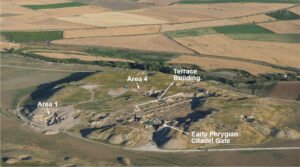
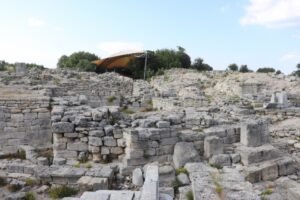
Troy is a documented excavation site. It sits on the mound of Hisarlık in Çanakkale province, about 4.8 kilometres from the southern entrance of the Dardanelles. UNESCO listed the Archaeological Site of Troy as World Heritage in 1998, under number 849.
The site is not one city but a stack of them. Turkey’s Ministry of Culture and Tourism describes settlements reaching back to the 3000s BC and ten city layers from different periods. Ten layers on one mound, each from a different age.
The horse is another matter. Its historical existence has not been confirmed. Even the Turkish Wikipedia article passes on the view that the horse may be a metaphor for an earthquake rather than a real wooden structure. The debate below shows why.
Earthquake, ship or siege engine? Four theories
The earthquake theory. The layer called Troy VIh shows heavy collapsed stonework. Archaeologists explain it by an earthquake. Poseidon’s association with the horse gives this reading a mythic hook: a “horse” that broke the walls could be a poetic memory of a quake. The weakness: the layer shows no convincing signs of a city-wide fire, which a sack would leave behind.
The burned city. Dartmouth College’s Aegean Prehistoric Archaeology lessons treat Troy VIIa as the other main candidate for the city of the epic. It was destroyed by fire around 1230–1180 BC. Its cramped houses and storage jars sunk into the floors have been read as preparation for a siege. The same lessons warn the layout could reflect social change instead. Tradition blames Mycenaean Greeks for the destruction, but the archaeological evidence does not identify the attackers.
The ship theory. Francesco Tiboni, in his book The Hippos of Troy published in May 2021, reads the horse as a tribute ship of Levantine origin. His proposal is an alternative to the traditional soldier-filled wooden horse.
The siege-engine theory. Some point to an Assyrian relief from the reign of Ashurnasirpal II as evidence that horse-like siege machines existed. The relief dates to 883–859 BC. That is several centuries after the destruction of Troy VI, so the comparison has a timing problem.
Trojan Horse: where is it now? The statue and the movie prop
If you travel to Çanakkale, you can stand under two Trojan Horses. Neither is ancient. Both are modern representations.
The first stands at the entrance of the Troy archaeological site, west of Tevfikiye village. It is 12.5 metres tall. The Ministry of Culture and Tourism states that İzzet Senemoğlu designed it in 1975, using pine trees brought from the Kazdağları mountains.
The second stands on the Çanakkale waterfront, in the city centre. It is 12.4 metres tall and is the prop used in the 2004 film Troy. Warner Bros donated it to Turkey, and it has been on display since 13 September 2004. So the “Trojan Horse movie” question and the “where is it now” question share one answer.
Getting there is simple. The Culture Portal describes the museum route: follow the Çanakkale–İzmir road to kilometre 25, turn toward Tevfikiye, and continue 5 kilometres. Minibuses to Tevfikiye run from the city centre.
Trojan horse meaning: from Troy to your laptop
In English, “Trojan horse” means a trick that makes a target willingly admit an enemy into a protected space. The phrase takes its name from the Troy story.
The computer term works the same way. Think of the moment you install a free app on your phone. Microsoft explains that computer trojans can imitate the names of legitimate applications. Unlike viruses, they cannot spread on their own. Someone has to let them in, just as the Trojans pulled the horse through the gate. Once inside, Microsoft notes, a trojan can steal passwords and browsing history, record keystrokes or hand control of the device to an attacker.
Timeline
- 3000s BC The earliest settlements at Troy, according to the Ministry of Culture and Tourism.
- c. 1230–1180 BC Troy VIIa is destroyed by fire, per Dartmouth’s assessment. Its link to the epic war is debated.
- c. 8th century BC: The Odyssey mentions the wooden horse as a past event.
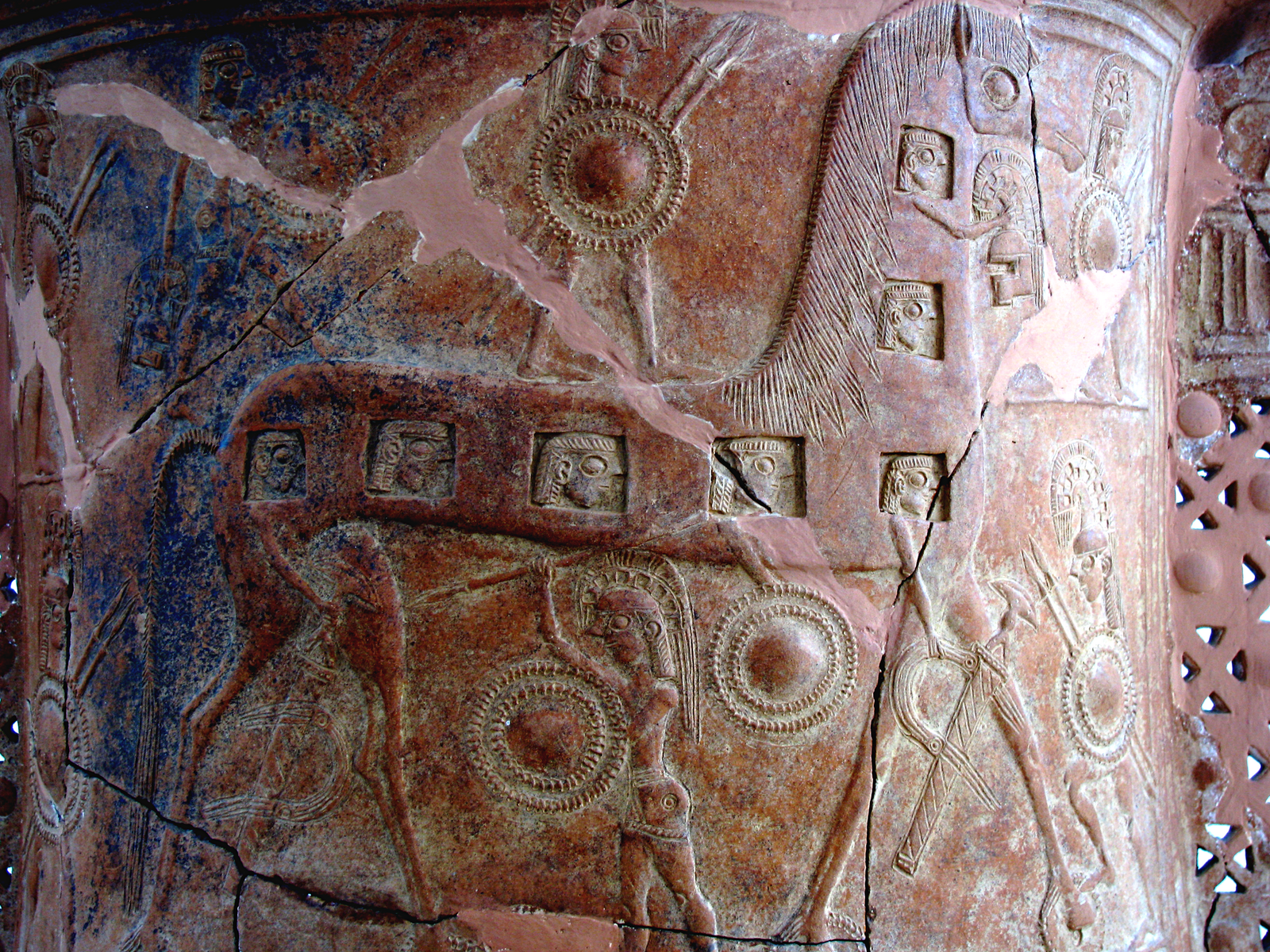
- c. 675 BC The Mykonos pithos depicts a Trojan Horse on wheels.
- 19 BC Virgil’s Aeneid gives the detailed account in Book 2.
- 1961 The Mykonos pithos is found.
- 1975 İzzet Senemoğlu designs the modern horse at the Troy entrance.
- 1998 Troy enters the UNESCO World Heritage List.
- 13 September 2004 The Troy film horse goes on display on the Çanakkale waterfront.
- May 2021 Francesco Tiboni publishes The Hippos of Troy.
- 29 August 2025 Çanakkale Municipality announces Trojan Horse traffic lights.
Details you won’t find in guidebooks
- The builder was a boxer. The Odyssey names Epeios as the horse’s craftsman. In Book 23 of the Iliad, the same Epeios wins the boxing match at the funeral games for Patroclus.
- Helen almost gave them away. In Book 4 of the Odyssey, Helen imitates the voices of the hidden warriors’ wives. Anticlus tries to answer, and Odysseus clamps a hand over his mouth.
- The oldest picture has wheels. A relief-decorated pithos found on Mykonos in 1961, dated to about 675 BC, shows the horse with wheels attached to its hooves.
- Real horses, not wooden ones. The first horse bones at Troy appear at the start of Troy VI. They are animal remains, not traces of the legendary structure.
- The horse now stops traffic. On 29 August 2025, Çanakkale Municipality announced that traffic lights in the shopping-mall district had been fitted with a Trojan Horse figure.
FAQ
Was the Trojan Horse real?
Troy was a real city. Its excavated mound at Hisarlık holds ten settlement layers and has been on the UNESCO World Heritage List since 1998. The wooden horse itself has not been confirmed by archaeology, and the earthquake, ship and siege-engine readings remain theories.
Is the Trojan Horse in the Iliad?
No. The Iliad does not tell the story. The horse is recalled as a past event in the Odyssey, dated to about the 8th century BC, and told in full in Book 2 of Virgil’s Aeneid from 19 BC.
Where can I see a Trojan Horse today?
Two modern horses stand in Çanakkale. A 12.5-metre horse designed by İzzet Senemoğlu in 1975 marks the entrance to the Troy site near Tevfikiye village, and the 12.4-metre prop from the 2004 film Troy stands on the city waterfront, where it has been since 13 September 2004.
Why is malware called a Trojan horse?
Microsoft describes computer trojans as programs that imitate the names of legitimate apps and cannot spread by themselves. The user lets them in, as the Trojans did with the horse. Once inside they can steal passwords and browsing history, record keystrokes or give an attacker control of the device.
Sources
- Vikipedi — Truva Atı tr.wikipedia.org
- Wikipedia — Trojan Horse en.wikipedia.org
- Thomas F. Scanlon — Bulletin of the Institute of Classical Studies onlinelibrary.wiley.com
- Harvard Center for Hellenic Studies — Classics@, To Make a Wooden Horse classics-at.chs.harvard.edu
- UNESCO — Archaeological Site of Troy whc.unesco.org
- Kültür ve Turizm Bakanlığı — Troya Ören Yeri ktb.gov.tr
- Dartmouth College — Aegean Prehistoric Archaeology, Lesson 23 sites.dartmouth.edu
- Dartmouth College — Aegean Prehistoric Archaeology, Lesson 27 sites.dartmouth.edu
- Archaeopress — The Hippos of Troy archaeopress.com
- National Geographic — How archaeologists found the lost city of Troy nationalgeographic.com
- DHA / Hürriyet — Truva Atı’na makyaj hurriyet.com.tr
- Kültür Portalı — Troya Müzesi kulturportali.gov.tr
Image: Mykonos vase 7th cent bce early depiction of Trojan Horse photographed by Travellingrunes Flickr 2949254926 4c9dc0882d o.png — Paul, CC BY-SA 2.0