The Ottoman–Habsburg wars were fought over rival claims to Hungary’s throne after 1526, control of frontier fortresses and influence in Transylvania. Ottoman defeats after 1683 brought most of Hungary under Habsburg rule through the Treaty of Karlowitz in 1699. Further wars followed before the Treaty of Sistova ended the sequence in 1791 with limited border changes.
Why did the Ottoman defeat outside Vienna lead toward major territorial losses, while an earlier Ottoman defeat produced a favorable peace? The contrast between Saint Gotthard in 1664 and Vienna in 1683 helps explain the struggle. As you follow the fortresses, payments and treaties, battlefield results become only one part of the story.
How did competing claims to the Hungarian throne bring the dynasties into conflict?
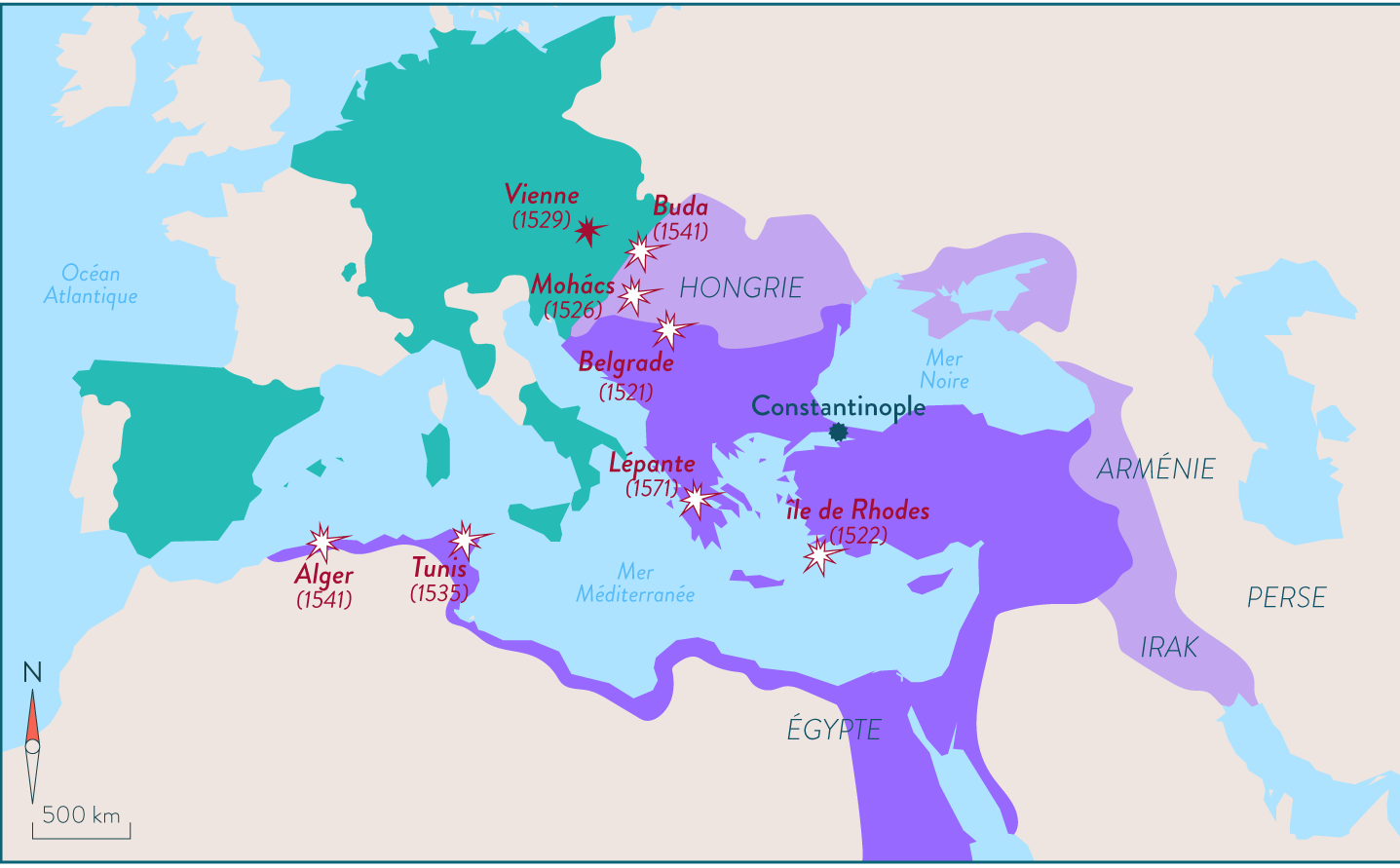
The Ottoman capture of Belgrade in 1521 opened the way for a major advance against the Hungarian kingdom. On 29 August 1526, King Louis II died at the Battle of Mohács. His death created the succession struggle that brought the Habsburgs and Ottomans into direct conflict.
Ferdinand’s claim rested partly on a dynastic marriage. He was married to Louis’s sister Anna. After Mohács, rival royal elections elevated Ferdinand and János Zápolya, drawing them into civil war. The Ottomans supported Zápolya. A dispute within Hungary therefore became entangled with competition between the two powers.
Sultan Süleyman besieged Vienna in autumn 1529. The city held, and the Ottoman army withdrew after roughly three weeks. The failed siege did not settle the Hungarian succession. After Zápolya died in 1540, the continuing struggle produced a divided kingdom.
Hungary separated into three political areas. The Habsburgs controlled Royal Hungary in the northwest. The Ottomans governed the central region. Transylvania in the east acknowledged Ottoman supremacy. If you want to understand why the wars kept returning, this division matters: Hungary contained competing centers of power rather than a single accepted settlement.
How did frontier fortresses, raids and diplomacy shape relations between wars?
During the sixteenth century, the Habsburgs developed the Croatian-Slavonian Military Frontier, beginning at the Adriatic coast. Defense became an enduring frontier obligation. Balkan migrants settled there received exemptions from obligations to feudal lords in exchange for permanent military service.
That arrangement offers an everyday-life connection. For a frontier household, military duty was tied directly to the obligations it owed. Exemption from feudal burdens came with continuing service. The Ottoman–Habsburg struggle therefore shaped settlers’ responsibilities as well as the decisions of rulers.
Diplomacy also kept relations functioning between campaigns. The February 1568 truce required Emperor Maximilian II to pay the Ottoman sultan 30,000 ducats annually. Armed rivalry could coexist with a negotiated payment system. A truce established terms for dealing with the opposing ruler without resolving the wider competition over Hungary.
Fortifications remained potential triggers for renewed war. In 1661, the Croatian ban Miklós Zrínyi built Yenikale opposite Kanije. The Ottomans cited this fortress as one of the official causes of the 1663–1664 war. A local construction project could thus become an issue between the two powers.
The ban on fortress seizures and captive-taking at Zsitvatorok shows how closely diplomacy addressed frontier violence. Peace required rules about what soldiers and commanders could do along the border. Payments, fortresses and prisoners belonged to the same relationship.
What changed with the treaties of Zsitvatorok and Vasvár?
The long war that began in 1593 strained both sides financially. From 1596, peace negotiations took place during the winter intervals between campaigning seasons. Fighting and negotiation overlapped for years before a settlement emerged.
The Treaty of Zsitvatorok was signed on 11 November 1606 where the Zsitva meets the Danube. It ended the war begun in 1593. The Habsburgs’ annual tribute obligation was removed and replaced by a single gift of 200,000 kuruş. The Ottomans also accepted the use of the imperial title Kaiser or Caesar for the Habsburg ruler.
These provisions changed Ottoman recognition of the Habsburg ruler’s title. Yet Zsitvatorok preserved important Ottoman positions: Eğri, Kanije and Estergon remained Ottoman. It also prohibited fortress seizures and captive-taking. You can see the distinction between diplomatic standing and territorial control: recognition changed while these fortresses stayed in Ottoman hands.
Vasvár followed a different military sequence. On 26 September 1663, Ottoman forces captured Uyvar, an important Habsburg defensive fortress in Hungary, after a siege lasting about a month. On 1 August 1664, Montecuccoli’s allied army defeated Köprülüzâde Fâzıl Ahmed Paşa’s Ottoman army at Saint Gotthard beside the Rába.
Despite that defeat, the Treaty of Vasvár preserved Ottoman gains, including Uyvar. It accepted the existing territorial situation and marked the Ottoman Empire’s widest borders in Hungary. The agreement required both sides to withdraw simultaneously from Transylvania. Yenikale was not to be rebuilt, and peace was set for twenty years.
Saint Gotthard and Vasvár therefore answer an important question about the wars. Winning a battle did not necessarily mean recovering the territory lost during the campaign. In 1664, the Habsburg side won at Saint Gotthard while the peace preserved major Ottoman gains.
How did the military balance shift after 1683?
On 12 September 1683, a relief army under Jan III Sobieski defeated Merzifonlu Kara Mustafa Paşa’s forces outside Vienna. The victory lifted the siege. In 1684, the Habsburgs, Poland and Venice formed the Holy League with papal support. Russia later joined, widening the war across several fronts.
The capture of Buda in 1686 became a major gain in the counteroffensive against Ottoman Hungary. Prince Eugene’s victory at Zenta in 1697 was another decisive stage on the road to peace. These defeats gave the post-1683 struggle a different outcome from the settlement reached after Saint Gotthard.
The Treaty of Karlowitz, signed on 26 January 1699, recognized Habsburg rule over most of Hungary and Transylvania. Belgrade and the Banat of Temesvár remained Ottoman. The struggle for most of Hungary had shifted decisively in the Habsburgs’ favor, but further territorial changes followed.
Under the Treaty of Passarowitz on 21 July 1718, Austria received the Banat, northern Serbia including Belgrade, northern Bosnia and Lesser Wallachia. The Treaty of Belgrade on 18 September 1739 then reversed Habsburg gains in Serbia, including Belgrade. It moved the Ottoman–Habsburg border to the Sava and Danube.
The changing settlements also caution against explaining every campaign through an allegedly exceptional Ottoman appetite for war. Historian Gábor Ágoston challenges that interpretation by pointing to the intensity of Habsburg and other European warfare in the sixteenth and seventeenth centuries. The conflict involved rival states whose military activity extended beyond this frontier.
How did the Treaty of Sistova end the sequence of wars in 1791?
Austria entered the war against the Ottomans on 9 February 1788 as Russia’s ally. Its intervention turned the Ottoman–Russian war, which had begun in 1787, into a two-front struggle for the Ottomans. The final Ottoman–Habsburg war thus developed within a wider conflict involving Russia.
Prussian military pressure and developments following the French Revolution helped push Austria toward peace. The Treaty of Sistova was signed on 4 August 1791. Austria returned most of the places it had occupied, including Belgrade, while retaining limited gains around Eski Hırsova and the Una.
Sistova closed the sequence of Ottoman–Austrian wars. Russia’s growing power in the Balkans subsequently became a factor drawing the former opponents closer. The ending was therefore different from the major transfer of Hungarian territory at Karlowitz: the final peace involved limited border changes and a changing relationship between the two states.
Timeline
- 1521: The Ottomans captured Belgrade.
- 29 August 1526: Louis II died at Mohács; the Hungarian succession struggle began.
- 1529: Süleyman’s siege of Vienna failed.
- After 1540: Hungary developed its three-part political division.
- 1568: A truce required annual Habsburg payments.
- 1593–1606: The long Ottoman–Habsburg war continued until Zsitvatorok.
- 1663–1664: The Ottomans captured Uyvar, lost at Saint Gotthard and retained their gains at Vasvár.
- 1683–1686: Vienna was relieved, the Holy League formed and Buda fell.
- 1697–1699: Zenta preceded the Treaty of Karlowitz.
- 1718: Passarowitz transferred the Banat and Belgrade to Austria.
- 1739: The Treaty of Belgrade reversed Habsburg gains in Serbia.
- 1788–1791: Austria fought alongside Russia before making peace at Sistova.
Details you won’t find in guidebooks
With Buda under Ottoman rule, Pressburg, today’s Bratislava, served as the capital of the Habsburg Hungarian kingdom. The division of Hungary therefore changed where the kingdom’s capital functions were based.
Zsitvatorok also had a textual afterlife. The parties’ versions disagreed over tribute and fortress provisions. Further ratification in 1615 was needed to secure recognition of the text sought by the Habsburgs.
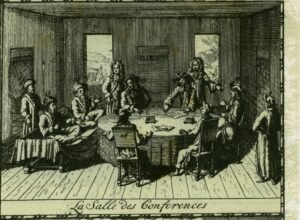
When Mehmed IV confirmed Vasvár in a 1664 ahidnâme, he pledged that his descendants would also observe it. At Sistova, documentary detail mattered again: one hour after the fourteen-article main peace was signed, a separate seven-article territorial agreement was signed without mediators.
FAQ
Why were the Ottoman–Habsburg wars fought?
Rival claims to the Hungarian throne after Louis II died at Mohács in 1526 brought the dynasties into conflict. Ottoman support for János Zápolya, competition over Transylvania and disputes over frontier fortresses sustained the struggle.
Why was 1683 a turning point?
The relief army commanded by Jan III Sobieski defeated the Ottoman forces besieging Vienna. The Holy League formed in 1684, and subsequent victories helped bring most of Hungary under Habsburg rule.
Did the Treaty of Karlowitz end the wars?
No. Karlowitz recognized Habsburg rule over most of Hungary and Transylvania in 1699, but further wars and territorial settlements followed. The sequence ended with the Treaty of Sistova in 1791.
What did Austria gain at Sistova?
Austria retained limited gains around Eski Hırsova and the Una. It returned most occupied territory, including Belgrade, under the settlement signed on 4 August 1791.
Sources
- Die Welt der Habsburger — A new great power in south-east Europe: The Ottoman Empire habsburger.net
- Wikipedia — Ottoman–Habsburg wars en.wikipedia.org
- Die Welt der Habsburger — Vienna: Episode 1 habsburger.net
- Die Welt der Habsburger — Military Frontier habsburger.net
- TDV İslâm Ansiklopedisi — Zitvatorok Antlaşması islamansiklopedisi.org.tr
- TDV İslâm Ansiklopedisi — Saint Gotthard Muharebesi islamansiklopedisi.org.tr
- TDV İslâm Ansiklopedisi — Vasvar Antlaşması islamansiklopedisi.org.tr
- Die Welt der Habsburger — Vienna: Episode 2 habsburger.net
- Die Welt der Habsburger — Prince Eugene habsburger.net
- Wikipedia — Treaty of Karlowitz en.wikipedia.org
- TDV İslâm Ansiklopedisi — Pasarofça Antlaşması islamansiklopedisi.org.tr
- Wikipedia — Treaty of Belgrade en.wikipedia.org
- TDV İslâm Ansiklopedisi — Savaş, Osmanlı Dönemi islamansiklopedisi.org.tr
- TDV İslâm Ansiklopedisi — Ziştovi Antlaşması islamansiklopedisi.org.tr
Image: 16th century Ottoman-Habsburg wars.png — Barjimoa, CC BY-SA 4.0