Diwali is India’s Festival of Lights, usually celebrated over five days, with small lamps symbolizing the victory of light over darkness. In northern Indian tradition, it commemorates Rama’s return to Ayodhya after 14 years of exile and his victory over Ravana. According to the legend, residents lit his way home with lamps.
Why does a festival associated with Rama also honor Lakshmi and carry different meanings for Jains and Sikhs? If you follow its lamps from the Ramayana to household preparations, you encounter several connected traditions. Its history includes a possible harvest origin, regional legends, and written references to lighting and gift giving.
What does Diwali mean?
The name Diwali comes from the Sanskrit word Deepavali, meaning “a row of lights.” The small clay lamps used during the festival are called diyas or dipas. Traditionally, they burn oil. Their arrangement gives visible form to the festival’s name.
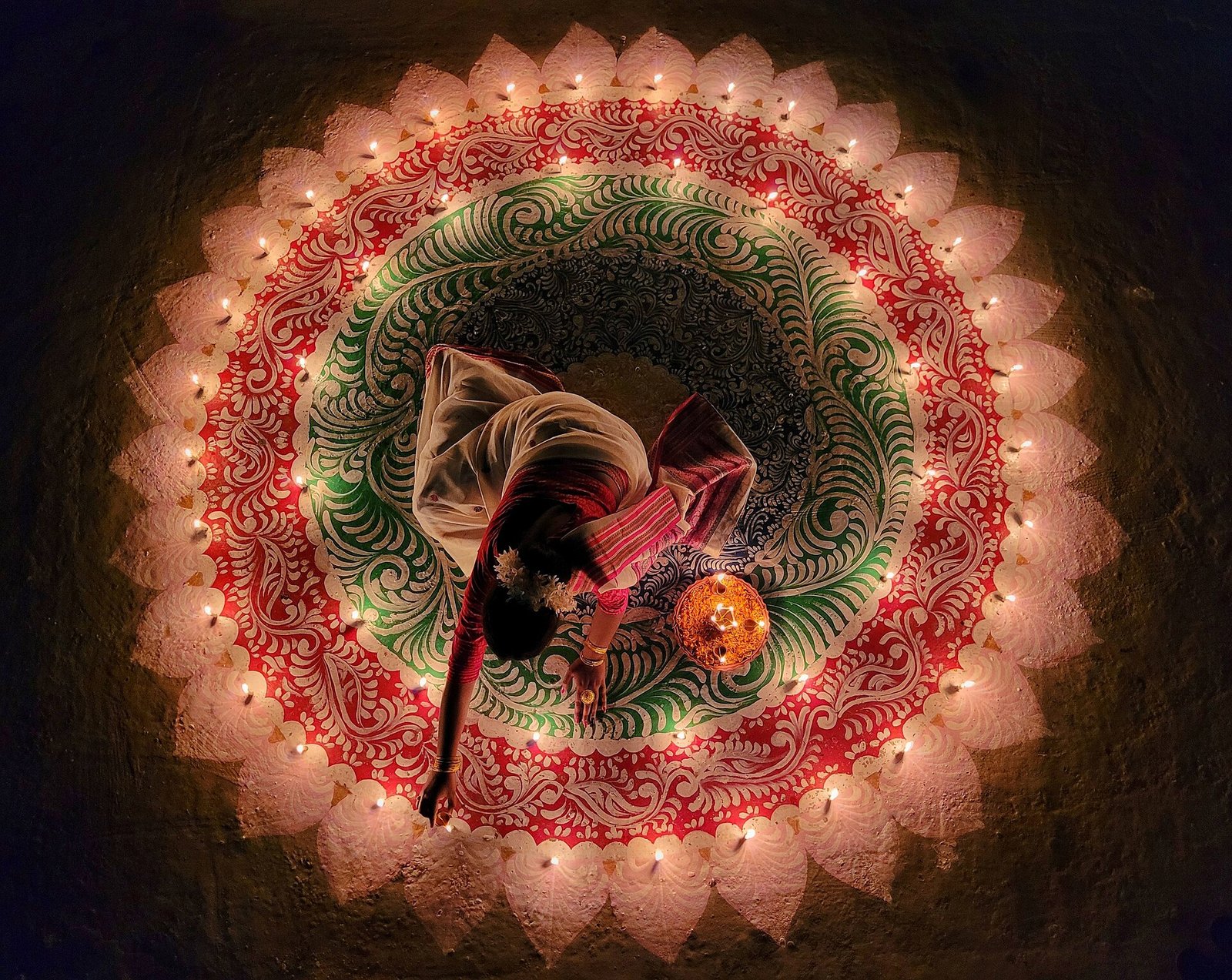
These lamps symbolize light overcoming darkness, goodness overcoming evil, and wisdom overcoming ignorance. On the festival evening, lamps are placed at windows, entrances, and on roofs. The lighting therefore connects a religious symbol with the spaces where people live.
In Turkish, the festival is also called Divali. If you encounter that spelling while reading in Turkey, it refers to the same Festival of Lights. The English greeting “Happy Diwali” corresponds to the Turkish festival greeting “Diwali Bayramınız kutlu olsun.”
What are the origins of Diwali?
One theory connects Diwali’s origins with the coming together of harvest festivals in ancient India. This remains an explanation of its possible development. In northern India, Rama’s return provides a prominent religious account of why the festival is celebrated.
The harvest theory and the Rama tradition address different aspects of the festival. One concerns how celebrations may have developed. The other connects the lamps with a homecoming in the Sanskrit epic Ramayana.
Regional traditions also connect Diwali with other divine figures. In southern India, one tradition commemorates Krishna’s defeat of the demon Narakasura. Lakshmi, the goddess associated with prosperity and good fortune, is widely worshipped during the festival. These associations help explain its range of religious meanings.
Why does Diwali celebrate Rama’s return?
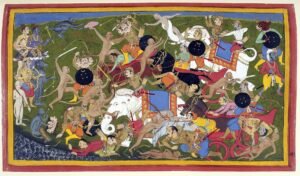
In the Ramayana legend, Ravana abducts Sita, Rama’s wife, while Rama is in exile. Ravana takes her to his kingdom in Lanka. Her abduction sets up the conflict that precedes the homecoming associated with Diwali.
Rama fights Ravana with help from his brother Lakshmana and Hanuman. He rescues Sita. In the northern Indian Diwali tradition, the return to Ayodhya follows this victory and the completion of Rama’s 14 years of exile.
According to the homecoming legend, the people of Ayodhya place lights outside their doors. The lamps help Rama and Sita find their way home. The festival’s lights thus connect the defeat of Ravana with the welcome awaiting the returning pair.
For you, the doorway offers an everyday-life link to the story: a light at an entrance helps someone find the way home. Diwali preparations still include placing lamps at entrances and windows. In the Rama legend, that familiar act becomes a welcome shared by Ayodhya’s residents.
When is Diwali, and why does its date change?
Diwali follows the Hindu lunisolar calendar. Its main night coincides with the new moon, so its date changes each year in the Gregorian calendar. It generally falls between mid-October and mid-November, on dates associated with the Hindu months of Ashvin and Kartika.
The celebrations usually last five days. Some regions observe six. In the widespread five-day arrangement, the main celebration falls on the third day and is associated with Lakshmi Puja, worship of Lakshmi.
An official calendar supplies one dated example. The Indian Comptroller and Auditor General’s Himachal Pradesh office listed Diwali as a holiday on Monday, 20 October 2025. That entry records the holiday for that year; the festival’s Gregorian date changes with its calendar cycle.
How do the five days connect with household life?
The first day, Dhanteras, involves cleaning homes and making purchases considered auspicious. Preparations also include buying new clothes and preparing special meals. These activities connect the festival with household work, food, and expectations of good fortune.
Rangoli adds another form of decoration. These floor patterns are made with fine colored powder or sand. Alongside the oil lamps placed around homes, they form part of Diwali’s visible preparations.
The main day in the common five-day sequence centers on Lakshmi Puja. Lakshmi represents prosperity and good fortune in Hindu tradition. Worship of her places those concerns alongside the lamps’ broader symbolism of goodness and wisdom overcoming evil and ignorance.
Annakut is associated with the fourth day. Its name means “mountain of food,” and the observance involves taking large quantities of food to a temple. The final day, Bhai Dhooj, celebrates the bond between brothers and sisters through visits and gifts.
Who celebrates Diwali beyond the Rama tradition?
Diwali is a major Hindu festival, but Jains, Sikhs, and Nepal’s Newar Buddhists also celebrate it with different religious meanings. The northern Indian account of Rama’s return therefore explains one prominent tradition within a wider festival.
For Jains, Diwali marks the nirvana of Mahavira, the 24th tirthankara, at Pavapuri. It is observed as Nirvana Day. This commemoration gives the festival a religious focus distinct from Rama’s journey to Ayodhya.
The Sikh celebration of Bandi Chhor Divas occurs during the Diwali period. It commemorates Guru Hargobind’s release from Mughal imprisonment. Its central event is liberation from prison, while the Rama tradition centers on victory and a return from exile.
Diwali also extends beyond India. It is celebrated in Sri Lanka, Nepal, Singapore, Malaysia, Mauritius, Fiji, Guyana, Suriname, and Trinidad and Tobago. The British Council lists Singapore, Malaysia, Mauritius, Fiji, and Trinidad and Tobago among countries where it is a public holiday.
Timeline
The chronology below separates the undated Rama legend from dated references and official recognition. You can use it to distinguish the festival’s sacred narrative from records of its observance.
- Undated legend: Rama returns to Ayodhya after 14 years of exile and victory over Ravana. Residents illuminate the way home with lamps.
- 7th century: Harsha’s Sanskrit play Nagananda mentions a Deepavali celebration involving lamps and gifts for newly engaged couples.
- 1799: William Jones’s study of the Hindu calendar names four days of the Diwali period and records lighting in honor of Lakshmi.
- 20 October 2025: The Indian Comptroller and Auditor General’s Himachal Pradesh office lists Diwali as an official holiday.
- 10 December 2025: Deepavali is inscribed on UNESCO’s Representative List of the Intangible Cultural Heritage of Humanity.
Details you won’t find in guidebooks
The reference in Harsha’s Nagananda brings together lamps and gifts for newly engaged couples. This seventh-century mention places a named Deepavali celebration in Sanskrit literature. Its details concern both illumination and a particular occasion for giving presents.
William Jones’s study, published in 1799, names four of the festival period’s five days. It also records trees and houses illuminated in Lakshmi’s honor. The lighting described there extends beyond doorways to both buildings and trees.
In Bengal, Odisha, and Assam, Diwali coincides with Kali Puja. Worship there honors the goddess Kali for protection and inner strength. This regional association adds another religious focus to a festival also connected with Rama, Krishna, and Lakshmi.
Deepavali’s inscription on 10 December 2025 made it India’s 16th element on UNESCO’s intangible heritage lists. The inscription concerns the living festival whose practices include lighting lamps, preparing homes, worship, visits, and gifts.
FAQ
What does Diwali mean?
Diwali comes from the Sanskrit word Deepavali, meaning “a row of lights.” Its small clay lamps symbolize light overcoming darkness, goodness overcoming evil, and wisdom overcoming ignorance.
Why is Rama’s return associated with Diwali?
In northern Indian tradition, Diwali commemorates Rama’s return to Ayodhya after 14 years of exile. According to the legend, residents placed lights outside their doors to guide Rama and Sita home.
When is Diwali celebrated, and how long does it last?
Diwali usually falls between mid-October and mid-November. Celebrations generally last five days, or six in some regions, and the main night coincides with the new moon.
Is Diwali celebrated only by Hindus?
Diwali is a major Hindu festival, but Jains, Sikhs, and Nepal’s Newar Buddhists also observe it with different religious meanings. Jain observances commemorate Mahavira’s nirvana, while Sikh Bandi Chhor Divas commemorates Guru Hargobind’s release from Mughal imprisonment.
Sources
- Asian Art Museum — Celebrate Diwali asianart.org
- Smithsonian National Museum of Asian Art — The Epic that Inspired Diwali asia.si.edu
- English Wikipedia — Diwali en.wikipedia.org
- Turkish Wikipedia — Divali tr.wikipedia.org
- British Council — Diwali learnenglish.britishcouncil.org
- American University — What to Know About Diwali american.edu
- Press Information Bureau, India — Deepavali static.pib.gov.in
- Ministry of Tourism, India — Incredible India: Diwali incredibleindia.gov.in
- UNESCO — Deepavali Inscribed unesco.org
Image: Woman lighting the candles for the Festival of Lights in India (cropped).jpg — Original: AjoyDutta1997
Derivative work: Aristeas, CC BY-SA 4.0