Grace O’Malley was an Irish maritime leader who gained power through family lands, marriage ties, trade and armed raids along Ireland’s western coast. She met Elizabeth I to seek freedom for her detained son and brother and protect her family’s income. The Dictionary of Irish Biography dates their meeting to September 1593.
The woman also known as Gráinne Ní Mháille and Granuaile traded with Spain, commanded galleys and negotiated with royal officials. If you follow those activities, the meeting becomes more than a dramatic encounter between two powerful women. Her castles, payments and petitions explain what brought her to Elizabeth.
How did Gráinne O’Malley gain power on Ireland’s western coast?
Born around 1530, Gráinne was the daughter of Eoghan Dubhdarra O’Malley, ruler of Umhall in Mayo. Maritime knowledge came through her family. Royal Museums Greenwich states that her father, a clan chief, trained her in seafaring.
Property also mattered. Gráinne was the sole heir to her mother’s lands in the Owles region. Her position therefore rested on more than her father’s standing or her own command at sea. Land inheritance formed part of the foundation of her power.
The Ó Máille family built seaward-facing castles around Clew Bay to maintain its authority. These strongholds placed coastal property beside the waters on which the family operated. When you picture her power, a castle and a ship belong in the same scene.
Around 1546, Gráinne married Domhnall an Chogaidh O’Flaherty. They had three children. Around 1566, she married Richard an Iarainn Burke. Family property and marriage connections were both elements of a career that also depended on maritime activity.
According to Heritage Ireland, she settled at Rockfleet Castle in 1567, a year after her second marriage. Rockfleet became a base associated with her operations. A Galway fleet sent to stop her maritime activities attempted to besiege the castle, but failed.
How did maritime trade, raiding and clan politics intersect in her career?
Gráinne’s ships carried both commercial and military ambitions. The National Maritime Museum of Ireland records regular trading voyages to Spain. She also targeted ships along Ireland’s western coast with her galleys.
The label Pirate Queen captures the raiding side of that career. Yet the Spanish voyages place trade alongside attacks on shipping. You get a fuller picture by keeping both activities in view: the same maritime career included commerce, armed force and negotiations over money.
The Ó Máille clan also collected compulsory payments known as black rent from English fishermen working off its coast. Fishing, coastal authority and enforced payment thus overlapped. Control of the shore could produce income from people using the surrounding waters.
In March 1576, Gráinne took Henry Sidney and his entourage around Galway Bay aboard her ship. She charged for the journey. This paid outing offers a concrete example of her dealing with an official through a maritime service.
Money could also be negotiated through livestock. In January 1583, men acting for Theobald Dillon demanded £600 in tax arrears. Gráinne appeased them with 300 cattle. Ships were only one part of an economic world that also involved land, taxation and herds.
Her vessels served clan conflict as well. During the Burke rising of 1589, she transported Scottish military reinforcements by sea. The ships used in her coastal career could therefore carry soldiers as well as support commerce and raiding.
Why did she seek a meeting with Elizabeth I?
Richard Bingham became governor of Connacht in 1584. Under his administration, the destruction of Gráinne’s fleet and confiscation of her property damaged the resources behind her authority. These losses formed the economic background to her appeal to Elizabeth.
Family danger made the appeal urgent. In 1593, Bingham accused her son Theobald of treason and detained her brother Domhnall. Gráinne travelled to London to seek their freedom. Her mission combined the release of relatives with the protection of her livelihood.
Her 1593 petition requested income for her support and freedom to attack Elizabeth’s enemies. That request connected her maritime capabilities to the queen’s interests. She sought both maintenance for herself and permission to continue armed activity under those terms.
The everyday connection is a household budget. If you lose the assets that provide your income, paying for daily life becomes a pressing concern. Gráinne’s petition addressed that practical problem: her fleet and property had suffered, and she asked for the means to support herself.
Before the meeting, she answered 18 written questions sent by Lord Burghley. Those answers are among the principal documents for her life. They give the encounter a substantial written foundation alongside the petition and the subsequent royal instructions.
The Dictionary of Irish Biography places the audience in September 1593. Royal Museums Greenwich gives September 1594. The September 1593 royal instructions and the release of the prisoners later that year support using 1593 for the sequence presented here.
Elizabeth intervened after the meeting. Bingham released the prisoners in late November or early December 1593. The queen’s September instructions also provided for income from Gráinne’s sons’ estates and protection of the family’s maintenance.
Gráinne’s dealings with the crown continued beyond the audience. In August 1597, she and her sons Theobald and Murchadh received £200 for services to the English crown. That payment belongs beside the earlier military transport and raiding when considering her political career.
Which stories about the Pirate Queen are documented, and which are later legends?
The strongest documentary core includes Gráinne’s petition, her answers to Burghley’s questions and Elizabeth’s instructions. The prisoners’ release gives a concrete outcome to the appeal. These records explain the meeting through family freedom, property and income.
The language of the conversation remains disputed. Royal Museums Greenwich presents the account that Gráinne and Elizabeth spoke Latin. The National Maritime Museum of Ireland presents Anne Chambers’s view that they spoke English. Neither version should be presented as an uncontested detail.
Other familiar scenes require similar care. Stories say Gráinne refused to bow, carried a concealed dagger and threw a handkerchief into a fire. Anne Chambers’s assessment, reported in the account of her life, treats these as later additions.
The childhood haircut story also belongs to anecdote. It describes Gráinne cutting her hair to try to join her father’s voyage to Spain. The Dictionary of Irish Biography presents it as an anecdote, rather than a verified episode in her early maritime training.
Even her final years need cautious wording. Gráinne is thought to have died around 1603, possibly at Rockfleet. The precise year and place remain disputed. Her documented career is firmer ground than a definite death scene.
Timeline
- Around 1530: Gráinne was born.
- Around 1546: She married Domhnall an Chogaidh O’Flaherty.
- Around 1566: She married Richard an Iarainn Burke.
- 1567: According to Heritage Ireland, she settled at Rockfleet.
- March 1576: She took Henry Sidney and his entourage around Galway Bay aboard her ship and charged for the journey.
- 1584: Richard Bingham became governor of Connacht.
- September 1593: She met Elizabeth I, according to the Dictionary of Irish Biography.
- Late 1593: Her detained son and brother were released.
- August 1597: She and her sons received payment for services to the English crown.
- Around 1603: She probably died, possibly at Rockfleet.
Details you won’t find in guidebooks
Rockfleet’s relationship with the sea is physical. The castle has four storeys, and seawater reaches its walls at high tide. For a reader picturing Gráinne’s base, that detail brings her residence and maritime activity into the same narrow space.
Her inheritance through her mother also deserves attention. As sole heir to the Owles lands, she had a property connection distinct from being the daughter of Umhall’s ruler. Both parental backgrounds matter when tracing the resources behind her career.
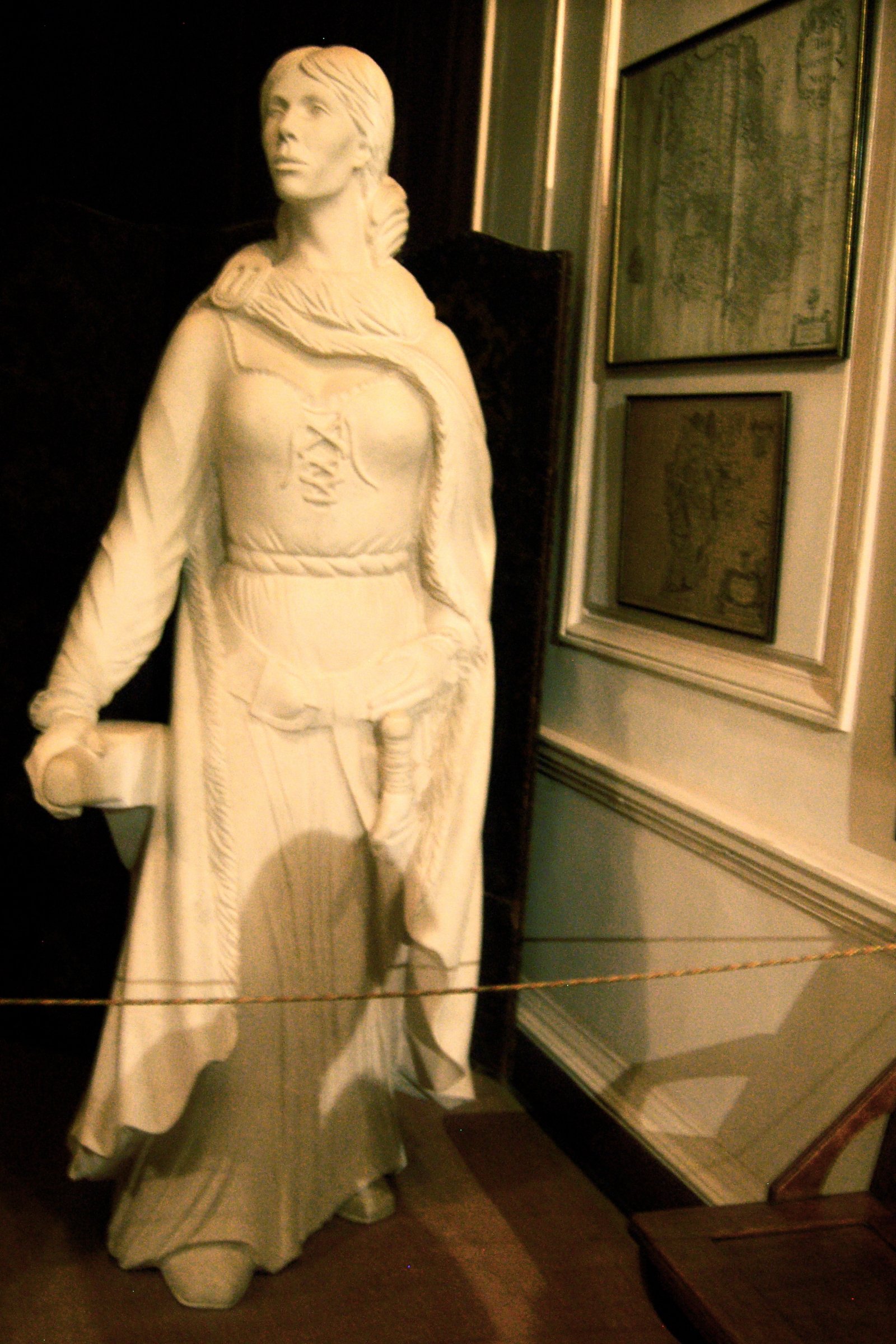
There is no known depiction of Gráinne made during her lifetime. You can trace her demands through written documents, but a surviving contemporary likeness does not establish her appearance. The petitions provide a firmer connection to her than an imagined portrait.
FAQ
Who was Grace O’Malley?
Grace O’Malley, also known as Gráinne Ní Mháille and Granuaile, was a maritime leader from western Ireland. Her power rested on family property, marriage connections, trade and armed raids.
Why did Grace O’Malley meet Elizabeth I?
She sought the release of her son Theobald and brother Domhnall, whom Richard Bingham had detained. She also wanted income to support her family and permission to attack Elizabeth’s enemies.
When did Grace O’Malley meet Elizabeth I?
The Dictionary of Irish Biography dates the meeting to September 1593. Royal Museums Greenwich gives September 1594, although the royal instructions and the prisoners’ release belong to 1593.
Did Grace O’Malley speak Latin to Elizabeth I?
The accounts differ. Royal Museums Greenwich repeats the Latin account, while the National Maritime Museum of Ireland presents Anne Chambers’s view that they spoke English.
Sources
- Dictionary of Irish Biography — O’Malley, Gráinne dib.ie
- Royal Museums Greenwich — Were there female pirates? rmg.co.uk
- Heritage Ireland — Rockfleet Castle heritageireland.ie
- National Maritime Museum of Ireland — Grace O’Malley mariner.ie
Image: Westport House – Alabaster Statue of Grace O'Malley (Granuaile) (1530-1603) – geograph.org.uk – 3754514.jpg — Joseph Mischyshyn, CC BY-SA 2.0