You may know the Caspian Sea by its Turkish name, Hazar Denizi. That name is a leftover of a state that ruled the lands north of it for about three centuries. The Khazars controlled trade routes, ran a two-part government and, according to many scholars, saw their ruling family adopt Judaism. Much of the story is still argued over. This article separates what is documented from what is only claimed.
Who Were the Khazars?
The Khazars were a multi-ethnic confederation in Eastern Europe. According to Encyclopaedia Iranica, a Turkic tribe of the same name ruled it. Under that rule lived Turkic, Iranian, Slavic, Finno-Ugric and North Caucasian communities.
The state is usually called the Khazar Khaganate. It became independent between about 630 and 650, as the Western Turk world broke apart. It remained a major regional power until the second half of the 10th century (Peter B. Golden, YIVO Encyclopedia).
You should picture a mixed society, not one nation. The people who ruled were Turkic. Many of the people they ruled were not.
What Does “Khazar” Mean?
The meaning of the name is not settled. One explanation links it to a hypothetical Turkic root qaz-, read as “to wander”. András Róna-Tas objects that this root is not an attested word.
The name itself is easy to find on a Turkish map. It lives on in Hazar Denizi, the Caspian Sea. If you look at a weather forecast or a regional map in Turkey, you are reading a name the Khazars left behind.
The language of the Khazars is also only partly known. Most of the surviving titles, personal names and place names are Turkic. Golden notes, however, that these fragments do not show which branch of Turkic the language belonged to.
Khazar Origin: Where Did They Come From?
Many scholars think the ruling dynasty came from the Ashina family of the Göktürks. This view is common, but not proven. Constantin Zuckerman treats the link with doubt. Golden’s suggestion of Irbis Seguy as founder is not an established fact.
What is clear is the setting. The Khazar state grew out of the Western Turk world as it fragmented. At first its center of gravity lay around the Terek River. Later it moved to the lower Volga (İdil) and spread across the Volga, Ural (Yayık), Don and Kuban basins (Ahmet Taşağıl, TDV İslâm Ansiklopedisi).
Khazar Empire: Borders and Trade Routes
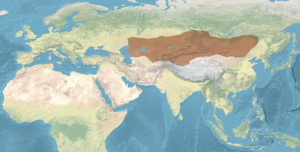
The area under Khazar control changed over time. At different periods it stretched from the steppes of Ukraine to the region near the Ural River. It also reached from the Middle Volga to the North Caucasus and Crimea (Golden).
Trade explains much of the state’s power. The Khazar land controlled the Volga trade route between the Islamic world and Scandinavia. It also controlled the caravan route from Khwarezm to the Black Sea coast (Taşağıl, Türk Dünyası Ansiklopedisi).
Here is a concrete example of how the state defended its position. The fortress of Sarkel stood on the Don River. The Internet Encyclopedia of Ukraine dates its construction to 835 and says Byzantine craftsmen helped build it.
The government was also unusual. A sacred khagan stood at the top. Beside him, a second ruler handled the actual running of the state. This dual system was the basic feature of Khazar rule.
Timeline
- c. 630–650: The Khazar political structure separates from the Western Turk world and becomes independent.
- Mid-8th century: Itil becomes the Khazar capital.
- 8th–9th centuries: The main period proposed for the dynasty’s turn to Judaism. The exact date is disputed.
- 835: Sarkel is built with Byzantine help, according to the Internet Encyclopedia of Ukraine.
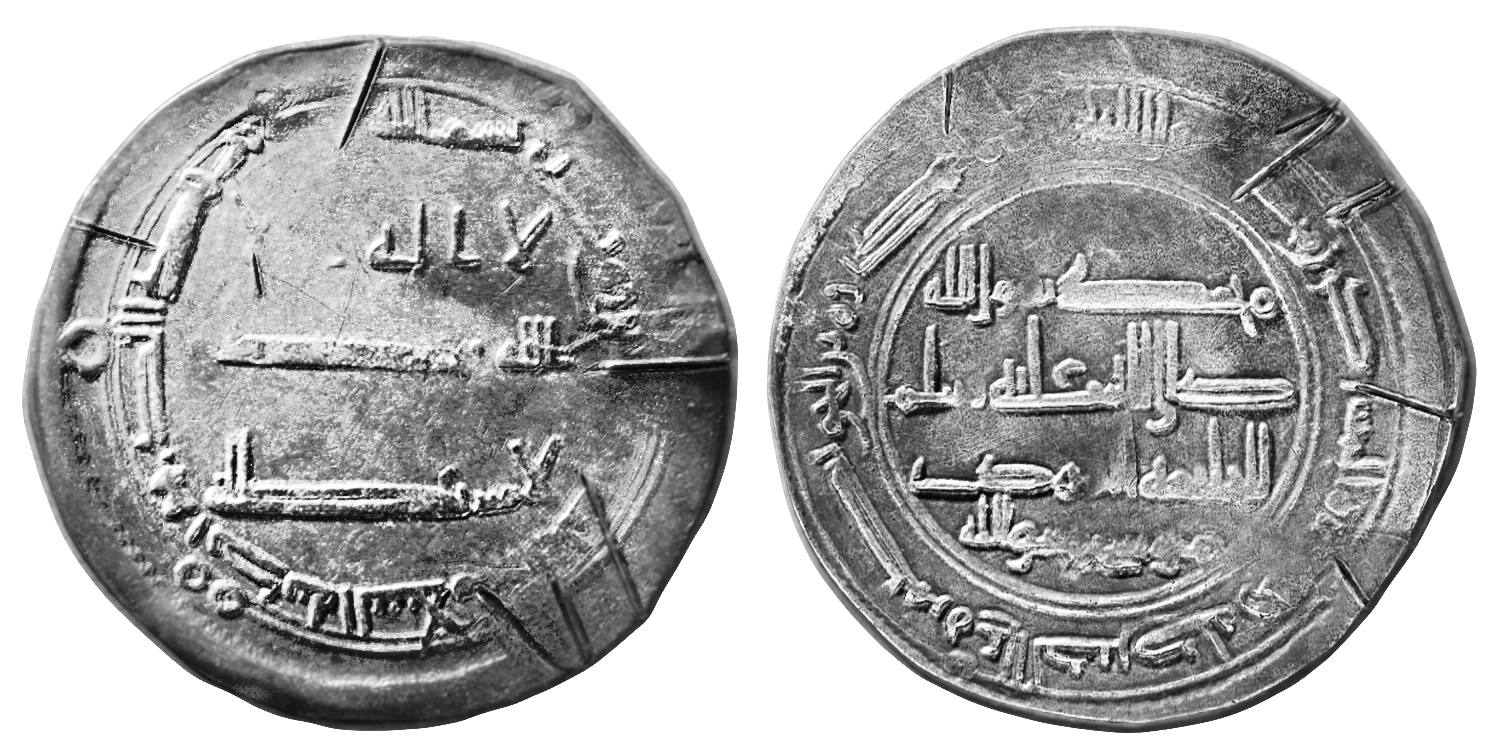
- 837–838: The coin bearing the name of Moses is struck. It is attributed to the Khazars.
- Second half of the 960s: Rus campaigns bring about the breakup of the Khazar state.
- 1079: Russian chronicles record the activity of Khazars in Tmutorokan.
- 2019–2020: Researchers identify a settlement of about 150 hectares near Semibugry as a candidate for Itil.
Khazars and Judaism: What Do We Know?
This is the part most readers come for. Encyclopaedia Iranica says the Khazar dynasty adopted Judaism in the 9th century. It also says the extent of the change in society is unknown.
That last point matters. A king’s choice is not the same as a nation’s choice. Even the best-known story of the conversion, the choice of Bulan, rests on a tradition of religious debate. It is preserved in the reply of the Khazar ruler Joseph, and it does not show that the whole population changed religion at once (Encyclopaedia Judaica).
When Did It Happen?
There is no agreed date. Yehuda Halevi wrote around 1140 and placed the conversion near 740. Some researchers suggest a time after 860. The two positions are more than a century apart.
Is the Story Even True?
Moshe Gil rejected the conversion narrative in a 2011 article. He argued that Arabic sources had been misread. Encyclopaedia Iranica does not find this rejection convincing. So the mainstream view still holds that the dynasty did adopt Judaism.
Why Did the Khazars Convert to Judaism?
The tradition gives a religious reason. It centers on Bulan, who is said to have chosen Judaism after a debate among representatives of different faiths. The account is preserved in Joseph’s reply to Hasdai ibn Shaprut.
Treat this as a tradition, not as a record of what happened in the room. It shows how the Khazars later told the story of their own religious choice.
Khazar Religion: A Mixed Picture
Judaism was not the only faith in Khazar lands. Tengrism, Christianity and Islam were all present. So “the Khazars were Jewish” is too simple. A better statement is that the ruling house adopted Judaism within a religiously mixed state.
Khazars in the Bible?
The Khazars do not appear by name in the Torah. Joseph, in his reply to Hasdai ibn Shaprut, linked his people to Kozar, son of Togarmah. This is a medieval family tree. It does not mean the Khazars are named in the Bible.
Itil: The Capital
Itil was the Khazar capital from the mid-8th century to the late 10th century. It lay in the Volga delta, north of the Caspian Sea, in what is now southern Russia.
Some details are not in standard guidebooks. They are reported in accounts of the city.
Details You Won’t Find in Guidebooks
- A court with seven judges. Itil is described as having two Jewish, two Christian and two Muslim judges for disputes. A seventh judge heard cases of people of other faiths.
- Palaces on an island. The residences of the khagan and the bey stood on an island between the city’s two main parts. A floating bridge linked the island to the shore.
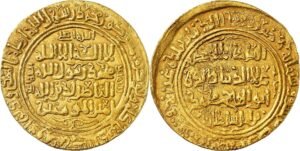
- A coin with Moses on it. A 837–838 imitation Arab coin found in Sweden is attributed to the Khazars. It says Moses, not Muhammad, is the messenger of God.
- A fortress under a lake. Mikhail Artamonov’s teams excavated Sarkel in the 1930s and the late 1940s. The site later disappeared under the Tsimlyansk Reservoir.
Where Was Itil, Exactly?
The exact location is still not proven. In 2020 the Russian Geographical Society presented a settlement of about 150 hectares near Semibugry as a candidate. It had been identified during research in 2019 and 2020. It is a candidate, not a confirmed capital.
Dmitriy Vasilyev’s 2015 study takes up a different site. He identifies the Samosdelka settlement in the Volga delta with Saksin. He links its pottery to Oghuz, Bulgar, Suvar and Khazar communities.
How Did the Khazar State End?
By 969, the ruler of Kiev, Svyatoslav, and his allies had captured Itil. This played a decisive role in the breakup of the khaganate (Wikipedia, Khazars).
Khazars did not vanish at once. Russian chronicles record that in 1079 the Khazars in Tmutorokan seized Prince Oleg Svyatoslavich and handed him over to the Byzantine emperor.
After the khaganate fell, the Khazars mixed with other Turkic groups and the Cumans. They withdrew from history as a separate people.
Khazars Today
No community today can be clearly named as Khazar descendants. Behar and colleagues note this in their 2013 study. They say it makes direct tests of genetic ancestry claims hard.
The same study looked at the claim that Ashkenazi Jews are largely of Khazar origin. The team analyzed 1,774 samples from 106 communities. They found no clear genetic contribution from the Khazar region.
So the Khazars remain a historical people with a living trace in one name: the Caspian Sea, Hazar Denizi.
FAQ
Were the Khazars Jewish?
Their ruling dynasty adopted Judaism, according to Encyclopaedia Iranica, which dates the step to the 9th century. How far the change reached into ordinary society is unknown. Tengrism, Christianity and Islam were also present in Khazar lands.
Are the Khazars mentioned in the Bible?
Not by name. The Khazar ruler Joseph, in his reply to Hasdai ibn Shaprut, traced his people to Kozar, a son of Togarmah in the Torah. That is a medieval genealogy, not a biblical mention of the Khazars.
Where do the Khazars live today?
There is no clearly identifiable Khazar population. After the khaganate fell, the Khazars mixed with other Turkic groups and the Cumans and disappeared as a separate people. Their name survives in the Turkish name of the Caspian Sea, Hazar Denizi.
When did the Khazars convert to Judaism?
Scholars disagree. Yehuda Halevi, writing around 1140, puts the conversion near 740. Some researchers prefer a date after 860.
Sources
- Peter B. Golden, “Khazaria,” YIVO Encyclopedia of Jews in Eastern Europe encyclopedia.yivo.org
- “Khazars,” Encyclopaedia Iranica iranicaonline.org
- Ahmet Taşağıl, “Hazarlar,” TDV İslâm Ansiklopedisi islamansiklopedisi.org.tr
- Ahmet Taşağıl, “Hazarlar,” Türk Dünyası Ansiklopedisi turkdunyasiansiklopedisi.gov.tr
- “Khazars,” Internet Encyclopedia of Ukraine encyclopediaofukraine.com
- “Khazars,” Wikipedia en.wikipedia.org
- “Atil,” Wikipedia en.wikipedia.org
- “Bulan,” Encyclopaedia Judaica, via Encyclopedia.com encyclopedia.com
- Moshe Gil, “Did the Khazars Convert to Judaism?” (2011) doi.org
- Behar et al., Human Biology (2013), PubMed abstract pubmed.ncbi.nlm.nih.gov
- Russian Geographical Society, announcement on the Itil excavations (2020) rgo.ru
- Dmitriy Vasilyev, “The City of Saksin” (2015), Kazan University publication abstract ceeol.com
Image: Mosemyntet high contrast.png — Unknown authorUnknown author, Public domain