Two English settlements were planted on Roanoke Island, in today’s North Carolina. The second one, led by John White in 1587, is the one people mean by the “Lost Colony.” When White came back in 1590, the houses were gone and the people with them. This article walks through what is known, what is guessed, and what you can still visit.
Roanoke Colony founded: two attempts, not one
The colony began under Queen Elizabeth I with the backing of Walter Raleigh. It was an English attempt to settle on Roanoke Island.
It happened in two stages. Ralph Lane led the first colony in 1585. John White led the second in 1587. People often blend them into one story, but they were separate efforts.
The first group did not last. Short of food and in conflict with native communities, its settlers sailed home in 1586 on Francis Drake’s ships. Richard Grenville then left a group of 15 people on Roanoke. The settlers who arrived in 1587 never reached the survivors of that group.
How the 1587 colonists ended up on Roanoke
Here is a twist. Roanoke was not the goal. White’s group meant to found a colony farther north, on Chesapeake Bay.
In July 1587, Captain Simon Fernandes said the season was too far along. He refused to take the group to the Chesapeake. The settlers stayed on Roanoke instead.
The National Park Service describes the starting group as 118 men, women and children. English Wikipedia gives about 115 who agreed to join. Neither number is a precise census of the people who vanished, so treat “115” as an estimate.
A baby, a promise and a voyage home
On 18 August 1587, Virginia Dare was born on Roanoke. She was the daughter of Eleanor, White’s daughter, and Ananias Dare. She is recorded as the first English child born in America.
She was not alone. An unnamed child of the Harvie family was also born in the colony in 1587.
The colony then asked White to return to England for food and more settlers. He left in late August 1587.
Think of a flatmate who heads out for supplies and says, “If we move, I’ll leave a note saying where.” White and the settlers made a similar deal. If they left Roanoke, they would carve their destination on a tree. If they were forced out, they would add a Malta cross as a sign of danger.
Roanoke Colony disappearance: why White was delayed
White did not come back for three years. In 1588 the Spanish Armada threatened England, and ships were kept at home for defence. That delayed any help for Roanoke.
His own 1588 attempt to send relief also failed. Pirates took his supplies.
White finally reached Roanoke on 18 August 1590. He found the settlement empty. That date matters, because it means the colonists left at some unknown moment between August 1587 and August 1590.
Roanoke Colony Croatoan: the clue left behind
White found two carved messages. One was the letters CRO cut into a tree. The other was the word CROATOAN carved on a post of the defensive fence.
Croatoan was the name of a native community. It was also the name of the island now called Hatteras Island.
The agreed danger sign, the Malta cross, was not there. White therefore thought the settlers might be alive. He also described the houses as taken apart, not smashed. That suggests a planned move, not an attack.
He wanted to sail to Hatteras and search. A storm stopped the voyage, and he went back to England.
Timeline
- 1585: Ralph Lane’s first English colony is founded on Roanoke Island.
- 1586: The first colonists return to England on Francis Drake’s ships.
- July 1587: John White’s group cannot go on to Chesapeake Bay and settles on Roanoke.
- 18 August 1587: Virginia Dare is born.
- Late August 1587: White leaves for England to fetch aid and supplies.
- 1587–1589: Tree rings later show an extreme drought in the region.
- 1588: The Spanish Armada threat and a failed relief attempt delay his return.
- 18 August 1590: White finds the empty settlement, with CRO and CROATOAN carved.
- 1998: Science publishes the tree-ring drought study.
- 2012: British Museum experts spot a fort symbol under a patch on White’s map.
- 2020: Archaeologists debate whether Site X and Site Y finds belong to the colonists.
- 4 June 2026: The First Colony Foundation claims to have found the colony’s scattered settlements along the Chowan River.
Roanoke Colony theories: where did they go?
No single answer has won. These are the main ideas.
They joined the Croatoan people. The carved name points to Hatteras. But the National Park Service says no grave, human remains or settlement has been firmly tied to the colonists. A sword hilt and a gun part dug up on Hatteras are from the 16th century. Excavation director Mark Horton said they came from a 17th-century context and could be later trade goods. So they do not settle it.
Drought hit them. A 1998 tree-ring study in Science found that 1587–1589 was the most severe three-year drought in an 800-year reconstructed record for the region. Its authors argued that drought may have played a part in Roanoke’s fate. Tree rings do not show that the colonists died, or where they went.
A hurricane destroyed the colony. The National Park Service argues against this. White saw dismantled structures in 1590, not storm damage.
They split up and moved inland. This is the idea behind the newest claims. It leads to the next section.
Roanoke Colony map: the patch that changed the search
The British Museum holds White’s map La Virginea Pars, made around 1585–1590. It measures 478 × 235 millimetres. It shows the coast from Chesapeake Bay down to Cape Lookout.
In 2012, British Museum experts found a fort symbol hidden under a paper patch. It lay west of Albemarle Sound. The find guided research in Bertie County.
Roanoke Colony solved? The 2026 claim and its critics
On 4 June 2026, the First Colony Foundation published a statement on its Site X and Site Y finds. It presented them as evidence that colonists settled on scattered farms along the Chowan River.
The claim is not accepted as proof. In its 2020 assessment, National Geographic quoted archaeologists who raised two problems. The pottery could have come from later Jamestown traders. And the soil had been mixed by later farming.
So the honest answer to “Roanoke Colony mystery solved?” is this. There are strong clues for a planned move, and a new claim to test. There is no agreed ending.
Details you won’t find in guidebooks
- The colony was never meant to be at Roanoke. The target was Chesapeake Bay, and a captain’s worry about the season changed the course of history.
- After White’s men avenged the killing of settler George Howe in 1587, they attacked the friendly Croatoan people by mistake. Manteo, a Croatoan man, stopped the attack.
- White’s 1588 rescue plan failed because pirates took his supplies.
- When White returned in 1590, seven sailors drowned in bad weather and dangerous landing conditions.
- The “115” figure is an estimate. The National Park Service counts 118 at the start.
Roanoke Colony today: visiting Fort Raleigh
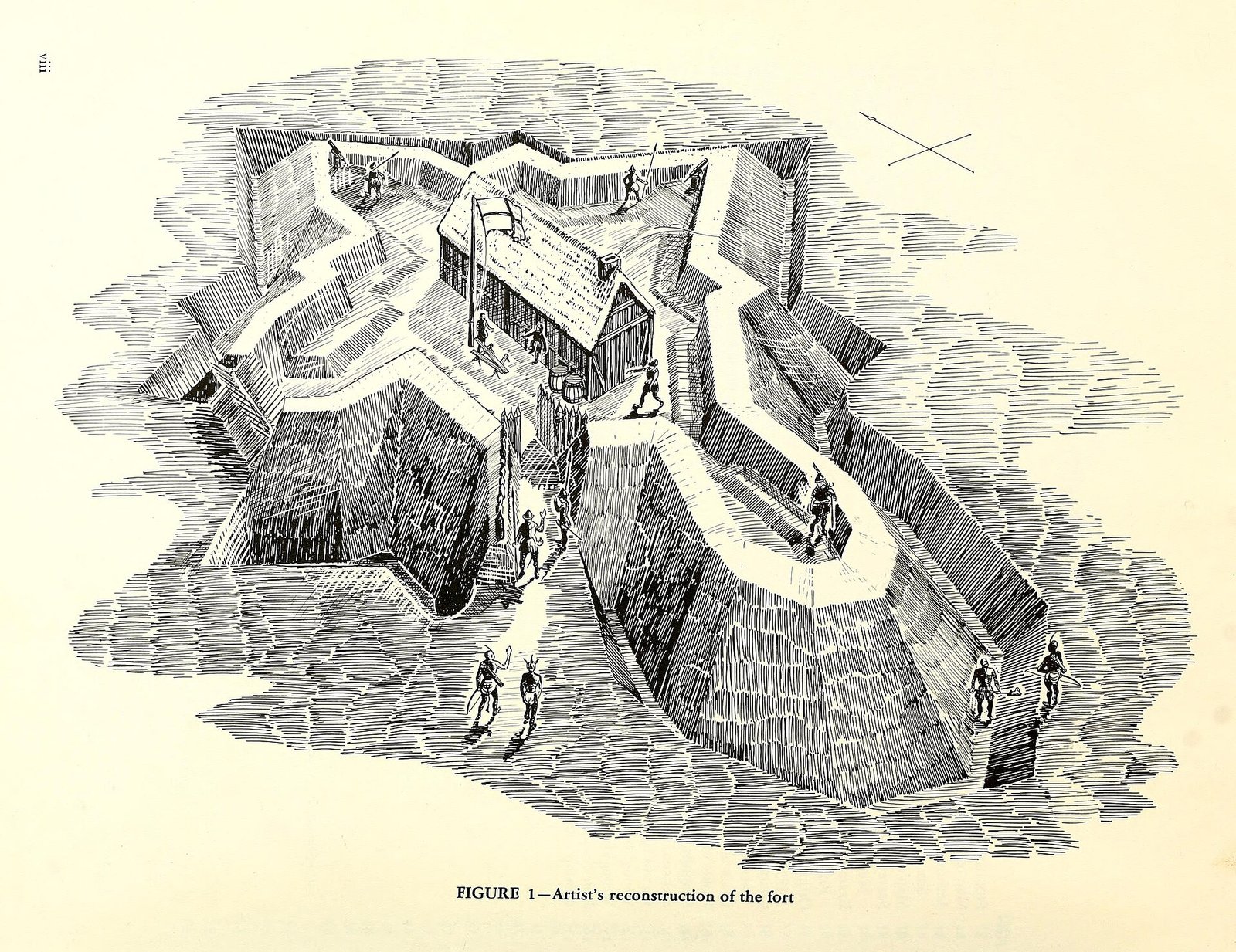
You can see the area for yourself. Fort Raleigh National Historic Site is linked to the colony. It sits at the north end of Roanoke Island. It is about 6.4 kilometres north of the town of Manteo, North Carolina.
If you are planning a trip, the National Park Service site has directions and a visitor brochure. Standing there, you are in the area tied to the story of Virginia Dare’s birth and White’s discovery of the word CROATOAN.
FAQ
How many people disappeared from the Roanoke Colony?
English Wikipedia gives about 115 people who agreed to join the 1587 colony. The National Park Service describes the starting group as 118 men, women and children. Neither figure is an exact count of the missing.
Has the Roanoke Colony mystery been solved?
Not in a way historians accept as final. In June 2026 the First Colony Foundation said its finds show the colonists spread over farms along the Chowan River. Archaeologists quoted by National Geographic in 2020 warned that the pottery could come from later Jamestown traders.
What does CROATOAN mean?
Croatoan was the name of a native community and of the island now called Hatteras Island. John White saw the word carved on a post of the settlement’s defensive fence in 1590.
Where was the Roanoke Colony?
It stood on Roanoke Island in today’s North Carolina. Fort Raleigh National Historic Site, at the north end of the island, lies about 6.4 kilometres north of the town of Manteo.
Why did John White not return sooner?
In 1588 the Spanish Armada threatened England, and ships were kept for defence. His 1588 relief attempt also failed when pirates seized his supplies.
Sources
- English Wikipedia — Roanoke Colony en.wikipedia.org
- Türkçe Vikipedi — Roanoke Kolonisi tr.wikipedia.org
- National Park Service — Fort Raleigh Brochure home.nps.gov
- National Park Service — 1587: The Lost Colony nps.gov
- National Park Service — 1590 Rescue Voyage home.nps.gov
- National Park Service — Major Theories of the Lost Colony nps.gov
- National Park Service — Fort Raleigh Administrative History govinfo.gov
- National Park Service — Directions nps.gov
- North Carolina Department of Natural and Cultural Resources — Origins of the Lost Colony Mystery dncr.nc.gov
- Stahle et al. — The Lost Colony and Jamestown Droughts researchgate.net
- College of William and Mary — Extreme Droughts Played Major Role in Tragedies at Jamestown, Lost Colony eurekalert.org
- British Museum — La Virginea Pars, 1906,0509.1.3 britishmuseum.org
- First Colony Foundation — Testing Continues at Site X firstcolonyfoundation.org
- First Colony Foundation — How First Colony Foundation Found the Lost Colony of Roanoke firstcolonyfoundation.org
- National Geographic — Newfound survivor camp may explain fate of the famed Lost Colony of Roanoke nationalgeographic.com
Image: Fort Raleigh (artist’s reconstruction).jpg — Uncredited, Public domain