Who was Haji Bektash Veli?
Haji Bektash Veli was a Turkmen sheikh. He lived in 13th-century Seljuk Anatolia. The Bektashi order honors him as its pir, its spiritual guide.
The Turkish Literature Dictionary of Ahmet Yesevi University says he was born and raised in Nişabur, a city of Khorasan. Âşıkpaşazâde tells how he came to Anatolia from Khorasan with his brother Menteş.
He spent much of his life in Sulucakarahöyük. Today that place is the Hacıbektaş district of Nevşehir. He died there, and the town still carries his name.
Haji Bektash Veli’s dates: why they are disputed
No single set of dates is settled. Turkish Wikipedia gives 1209–1271. The Turkish Literature Dictionary is more careful. It writes the birth as 1207? and the death as 1271?, with question marks.
The Culture Portal’s museum page passes on a different range, 1248–1337. That contradicts the 1209–1271 range. So it cannot be treated as firm biography.
If you see 1271 on a sign, read it as the widely used date, not a proven one.
Who influenced Haji Bektash Veli?
Ahmet Yaşar Ocak relies on the records of Elvan Çelebi, Eflâkî and Âşıkpaşazâde. He counts Haji Bektash among the caliphs of Baba İlyâs-ı Horasânî. A caliph here means a deputy and successor in a Sufi line.
A legend adds another name. It says Ahmed Yesevî sent Haji Bektash to Anatolia. English Wikipedia points out that a direct link between the two is not possible chronologically.
That is a good example of how legend and record mix in this story.
Was he the founder of the Bektashi order?
The tradition puts him first. Ocak sees it differently. He argues that the order’s known institutional form was created in the early 16th century by Balım Sultan.
So Haji Bektash is the pir, the name the order looks back to. The organized order, as Ocak reads it, took shape about three centuries later.
Haji Bektash Veli’s books: the Vilâyetnâme and the Makâlât
Two texts matter most.
The Vilâyetnâme is the main collection of stories about him. It was written down in the last quarter of the 15th century. That is not his own century, the 13th. Treat its miracle tales as later tradition.
The Makâlât is his best-known work. Esad Coşan’s critical edition came out in 1986. The text is attributed to Haji Bektash. Ocak notes that historians have not proven it came directly from his pen.
Nesrin Sofuoğlu studied it in a 2021 article. She says the book covers:
- tevhid, the oneness of God
- faith
- marifet, spiritual knowledge
- the creation of the human being
- the struggle against Satan
She explains its main aim as educating the reader in belief, worship and ethics. The goal is to bring a person to the level of insân-ı kâmil, the complete human.
His teaching: Four Gates, Forty Stations
The Makâlât is the source of the Four Gates, Forty Stations teaching. There are four gates: şeriat, tarikat, marifet and hakikat. Each gate holds ten stations.
That makes forty steps in all. The idea is a path with stages. A person grows one station at a time.
If you search for his sayings, check each against the Makâlât and its editions.
Did he marry? Two branches disagree
Even his private life is contested. The Babagân branch says Haji Bektash died unmarried. The Çelebiler branch says he married Kadıncık Ana.
Both branches belong to the tradition. The sources do not settle the matter.
Haji Bektash Veli and the janissaries
People often link him to the Ottoman janissaries. The evidence is more careful than the popular claim.
Âşıkpaşazâde rejects a direct tie. He denies that Haji Bektash met Ottoman rulers. He also denies that the janissary cap, the börk, came from him.
The documented connection comes later. Fahri Maden’s 2015 study points to the end of the 16th century. Bektashi sheikhs and dervishes were then housed in the janissary barracks. Maden sees this as the step that strengthened the bond between the two institutions.
One detail on the tomb fits this later period. The finial (âlem) above it carries the date 1028. Next to it is a note naming the endowment of the janissary lodge’s steward (kethüda).
The Haji Bektash Veli Complex in Nevşehir
The complex is in Hacıbektaş, Nevşehir. The heritage inventory lists its address as Kayseri Caddesi No. 7.
It is built around courtyards. Türkiye’s UNESCO application names the Nadar Courtyard, the Dergâh Courtyard and the third courtyard. Buildings line them.
The complex grew by additions and repairs. According to the same application, it took its present form mainly in the 16th century.
Haji Bektash Veli’s tomb
The tomb is in the third courtyard. You find it at the entrance to the Kırklar Meydanı.
From lodge to museum
The lodge was closed on 30 November 1925. Law no. 677, which shut down all dervish lodges and zaviyes, covered it.
After repairs it reopened on 16 August 1964. It came back as an ethnography museum, and visitors have walked its courtyards since.
On 13 April 2012, Türkiye submitted the complex to the UNESCO World Heritage Tentative List as cultural heritage. That is a candidacy step. It is not an inscription.
Details you won’t find in guidebooks
- Twelve pelts. In the cem room, 12 pelts are spread on the benches. According to Türkiye’s UNESCO application, they stand for the Twelve Imams.
- Doors that make you bow. The same text says many doors in the complex were made small on purpose. Anyone entering has to lower their head. Think of ducking under a low beam in an old house.
- Nine layers of sky. The wooden ceiling of the Meydan Evi is made of crossed beams. In Bektashi symbolism it represents the nine layers of the heavens.
- A lion’s mouth. The Arslanlı Çeşme has three spouts. Water runs from three mouths, and one of them belongs to a marble lion.
- A date on the tomb. The finial above the tomb carries the date 1028 and the janissary steward’s endowment note, as mentioned above.
Planning a visit
Go to the Hacıbektaş district of Nevşehir. Look for the complex at Kayseri Caddesi No. 7.
Walk the courtyards in order, from the Nadar Courtyard to the third. Look at the doorframes as you go. Then stand at the tomb, at the entrance to the Kırklar Meydanı.
If you want to read before you go, start with the Makâlât, in Esad Coşan’s critical edition. It will give you the Four Gates before you see them in stone.
FAQ
Who was Haji Bektash Veli?
He was a Turkmen sheikh who lived in 13th-century Seljuk Anatolia. The Bektashi order regards him as its pir. He spent much of his life in Sulucakarahöyük, today the Hacıbektaş district of Nevşehir, and died there.
Where is Haji Bektash Veli’s tomb?
It stands in the third courtyard of the lodge in Hacıbektaş, Nevşehir, at the entrance to the Kırklar Meydanı. The complex’s address is Kayseri Caddesi No. 7.
Which book is attributed to Haji Bektash Veli?
The Makâlât is his best-known work. Esad Coşan’s critical edition appeared in 1986. Ahmet Yaşar Ocak notes that historians have not proven it came directly from his pen.
Sources
- TDV İslâm Ansiklopedisi — Hacı Bektâş-ı Velî islamansiklopedisi.org.tr
- Ahmet Yesevi Üniversitesi — Türk Edebiyatı İsimler Sözlüğü, Hacı Bektaş Veli teis.yesevi.edu.tr
- Vikipedi — Hacı Bektaş-ı Veli tr.wikipedia.org
- Wikipedia — Haji Bektash Veli en.wikipedia.org
- Kültür Portalı — Hacı Bektaş Veli Müzesi kulturportali.gov.tr
- Kültür Portalı — Hacıbektaş Veli Külliyesi kulturportali.gov.tr
- UNESCO Dünya Mirası Merkezi — Haci Bektas Veli Complex whc.unesco.org
- Kültür ve Turizm Bakanlığı — Hacı Bektaş Velî Türbesi yakegm.ktb.gov.tr
- Kültür ve Turizm Bakanlığı — Meydan Evi yakegm.ktb.gov.tr
- Kültür ve Turizm Bakanlığı — Arslanlı Çeşme yakegm.ktb.gov.tr
- Nevşehir Hacı Bektaş Veli Üniversitesi — Nevşehirli Âlimler Sempozyumu Özet Kitabı dosyalar.nevsehir.edu.tr
- Dokuz Eylül Üniversitesi İlahiyat Fakültesi Dergisi — Nesrin Sofuoğlu dergipark.org.tr
- Türk Kültürü ve Hacı Bektaş Veli Araştırma Dergisi — Fahri Maden dergipark.org.tr
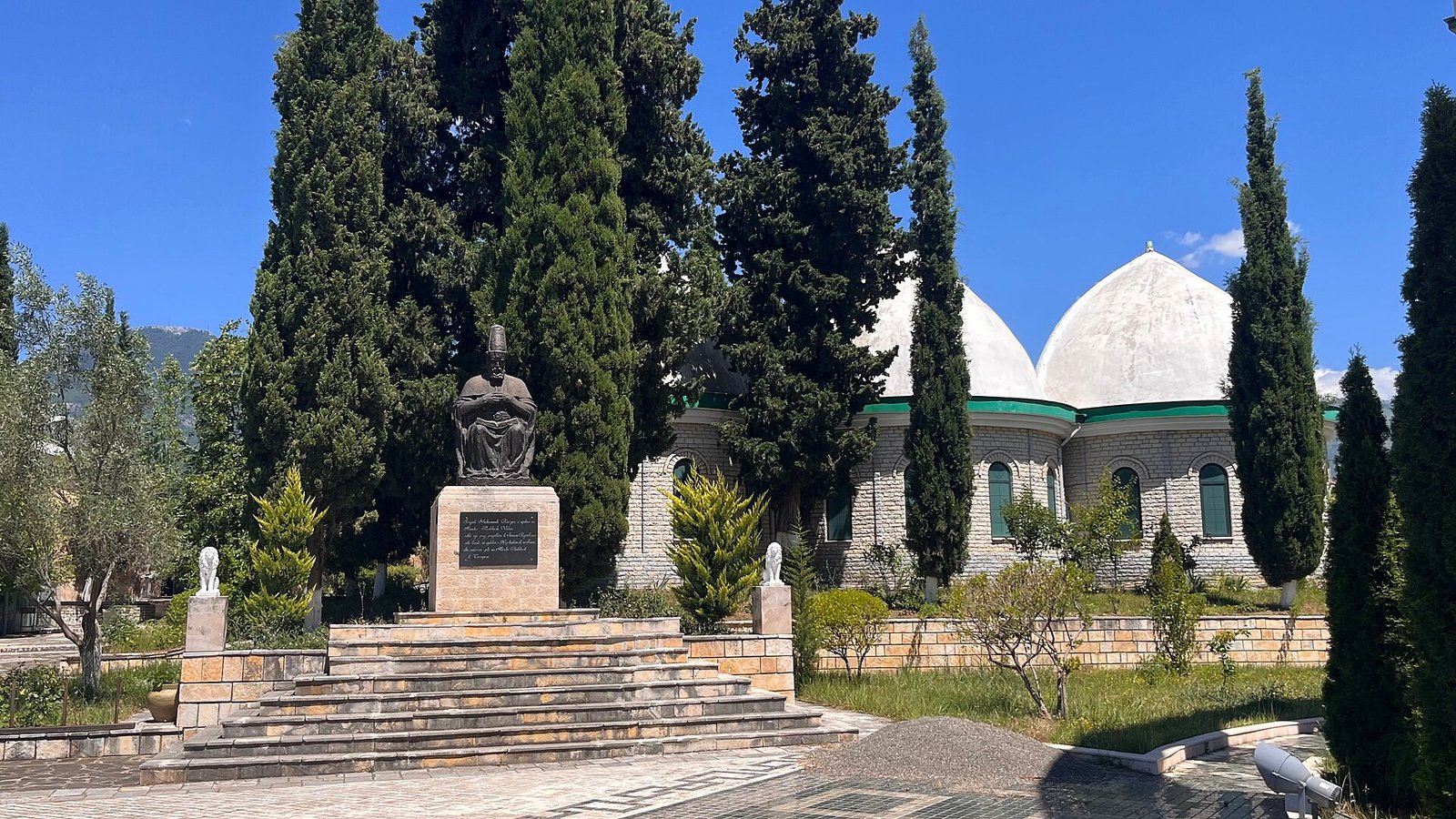
Image: Qendra Botërore Bektashiane 2026 – monumenti i Haxhi Bektash Veliut.jpg — Albinfo, CC BY-SA 4.0